Raven vs Crow: How to Tell Them Apart
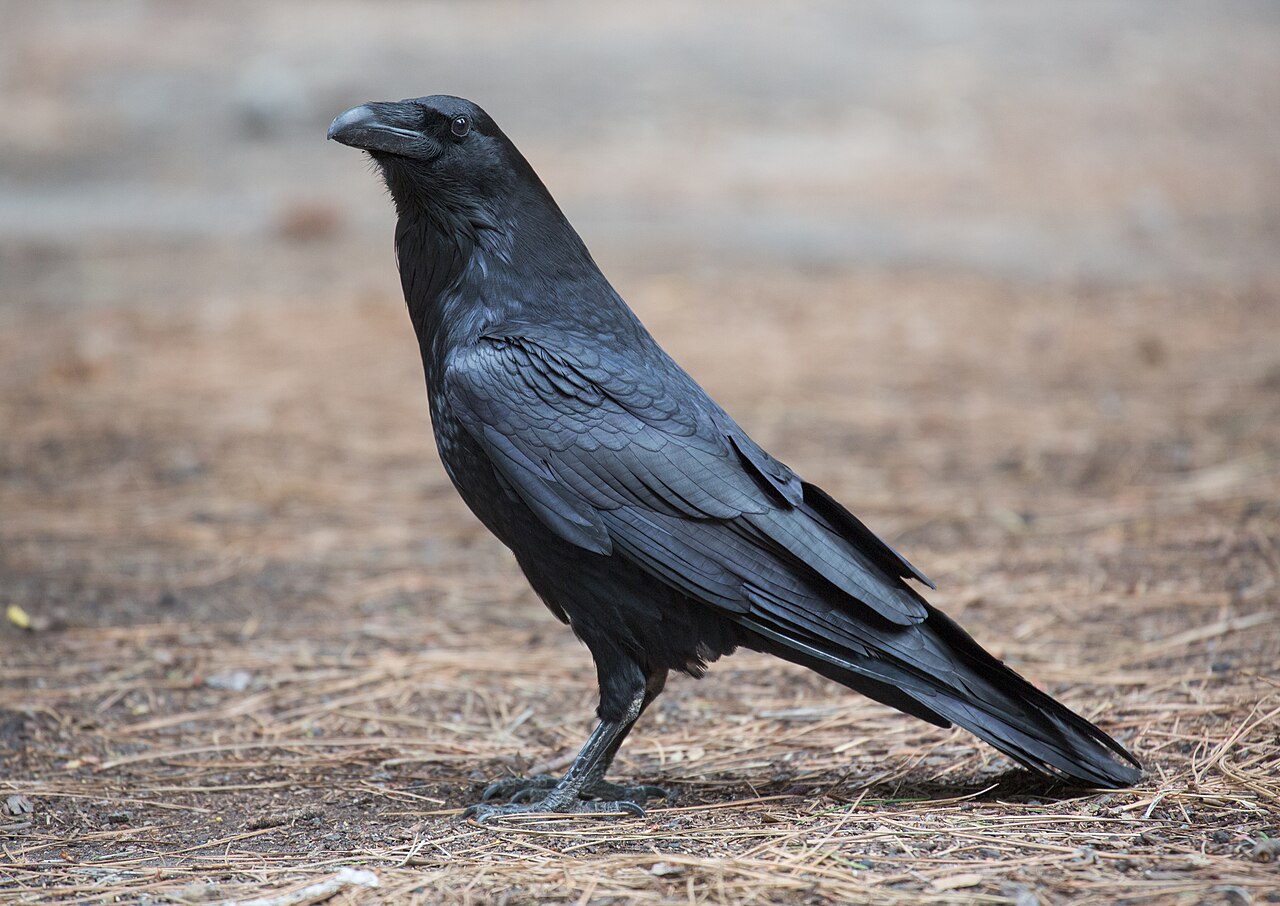
The fastest way to tell a raven from a crow is the tail shape in flight: a raven’s tail is wedge-shaped, coming to a point in the middle, while a crow’s tail is fan-shaped with a straight, even edge. Ravens are also considerably larger, with a heavier bill and a deeper, croaking call, compared to the crow’s smaller frame and familiar sharp “caw.” Because both birds are all-black and often seen at a distance, most people rely on a mix of these cues rather than any single feature.
| Feature | Raven | Crow |
|---|---|---|
| Length | 22 to 27 inches | 16 to 21 inches |
| Wingspan | 45 to 47 inches | 33 to 39 inches |
| Tail shape (in flight) | Wedge-shaped, pointed | Fan-shaped, straight edge |
| Bill | Larger, heavier, curved | Smaller, straighter |
| Call | Deep, croaking “gronk” | Sharp, nasal “caw” |
| Flight style | Soars, glides, sometimes does acrobatic rolls | Steady flapping, rarely soars |
| Throat feathers | Shaggy, pointed (hackles) | Smooth |
Size Difference: Ravens Are Noticeably Larger
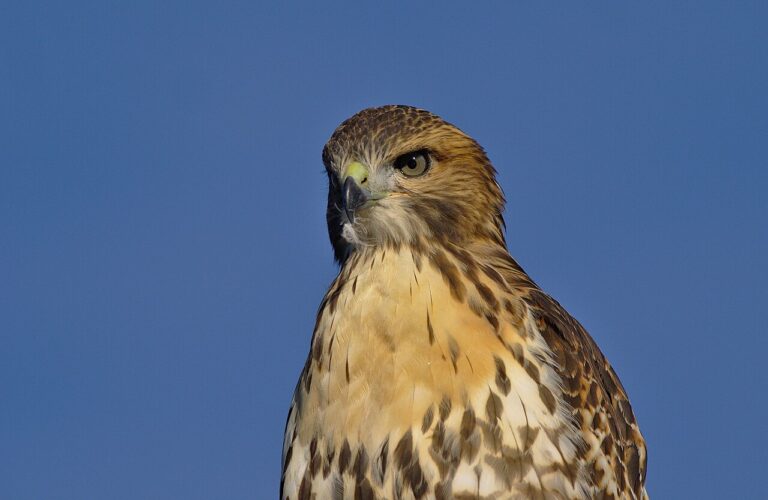
A common raven measures 22 to 27 inches long with a wingspan up to 47 inches, roughly the size of a red-tailed hawk, while an American crow is closer to 16 to 21 inches long with a wingspan around 33 to 39 inches. Side by side the difference is obvious, but the two are rarely seen together, so size alone is unreliable without a size reference like a nearby bird or a power line for scale. Ravens also have a noticeably heavier, more powerful build overall, sometimes described as bulkier or more robust compared to the sleeker crow, an important distinction since crows are frequently mistaken for their smaller cousin the common grackle at a distance despite the grackle’s iridescent purple sheen and yellow eyes.
Diet: What Ravens and Crows Actually Eat
Both species are highly opportunistic omnivores, eating carrion, insects, small vertebrates, eggs, and human food waste, which is part of why both thrive around landfills, farms, and roadways where food is abundant and predictable. Crows tend to forage more often in open, mowed areas like parks and agricultural fields, sometimes alongside other adaptable ground foragers such as the Canada goose, while ravens range more widely across rugged terrain and are especially drawn to large carcasses in remote areas where they can feed undisturbed for extended periods. This dietary overlap means diet alone is not a useful way to separate the two species; behavior, size, and physical field marks remain far more reliable.
Tail Shape: The Most Reliable Flight Clue
In flight, a raven’s tail feathers are graduated in length, creating a wedge or diamond shape that comes to a visible point in the center. A crow’s tail feathers are roughly equal in length, forming a fan shape with a flat or slightly rounded trailing edge. This single feature works even at a distance and in silhouette, making it one of the most dependable ways to distinguish the two species when you cannot get a close look at size or bill.
Bill Size and Shape
Ravens have a notably larger, thicker bill with a more pronounced curve near the tip, sometimes described as looking almost prehistoric. Crows have a proportionally smaller, straighter bill. Ravens also often show shaggy, pointed throat feathers called hackles, especially visible when the bird calls or displays, which crows lack entirely.
Call: A Croak vs a Caw
Ravens produce a deep, guttural croaking sound often written as “gronk” or “cr-r-ruck,” along with a wide range of other clicks, rattles, and knocking noises. Crows are known for their sharp, nasal “caw-caw-caw,” repeated in quick succession, especially when alarmed or mobbing a predator, a group defense behavior also seen in red-winged blackbirds defending their nests. If you hear the bird before you see it, the call is often the quickest way to identify which species you’re dealing with.
Flight Pattern Differences
Ravens are accomplished soarers and gliders, often riding thermals with barely a wingbeat, and are known to perform playful acrobatic rolls and dives, especially in pairs. Crows fly with steady, continuous flapping and rarely soar for extended periods, giving their flight a more labored, workmanlike appearance compared to a raven’s effortless glide. Watching how a bird moves through the air for even a few seconds often reveals the species before any other feature does.
Intelligence and Social Behavior
Both ravens and crows are members of the corvid family and rank among the most intelligent birds in the world, capable of tool use, problem-solving, and recognizing individual human faces over years. Crows are highly social and often form large flocks, especially at communal winter roosts that can number in the thousands, a behavior also shared by other flocking blackbirds like the common grackle. Ravens tend to be more solitary or travel in mated pairs, though young, non-breeding ravens do form loose social groups at abundant food sources like carcasses or landfills.
Range and Habitat
American crows are widespread across nearly the entire United States, thriving in suburbs, farmland, and cities alike, often forming large family groups that stay together year-round to help raise the next brood. Common ravens are more associated with wilder, more remote landscapes, including mountains, deserts, and coastlines in the western US, though their range has been expanding eastward in recent decades as forests have matured and food sources like roadkill and landfills have become more widely available. If you live in a dense urban or suburban environment in the eastern half of the country, the black bird in your yard is almost certainly a crow rather than a raven, since ravens still largely avoid the most densely populated eastern cities.
Why the Confusion Persists
Part of why so many people struggle to separate these two species is that field guides and casual conversation both use “crow” as a catch-all term for any black corvid, and the two species do overlap significantly across the western half of the country. According to the Cornell Lab of Ornithology, common ravens and American crows can even be seen foraging in the same open fields in parts of the West, making direct side-by-side comparison the only truly reliable identification method in areas where both species are common. Audubon notes that beginning birders often over-rely on size alone, which is unreliable without a nearby object for scale, making tail shape and call the two most consistently useful field marks in practice.
Other Corvids You Might Confuse With Crows and Ravens
Beyond the crow-versus-raven distinction, North America is home to several other all-black or mostly black corvids that can add to the confusion at a distance. Fish crows, found along the Atlantic and Gulf coasts, look nearly identical to American crows but give a distinctly nasal, two-syllable call. Chihuahuan ravens, found in the arid Southwest, are smaller than common ravens and nearly impossible to separate visually in the field, requiring range and habitat context rather than plumage alone. For a broader look at black-plumaged birds across North America, see our guide to identifying common black bird species.
A Quick Field Checklist
When you’re not sure which species you’re looking at, run through the cues in order of reliability: first check the tail shape in flight (wedge versus fan), then listen for the call (croak versus caw), then note overall bulk if a size reference is available, and finally check for shaggy throat hackles if the bird is close enough to see clearly. Using two or three of these cues together, rather than relying on any single feature, will resolve the vast majority of raven-versus-crow sightings correctly, even for birders who are just starting to learn the difference.
Related reading: Finch vs Sparrow.
Frequently Asked Questions
What is the easiest way to tell a raven from a crow?
The tail shape in flight is the most reliable single clue: a raven’s tail is wedge-shaped and comes to a point, while a crow’s tail is fan-shaped with a straight edge.
Are ravens bigger than crows?
Yes, ravens are considerably larger, measuring 22 to 27 inches long compared to a crow’s 16 to 21 inches, with a heavier bill and bulkier overall build.
Do ravens and crows sound different?
Yes, ravens produce a deep, croaking “gronk” sound, while crows make a sharper, higher-pitched “caw” typically repeated several times in a row.
Which is smarter, a raven or a crow?
Both are highly intelligent corvids capable of tool use and problem-solving, and studies have not shown a clear intelligence gap between the two species.
Do ravens and crows live in the same areas?
They can overlap, but crows are more common in suburbs, cities, and farmland across the whole country, while ravens favor wilder, more remote landscapes, especially in the west.
Do ravens fly differently than crows?
Yes, ravens soar and glide with occasional acrobatic rolls, while crows fly with steady, continuous flapping and rarely soar for long stretches.
Are ravens and crows the same species?
No, they are different species within the same corvid family; common ravens and American crows are distinct birds with different sizes, calls, and behaviors.