The Best Bird Feeders: 9 Top Picks for Every Budget and Bird (2026)
Affiliate Disclosure: This article contains affiliate links. We may earn a small commission when you purchase products through these links, at no additional cost to you. This supports our research and content creation. We only recommend products that match the specifications and quality standards we cover in our complete bird feeders guide.
There are hundreds of bird feeders available, and most of them aren’t worth buying. The best bird feeder for you depends entirely on three factors: what birds you want to attract, what wildlife pressure (squirrels, raccoons) your yard has, and how much you want to spend. This guide ranks the 9 best bird feeders across categories, best overall, best squirrel-proof, best budget, best for cardinals, best for finches, best window-mounted, best caged, best large-capacity, and best for small spaces. Each recommendation is based on extensive customer reviews, established brand reputation, and specifications that match what we recommend in our complete feeder guides.
Quick Comparison Table
| Feeder | Best For | Capacity | Approx. Price | Squirrel-Proof |
|---|---|---|---|---|
| Brome Squirrel Buster Plus | Best Overall | 5.1 lb | $80-100 | Yes (weight) |
| Droll Yankees New Generation | Best Tube | 1.25 lb | $40-60 | Partial |
| Perky-Pet Squirrel-Be-Gone II | Best Mid-Range Squirrel-Proof | 4 lb | $35-50 | Yes (cage) |
| Aspects Quick Clean Tube | Best Easy-Clean | 2.5 lb | $25-45 | No |
| Nature’s Hangout Window Feeder | Best Window | 1 cup | $20-30 | N/A |
| Birds Choice Squirrel-Proof Wire Cage | Best Caged | 5 lb | $30-50 | Yes (cage) |
| Audubon Cedar Tray Feeder | Best for Cardinals | Open | $20-30 | No |
| Stokes Select Finch Mesh Sock | Best for Finches | 0.5 lb | $10-15 | N/A |
| Woodlink Going Green Hopper | Best Large Capacity | 8 lb | $35-55 | No |
#1: Best Overall, Brome Squirrel Buster Plus
Why we recommend it: The Brome Squirrel Buster Plus is the most reliably effective squirrel-proof feeder available, with weight-triggered ports that close when squirrels (or other heavy birds like grackles) land on it. It’s the feeder serious backyard birders consistently recommend for yards with squirrel pressure.
Key specs:
- Capacity: 5.1 lb of seed (large reservoir, infrequent refills)
- Material: Heavy-duty polycarbonate
- Mechanism: Weight-activated closure of seed ports
- Adjustable: Weight sensitivity adjustable for different bird sizes
- Made in Canada
Pros:
- Genuinely squirrel-proof (weight mechanism actually works long-term)
- Large capacity reduces refill frequency
- Lifetime warranty against squirrel damage
- Dishwasher-safe parts
- Cardinal-friendly ring for larger birds
- Can be adjusted to exclude larger nuisance birds (grackles, starlings)
Cons:
- Higher price point ($80-100)
- Larger and heavier than tube feeders
- Mechanism requires occasional maintenance (cleaning, lubrication)
- Not ideal for tiny birds (chickadees can sometimes trigger the mechanism)
Best for: Yards with persistent squirrel problems, serious birders willing to invest, anyone who wants one feeder that handles most species without modifications.
[Check Price on Amazon →]
#2: Best Tube Feeder, Droll Yankees New Generation
Why we recommend it: Droll Yankees is the original premium tube feeder brand, and the New Generation line represents decades of refinement. It’s the standard against which other tube feeders are judged. Particularly excellent for chickadees, finches, titmice, and nuthatches.
Key specs:
- Capacity: 1.25 lb of seed
- Material: UV-stabilized polycarbonate tube, metal cap and base
- Ports: 6 feeding ports with metal reinforcement
- Made in USA
- Lifetime warranty
Pros:
- Excellent build quality (lasts 10+ years with normal use)
- Dishwasher-safe, easy to clean thoroughly
- Metal port reinforcement prevents squirrel chewing damage
- Multiple feeding ports allow multiple birds simultaneously
- Available in different colors
Cons:
- Not squirrel-proof (squirrels can access ports easily without a baffle)
- Smaller capacity than hopper or weight-triggered feeders
- Single seed type at a time
Best for: Yards with manageable squirrel pressure (use with a pole-mounted baffle), birders wanting a long-lasting quality feeder, primary feeder for chickadee-and-finch yards.
[Check Price on Amazon →]
For squirrel defense with this feeder, see our squirrel baffles guide and our bird feeder poles guide.
#3: Best Mid-Range Squirrel-Proof, Perky-Pet Squirrel-Be-Gone II
Why we recommend it: A solid squirrel-proof option at half the price of the Brome Squirrel Buster Plus. It uses a cage design rather than weight mechanism, which works differently, keeping squirrels physically out rather than triggering a closure. Reliable for yards with moderate squirrel pressure.
Key specs:
- Capacity: 4 lb of seed
- Material: Steel cage over plastic seed reservoir
- Design: Wire mesh cage with adjustable seed access
- Adjustable port sizing
Pros:
- Effective squirrel deterrent at a moderate price
- Large capacity (4 lb)
- Cage design also excludes larger nuisance birds (grackles, starlings)
- Easy to disassemble for cleaning
- Multiple seed types compatible
Cons:
- Cage design can be intimidating to smaller, shy birds initially
- Plastic reservoir less durable than premium feeders
- Some birds (cardinals especially) can have difficulty accessing seed through the cage
Best for: Moderate squirrel pressure, budget-conscious birders who still want squirrel defense, secondary feeder for varied yards.
[Check Price on Amazon →]
#4: Best Easy-Clean Feeder, Aspects Quick Clean Tube
Why we recommend it: The Aspects Quick Clean Tube was specifically designed with cleaning in mind, the bottom comes off entirely for thorough cleaning, which is critical for preventing disease transmission at feeders. Bird feeder cleanliness affects bird health significantly.
Key specs:
- Capacity: 2.5 lb of seed
- Material: Hard plastic with metal accents
- Cleaning: Bottom port assembly removes entirely
- Multiple ports for simultaneous feeding
Pros:
- Truly easy to clean thoroughly (vital for bird health)
- Good capacity for moderate use
- Multiple feeding ports
- Affordable price point
- Reliable build quality
Cons:
- Not squirrel-proof (use with a baffle)
- Plastic less durable than premium options
- Sometimes the removable bottom creates a slight seal issue
Best for: Health-conscious birders who clean regularly, beginners who want simple maintenance, yards with disease concerns. See our hummingbird feeder cleaning guide for general feeder cleaning protocols.
[Check Price on Amazon →]
#5: Best Window Feeder, Nature’s Hangout Window Feeder
Why we recommend it: The Nature’s Hangout window feeder uses strong suction cups and a simple tray design to bring birds inches from your window. Particularly excellent for apartments, balconies, and anyone wanting close-up bird viewing.
Key specs: For a closely related question, see our guide to gray bird. For a closely related question, see our guide to blue and white bird. For a closely related question, see our guide to national bird of el salvador.
- Capacity: ~1 cup
- Material: Acrylic with strong suction cups
- Suction cups: 4 included for stability
- Drainage holes prevent rain pooling
Pros:
- Strong suction cups (don’t fall off in normal conditions)
- Drainage holes prevent rain-spoiled seed
- Easy to refill from inside (slides apart)
- Excellent for apartment use
- Birds become comfortable quickly with the close human proximity
Cons:
- Small capacity requires frequent refilling
- Suction cups need occasional re-cleaning to maintain grip
- Direct sun can degrade acrylic over time
Best for: Apartments, condos, anyone without a yard, beginners wanting close-up viewing, supplementary feeder to a primary pole-mounted setup. See our complete window bird feeders guide for window feeder strategy.
[Check Price on Amazon →]
#6: Best Caged Feeder, Birds Choice Squirrel-Proof Wire Cage
Why we recommend it: A caged feeder excludes squirrels AND larger nuisance birds (grackles, starlings, jays) while letting small songbirds access seed freely. For yards plagued by aggressive non-target birds, this design solves the problem cheaply.
Key specs:
- Capacity: 5 lb
- Material: Powder-coated steel cage over plastic reservoir
- Cage spacing: Sized for small songbirds (chickadees, titmice, finches)
- Adjustable hanging hook
Pros:
- Excludes both squirrels and larger nuisance birds
- Large capacity (5 lb)
- Durable steel cage
- Affordable mid-range pricing
- Works well alongside other feeders
Cons:
- Some smaller birds find the cage spacing too tight
- Cardinals and grosbeaks cannot access
- Slightly bulky aesthetic compared to streamlined tube feeders
Best for: Yards with grackle/starling problems, secondary feeder alongside an open-access feeder for variety, anyone wanting maximum nuisance bird exclusion.
[Check Price on Amazon →]
#7: Best for Cardinals, Audubon Cedar Tray Feeder
Why we recommend it: Cardinals and other large songbirds (grosbeaks, jays) prefer open tray feeders to tube designs because their larger bodies can perch comfortably and their stronger beaks work well with the open access. A cedar tray feeder serves these “big bird” species better than premium squirrel-proof tube feeders.
Key specs:
- Capacity: Variable (open tray, ~2 cups when full)
- Material: Cedar wood with metal hanging hardware
- Design: Roofed tray with drainage
- Compatible seed: Sunflower, safflower, mixed seed, mealworms
Pros:
- Cedar resists rot and weathering naturally
- Open access for cardinals, grosbeaks, jays
- Roof protects seed from rain
- Drainage prevents seed soaking
- Aesthetic match for natural-style yards
Cons:
- Not squirrel-proof at all (open access for all species)
- Open design means more seed waste
- Less capacity than enclosed feeders
- Requires frequent refilling
Best for: Cardinal-focused yards, varied yards with both small and large birds, supplementary feeder to a squirrel-proof primary, anyone preferring natural materials.
[Check Price on Amazon →]
#8: Best for Finches, Stokes Select Finch Mesh Sock
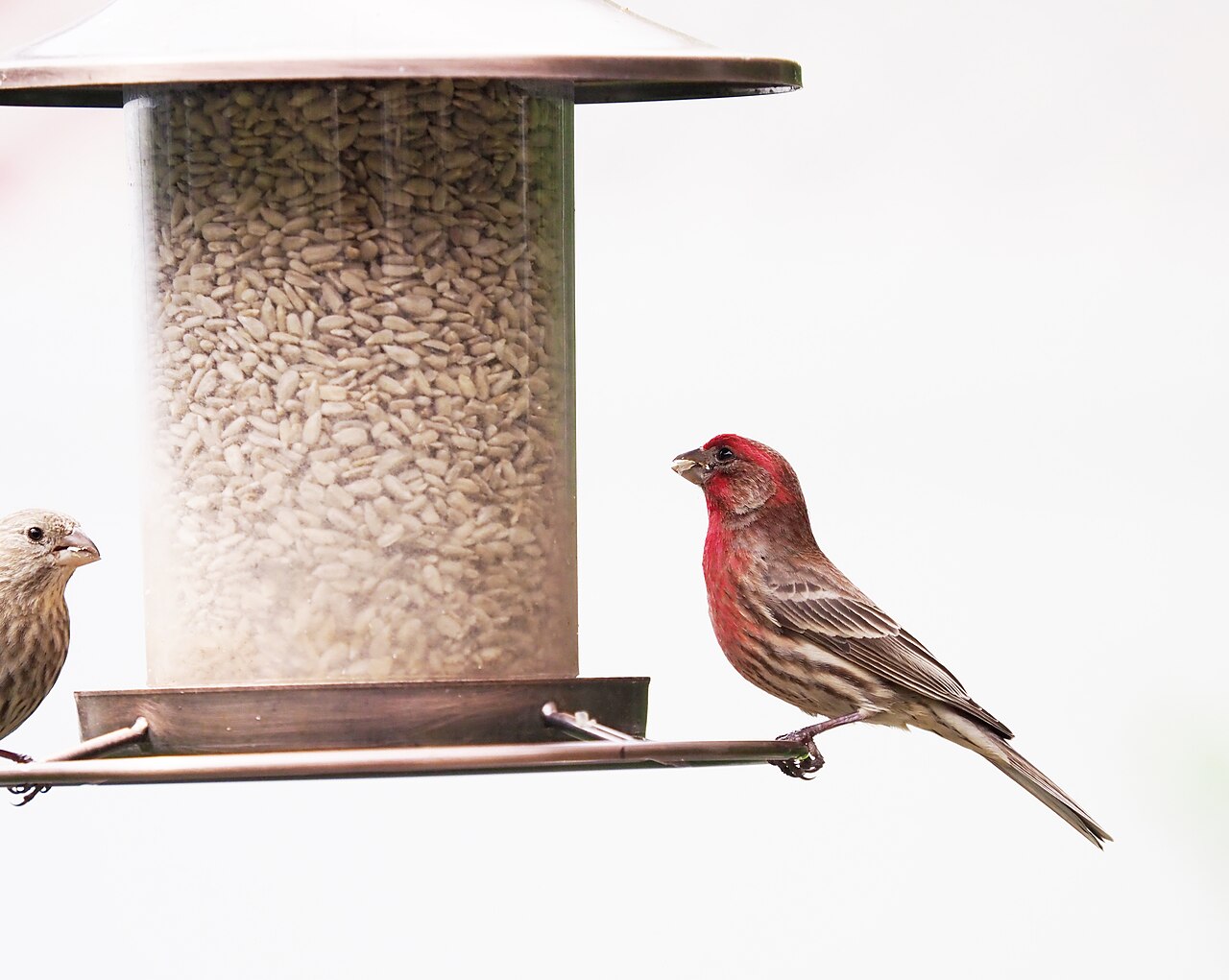
Why we recommend it: Goldfinches, House Finches, and Pine Siskins prefer nyjer (thistle) seed served in a finch sock, a fine mesh tube that lets them cling and feed but excludes larger birds. The mesh design is also squirrel-resistant because nyjer is not preferred by squirrels.
Key specs:
- Capacity: 0.5 lb of nyjer/thistle seed
- Material: Fine mesh fabric
- Mounting: Simple hanging hook
- Seed: Specifically nyjer/thistle (don’t use sunflower)
Pros:
- Goldfinch favorite
- Cheap entry point ($10-15)
- Squirrel-resistant (squirrels generally avoid nyjer)
- Easy to refill
- Multiple finches can feed simultaneously
Cons:
- Single seed type only (nyjer)
- Mesh wears out after 1-2 seasons (replace as needed)
- Smaller capacity than tube feeders
Best for: Goldfinch-focused yards, adding species variety to existing feeder setups, budget-conscious beginners. See our bird seed guide for nyjer seed details.
[Check Price on Amazon →]
#9: Best Large Capacity, Woodlink Going Green Hopper
Why we recommend it: For high-traffic yards or anyone who hates frequent refilling, a large hopper feeder holds significantly more seed than tube designs. The Woodlink Going Green line is made from recycled plastic and built to last.
Key specs:
- Capacity: 8 lb of seed
- Material: Recycled plastic
- Design: Traditional hopper with gravity-fed seed distribution
- Roof provides rain protection
Pros:
- Massive capacity (8 lb means infrequent refills)
- Sustainable recycled plastic construction
- Solid weather protection
- Compatible with multiple seed types
- Cardinal and chickadee both can use
Cons:
- Not squirrel-proof (use with a baffle)
- Bulkier than tube feeders
- Heavier when full
Best for: Active feeding setups, large yards with consistent bird traffic, anyone tired of weekly refills, paired with pole-mounted baffle for squirrel defense.
[Check Price on Amazon →]
How to Choose the Right Bird Feeder
The decision framework that matches a feeder to your specific yard:
Step 1: Identify Your Wildlife Pressure
Walk through your yard and honestly assess:
- Heavy squirrel activity: Choose Brome Squirrel Buster Plus (#1) or a caged feeder (#6)
- Moderate squirrels: Perky-Pet Squirrel-Be-Gone (#3) or any feeder with proper baffle setup
- Minimal squirrels: Any feeder works, focus on bird species priorities instead
Step 2: Identify Target Birds
- Maximum species variety: Brome Squirrel Buster Plus (#1) or Woodlink Hopper (#9) for general use
- Cardinals especially: Audubon Cedar Tray (#7)
- Goldfinches especially: Stokes Finch Sock (#8)
- Chickadees, titmice, nuthatches: Droll Yankees Tube (#2)
- Excluding grackles/starlings: Birds Choice Caged Feeder (#6)
Step 3: Identify Your Space
- Apartment or balcony: Nature’s Hangout Window Feeder (#5)
- Yard with mature trees: Pole-mounted Brome Squirrel Buster (#1)
- Yard with deck or patio: Combination of window feeder (#5) and pole-mounted main feeder
- Multi-feeder setup: Layer 2-3 different feeders for variety. See our complete bird feeders guide for combined setup strategy.
Step 4: Match Capacity to Refill Frequency
- Weekly refills acceptable: Any feeder works
- Monthly refills preferred: Brome (5 lb), Birds Choice (5 lb), Woodlink (8 lb)
- Daily attention OK: Window feeders, finch socks, smaller tube feeders
What Else You’ll Need
A bird feeder alone won’t transform your yard. The complete setup includes:
A Mount or Hanger
Most feeders need either:
- A pole-mounted setup with a baffle (best squirrel defense), see our bird feeder poles guide
- A shepherd’s hook (mid-budget option)
- A hanging bracket or tree branch attachment, see our hanging bird feeders guide
- A weighted base for patio use, see our bird feeder stands guide
The Right Seed
The single most important seed choice: black oil sunflower seed. It attracts the widest variety of species. See our bird seed guide for complete seed strategy.
A Water Source
A bird bath or water feature dramatically increases yard bird visits. See our bird baths guide.
Time for Discovery
New feeders take 1-4 weeks for birds to discover and trust. Don’t give up too early, see our guide on why feeders aren’t attracting birds if no birds appear after 4 weeks.
Maintenance Considerations
Every feeder on this list requires regular maintenance to remain functional and safe for birds:
- Clean every 2 weeks during normal use, weekly in damp or hot weather
- Use 1:9 bleach-to-water solution for deep cleaning, with thorough rinsing
- Refill with fresh seed every 5-14 days depending on bird traffic
- Inspect for damage monthly (cracks, worn parts, mold growth)
- Replace worn parts as needed (Brome and Droll Yankees offer replacement parts; check manufacturer for others)
Neglected feeders can transmit disease between birds, including salmonella and avian conjunctivitis. A dirty feeder hurts birds more than no feeder at all.
Where to Buy Bird Feeders
Bird feeders are available at multiple sources, each with trade-offs:
- Amazon: Widest selection, fast shipping, customer reviews. Most feeders listed here are available.
- Wild Birds Unlimited: Premium specialty stores with expert staff. Higher prices but excellent guidance.
- Tractor Supply, Ace Hardware: Budget options, limited selection, but local availability.
- Independent garden centers: Variable selection, often locally appropriate species.
- Manufacturer direct: Brome, Droll Yankees, and Wild Birds Unlimited all sell direct. Lifetime warranties often work best through direct purchase.
Frequently Asked Questions
What’s the best bird feeder for beginners?
The Brome Squirrel Buster Plus (#1 in this guide) is our top beginner recommendation despite the higher price. It eliminates the biggest beginner frustration (squirrels emptying the feeder) and works with a wide variety of seed types and bird species. If budget is tight, the Perky-Pet Squirrel-Be-Gone II (#3) is a solid mid-range alternative.
Are squirrel-proof bird feeders actually squirrel-proof?
The best ones are, yes. Weight-triggered designs like the Brome Squirrel Buster Plus reliably exclude squirrels for years. Caged designs like the Perky-Pet Squirrel-Be-Gone work through physical exclusion. Both approaches have been refined over decades. Cheap “squirrel-proof” feeders often fail; the products on this list have established track records.
What’s the difference between tube, hopper, and tray feeders?
Tube feeders (Droll Yankees, Aspects) are vertical cylinders with feeding ports. Best for chickadees, titmice, nuthatches, finches. Hopper feeders (Woodlink) hold larger amounts of seed with gravity-fed distribution. Tray feeders (Audubon Cedar) are open platforms. Each suits different species and yard situations.
Should I buy one big feeder or multiple smaller ones?
For most yards, multiple feeders work better than one large one. Different feeder types attract different species. A typical productive setup: one squirrel-proof main feeder, one finch sock, one window feeder, plus a water source. See our complete feeders guide for combined setup strategies.
How much should I spend on a bird feeder?
A budget feeder ($10-25) works fine for testing whether you’ll enjoy backyard birding. For commitment, $50-100 buys a quality feeder that lasts 5-10+ years. Premium feeders ($80-100) like the Brome are worth the investment if squirrels are an ongoing problem.
What’s the best material for a bird feeder?
Polycarbonate (clear plastic with UV stabilization) is the durable choice for most feeders, it lasts decades without yellowing. Cedar is excellent for natural-style tray feeders. Recycled plastic (Woodlink) lasts well and is sustainable. Avoid cheap unstabilized plastics that crack within seasons.
Are expensive bird feeders worth it?
Yes, for two reasons. First, premium feeders last decades while cheap ones break within seasons, making cost-per-year far lower for premium options. Second, premium feeders include features (weight-triggered closures, lifetime warranties, replacement parts) that genuinely improve the bird-feeding experience.
Will birds use a brand new feeder right away?
Sometimes within hours, but typically 1-4 weeks for first visitors. Discovery time depends on local bird traffic, feeder placement, and existing food sources. Don’t give up too early. See our complete guide on attracting birds quickly for placement strategies that speed discovery.
Can I leave bird feeders out year-round?
Yes, in most regions. Winter feeders save birds significant energy during cold weather and don’t disrupt natural feeding patterns. The exception: in some bear-active regions, bird feeders are removed during bear active months. Check local guidance for specific situations.
What’s the best bird feeder for cardinals?
Cardinals prefer open tray and hopper feeders over tube feeders because their larger bodies can perch comfortably. The Audubon Cedar Tray Feeder (#7) is excellent for cardinal-focused yards. The Brome Squirrel Buster Plus (#1) also has a cardinal-friendly perching ring.
How do I know if a feeder is well-made?
Look for: heavy-duty materials (polycarbonate, recycled plastic, cedar), metal reinforcement at stress points, dishwasher-safe components, replaceable parts available from manufacturer, and a lifetime or multi-year warranty. The brands on this list (Brome, Droll Yankees, Aspects, Birds Choice, Audubon, Stokes, Woodlink) all meet these criteria.
Do I need different feeders for different seasons?
Generally no, quality feeders work year-round. The main seasonal adjustments are seed type (more high-calorie suet in winter, fresh seed in summer) and cleaning frequency (more frequent in damp/hot weather). The hummingbird-specific season is the exception, see our best hummingbird feeders guide for that.
Where can I find more bird feeder reviews?
Our other money-page guides cover specific categories in depth:
- Best Squirrel-Proof Bird Feeders
- Best Hummingbird Feeders
- Best Window Bird Feeders
- Best Bird Feeder Poles
Final Thoughts
The best bird feeder for you isn’t necessarily the most expensive or the most popular, it’s the one that matches your specific yard situation, target birds, and budget. For most American backyard birders dealing with normal squirrel pressure, the Brome Squirrel Buster Plus is our top pick because it solves the biggest practical problem (squirrels emptying feeders) reliably.
For apartments or close-up viewing, the Nature’s Hangout Window Feeder is the right choice. For cardinals especially, the Audubon Cedar Tray Feeder. For finches, the Stokes Mesh Sock.
Don’t try to buy every feeder on this list. Start with one feeder that matches your primary need, give it 4 weeks to attract birds, then add additional feeders to expand variety. A well-managed yard with 2-3 quality feeders supports far more bird activity than a yard with 8 random feeders.
For complete setup guidance once you’ve chosen a feeder, see our complete bird feeders guide and our guide on attracting birds to your yard.