Crow Poop: What It Looks Like, Size, Color and How to Clean It
Crow poop looks like a white and dark green splash of roughly 0.5 to 1 in (1.5 to 2.5 cm), usually a soft blob rather than a formed pellet, with a chalky white cap of urate on top of darker digested material. Fresh droppings are wet and glossy; within an hour on a warm surface they dry to a flat, crusty stain that is much harder to scrub off.
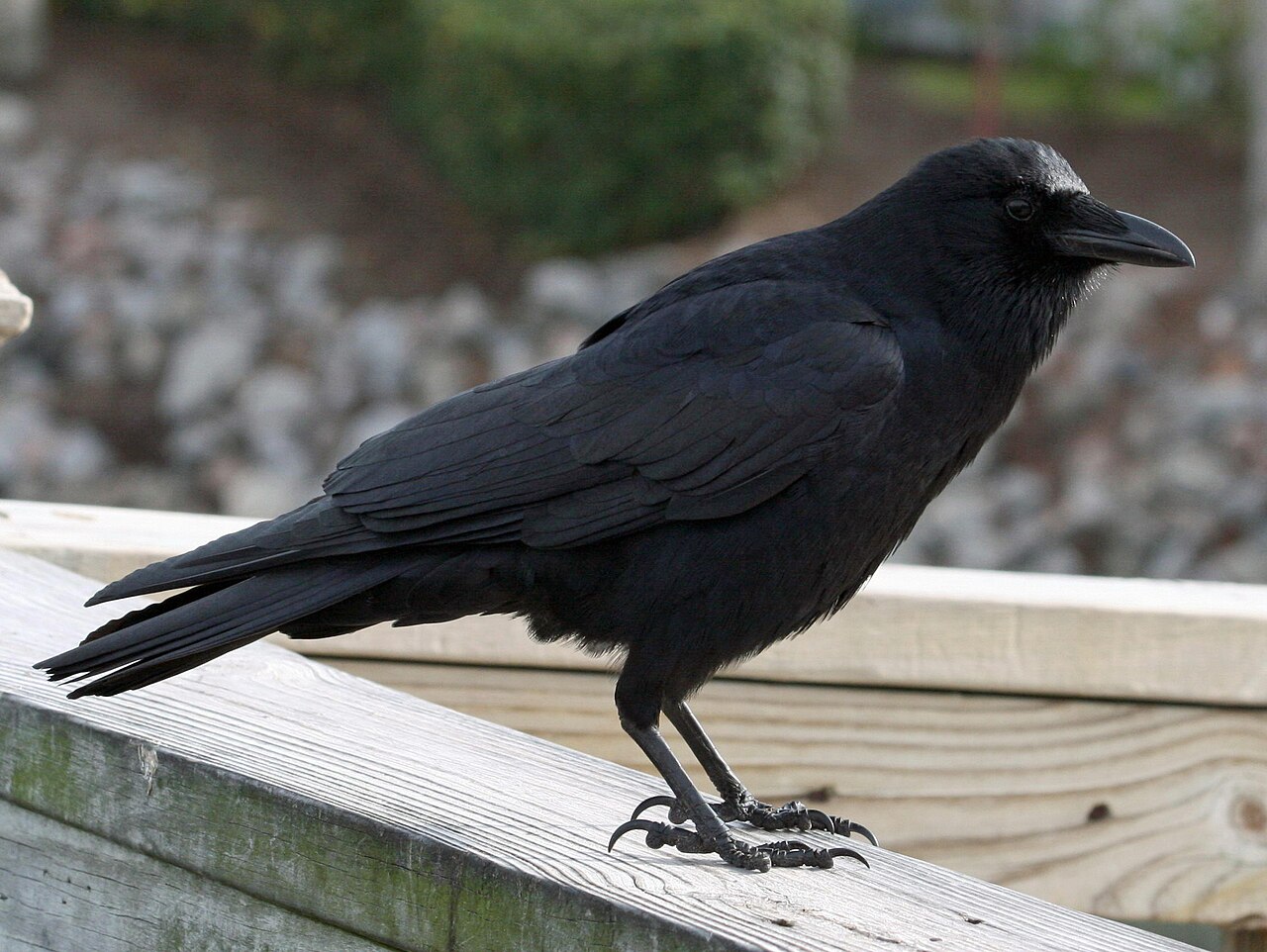
Because American crows (Corvus brachyrhynchos) eat almost anything, their droppings carry visible evidence of the last meal: sunflower hulls, corn kernels, insect wing cases, berry skins and seeds, small bone fragments, even bits of gravel. That content, plus where you find the splash and how much of it there is, is what separates crow poop from the pigeon, raven and starling droppings it gets confused with.
Crow droppings are 0.5 to 1 in (1.5 to 2.5 cm) splashes with a white urate cap over dark green, brown or black material, often studded with seeds, hulls, insect parts or berry skins. They land under roost trees, on railings, cars and porch posts, and build up in dense layers where crows gather in numbers at night.
| Feature | What crow poop shows |
|---|---|
| Size | 0.5 to 1 in (1.5 to 2.5 cm) across, occasionally to 1.5 in (4 cm) |
| Shape | Irregular splash or soft coil, rarely a firm pellet |
| Color | White cap over dark green, olive, brown or near black |
| Contents | Seeds, corn, hulls, insect parts, berry skins, bone and shell fragments |
| Smell | Faint when fresh; sour and musty when layers accumulate |
| Typical sites | Under roost trees, railings, car hoods, porch posts, light poles |
| Pattern | Scattered singles while feeding; dense carpets under a night roost |
What Do Crow Droppings Look Like?
Expect a two tone splash. Birds pass waste and urine together, so the white or cream portion is uric acid paste and the dark portion is digested food. On a horizontal surface like a deck rail the dropping spreads into a rough circle with a tail where it ran; on a vertical surface like a wall it streaks downward and dries in a narrow line. The surface shapes the stain more than the bird does.
Texture is the detail most people miss. Crow droppings are coarser than those of seed eating songbirds because the diet is bulkier. Run a stick through a fresh dropping and you will usually find recognizable pieces rather than a smooth paste. That coarseness is a reliable clue and it holds even after the dropping dries.
How Big Is Crow Poop?
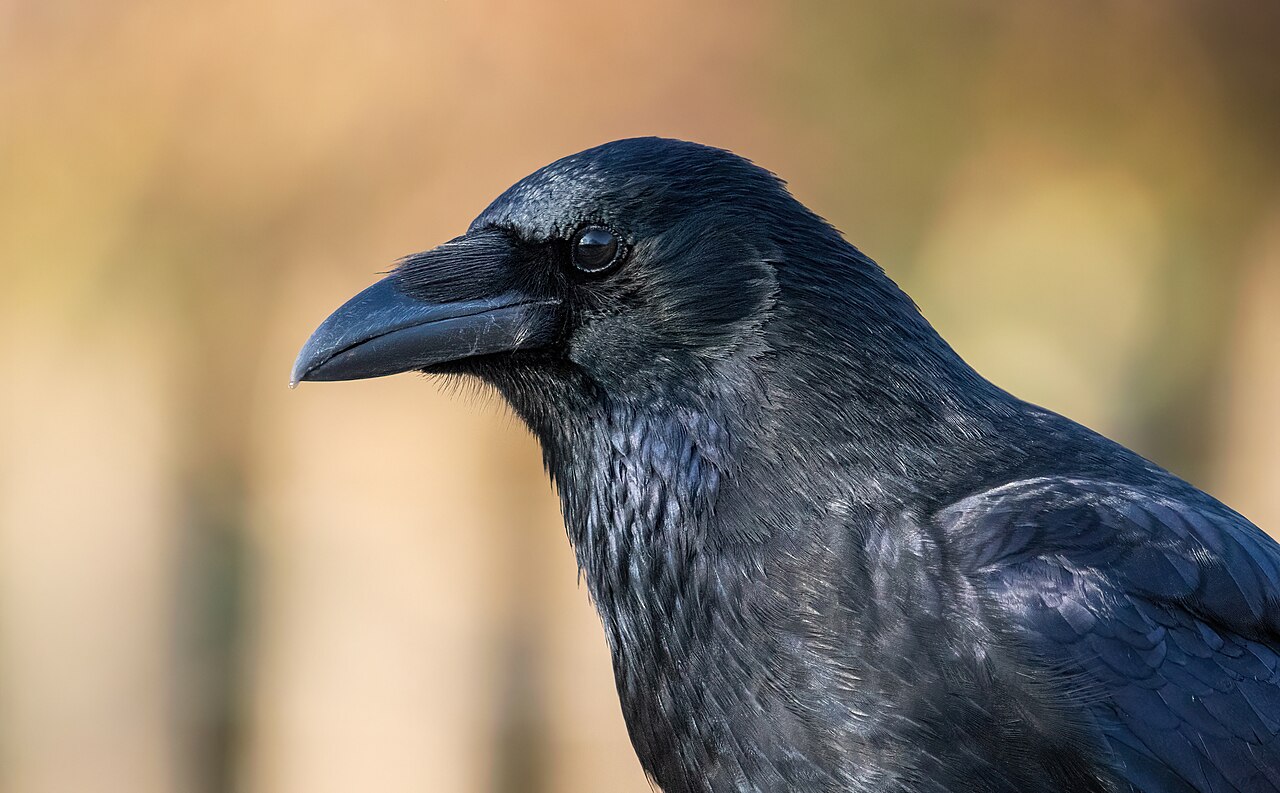
A single American crow dropping measures 0.5 to 1 in (1.5 to 2.5 cm) at its widest point, and the mass is roughly the volume of a nickel laid flat. A crow weighing 1 to 1.4 lb (450 to 640 g) produces far more waste than a sparrow and noticeably less than a Canada goose, which leaves firm green tubes of 2 to 3 in (5 to 8 cm).
Size alone is weak evidence, because a dropping that hits from 40 ft (12 m) up spreads much wider than the same volume dropped from a railing. Judge size from droppings that landed on a flat, horizontal surface, and treat anything on a windshield or a sloped roof as unmeasurable.
Crow Poop Color and What It Means

Color tracks diet, not health, and it changes through the year. Late summer droppings turn purple or red where crows raid mulberries, cherries and pokeweed, and people regularly mistake that for blood. Fall and winter droppings go olive to near black on a diet of corn, acorns, carrion and garbage. Spring droppings often look greener where crows take large numbers of insects and fresh plant material.
The white portion should stay white or cream. A dropping that is almost entirely watery and clear usually means the bird has been drinking heavily in hot weather. Bright yellow or green staining across many droppings at a roost site is worth reporting to a state wildlife agency, since widespread illness in a flock sometimes shows up this way first.
What Is in Crow Droppings?
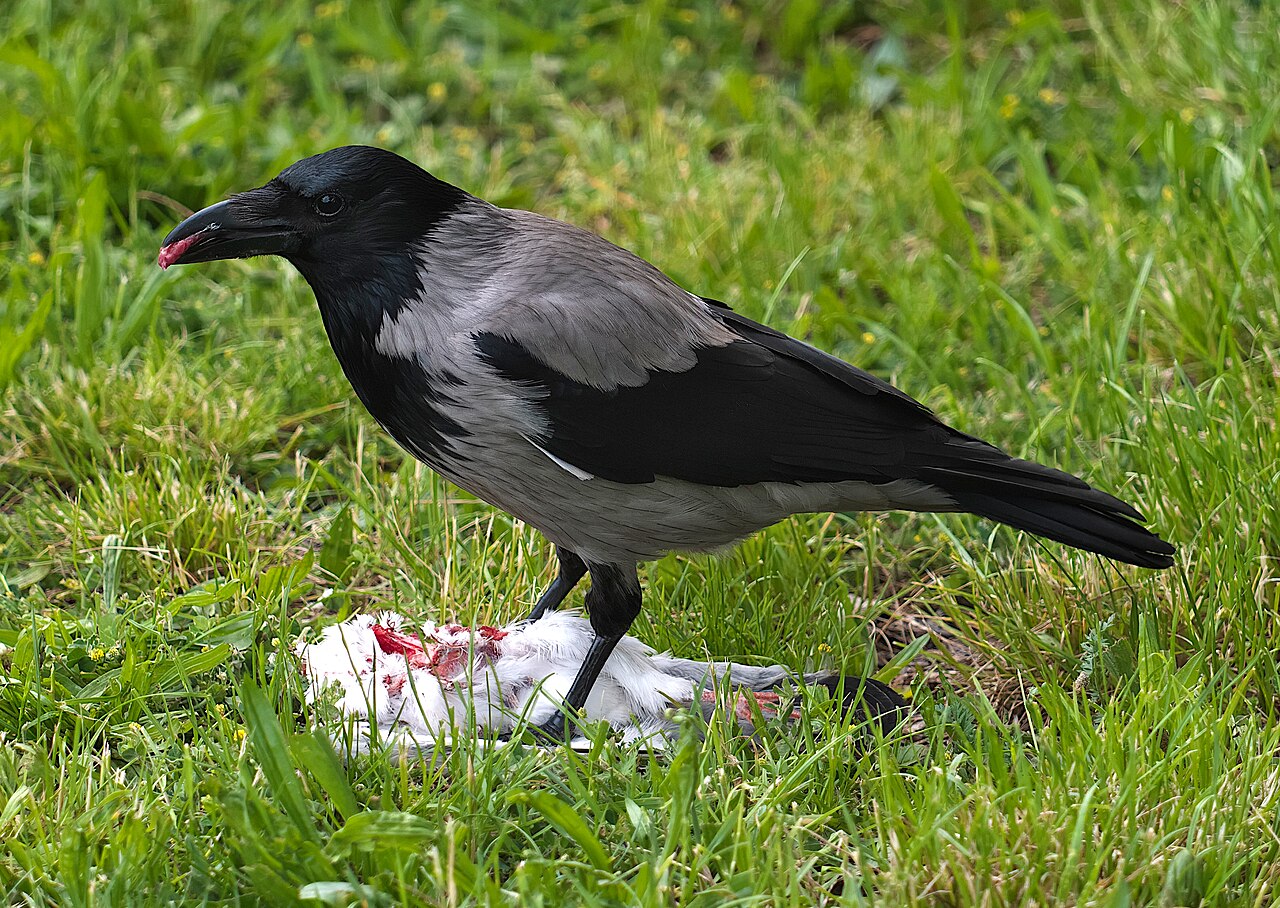
Crows are omnivores and generalists, which is exactly why their droppings are easy to read. Common finds include whole or split corn kernels, sunflower hulls from feeders, grasshopper and beetle fragments, crayfish shell, eggshell, small mammal bone, cherry and grape skins, and fast food grease stains in parking lots. For the full picture of the diet behind all this, see what crows eat through the year.
Crows also produce pellets, which are not droppings at all. Like owls and hawks, they cough up compact oval wads of indigestible fur, bone and plant fiber of about 1 in (2.5 cm). Finding pellets and droppings together under the same tree is a strong sign of a regular roost rather than a single passing bird.
Where You Find Crow Poop
Location tells you whether you have a visitor or a roost. Scattered single droppings on a lawn, a driveway or a feeder tray mean birds are feeding in the area and moving on. A dense white carpet under one group of trees, on the cars parked beneath them and on the sidewalk means a communal night roost, where hundreds or thousands of crows gather from fall through late winter.
Not everything on a railing came from a bird, either. Squirrel and rat droppings land on the same decks and are firm dark pellets with no white cap at all, so the urate portion is the quickest way to confirm you are looking at a bird.
Those winter roosts are the reason crow droppings become a city problem rather than a backyard one. Portland, Oregon ran into exactly this, and cities from Lancaster, Pennsylvania to Auburn, New York have used lasers, noise and trained hawks to move roosts off downtown blocks. Nothing about the dropping itself changes; the volume does.
Crow Poop vs Raven Poop
Raven (Corvus corax) droppings are the same design at a larger scale: 1 to 1.5 in (2.5 to 4 cm) across, with a heavier dark portion and more bone, fur and hide fragments, because ravens take more carrion. Crow droppings are smaller and show more grain, fruit and insect material.
Range is the more practical separator. Across most of the eastern and midwestern United States you have crows and no ravens, so a large black bird dropping on your deck in Ohio is a crow. In the mountain West, Alaska and the Appalachians both occur, and there the sensible answer is to identify the bird rather than the dropping. The same logic that applies to mammal pairs like bear and deer scat applies here.
Crow Poop vs Pigeon Poop
Rock pigeon (Columba livia) droppings are smaller at 0.25 to 0.5 in (0.6 to 1.5 cm), paler overall, and often formed into a short coil with a thick white cap. The content is nearly uniform, because pigeons eat mostly grain and seed, so you will not find insect parts or bone.
Site habits differ too. Pigeon droppings pile up directly beneath ledges, beams, bridge girders and building signs, in cone shaped heaps that build for months in sheltered spots. Crow droppings land out in the open under tree canopies and on exposed surfaces, and rain washes much of it away between storms.
Crow Poop vs Starling and Grackle Poop
European starlings and common grackles roost in the same winter flocks as crows and leave droppings in the same places, which is why blame often lands on the wrong bird. Starling droppings are 0.2 to 0.4 in (0.5 to 1 cm), loose and liquid, and during berry season they stain purple over wide areas. Grackle droppings fall between starling and crow in size.
The flock is the clue. If the carpet beneath a tree is made of small, splattery, uniform droppings in enormous numbers, you are standing under starlings. If the droppings are coarse, varied in content and spaced further apart, crows are the source. Mixed roosts of all three are common in urban parks and the mess is simply additive. Separating small droppings by species works much the same way as telling rat and mouse droppings apart: size plus content, never size alone.
Is Crow Poop a Health Risk?
The realistic risk from a few droppings on a railing is low, and it is not zero where droppings accumulate. Bird droppings mixed into soil over time can support Histoplasma capsulatum, the fungus that causes histoplasmosis, which is inhaled as spores when dry contaminated material is disturbed. Large roost sites are where that matters, and the Centers for Disease Control and Prevention publishes guidance for cleaning them. Crows have also been monitored for years as sentinels for West Nile virus, but that is transmitted by mosquitoes, not by handling droppings. Droppings found inside an attic are usually not avian at all, and separating bat droppings from mouse droppings matters there for the same fungal reason.
Practical precautions are simple. Wear disposable gloves, wet the droppings down before scraping so you are not raising dust, wear an N95 respirator for any large or dry accumulation, bag the waste, and wash your hands and tools afterward. Do not dry sweep or use a leaf blower on dried droppings. If a roost has layered droppings on soil for several seasons, that is a job for a contractor with the right equipment, not a weekend task.
How to Clean Crow Droppings
Soak before you scrub. Warm water with dish soap, left on the dropping for 10 to 15 minutes, breaks the dried urate crust so it lifts instead of smearing. A plastic scraper then takes off the bulk, and a second soapy pass clears the residue. On concrete, a stiff brush and an enzyme cleaner handle the stain that soap leaves behind.
Car paint needs more care, because dried droppings etch clear coat within days in summer sun. Lay a wet microfiber cloth over the spot, wait, then lift rather than rub. Avoid household vinegar on paint and avoid hydrogen peroxide on fabric or dark stone; both do remove organic staining, and both can dull the finish they sit on.
How to Keep Crows From Pooping on Your Porch
Remove the perch and the reason to use it. Bird spikes, taut line kits or simple angled covers on railings, beams and light fixtures stop birds from standing where the mess lands. Clear the attractant at the same time: open garbage, pet food, spilled birdseed and fallen fruit are what drew a flock to your block. A single deterrent without the cleanup tends to move the problem 20 ft (6 m) over.
Scare devices work for days to weeks, then stop. Reflective tape, hanging discs, fake owls and motion sprinklers all lose effect once crows learn there is no consequence, so rotate them and move them weekly if you use them at all. Crows are among the most adaptable birds in North America and they remember individual people, which is also why the quiet, structural fixes outlast the loud ones. For the same reason, treat a sound based deterrent as a short term tool, not a solution.
Frequently Asked Questions
What do crow droppings look like?
A splash of 0.5 to 1 in (1.5 to 2.5 cm) with a chalky white cap over dark green, brown or black material, usually with visible seeds, hulls, insect parts or berry skins mixed in. Fresh ones are glossy and wet; dried ones become flat crusty stains that resist scrubbing.
If a crow poops on you, is it good luck?
In several folk traditions, including common European and South Asian sayings, a bird dropping landing on you is read as incoming money or good fortune. There is no evidence behind it. What it really indicates is that you were standing under a perch or a flight path, which is worth knowing if you park there daily.
Why does crow poop smell?
A single dropping has almost no odor. Smell develops where droppings accumulate under a roost and bacteria break down the organic portion, producing a sour, musty, ammonia tinged scent that gets stronger after rain. If you can smell it, you are dealing with volume and should clean with water and soap rather than a dry brush.
Does Irish Spring soap repel birds?
No. Grated bar soap circulates online as a deterrent for deer, squirrels and birds, and there is no controlled evidence that it keeps birds off a porch. Crows habituate to novel smells within days. Physical barriers on the perch surface are the only approach that holds up over a season.
Does WD-40 get rid of bird poop?
It can loosen dried droppings on metal and glass, and it is a poor choice on car paint, trim and fabric, where it leaves an oily film that attracts dirt. Warm soapy water under a wet cloth does the same job without the residue. Save penetrating oil for hinges and hardware.
Do crows warn you of danger?
Crows give loud, repeated alarm calls at hawks, owls, cats and people they have learned to distrust, and other animals including deer and squirrels react to those calls. The warning is for the flock, not for you, but it is genuinely useful: a sustained crow mobbing call usually means a predator is sitting nearby.