Musk Turtle: The 4 Inch Turtle That Lives 50 Years
A musk turtle is a small, bottom walking freshwater turtle of the genus Sternotherus that stays under 5.5 inches (14 cm) for life, lives 30 to 50 years, and releases a sharp musky odor from glands under its shell when it feels threatened. That combination of tiny adult size and long lifespan is exactly why so many keepers pick one, and why so many of them are surprised later.
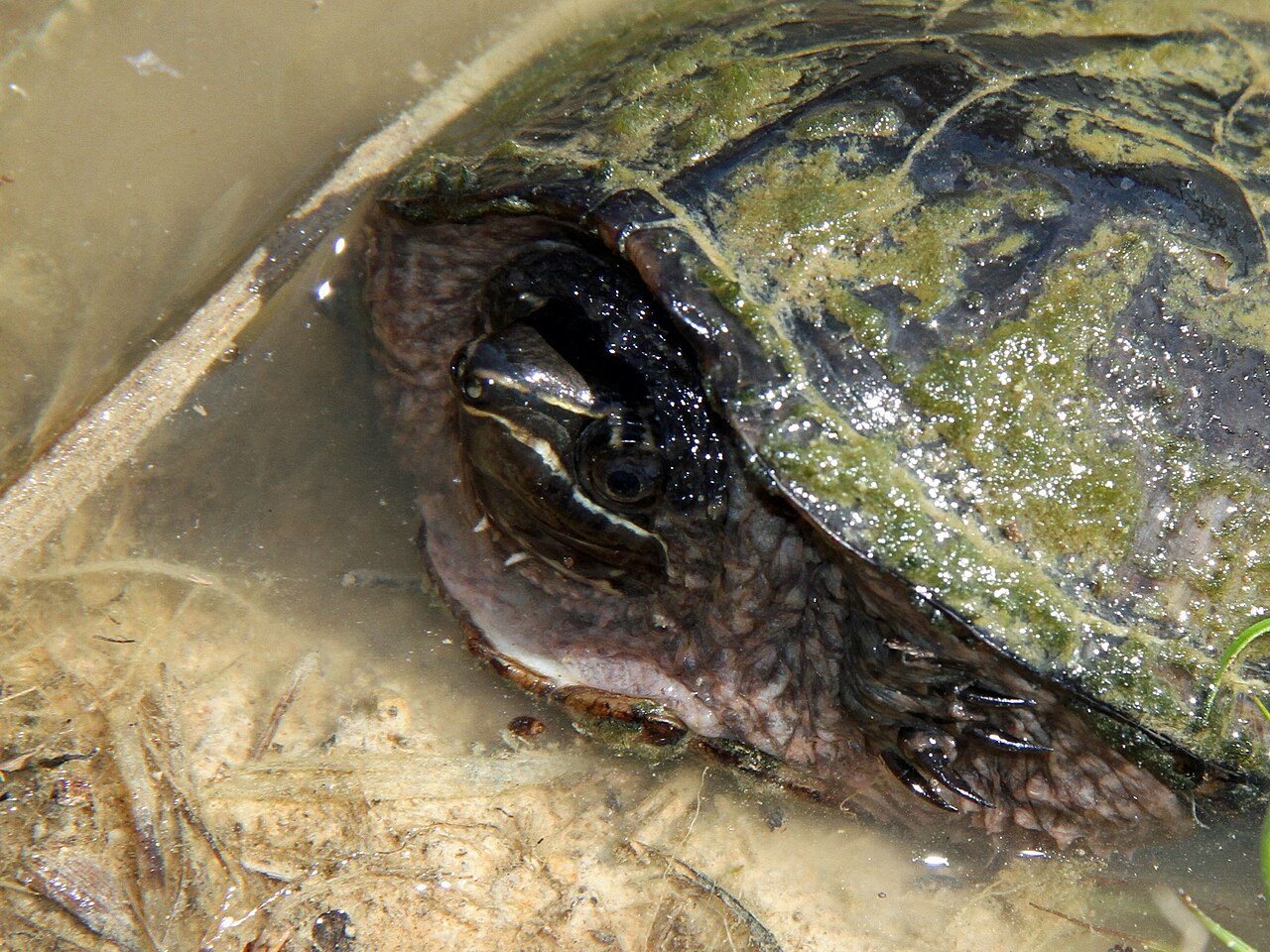
The most common species in the pet trade and in eastern US waterways is the common musk turtle (Sternotherus odoratus), nicknamed the stinkpot. It spends most of its life walking along the bottom of ponds and slow rivers rather than swimming in open water, which changes how you build a tank for one and which tankmates survive the arrangement.
Musk turtles are small aquatic turtles that reach 3 to 5.5 inches (8 to 14 cm) and live 30 to 50 years in captivity. They release a musky smell only when handled or frightened, not constantly. A single adult needs a 29 to 40 gallon tank with shallow water, strong filtration, and a basking spot.
| Quick fact | Common musk turtle (Sternotherus odoratus) |
|---|---|
| Adult size | 3 to 5.5 in (8 to 14 cm) shell length |
| Lifespan | 30 to 50 years, some records past 50 |
| Minimum tank | 29 gallons for one adult, 40 gallons preferred |
| Water depth | 8 to 18 in (20 to 46 cm) with climbing structure |
| Diet | Carnivore: snails, insects, worms, fish, pellets |
| Temperament | Defensive, quick to bite when handled |
| Price range | $30 to $80 captive bred, setup $250 to $500 |
What Is a Musk Turtle?
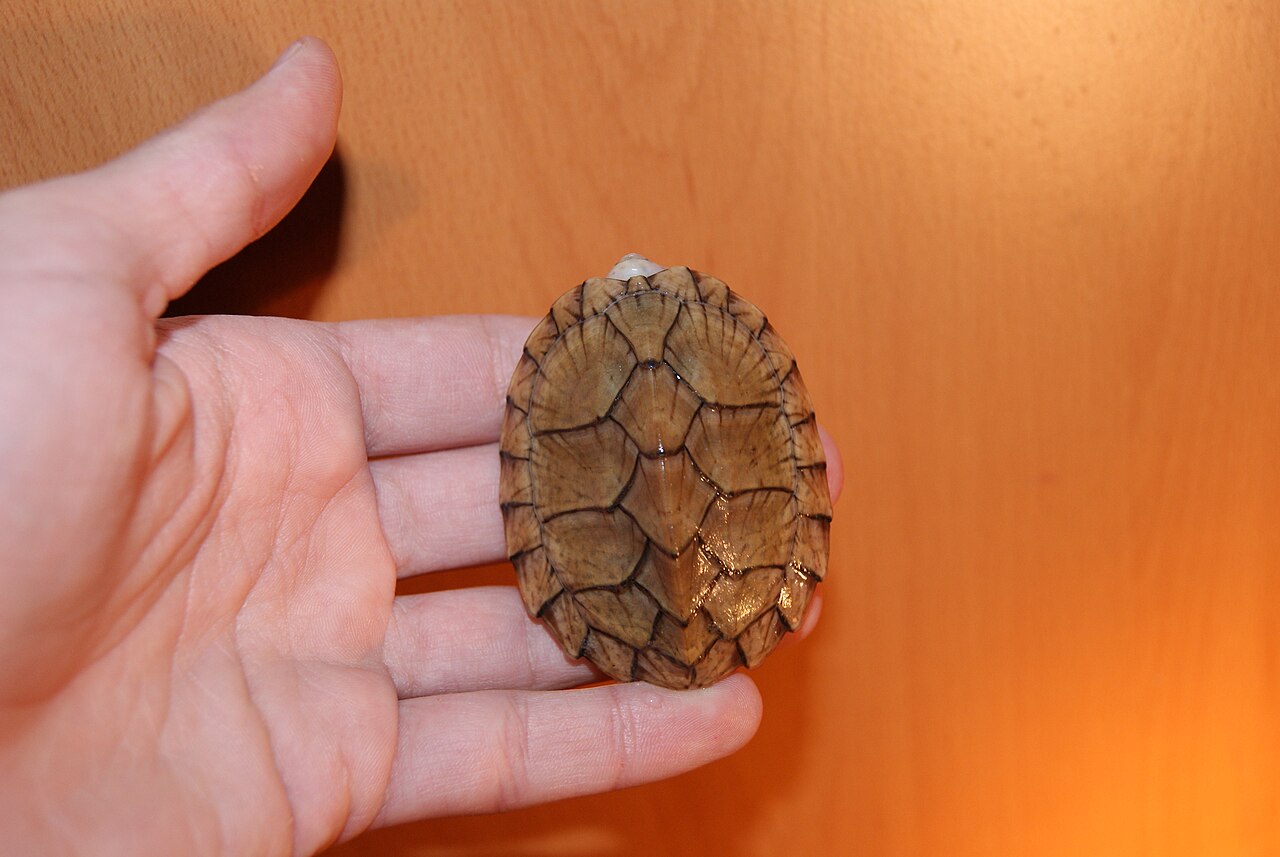
Musk turtles are the four to six species in the genus Sternotherus, small North American turtles named for the yellowish fluid they release from four glands along the edge of the shell. The shell is high domed and narrow, the head is oversized, and two pale stripes usually run from the snout past the eye on the common species.
They are closely related to the mud turtles, and the two groups are confused constantly. The quickest field difference is the plastron, the underside: mud turtles have a broad plastron with two working hinges, while musk turtles have a small plastron that leaves a lot of skin exposed. If you want the other side of that comparison, the mud turtle profile covers the same waters from the opposite direction.
Musk turtles are found from southern Ontario down through Florida and west to Texas, in almost any permanent water with a soft bottom. They are common animals, not rarities, and most people who live near a slow river have walked past dozens without seeing one.
Do Common Musk Turtles Smell?
Yes, but only when they choose to. A common musk turtle releases its musk when a predator picks it up or a person grabs it carelessly, and the smell is a sour, oily odor that clings to hands for an hour or two. A settled captive turtle that is handled rarely may go months without using the glands at all.
The nickname stinkpot comes from wild animals hauled out of a net, not from tank life. In practice, the smell in a musk turtle room almost always comes from the water rather than the turtle, because these are messy carnivores producing a lot of waste in a small volume.
If your tank smells and the turtle has not been disturbed, the answer is filtration and water changes, not the animal. Skip a week of maintenance on a 29 gallon tank and the odor arrives on schedule.
Musk Turtle Species You Will Actually See
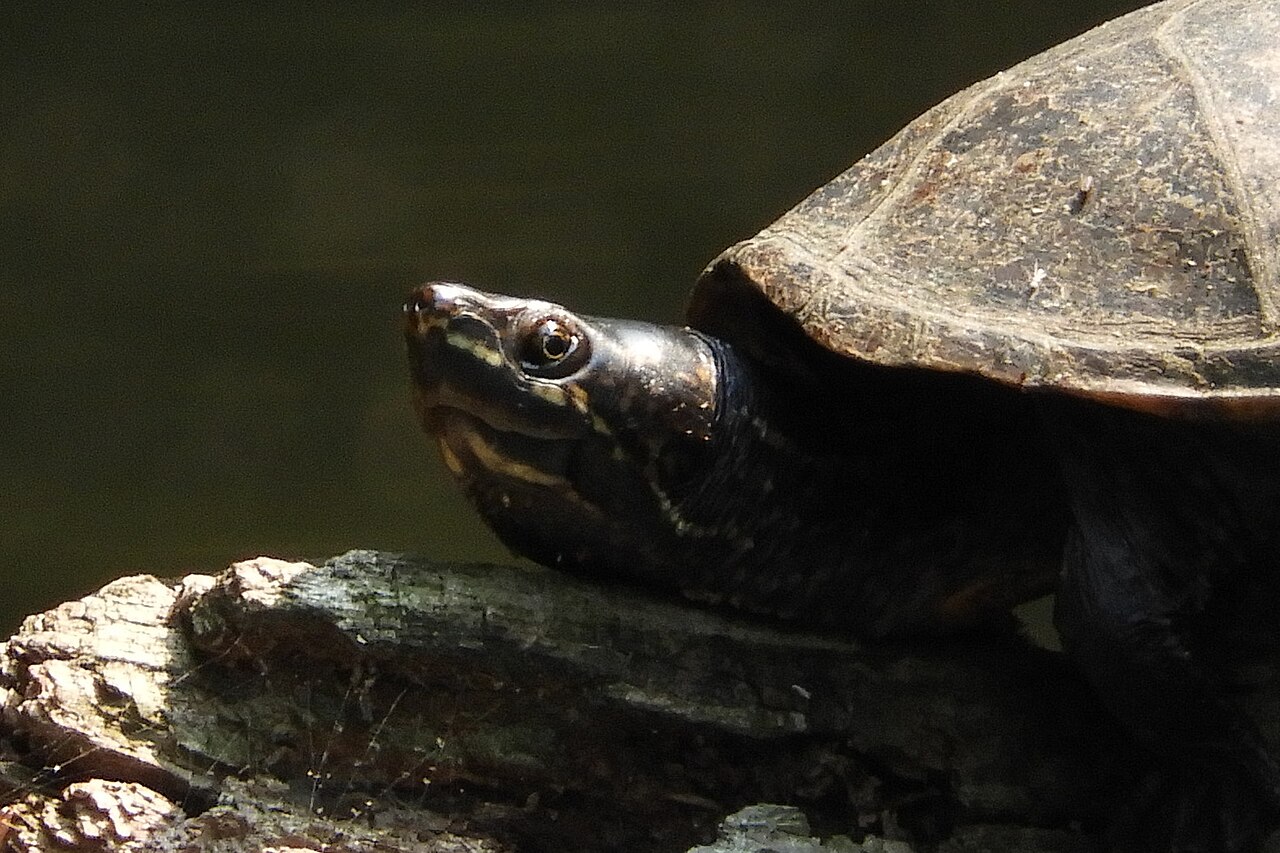
The common musk turtle is the species behind almost every photo and care sheet, but three others turn up regularly. The razorback musk turtle (Sternotherus carinatus) has a sharply peaked, keeled shell and grows slightly larger at up to 6 inches (15 cm). It is also the calmest of the group, which is why experienced keepers often recommend it over the common species.
The loggerhead musk turtle (Sternotherus minor) has a huge head built for crushing snails, and the flattened musk turtle (Sternotherus depressus) is a federally threatened species restricted to the Black Warrior River system in Alabama. The flattened musk turtle is not a pet animal and should never be for sale.
Hatchlings of all four look similar enough that shop labels are frequently wrong. Shell profile is the reliable tell: keeled ridge for razorback, smooth dome for common, oversized head for loggerhead.
How Big Do Musk Turtles Get and How Long Do They Live?
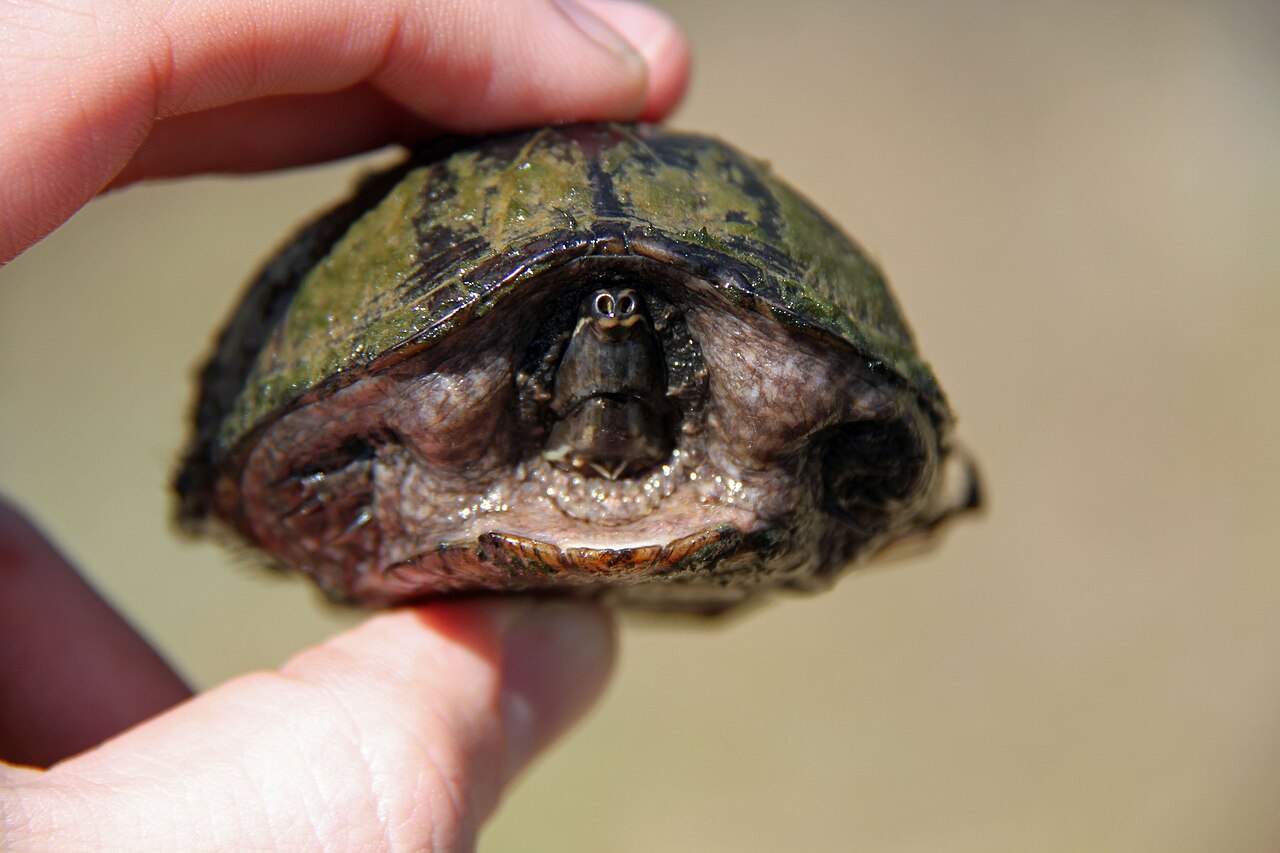
Adult common musk turtles reach 3 to 5.5 inches (8 to 14 cm) of shell length, with females averaging slightly larger than males. That is roughly the size of a deck of cards, and it is the single biggest reason people choose this species over a slider or a painted turtle, both of which pass 8 inches (20 cm).
Lifespan is where the small size stops being convenient. Captive musk turtles routinely reach 30 to 50 years with correct care, and wild individuals have been aged past 50. A hatchling bought for a ten year old child is a commitment that outlasts college, a first career, and several apartments.
Growth is slow. Expect a hatchling the size of a quarter to need four to six years to reach adult size, and expect the tank and the filter to be running that entire time.
Are Musk Turtles Aggressive?
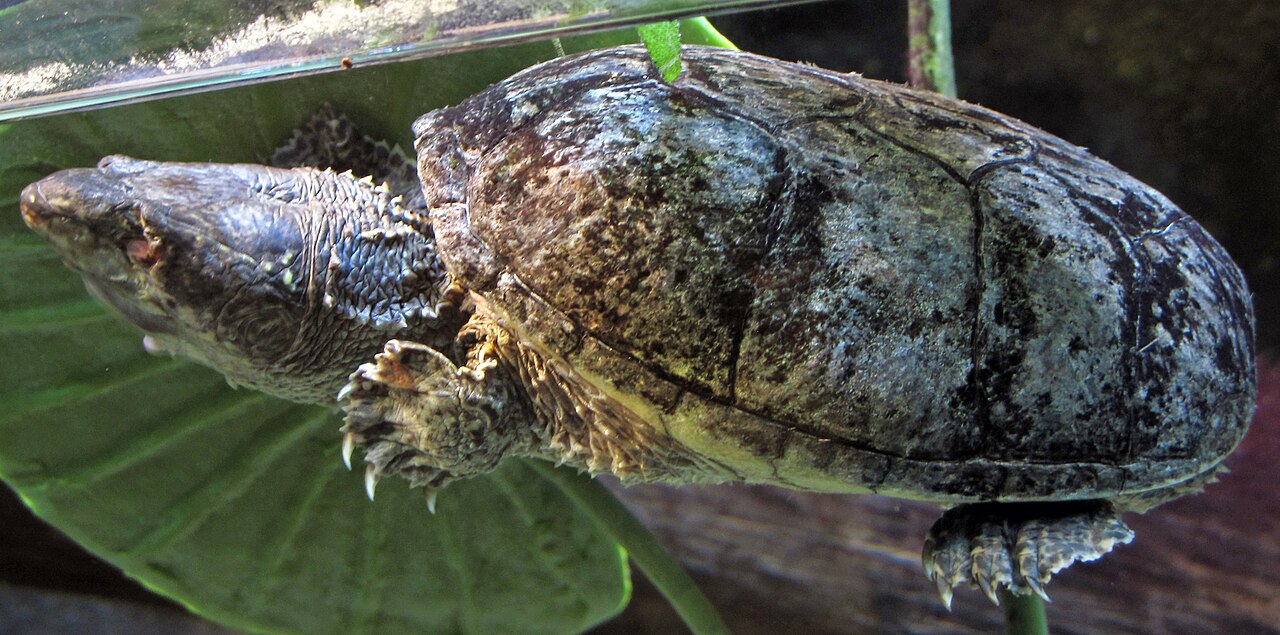
Musk turtles are defensive rather than aggressive, but the practical result is the same: they bite, and they can reach much further back along their own shell than a keeper expects. The long neck can swing around to the rear edge of the carapace, so the standard grip used on other small turtles does not protect your fingers.
A bite from an adult breaks skin and hurts. It is not dangerous and does not carry venom, but it ends the handling session. Males in particular can be pushy with other musk turtles and will harass tankmates during breeding season.
The honest summary is that this is a watching animal, not a holding animal. Keepers who accept that get a fascinating turtle; keepers who wanted a pet to carry around end up with a bitten thumb and a turtle that hides.
Can You Have a Musk Turtle as a Pet?
Yes, musk turtles are legal and widely kept across most of the United States, and captive bred hatchlings are easy to find. Federal law bans the sale of any turtle with a shell under 4 inches (10 cm) as a pet, so legitimate sellers ship hatchlings under research or educational exemptions, and some states add their own rules on top.
They suit a keeper who wants a small, active, genuinely interesting aquatic animal and who enjoys aquarium maintenance. They suit nobody who wants to handle a pet. Wild collection is another matter: taking a turtle from a local pond is illegal in many states and removes a slow breeding animal from a population that cannot absorb the loss.
Buy captive bred. A wild caught adult arrives with parasites, stress, and decades of habits that do not include your tank.
How Much Would a Musk Turtle Cost?
A captive bred common musk turtle hatchling costs $30 to $80 from a breeder or reptile expo, and razorbacks run $50 to $120. The animal is the cheap part of the equation, which is the mistake most first time buyers make.
A correct setup costs $250 to $500: a 40 gallon breeder tank, a canister filter rated for at least twice the water volume, a heater, a UVB fixture and bulb, a basking lamp, and the hardscape. Running costs land around $15 to $30 a month for electricity, food, and replacement bulbs, and a UVB bulb needs changing every 6 to 12 months even when it still lights up.
Budget for a vet too. Reptile vets are not everywhere, and a shell infection or a retained egg is a $150 to $400 visit.
Tank Setup: Water Depth, Filtration, and Basking
One adult musk turtle needs 29 gallons minimum, and 40 gallons of floor space is far better than a tall tank of the same volume. Water depth should be 8 to 18 inches (20 to 46 cm), deep enough for natural foraging but broken up by driftwood, rock piles, and plants the turtle can climb.
Filtration has to be oversized. A canister filter rated for 2 to 3 times the actual water volume plus a weekly 25 percent water change is the baseline for a carnivore that eats in the water. Water temperature sits at 72 to 78 F (22 to 26 C), the basking surface at 88 to 92 F (31 to 33 C), and a UVB source should run 10 to 12 hours a day.
Musk turtles bask less than sliders, and some individuals barely use the platform. Provide it anyway. Access to dry heat and UVB is what keeps the shell hard, and a turtle that never basks is showing you something about water temperature or security, not telling you the lamp is unnecessary.
What Is a Musk Turtle’s Favorite Food?
Snails are the clear favorite, and for loggerhead musk turtles they are close to a natural staple. In the wild these turtles eat aquatic snails, insect larvae, crayfish, worms, small fish, tadpoles, and carrion, hunting by walking the bottom and probing the substrate rather than chasing prey.
In captivity, build the diet on a quality aquatic turtle pellet and rotate in live or frozen items: ramshorn snails, earthworms, bloodworms, blackworms, crickets, and the occasional small feeder fish. Snails and a cuttlebone left in the tank supply calcium, which matters enormously for shell growth.
Feeding frequency drops with age. Hatchlings and juveniles eat daily, subadults every other day, and adults 2 to 3 times a week with a portion about the size of the turtle’s head. Overfed musk turtles become obese, and fat legs that no longer retract fully into the shell are the visible sign you went too far.
Can a Musk Turtle Live With Fish?
Sometimes, and only if you accept that the fish are livestock rather than pets. A musk turtle is a slow, bottom oriented predator that cannot chase down a healthy fast fish in open water, so fast schooling species like zebra danios or rosy red minnows often survive for months in a large tank.
Slow fish, fancy goldfish, bettas, and anything that rests on the bottom at night will be eaten. So will shrimp and small snails, though snails are a feature rather than a bug here. The bigger problem is bioload: a turtle and a school of fish in 40 gallons is a lot of waste for one filter.
Housing two musk turtles together is riskier than housing them with fish. Adult males fight and bite tails and limbs, so a second turtle means a second tank or a much larger footprint with visual barriers.
What Plants Are Good to Add to a Musk Turtle Tank?
Tough, fast growing plants survive; delicate ones do not. Java fern, anubias, and java moss attached to driftwood or rock are the reliable choices because musk turtles do not eat them and cannot uproot them. Hornwort and elodea float well, absorb nitrate, and are cheap enough to replace when they get trampled.
Avoid anything planted in loose substrate. A bottom walking turtle will dig it out within a week. Avoid water lettuce and duckweed as your only cover too, since they block the light your rooted plants need and clog filter intakes.
Plants are not decoration in this setup. They give a shy turtle cover, which directly reduces how often it hides and how often it musks, and dense planting near the basking route makes a nervous animal far more likely to use it.
Where Musk Turtles Live in the Wild
Common musk turtles occupy shallow, slow moving water with a soft muddy bottom: ponds, oxbows, canals, swamps, and the quiet margins of rivers across the eastern half of the United States. They tolerate murky water that other turtles avoid, and they often share habitat with eastern mud turtles and map turtles in the same drainage.
Instead of basking on logs in midwater the way a Florida softshell does, musk turtles frequently climb into overhanging branches a foot or two above the surface and drop when disturbed. Canoeists hear the splash far more often than they see the turtle.
In the northern part of the range they spend winter buried in mud or under submerged debris, absorbing oxygen through tissues in the throat and cloaca, a pattern covered in more detail in our guide to how turtles hibernate. Populations remain widespread, though the flattened musk turtle is federally protected and several state wildlife agencies track local declines; the US Fish and Wildlife Service maintains the listing for that species.
Frequently Asked Questions
How long can a musk turtle stay out of water?
A healthy adult can stay out of water for several hours without harm as long as the air is humid and not hot, and wild musk turtles sometimes walk overland between ponds. Beyond a day the skin and eyes dry out. Escaped turtles found under furniture after 24 hours usually recover with rehydration and a vet check.
How often should I feed a musk turtle?
Feed hatchlings and juveniles once a day, subadults every other day, and adults 2 to 3 times a week. One portion is roughly the volume of the turtle’s head. Cut back if the legs look swollen or the turtle cannot fully retract into its shell, both signs of obesity from overfeeding.
Are musk turtles good for beginners?
They are a good first turtle for someone who already keeps aquariums, because the tank and filtration demands are familiar and the adult size stays manageable. They are a poor first pet for a child who wants to hold something. The 30 to 50 year lifespan makes this a household decision, not a gift.
Can musk turtles drown?
Yes. Musk turtles are weak swimmers that walk rather than swim, and they drown in tanks where the water is deep with no rocks, plants, or driftwood to climb. Every part of the tank should let the turtle reach the surface by walking up something rather than swimming vertically.
Do musk turtles need a basking light and UVB?
Yes to both, even though musk turtles bask less than sliders or eastern painted turtles. UVB supports vitamin D3 production and calcium uptake, and a dry basking surface at 88 to 92 F (31 to 33 C) lets the shell dry out completely, which prevents shell rot. Replace UVB bulbs every 6 to 12 months.
Is a musk turtle the same as a mud turtle?
No. Musk turtles belong to the genus Sternotherus and mud turtles to Kinosternon, though both sit in the same family. Musk turtles have a small plastron with a single weak hinge and exposed skin, while mud turtles have a broad plastron with two functional hinges that closes much more tightly.