Fox Crossing Your Path: Meaning, Symbolism, and the Real Reason
A fox crossing your path is traditionally read as a signal to rely on cleverness rather than force, to look again at a situation you think you already understand, and to expect a change that arrives sideways rather than head on. Across most European and East Asian folklore the fox is an ambiguous figure rather than a straightforwardly good or bad omen, which is why interpretations of the same encounter range from imminent good fortune to a warning about deception.
There is also a plain ecological reason foxes cross paths, and it is worth holding alongside the symbolism. Red foxes are widespread, adaptable, and increasingly urban, they are active at dawn and dusk when people are commuting, and juvenile foxes disperse in autumn through unfamiliar territory. A sudden increase in sightings almost always tracks the fox calendar rather than anything about the observer.
| Context | Traditional Reading |
|---|---|
| Fox crossing left to right | Favourable, movement toward opportunity |
| Fox stopping and looking at you | A message worth pausing over |
| Fox seen in daylight | Something hidden becoming visible |
| Repeated sightings | A recurring lesson not yet learned |
| Fox with cubs | Protection, family, patience |
| Celtic tradition | Guide, knowledge of the woods |
| Japanese tradition | Kitsune, messenger of Inari, shapeshifter |
What a Fox Crossing Your Path Traditionally Means
The core of fox symbolism across almost every tradition that features the animal is intelligence applied indirectly. The fox does not overpower, it outmanoeuvres, and folklore consistently uses it to represent the person who solves a problem by angle rather than by strength. A fox crossing your path is therefore usually read as a prompt toward strategy over confrontation.
A second consistent theme is adaptability. Foxes thrive in forests, farmland, deserts, tundra, and city centres, and that flexibility feeds directly into their symbolic role as figures of change and survival through adjustment. Many interpretations of a fox encounter centre on an upcoming transition and the need to move through it flexibly.
The third theme is discernment, and it has a sharper edge. Because the trickster fox appears in so many stories, the animal also carries an association with things not being what they seem. Read this way, a fox crossing your path is a suggestion to examine a situation, a claim, or a person more carefully before committing.
Is It Good Luck or Bad Luck?
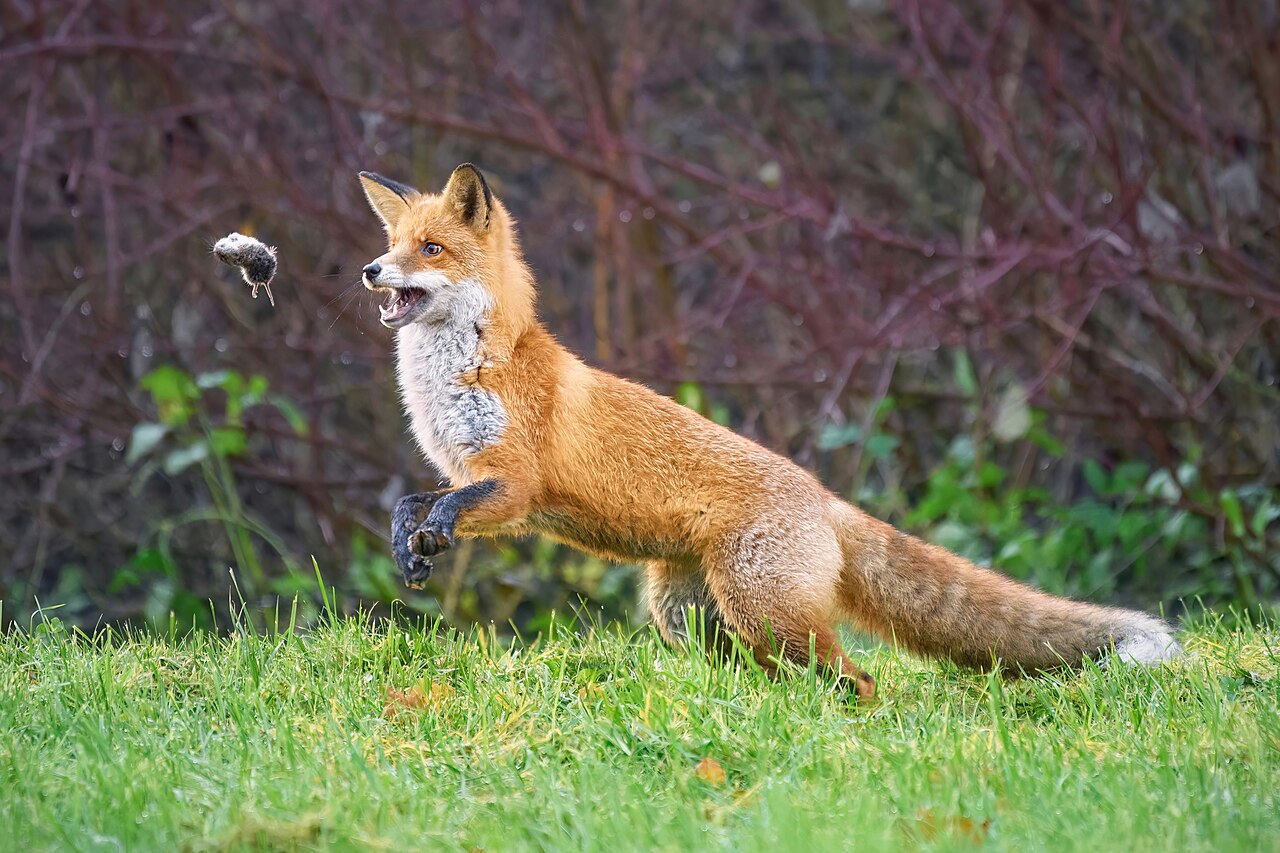
There is no single answer, and anyone offering one is flattening a genuinely divided tradition. In much of British and Irish folklore a fox sighting is broadly neutral to positive, associated with cunning and with the wild edges of settled land. In parts of continental European folk belief, particularly where foxes threatened poultry, the reading skews negative.
East Asian traditions are the most explicitly split. In Japanese belief the kitsune serves as a messenger of Inari, the deity of rice and prosperity, and fox imagery appears at thousands of shrines in an unambiguously auspicious role. The same tradition also contains the malicious shapeshifting fox spirit, and the two coexist without contradiction.
Directional readings appear in several European traditions, where a fox crossing from left to right is favourable and right to left is a caution. These belong to a broader family of omen rules applied to many animals rather than to foxes specifically. Our guide to what a crow visit means covers a comparable set of readings for another ambiguous animal.
Fox Symbolism Across Cultures
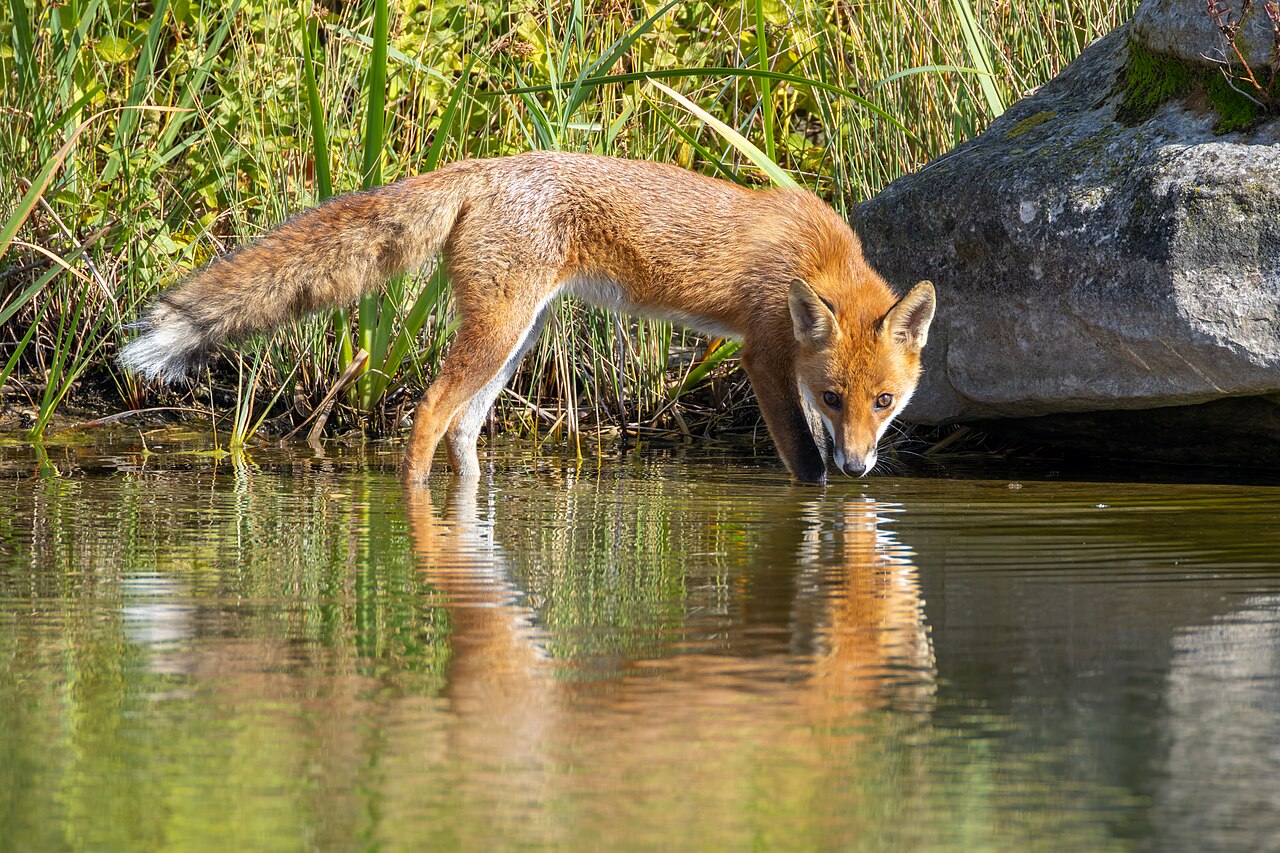
In Celtic tradition the fox appears as a guide figure with detailed knowledge of the forest, and stories frequently cast it as an animal that leads a traveller through terrain they could not navigate alone. That guiding role sits alongside the cleverness theme rather than replacing it.
Japanese kitsune beliefs are the most elaborate fox tradition anywhere. Kitsune gain tails and power with age, serve Inari as messengers, and appear across a spectrum from benevolent guardian to dangerous deceiver. Chinese huli jing traditions run parallel, with fox spirits capable of taking human form and of both helping and harming.
European literary tradition gave the fox its most familiar Western form in the Reynard cycle, a body of medieval tales in which a fox repeatedly outwits more powerful animals. Aesop’s fables did similar work earlier. Both fixed the fox in Western imagination as clever, self-interested, and not entirely trustworthy, which is the reading most English speakers carry today.
What the Context Changes
Traditional interpretation pays close attention to circumstance, and several distinctions recur. A fox that crosses quickly and continues on is generally read as a passing signal about direction or timing. A fox that stops, turns, and holds eye contact is treated as more significant and is usually interpreted as a message worth sitting with.
Timing carries weight too. A daylight sighting is often read as something concealed coming into the open, on the reasoning that foxes are creatures of dawn, dusk, and darkness. In practice foxes are frequently active in daylight, particularly when feeding cubs, which our guide to whether foxes are nocturnal covers in detail.
A fox with cubs shifts the reading toward family, protection, and patience in nearly every tradition that addresses it. A fox seen repeatedly in the same place over days or weeks is generally interpreted as a lesson that has not yet been absorbed, though the practical explanation is usually a nearby den or a reliable food source.
Fox as a Spirit Animal and Totem
In contemporary spirit animal frameworks, which draw loosely on several older traditions, the fox is associated with quick thinking, resourcefulness, camouflage, and the ability to move through difficult situations without direct confrontation. People who identify with the fox typically describe themselves as observers who prefer to understand a system before acting in it.
The shadow reading is part of the same framework. Fox energy taken too far becomes evasion, and the same intelligence that solves problems obliquely can become an unwillingness to face anything directly. Most modern interpretations pair the two deliberately rather than presenting only the flattering half.
It is worth being clear about provenance. Modern spirit animal and totem systems are largely twentieth century syntheses rather than continuations of any single older tradition, and they draw eclectically from Celtic, East Asian, and various Indigenous sources without belonging to any of them. Treating them as a contemporary interpretive framework rather than as ancient doctrine is the more accurate framing.
Fox Dreams and Repeated Sightings
Dream interpretation traditions generally read a fox as representing either a specific person in the dreamer’s life who is being less than straightforward, or an aspect of the dreamer that is being strategic. A fox being chased is commonly read as anxiety about exposure, and a fox leading the dreamer somewhere as a prompt to follow an instinct already forming.
Repeated sightings are the most commonly asked about pattern, and traditional readings treat repetition as emphasis. The interpretation is that the message has not landed, and the recurrence continues until it does. This framing is common across animal omen traditions and is not specific to foxes.
The practical explanation deserves equal space. Repeated fox sightings in one area nearly always mean a den within a few hundred metres, a reliable food source such as unsecured bins or a fed outdoor cat, or the autumn dispersal period when young foxes move through unfamiliar ground. Both explanations can be held at once without either cancelling the other.
Why You Are Actually Seeing More Foxes
Red fox populations have adapted to human landscapes with unusual success, and urban fox densities in some cities exceed rural densities substantially. Cities provide abundant food, few predators, and enormous numbers of sheltered denning sites under decks, sheds, and outbuildings, which supports a resident population that rural habitat could not.
Seasonality drives most sighting spikes. Cubs emerge above ground in late spring and are visible and noisy through summer. Autumn brings dispersal, when young foxes leave natal territories and travel through unfamiliar areas, often in daylight and often looking lost. Winter brings the mating season and the screaming calls that generate most fox-related emergency calls.
Time of day explains the rest. Foxes are most active around dawn and dusk, which overlaps directly with commuting and dog walking. A person who changes their schedule to include an early walk will start seeing foxes within weeks and reasonably experience it as a sudden increase. Our guides to fox sounds and the baby fox cover the seasonal patterns behind both.
Should You Be Concerned About a Fox in Your Yard?
Generally no. Red foxes present very little risk to adults and are not aggressive toward people except in the rare case of a rabid animal. Rabies in red foxes is uncommon in most of North America and Europe, though it varies regionally, and the Centers for Disease Control and Prevention (cdc.gov) publishes current regional data worth checking rather than assuming.
Pets are the more realistic concern and the risk is size dependent. Cats and small dogs are occasionally taken, though far less often than popular belief suggests, and most encounters between a fox and a cat end with mutual avoidance. Chickens, rabbits, and guinea pigs are genuinely at risk and need secured housing rather than deterrence.
A fox behaving abnormally, showing no fear, staggering, or appearing severely mangy warrants a call to local animal control rather than an approach. Our guide to whether foxes are dangerous covers the risk assessment in full, and fox poop identification helps confirm whether a fox is actually denning nearby.
Related reading: Deer Crossing Your Path.
Frequently Asked Questions
What is the spiritual meaning of a fox crossing your path?
Most traditions read it as a prompt toward cleverness and indirect strategy rather than direct confrontation, combined with a suggestion to look more carefully at a situation you may have misjudged. Adaptability and an approaching change are the other recurring themes.
Is it lucky for a fox to cross your path?
It depends on the tradition. Japanese kitsune beliefs associate foxes with Inari and with prosperity, making the sighting auspicious. Parts of European folk belief, shaped by foxes taking poultry, read it more negatively. Several traditions treat a crossing from left to right as favourable and right to left as a caution.
Is the fox a positive or negative symbol?
Both, deliberately. The fox is a trickster figure, and trickster symbolism is ambiguous by design. The same cleverness that makes the fox admirable makes it untrustworthy, and most traditions preserve that tension rather than resolving it in either direction.
What does it mean when you see a fox out of nowhere?
Traditionally, a sudden unexpected sighting is read as a signal about something appearing in your life without warning, often something previously hidden. Practically, foxes move quietly and are well camouflaged, so appearing from nowhere is simply what a fox looks like when it emerges from cover.
What does it mean to see a fox during the day?
Symbolically it is usually read as something concealed becoming visible. Biologically it means very little, since foxes are frequently active in daylight, especially adults feeding cubs in spring and young foxes dispersing in autumn. Daylight activity alone is not a sign of illness.
Should I be concerned if I see a fox in my yard?
Not usually. Foxes pose minimal risk to adults and are not aggressive toward people. Secure poultry, rabbits, and small pets, and remove accessible food sources. Contact animal control only if the animal shows no fear, staggers, or appears severely diseased.
What does a fox with cubs mean?
Across most traditions the reading shifts toward family, protection, and patience. Practically, a fox with cubs in view means a den within roughly 100 to 200 m, and the family will typically move on by late summer once the cubs are independent.