Wolf Sounds: Howls, Barks, and What Each One Means
Wolf sounds fall into four main categories: the howl, the bark, the growl, and the whimper or whine, along with a breathy huff that handlers call a puff. The howl is the one everyone knows, a low sustained note lasting 3 to 7 seconds that carries up to 10 km across open terrain and considerably further in cold still air. Unlike a coyote, a wolf does not yip, and that single difference resolves most misidentifications instantly.
Wolves also do not howl at the moon. Howling peaks at dusk and dawn and during the winter breeding season, and the association with a full moon comes from the fact that clear moonlit nights are also cold, still, and quiet, which is when howls carry furthest and people are most likely to be outside to hear them.
| Sound | Meaning |
|---|---|
| Howl | Long-range contact, territory, pack assembly |
| Bark | Alarm, rare, usually near the den |
| Growl | Threat, dominance, food defence |
| Whimper and whine | Affiliative, greeting, adult to pup |
| Puff or huff | Low-intensity alarm at close range |
| Howl duration | 3 to 7 seconds, no yipping |
| Audible range | Up to 10 km in open terrain |
Every Sound a Wolf Makes
Gray wolves have a smaller vocal repertoire than many people expect, roughly a dozen distinguishable sounds, but each carries considerable information through variation in pitch, duration, and delivery. The repertoire splits cleanly by distance: the howl handles everything beyond visual range, and every other sound operates within a few metres.
Long-range communication is dominated by the howl and its variants, including the bark-howl, a short bark followed immediately by a howl that functions as an alarm carried over distance. Close-range communication uses growls, whimpers, whines, squeaks, and huffs, most of which accompany body language rather than substituting for it.
Wolves rely far more on scent and posture than on sound for routine communication, and a pack travelling together may go hours without vocalizing at all. This is a key difference from coyotes, which vocalize far more frequently and in far more contexts. Our comparison of the coyote and the wolf covers the broader differences between the two.
The Howl: What It Sounds Like and How Far It Travels
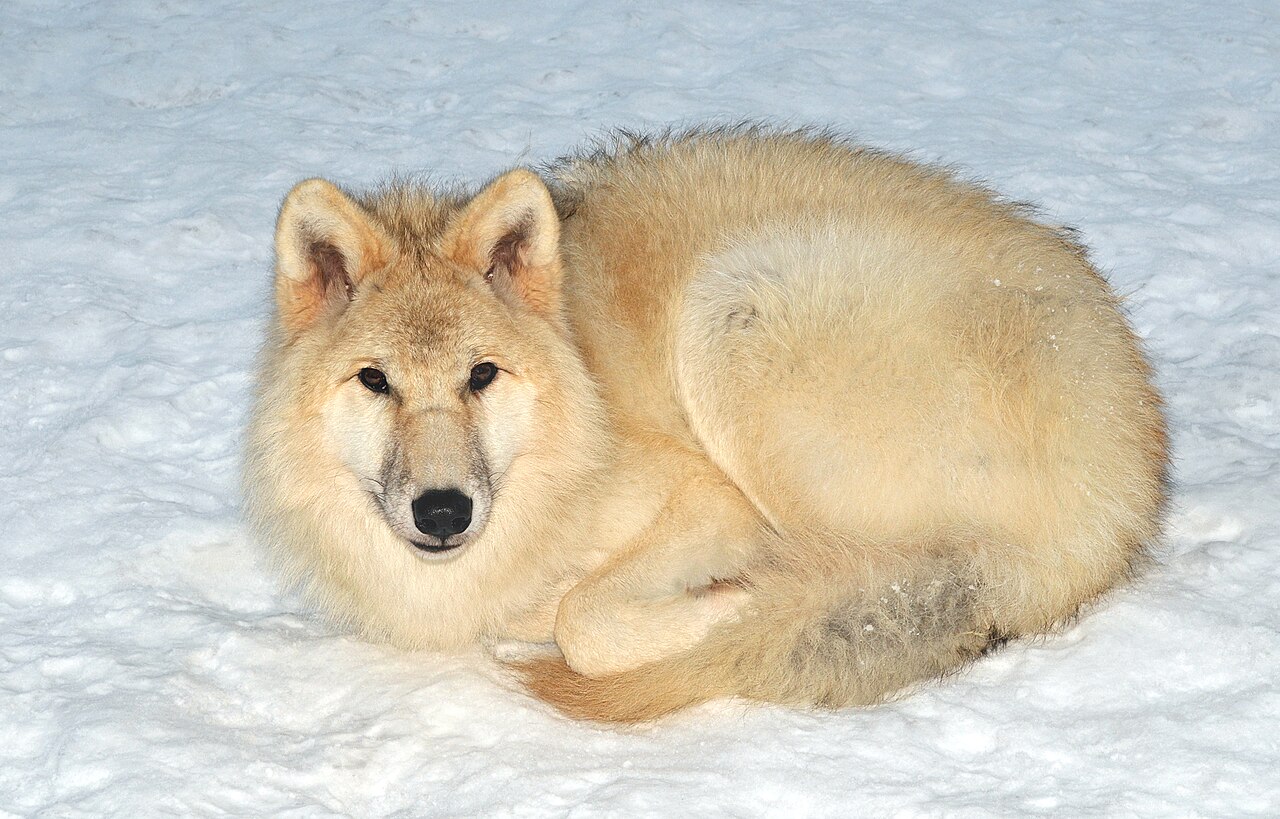
A wolf howl is a single sustained note, typically starting low, rising, holding, and then falling away, and lasting between 3 and 7 seconds. There is no break in the note and no rapid modulation. The tone is deep and smooth, with harmonics that give it the mournful quality that makes it recognisable to people who have never heard one in person.
Range depends heavily on terrain and conditions. Across open tundra or a frozen lake in cold still air, a howl can carry 10 km or more. In dense forest with foliage and wind, the effective range drops to 2 or 3 km. The National Park Service maintains recordings from Yellowstone that capture both the solo howl and full pack choruses.
Function is threefold: locating separated pack members, assembling the pack before a hunt or a move, and advertising territory occupancy to neighbouring packs. The third function carries real stakes, since territorial disputes between wolf packs are a leading cause of adult wolf mortality in populations without heavy human pressure.
Do Wolves Howl at the Moon?

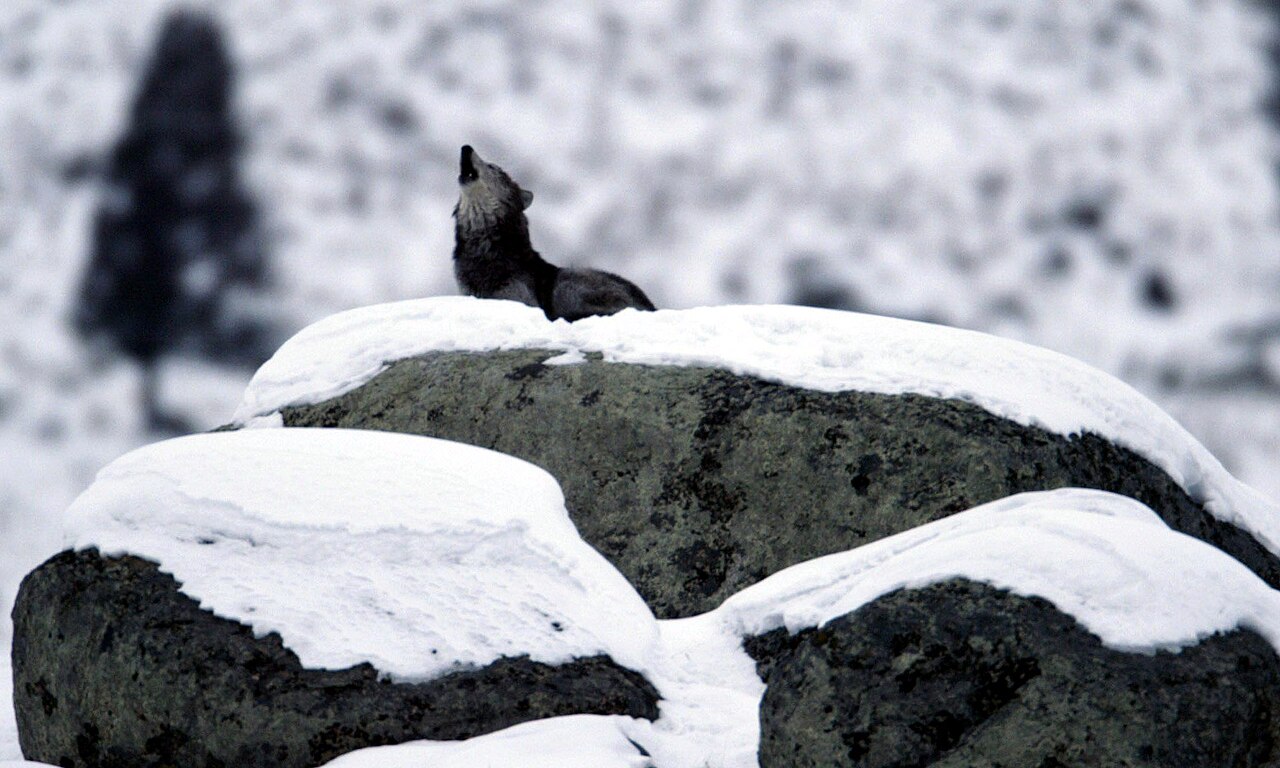
No, and the behaviour that produced the myth is easy to explain. Wolves howl with the head raised and the muzzle angled upward because that projects the sound outward rather than into the ground, maximising the distance it carries. To an observer at night the posture looks like the animal is addressing the sky.
Timing reinforces the impression. Howling peaks around dusk and dawn and again during the winter breeding season, and the nights on which a howl is most likely to be heard clearly are cold, clear, and still. Those are also the nights with the best moon visibility, which links the two in memory without any causal connection.
Research on howling rates has found no correlation with lunar phase. What does correlate is season, time of day, pack size, and whether the pack has pups at a rendezvous site. Wolves howl in daylight and under overcast skies at essentially the same rates, which is the straightforward test the myth fails.
Wolf Sounds vs Coyote Sounds
This is the most practically useful distinction for anyone in shared range, and three features separate them reliably. Pitch is the first: wolf howls are low and chest-resonant, coyote howls are higher and thinner. A wolf sounds like a large animal, a coyote sounds like a medium one, and the impression is accurate.
Structure is the second and the most decisive. A wolf howl is one long unbroken note. A coyote sequence is a howl broken up by rapid yips, yaps, and staccato barks, and that yipping is essentially never present in wolf vocalizations. If you hear yipping, it is coyotes, regardless of how deep the accompanying howl sounds.
Apparent numbers are the third. A group of three or four coyotes can sound like a dozen because of the rapid overlapping yips and pitch shifts, while a wolf pack chorus sounds like a small number of large animals even when eight or ten are howling. Our guide to coyote sounds covers the coyote repertoire in full.
Barks, Growls, and Puffs
Wolf barking is rare and sounds nothing like a dog’s. It is a short, muffled, low-pitched woof rather than a sharp repeated bark, and it is used almost exclusively as an alarm, most often by an adult near a den or rendezvous site when something approaches. Wolves rarely bark more than a few times in succession, and a wolf that barks usually retreats immediately afterward rather than holding position, which is close to the opposite of typical dog behaviour.
Growling functions as it does in dogs, signalling threat, asserting rank, or defending a carcass. Wolf growls are deep, sustained, and usually accompanied by clear postural signals including raised hackles, bared teeth, and a stiff stance. Growling at a carcass is common and rarely escalates to serious fighting within an established pack.
The puff or huff is the least known of the close-range sounds: a short forceful exhalation through the nose and mouth, used as a low-intensity alarm or as an expression of mild agitation. It is quiet enough that it is mostly documented from captive wolves and from researchers working at close range, and it often precedes a bark if the disturbance continues.
Whimpers and Whines
Whimpering and whining are the affiliative sounds, used in greeting, in submission, and above all between adults and pups. A returning adult approached by pups produces a high soft whine, and pups whine continuously when soliciting food, which triggers regurgitation by the adult.
These sounds appear early. Pups begin producing squeaks and whines within days of birth and start attempting howls at around three to four weeks, producing thin, wavering, poorly controlled versions that improve over the following months. Our guide to the baby wolf covers the developmental timeline.
Adult wolves use whining well outside the parental context. It appears in greeting ceremonies when a pack reunites, in submissive displays toward higher-ranking animals, and in what looks like frustration when a wolf cannot reach something. The sound is nearly identical to a domestic dog’s whine, which is unsurprising given the shared ancestry.
Chorus Howling and Why a Pack Sounds Bigger
When several wolves howl together they deliberately avoid matching pitch. Each animal shifts its frequency away from the others and modulates through the howl, so the chorus fills a broad frequency band rather than a single tone. The acoustic result is that a listener cannot count the individual voices.
This appears to be functional rather than incidental. Overestimating a neighbouring pack’s size makes a rival less likely to press a territorial challenge, and a small pack that sounds like a large one gains real protection from that misperception. Playback experiments have shown wolves respond more cautiously to choruses than to solo howls.
A chorus also functions internally, not just outward. Joining a howl appears to reinforce social bonds within the pack, and researchers have observed that wolves are more likely to join in when the initiating animal is one they associate closely with, which suggests the behaviour carries relationship information alongside the territorial message.
Chorus howls are typically initiated by one animal, joined by others within a few seconds, and sustained for 30 to 90 seconds before tapering off. They are most common at dusk, before a hunt, and after a successful kill, and they are the sound most people mean when they describe hearing wolves.
When Wolves Are Most Vocal
Two peaks dominate the year. The first is the winter breeding season, roughly January through March across most of the North American range, when territorial howling intensifies as packs advertise occupancy and dispersing individuals search for mates. This is the period with the highest rate of long-distance howling.
The second runs through summer, when pups are at a rendezvous site and adults are travelling to and from hunts. Howling coordinates those movements, and pups contribute their own developing howls. Rendezvous sites are the most reliably vocal wolf locations of the year, though researchers deliberately keep their locations quiet.
Daily timing is consistent across seasons, with peaks around dusk and dawn and a long quiet stretch in the middle of the day. Wolves are not strictly nocturnal, and in areas with little human pressure they are active and occasionally vocal at any hour. For comparison with the other large predators sharing that range, our guides to mountain lion sounds and fox sounds cover the sounds most often mistaken for wolves.
Frequently Asked Questions
What sounds does a wolf make?
Wolves howl, bark, growl, whimper, whine, and produce a breathy huff or puff. The howl handles long-distance communication and everything else operates within a few metres. Wolves do not yip, which is the clearest difference from coyotes.
Does a wolf sound like a coyote?
No. Wolf howls are lower, chest-resonant, and delivered as a single unbroken note lasting 3 to 7 seconds. Coyote howls are higher and thinner and are broken up by rapid yips and staccato barks. Yipping in a sequence means coyotes, without exception.
Do wolves howl at the moon?
No. Wolves raise the muzzle when howling because it projects the sound further, which looks like addressing the sky. Howling rates show no correlation with lunar phase, only with season, time of day, and pack activity. Clear moonlit nights simply carry sound better and put more people outdoors to hear it.
What is the cry of a wolf called?
A howl. The verb is to howl, and a group vocalizing together is a chorus howl. The short alarm variant that begins with a bark is called a bark-howl in the research literature.
Do wolves bark?
Yes, but rarely and not like a dog. A wolf bark is a short, muffled, low woof used as an alarm, usually near a den or rendezvous site, and it is seldom repeated more than a few times. Sustained repetitive barking is a dog trait rather than a wolf one.
How far can a wolf howl be heard?
Up to 10 km across open terrain in cold, still conditions, and further over frozen water. In dense forest with wind and foliage the effective range drops to roughly 2 to 3 km. Terrain and air conditions matter more than the volume of the howl itself.
Why does a wolf pack sound like more wolves than it is?
Because each wolf deliberately shifts pitch away from the others and modulates through the howl, filling a broad frequency band so individual voices cannot be counted. A rival pack that overestimates numbers is less likely to press a territorial challenge, so the effect appears to be functional.