Wolf Tracks: How to Identify Them and Rule Out Dog or Coyote
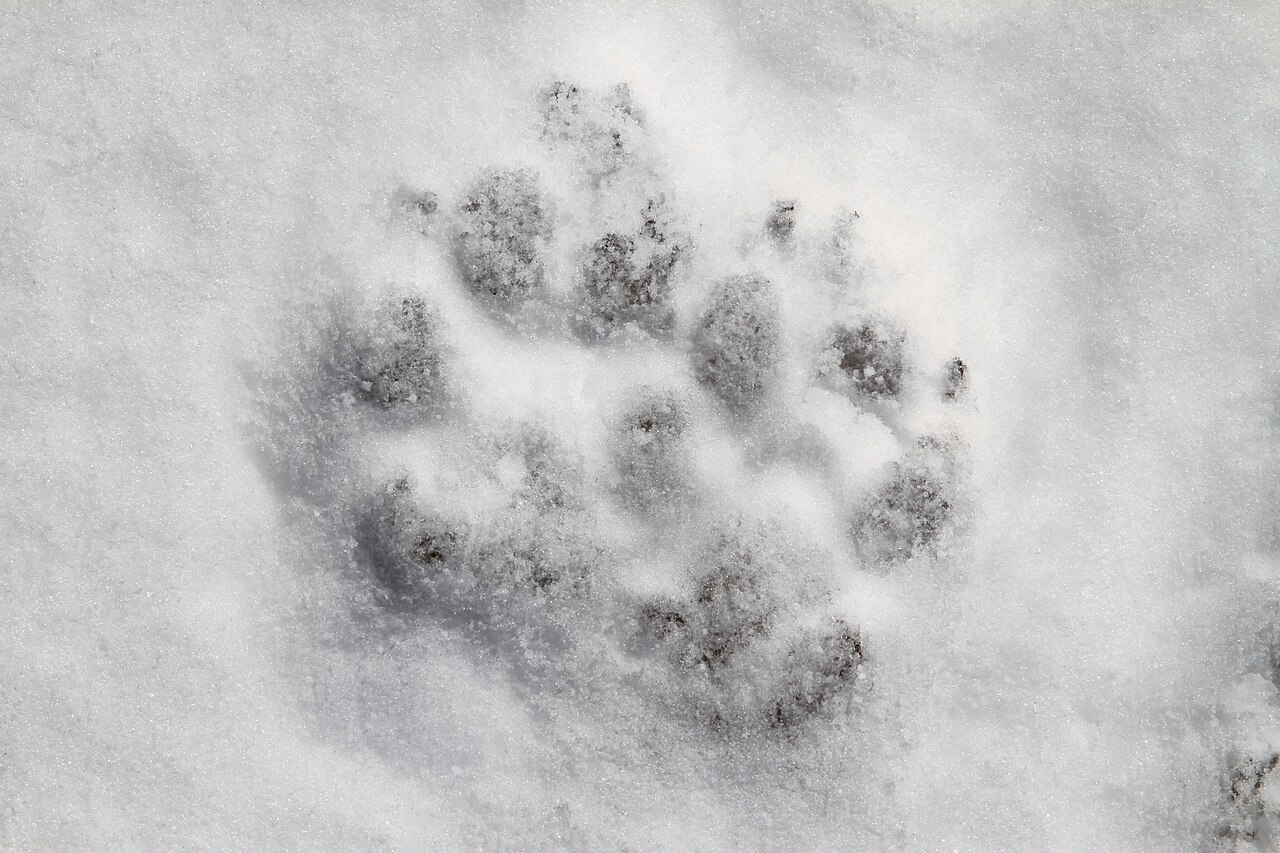
A wolf track is a large, elongated oval with four toes, blunt claw marks and a heavy triangular heel pad, and the front print runs 3.5 to 5 in long by 3 to 4.5 in wide (9 to 13 cm by 7.5 to 11 cm). That size rules out every wild canid except a very large dog. Winter is the season to look, because fresh snow holds the toe outlines and the trail pattern that confirm the identification.
Gray wolves (Canis lupus) leave tracks across the northern Rockies, the western Great Lakes, Alaska, parts of Washington, Oregon and California, plus a thin scatter of dispersers beyond that. Since a single oversized print proves very little, the sections below work from the print itself out to the stride, which is where wolf, dog and coyote actually separate.
Wolf tracks are 3.5 to 5 in long and 3 to 4.5 in wide, oval rather than round, with four toes, visible blunt claws and a large triangular heel pad. The two front toes sit clearly ahead of the outer two. Wolves trot in a near straight line with a 26 to 38 in stride, unlike the wandering trail of a dog.
How to identify wolf tracks
Start with the front foot, which is larger than the hind and carries the identifying detail. Four toes register, the two middle ones pushed forward of the outer pair, and all four usually show a short blunt claw mark about a quarter inch ahead of the toe pad. The heel pad is broad and triangular with one front lobe and two shallow rear lobes, taking up roughly a third of a clean track.
The outline is longer than it is wide, which is the most useful first impression. Draw an X through the negative space between the toes and the heel pad and it comes out narrow and clean in a canid, while a cat print gives you no clear channel.
| Animal | Front track length | Shape | Claws | Typical stride |
|---|---|---|---|---|
| Gray wolf | 3.5 to 5 in | Long oval, front toes well forward | Usually visible, blunt | 26 to 38 in |
| Coyote | 2.25 to 3 in | Compact oval, tidy toes | Often visible, fine | 16 to 24 in |
| Domestic dog | 1.5 to 4.5 in | Round, splayed toes | Visible, often thick | Irregular, 12 to 30 in |
| Red fox | 1.75 to 2.5 in | Small, furred, chevron in heel pad | Fine points | 12 to 18 in |
| Cougar | 3 to 4 in | Round, asymmetrical, leading toe | Not registered | 20 to 32 in |
| Bobcat | 1.75 to 2.5 in | Round, three lobed rear pad | Not registered | 12 to 18 in |
How to tell the difference between wolf and dog tracks
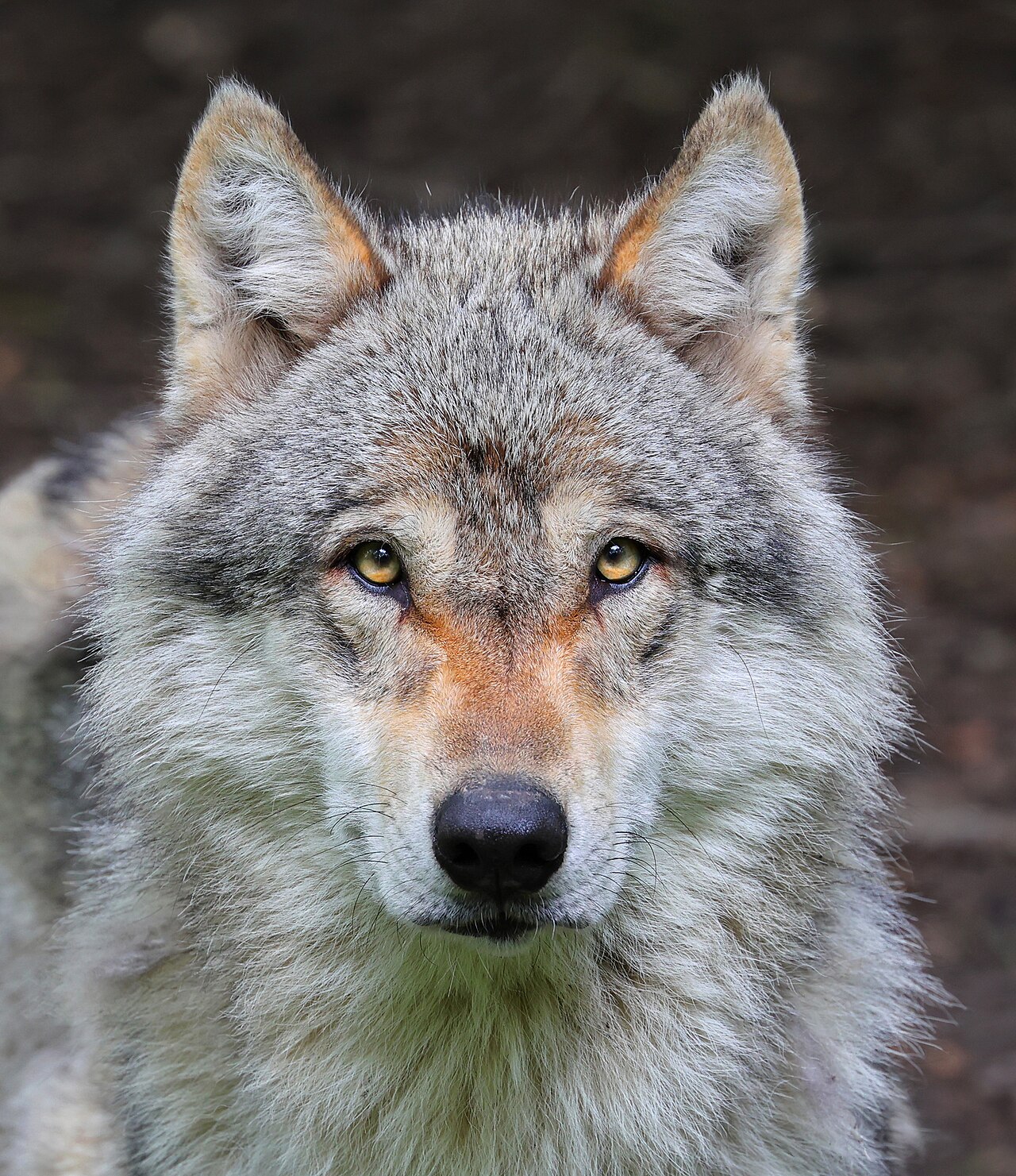
Size does not settle it, because a malamute, Great Dane or large shepherd leaves a print as big as a wolf’s. Shape helps: dog toes splay outward and the outline is rounder, while a wolf’s front two toes sit distinctly ahead of the outer pair in a tight, forward leaning arrangement. The trail is the real evidence. A wolf places prints in a nearly straight line with even spacing, often stepping its hind foot into the front print, while a loose dog meanders and doubles back across its own line of travel.
How can you tell the difference between a wolf track and a coyote track?
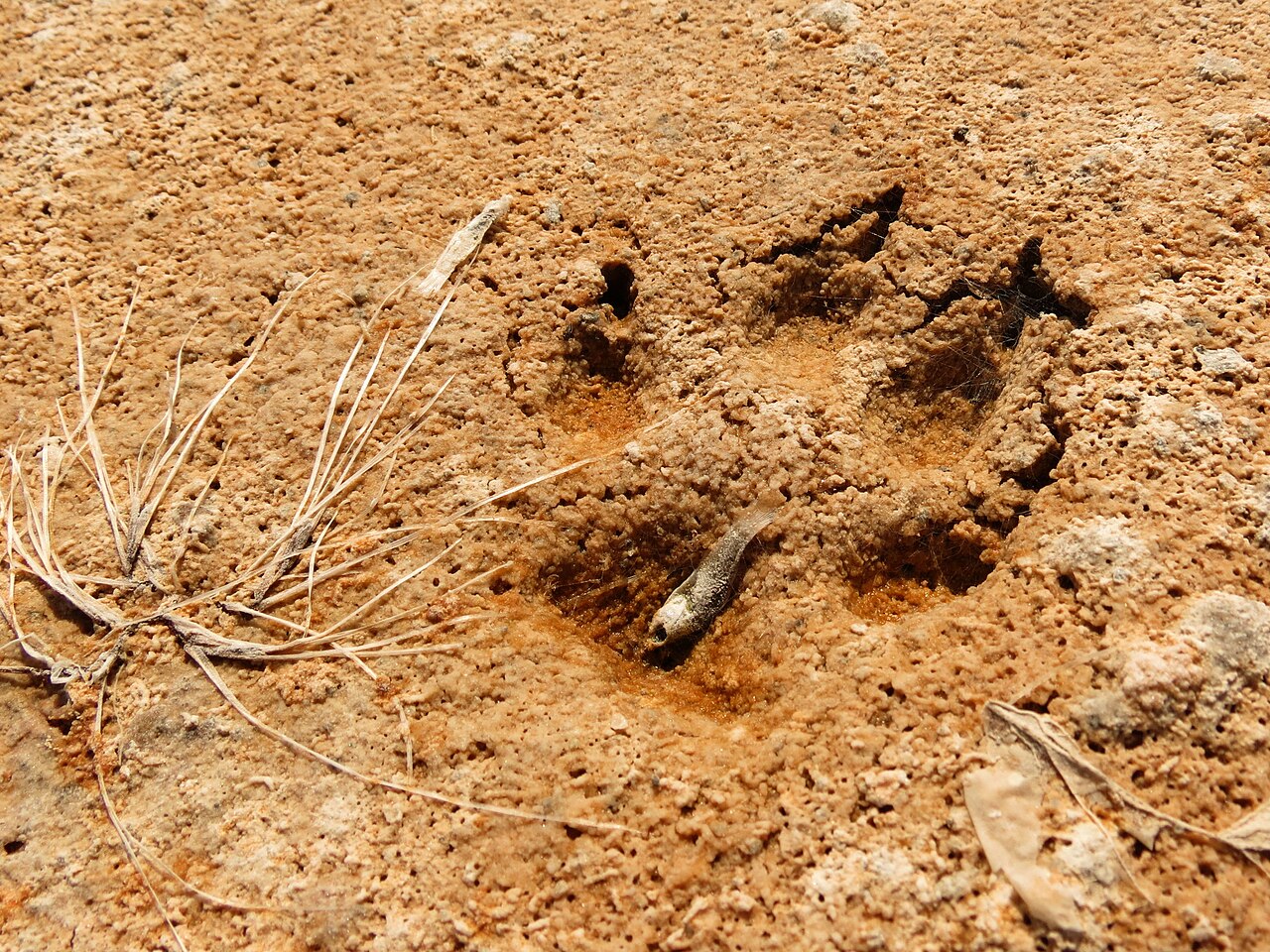
A coyote track is smaller, with the front print at 2.25 to 3 in long against the wolf’s 3.5 to 5 in, so anything wider than three inches is beyond coyote range.
Stride confirms it. A trotting coyote covers 16 to 24 in between prints and a wolf 26 to 38 in, a difference that is unmistakable over a long trail. Measure several strides on level ground, since deep snow and slopes compress the pattern. Our guide to coyote tracks covers the smaller species, and fox tracks handles the smallest canid, whose furred print is half the size.
Wolf tracks in snow, mud and sand
Snow is the best substrate and the reason winter is tracking season. An inch or two of fresh snow over a firm base holds toe pads, claw points and heel lobes, and preserves the trail long enough to follow. Deep powder misleads in the opposite direction: the print collapses inward and looks larger and shapeless, so measure only prints from shallow snow and expect melt to enlarge a track by the hour.
Firm mud at a creek edge or a rutted forest road gives the sharpest detail of all. Wet mud oozes and exaggerates size, dry mud takes nothing, and sand is the weakest surface because the walls slump at once and claws rarely register. In sand, rely on stride and trail line instead. The same substrate rules apply to bear tracks and to the hoof prints of deer on the same road.
Reading the trail: gait, stride and what else is there
Wolves travel at a trot for hours, producing the direct register trail where hind feet drop into front prints and the line of travel stays straight. Packs make this harder to read, because animals follow each other’s prints to save energy and a file of five wolves can look like one trail.
Read the context with the prints. Wolf trails follow roads, frozen waterways, ridgelines and game trails, and they intersect prey sign: deer and elk trails, scat, beds and kill sites. The tracks of rabbits and the round, clawless prints in our bobcat tracks guide cross the same ground and should not be confused with wolf sign. Current range maps and reporting forms are available through the U.S. Fish and Wildlife Service.
Frequently Asked Questions
What do wolf footprints look like?
Like a large, elongated dog print: four oval toes, the two middle ones pushed forward, short blunt claw marks ahead of each toe, and a broad triangular heel pad. Front prints run 3.5 to 5 in long, hind prints slightly smaller and narrower. In a clean print the negative space forms a narrow X between the toes and the pad.
How can you tell if it is a wolf or coyote?
Measure the width. Anything over 3 in wide is a wolf, anything under 2.5 in is almost certainly a coyote. Then measure stride across several prints on level ground: 26 in or more points to a wolf, under 24 in to a coyote. The coyote print also looks tidier, with tightly held toes and a smaller heel pad.
Do wolf tracks always show claws?
Usually but not always. Claws register in snow, firm mud and soft soil as short blunt points rather than the fine needles a cat leaves with extended claws. On frozen ground, hard packed trails or loose sand they often fail to show, so a track without claw marks is not evidence against a canid.
Will a wolf hurt a dog?
Wolves do kill dogs, and it is the most common wolf conflict outside of livestock. They treat a dog as a territorial rival rather than prey, so hunting dogs working alone in wolf country are the usual victims, particularly in the Great Lakes states. Keeping dogs leashed and close in occupied range is the standard agency recommendation.