Coyote Tracks: 7 Ways to Tell Them From Dog Tracks
Coyote tracks are oval, roughly 2.5 in long (6.4 cm), and show four toes with small claw marks on both front and hind feet, laid down in a line so straight it looks deliberate. That combination of a tight oval print and a narrow, purposeful trail is what separates a coyote (Canis latrans) from the neighborhood dog that crossed the same ditch an hour earlier.
Snow is the best teacher for this, which is why winter is the season most people first notice coyotes on their property. A fresh print in two inches of powder holds claw marks, toe spacing and the heel pad shape all at once. Mud and sand give you less, and each one distorts the print in its own predictable way.
A coyote track is an oval print 2.25 to 3 in long (5.7 to 7.6 cm) and about 2 in wide, with four toes, visible nail marks, a triangular heel pad, and two front toes set close together. The trail runs almost straight, with a walking stride of 13 to 17 in (33 to 43 cm).
What Does a Coyote Footprint Look Like?
A coyote footprint looks like a narrow dog print that someone squeezed from the sides. The front foot leaves an oval about 2.5 in long and 2 in wide (6.4 by 5 cm); the hind foot is noticeably smaller and narrower, usually 2 to 2.25 in long. Four toes register on each foot, with the two leading toes pressed close together so their nail marks often nearly touch.
The heel pad is roughly triangular and smaller in proportion to the toes than a dog’s. In a clean print you can lay an imaginary X across the track: one line between the two front toes, one between the outer toes, and the lines cross without touching the pads. In dog prints the splayed toes usually block that X.
Coyote Track Measurements at a Glance

Numbers matter more than impressions when you are standing over a single print. Measure the pad and toes only, not the splash of snow or mud around them, and measure the front track if you can tell the two apart.
| Feature | Coyote |
|---|---|
| Front track length | 2.25 to 3 in (5.7 to 7.6 cm) |
| Front track width | 1.75 to 2.25 in (4.4 to 5.7 cm) |
| Hind track | 2 to 2.5 in long, narrower than front |
| Toes and claws | 4 toes, claws usually visible |
| Walking stride | 13 to 17 in (33 to 43 cm) |
| Trotting stride | 17 to 26 in (43 to 66 cm) |
| Straddle (trail width) | 3 to 5 in (7.6 to 13 cm) |
How to Identify Coyote Tracks in Snow
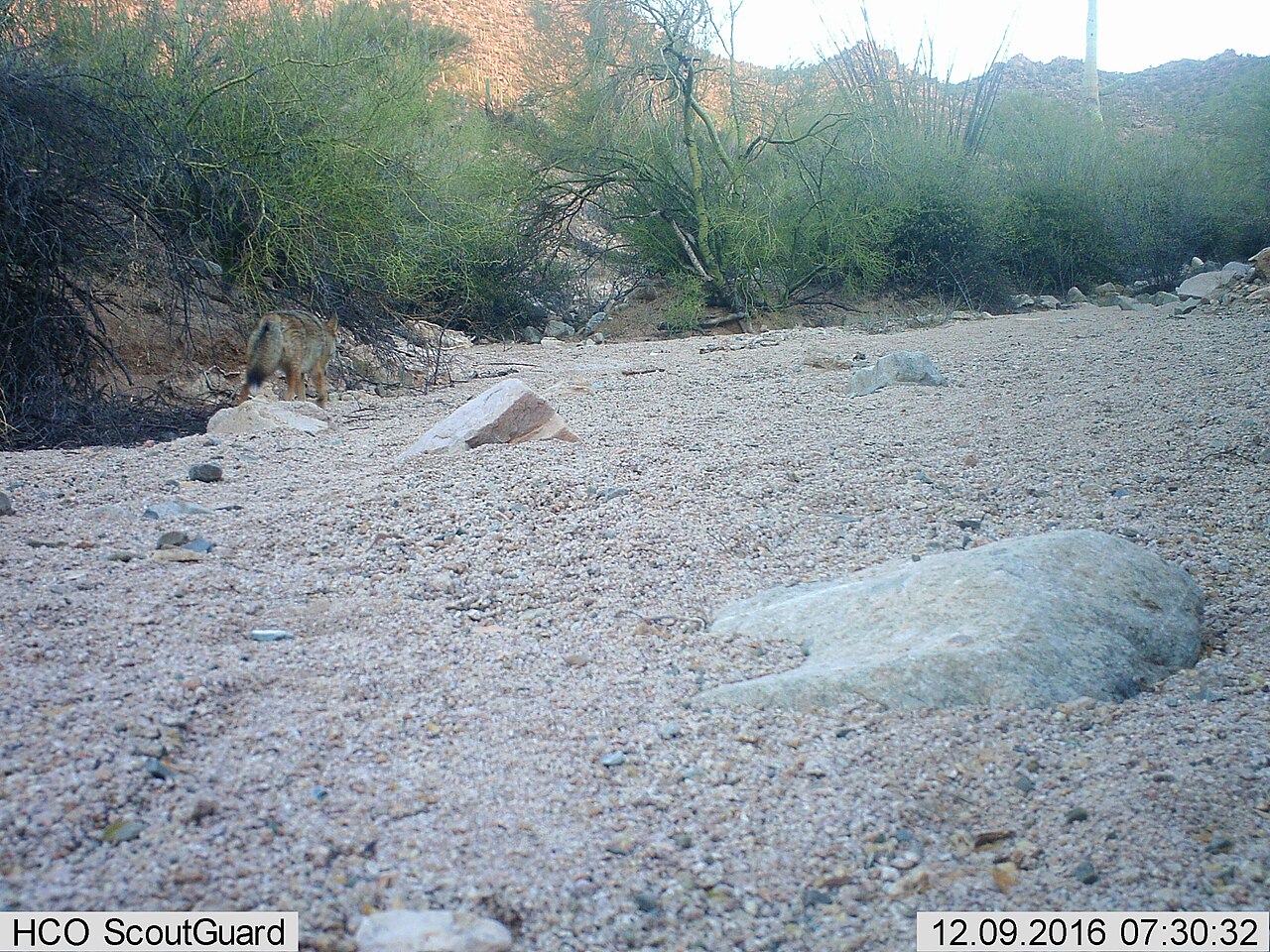
Snow gives you the full record, but only in a narrow window. One to three inches of settled snow over a firm base holds the toe outlines and nail marks; deeper powder collapses the edges and makes every canid print look oversized and round. Check prints in the morning before sun and wind round them off.
In deep snow a coyote switches to a direct register trot and drags its feet slightly between prints, leaving short connecting drag lines ahead of each track. Those drag marks point in the direction of travel, which is often the fastest way to read a trail that crosses a yard or a frozen pond.
Coyote Tracks in Mud
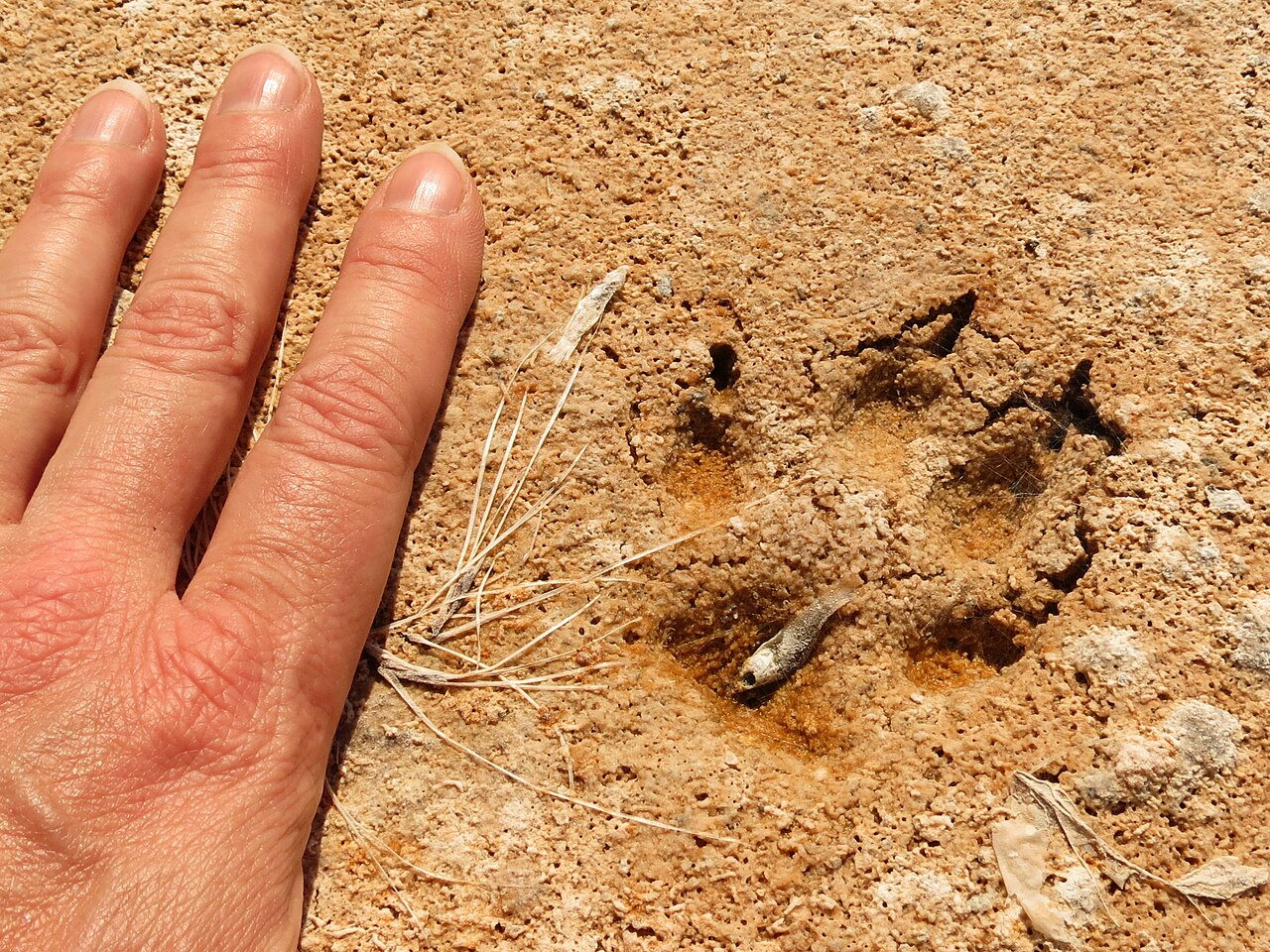
Mud records claws beautifully and size badly. Soft, wet mud spreads under the animal’s weight, so a 2.5 in front track can read as 3 in or more, and the toes splay wider than they do on firm ground. Look instead at the proportions: the heel pad still sits small behind large toes, and the print still runs longer than it is wide.
Firm, drying mud at the edge of a puddle or stock tank is the best substrate of all. That is where you can see the tiny detail that settles most arguments, a sharp nail point set well ahead of each toe pad, often 0.25 in (6 mm) clear of it.
Coyote Tracks in Sand
Dry sand is the hardest surface to work with because it collapses inward the moment the foot lifts. Expect a shapeless crater with no claw marks and no readable heel pad. Damp sand near a creek, a beach berm or a wash bottom behaves like firm mud and holds a clean print.
When only dry sand is available, stop measuring and start reading the trail. Stride length, the straightness of the line and the straddle survive in sand long after the individual print details are gone, and those three numbers are usually enough to name the animal.
Coyote Gait: Stride, Straddle and Trail Pattern
A traveling coyote trots, placing each hind foot almost exactly where the front foot was. The result is a single file of evenly spaced prints that holds a compass line across open ground for a hundred yards or more. Hunters call it a direct register, and it is the signature of a wild canid with somewhere to be.
Straddle, the width of the whole trail, runs 3 to 5 in (7.6 to 13 cm). When a coyote slows to investigate, the pattern loosens into a side trot, and the hind print lands beside the front one instead of on it. Scattered, looping, unevenly spaced prints almost always mean a dog.
What Is the Difference Between Dog Tracks and Coyote Tracks?
The difference between dog tracks and coyote tracks is shape and intent. Dog prints are rounder, often as wide as they are long, with toes splayed outward and a large heel pad; the nails are blunt and wide because dogs wear them on pavement. A coyote’s nails are narrow and sharp, and the whole print is compressed into an oval.
The trail decides the rest. A dog wanders off line to sniff, doubles back, and leaves irregular spacing even at a steady pace. If the trail is straight and the stride repeats within an inch, you are following a coyote. If you find scat along it, coyote droppings will confirm the identification quickly.
What Are the Key Differences Between a Fox and a Coyote?
The key differences between a fox and a coyote start with size and end with hair. A red fox leaves a track 1.75 to 2.5 in long (4.4 to 6.4 cm), daintier and often blurred by the dense fur on its feet; in winter the hind pad shows a raised chevron bar that no coyote print has. A gray fox prints smaller still, near 1.5 in, with sharper semi-retractable claws.
Stride separates them even when a large fox overlaps a small coyote in print size. Fox strides run 10 to 14 in against a coyote’s 13 to 17 in, and the fox trail wanders more along hedgerows and fence lines. The full fox and coyote comparison covers body size, scat and voice as well.
Cat, Bobcat and Big Cat Tracks Compared
Feline tracks solve themselves once you look for claws. Cats walk with their nails retracted, so a house cat, a bobcat track or a mountain lion print shows four toes and no nail marks at all. The prints are round rather than oval, and the heel pad carries two lobes at the front and three at the back.
Size then sorts the species: house cat near 1.25 in, bobcat 1.6 to 2.5 in, mountain lion 2.75 to 4 in. A round, clawless print the size of a coyote track in the Rockies or the Southwest deserves a careful second look, because that is mountain lion territory.
What Can Be Mistaken for a Coyote?
What can be mistaken for a coyote, on the ground as much as in the headlights, is a medium shepherd mix, a lean red fox, a gray wolf at the small end of its range, and in the Great Lakes and Northeast the eastern coyote with its wolf ancestry and oversized feet. Wolf tracks run 4 to 5 in long, far beyond any coyote.
Prints from a small dog running loose cause the most false alarms, because a trotting dog on a sidewalk can briefly produce a straight line. Follow the trail off the pavement and the dog gives itself away within thirty feet. At the other extreme, a wolf print of 4 to 5 in with a stride near 30 in settles that question by size alone.
How Can You Tell if a Coyote Is Near?
You can tell a coyote is near from four signs that often appear together: tracks on a straight line through soft ground, scat on a trail junction or driveway edge, group howling at dusk and before dawn, and missing cats or disturbed pet food. Coyotes scat in the open on purpose, right in the middle of a path, as a territorial marker.
Timing helps too. Coyotes are mostly crepuscular and nocturnal near people, so fresh prints usually appear overnight; see when coyotes are active for the daily pattern. Coyote vocalizations carry well in cold air, and a single pair can sound like six animals. For regional guidance on living alongside them, the U.S. Fish and Wildlife Service keeps state level wildlife contacts.
Other Tracks You Will Find on the Same Trail
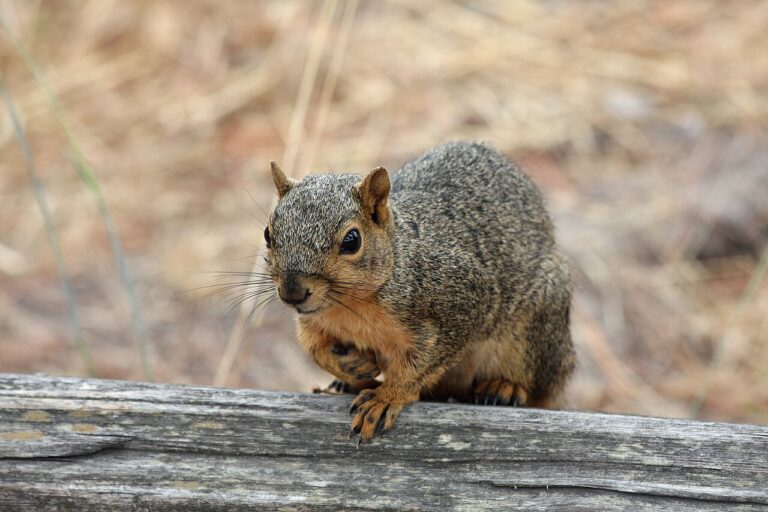
A coyote trail is rarely alone in the snow. The prey tracks beside it tell you why the coyote chose that route: rabbit tracks in a paired bounding pattern along brush edges, and squirrel tracks running tree to tree in a four print cluster.
Reading those together turns a single print into a story. A straight coyote line that suddenly breaks into a wide, splayed gallop next to a rabbit’s cutting trail marks the exact spot where a hunt began, and often ends in a patch of fur twenty feet on.
Related reading: coyote vs fox tracks.
Frequently Asked Questions
What month are coyotes most aggressive?
Coyotes are boldest from January through March, during breeding season, and again in May and June while pups are in the den. Territorial defense peaks in those windows, which is when most dog conflicts and daylight sightings are reported. Aggression toward people stays rare in every month.
What smell do coyotes hate the most?
Coyotes avoid strong ammonia, wolf or human urine, and capsaicin based repellents, but no scent reliably keeps them off a property. Removing the attraction works better: secure trash, pick up fallen fruit, feed pets indoors, and never leave food out for them, intentionally or not.
Do coyotes sleep in the same spot every night?
No. Outside of pup rearing season a coyote uses several resting spots across its territory, rotating among brush piles, culverts, thickets and field edges. Dens are reused mainly in spring. That is why track lines through a yard shift from week to week rather than repeating exactly.
Can a coyote pick up a 20 lb dog?
Yes. An adult coyote weighs 20 to 45 lb (9 to 20 kg) and can carry prey of similar weight for short distances. Small and medium dogs left outside unattended, especially at dawn and dusk, are the animals most often taken near neighborhoods.
How fresh is the track I am looking at?
Press a finger beside the print. A track with sharp edges, visible nail points and loose crystals still in place is usually under 12 hours old in cold weather. Rounded rims, wind filled toe holes or a glazed surface mean a day or more has passed.
Do coyote tracks always show claws?
Usually, but not always. On hard packed snow, frozen ground or dry sand the nails may leave nothing at all. Treat visible claws as confirmation of a canid, and treat their absence as inconclusive rather than proof that you are looking at a cat.