Woolly Bear Caterpillar Winter Prediction: What the Brown Band Actually Means
The woolly bear caterpillar winter prediction says that a wide rusty band across the middle means a mild winter and a narrow one means a hard freeze ahead. It is a wonderful piece of American folk weather lore, and it does not work. The band is real information, but it describes the season that just ended, not the one coming.
That makes the banded woolly bear, the larva of the Isabella tiger moth (Pyrrharctia isabella), more interesting than the legend suggests. Read the caterpillar correctly and you learn how wet the summer was, how old the animal is, and how close it is to the deep freeze it is built to survive.
Woolly bear caterpillars cannot predict winter. The width of the brown middle band reflects the caterpillar’s age and how good the past growing season was, since each molt adds brown segments. A well fed caterpillar from a wet summer is browner, which folklore then reads as a promise of a mild winter.
| Folklore claim | What the evidence shows |
|---|---|
| Wide brown band means a mild winter | Band width tracks larval age and the moisture of the past season |
| Narrow brown band means a brutal winter | A late hatching caterpillar has simply had fewer molts |
| An all black caterpillar means the worst winter | Usually a different species, not a banded woolly bear at all |
| The 13 segments stand for 13 weeks of winter | Every individual has 13 segments, in every year |
| The front black band shows how winter starts | No mechanism connects body pattern to future weather |
| Caterpillars crossing roads in a hurry mean early snow | Crawling speed rises and falls with ground temperature |
Do Woolly Bear Caterpillars Predict Winter?
No, woolly bear caterpillars do not predict winter, and no controlled study has ever found a link between band width in autumn and the weather that follows. The National Weather Service addresses the claim directly and comes down on the side of coincidence, which is the honest verdict when a forecast has two possible outcomes and a whole continent of caterpillars to choose from.
The appeal is easy to understand. Woolly bears are everywhere in September and October, they cross sidewalks in plain sight at exactly the moment people start wondering about the season ahead, and their pattern varies enough that any expectation can be confirmed by finding the right individual. Collect twenty from one field and you will have both a mild winter and a severe one in the same coffee can.
What Is the Old Wives Tale About Wooly Caterpillars?
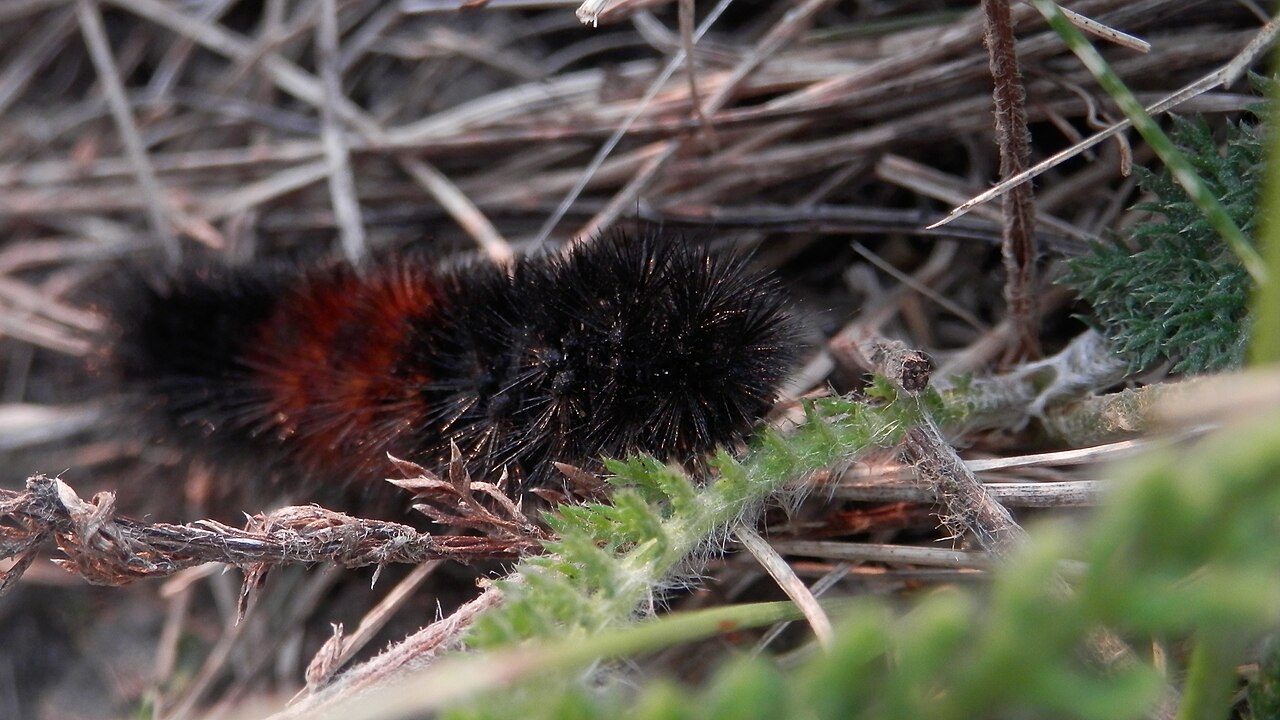
The old wives tale about wooly caterpillars holds that the animal carries a coded forecast on its back. The body has 13 segments, black at both ends and rusty brown in the middle, and the tradition reads that middle band as a measure of the coming winter’s mercy. Wide brown, gentle season. Thin brown squeezed between heavy black, get the firewood in.
Regional versions add detail. Some say the 13 segments correspond to the 13 weeks of winter, so a caterpillar with more black at the head end warns of a rough start and one with black at the rear warns of a late freeze. Others watch the direction the caterpillar travels, or whether it appears early. None of these variants agrees with the others, which is the usual sign of a story rather than a signal.
What Does Farmer’s Almanac Say About the Woolly Caterpillar?
The Farmer’s Almanac keeps the woolly caterpillar tradition alive as folklore and reports it with a wink rather than as meteorology. It traces the modern version to Dr. C. H. Curran, curator of insects at the American Museum of Natural History, who drove to Bear Mountain State Park in 1948, collected caterpillars, measured their brown bands, and passed his average to a reporter at the New York Herald Tribune.
Curran repeated the trip for most of a decade and his averages did line up with several mild winters. He also worked with samples of roughly a dozen caterpillars from a single park and described the whole exercise as an excuse to spend an autumn day outdoors with friends. The press treated it as research anyway, and the story has outlived every caveat he attached to it.
What the Bands Actually Measure
A woolly bear grows by molting, and each molt converts another black segment to brown. A caterpillar that hatched early and fed well through a warm, wet summer reaches autumn several instars along, wearing a broad rusty band. One that hatched late or fed on drought stressed plants arrives at the same October sidewalk younger and blacker.
So the band is a record of the past growing season. Entomologists who have counted bands across many individuals find variation within a single field that swamps any difference between years, which is exactly what you would expect if the pattern is tracking individual growth. Compare it with how a monarch caterpillar changes at each molt and the mechanism becomes obvious: this is a growth chart, not a barometer.
All Black Woolly Bear Caterpillar Winter Prediction
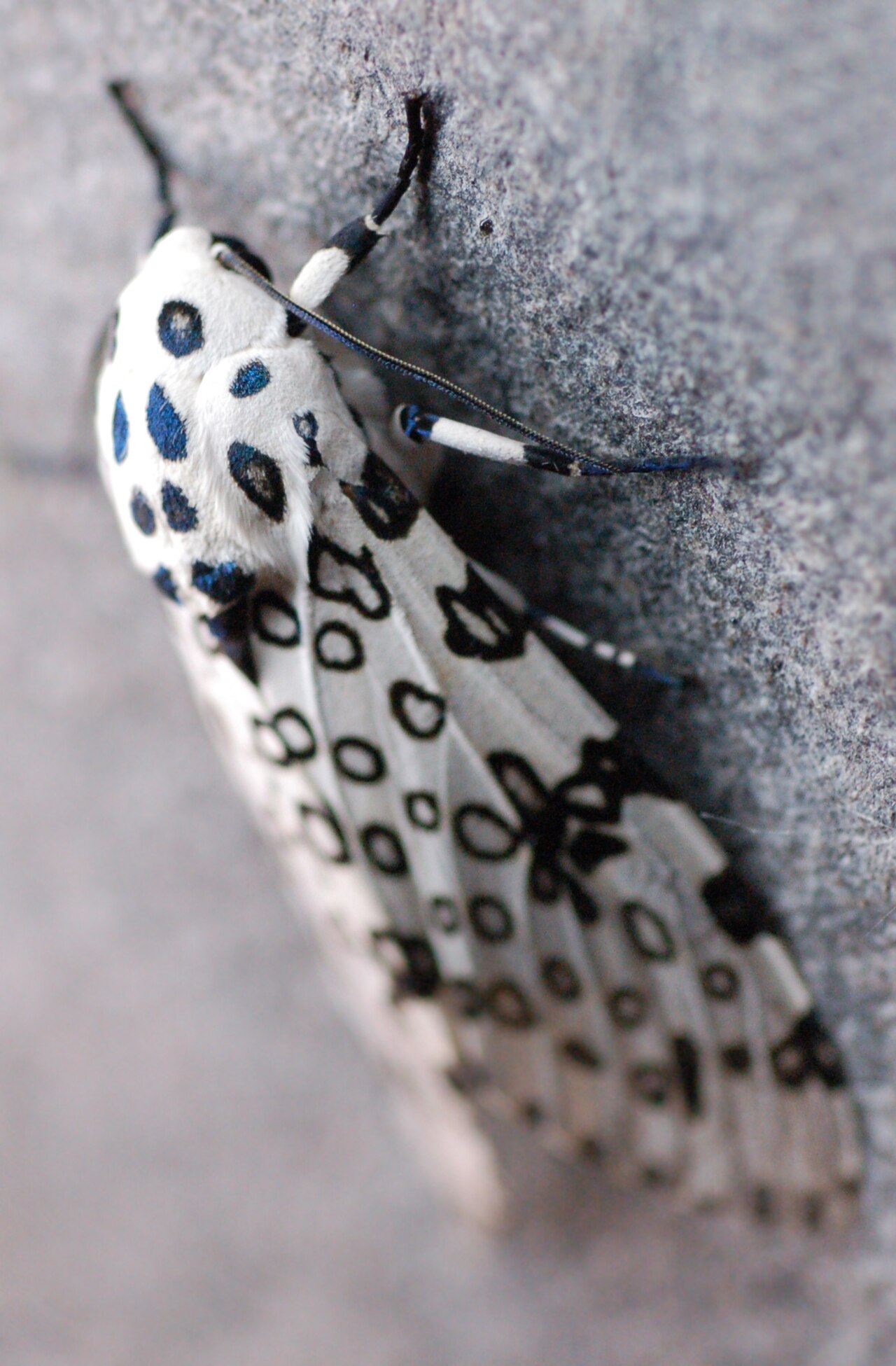
An all black woolly bear usually is not a woolly bear. The most common lookalike is the giant leopard moth larva (Hypercompe scribonia), a solid black, stiff bristled caterpillar that shows red bands between its segments when it curls up. Our guide to the black fuzzy caterpillar sorts the species that get mistaken for each other every fall.
Genuine banded woolly bears occasionally do run nearly black, typically young larvae in their first instars. Under the folklore that reading would call for a historic winter, when all it means is that the caterpillar hatched late. For the full identification picture across colors and textures, see our fuzzy caterpillar guide and the profile of the banded woolly bear itself.
What Should I Do If I Find a Woolly Bear Caterpillar?
If you find a woolly bear caterpillar, move it off the pavement in the direction it was heading and leave it alone. It is looking for leaf litter, loose bark, or a log to spend the winter under, and it does not need food, water, or rescue. Woolly bears overwinter as larvae, freeze nearly solid, and survive it by flooding their tissues with glycerol that keeps ice from tearing cells apart.
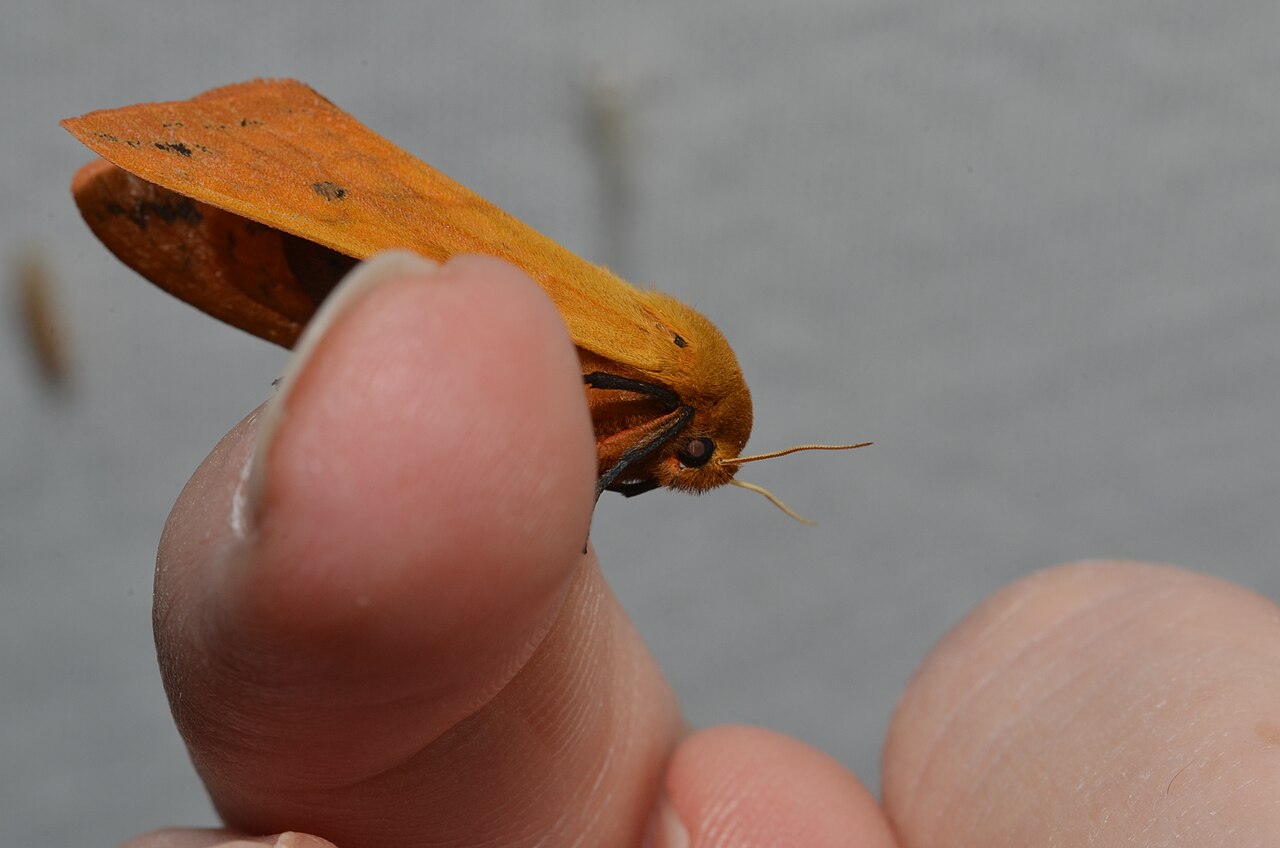
Handling is safe. Woolly bears are not venomous and the dense bristles, properly called setae, have no connection to venom glands, though they can leave a mild itch on sensitive skin. Come spring the caterpillar thaws, feeds briefly, spins a cocoon partly from its own bristles, and emerges as a dull orange Isabella tiger moth in early summer.
Related reading: Woolly Aphids.
Frequently Asked Questions
Do woolly bear caterpillars predict winter?
They do not. The brown band that folklore reads as a forecast is a record of how many times the caterpillar has molted, which depends on hatch date and how good the summer feeding was. Caterpillars collected from the same field on the same day show the full range of patterns.
What does a woolly bear caterpillar turn into?
The Isabella tiger moth (Pyrrharctia isabella), a modest yellow orange moth with small black spots and a wingspan near 2 in (5 cm). It is far less striking than the caterpillar, flies at night, and lives only a week or two. Adults do not feed.
Which caterpillar should not be touched?
Avoid the puss caterpillar, the saddleback, the io moth larva, the buck moth, and the white hickory tussock. All carry hollow spines connected to venom glands that cause burning pain, welts, or nausea. The rule of thumb is that stiff spines mean danger and soft dense fur, like a woolly bear’s, generally does not.
What is the most poisonous caterpillar in the US?
The puss caterpillar (Megalopyge opercularis), the larva of the southern flannel moth, found across the Southeast and Texas. Under its soft looking coat sit venomous spines that produce intense throbbing pain, sometimes with fever and vomiting. It looks more touchable than a woolly bear, which is exactly the problem.
Why do woolly bear caterpillars cross the road?
They are searching for a winter shelter, not fleeing weather. Once a woolly bear finishes feeding it wanders in a fairly straight line until it finds bark, a log, or deep leaf litter to freeze under. Pavement is simply in the way, which is why autumn sidewalks are full of them.
Are woolly bear caterpillars poisonous to dogs?
Not poisonous, but a dog that mouths one may drool or gag as the bristles irritate the lining of the mouth. Symptoms fade quickly and rarely need a vet. Birds have the same objection, which is why our list of birds that eat caterpillars is short on hairy species.
The woolly bears disappearing under the leaf litter are one of the clearest signs that the yard is shifting into its cold season routine, the same moment the feeders start earning their keep; our winter bird feeding guide covers the transition. For an actual seasonal outlook rather than a caterpillar, the National Weather Service publishes forecasts built on ocean and atmospheric data.