House Centipede
A house centipede is a fast-moving, long-legged arthropod that startles homeowners with its speed far more often than it ever causes any real harm. Scientifically known as Scutigera coleoptrata, it’s the only centipede species capable of completing its entire life cycle indoors in the United States, favoring damp basements, bathrooms, and crawlspaces.
Despite the unsettling appearance and startling burst of speed, a house centipede is technically a beneficial houseguest, since it actively hunts and eats many of the other pests people actually want gone, including roaches, silverfish, and even bed bugs, a fact that surprises most people the first time they hear it.
| Quick Reference | Detail |
|---|---|
| Scientific Name | Scutigera coleoptrata |
| Body Length | Up to 1.5 inches |
| Legs | 15 pairs |
| Speed | Up to 1.3 feet per second |
| Bite Risk | Extremely rare; mild if it happens |
| Diet | Roaches, silverfish, spiders, bed bugs, ants |
| Preferred Habitat | Damp, dark spaces: basements, bathrooms, crawlspaces |
What Is a House Centipede?
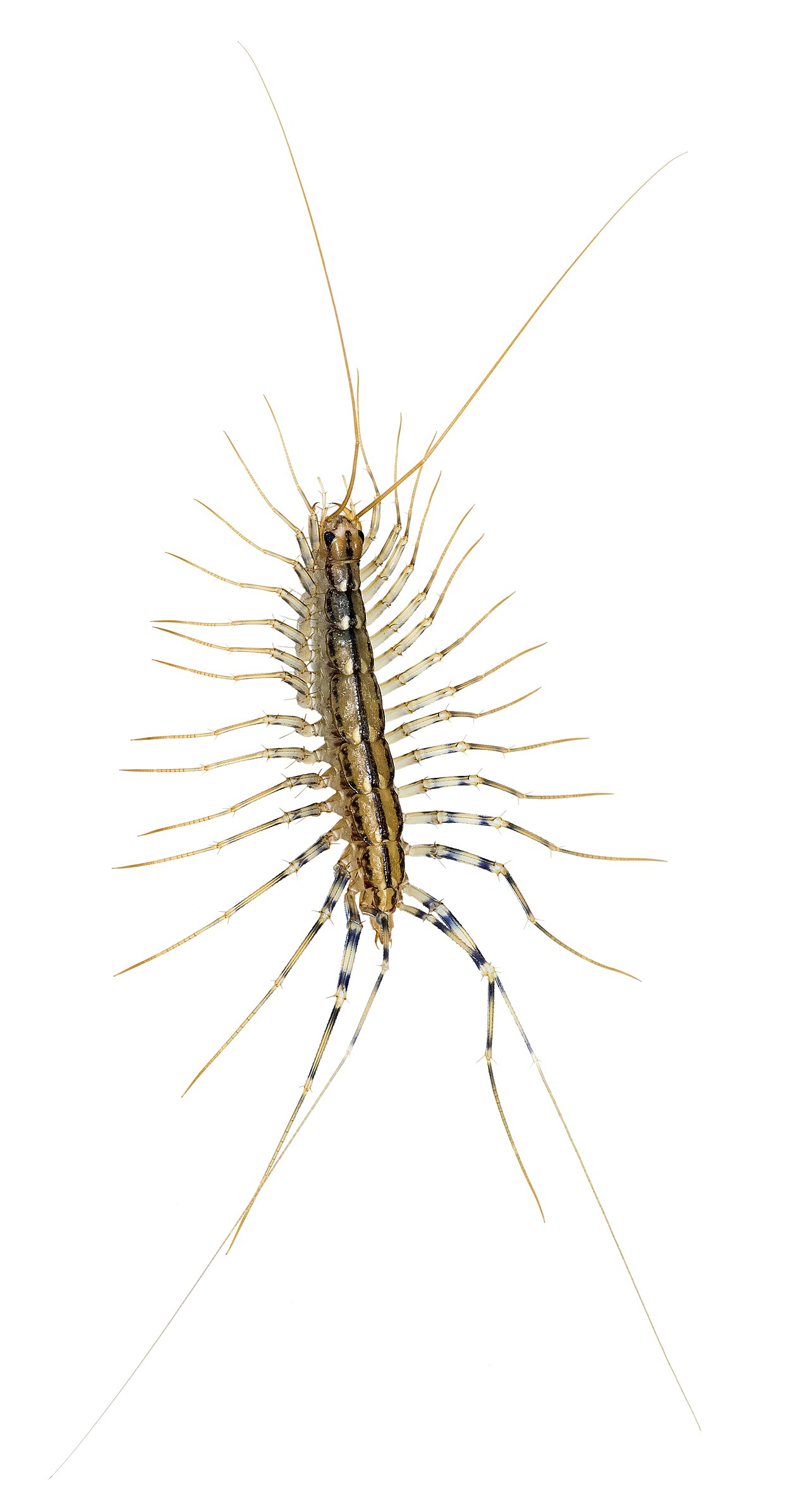
The house centipede, Scutigera coleoptrata, is a slender arthropod that can reach up to about 1.5 inches in body length, with 15 pairs of long, delicate legs that make it look considerably larger and more dramatic than its actual body size would otherwise suggest. A yellowish-gray coloring marked with dark longitudinal stripes runs the length of its body, and unusually long antennae extend from the front, helping it detect prey and navigate in the dark.
What truly sets a house centipede apart from most household pests is raw speed: it can move at roughly 1.3 feet per second, making it one of the fastest arthropods commonly encountered indoors relative to its size. That sudden burst of motion across a bathroom floor or kitchen wall is almost always what triggers the visceral, startled reaction most people have on first encountering one, and that same speed is precisely what makes the centipede such an effective hunter of equally fast-moving pests like silverfish and roaches.
Are House Centipedes Insects?
Despite common assumption, house centipedes are not insects at all, a distinction that surprises most people who lump every small crawling creature into one broad mental category. They belong to the class Chilopoda, a group more closely related to lobsters, crayfish, and shrimp than to any true insect, and they’re distinguished by having exactly one pair of legs per body segment, unlike millipedes, which have two pairs per segment and move far more slowly.
The name “centipede” technically implies 100 legs, but actual leg counts across the wider centipede group range anywhere from 30 to more than 350 depending on species, meaning the house centipede’s 30 legs (15 pairs) is really just one point along a much broader spectrum rather than a strict rule the name suggests. Some ancient centipede ancestors are believed to have grown to nearly a meter long, a startling contrast to the modest size of the house centipedes people encounter today crawling across a kitchen floor or bathroom tile.
Do House Centipedes Bite? Are They Dangerous?
House centipedes are technically venomous, but their venom delivery system isn’t built like a spider’s fangs; instead, a modified pair of front legs called forcipules pinch and inject venom, a mechanism suited for subduing small insect prey rather than penetrating tough human skin. According to Poison Control, centipedes technically sting rather than bite, and while all centipedes can inflict a painful sting, house centipedes rarely do so to people, and most individuals go their whole lives without ever experiencing one at all. For a closely related question, see our guide to baby centipede. For a closely related question, see our guide to black and yellow caterpillar. For a closely related question, see our guide to green caterpillar. For a closely related question, see our guide to praying mantis eggs.
On the rare occasion a house centipede does sting a person, typically only when handled or accidentally stepped on with bare skin, the result is usually mild: slight redness, localized swelling, and brief discomfort comparable to a bee sting, resolving on its own within a day or so without any medical treatment needed. People with known insect sting allergies should still watch for a stronger reaction and seek medical attention if swelling spreads or breathing becomes difficult, though such cases remain genuinely uncommon for this particular species compared to bees or wasps.
Are House Centipedes Actually Beneficial?
From a pest control standpoint, house centipedes genuinely earn their keep in ways most homeowners never fully appreciate until they learn more about them. They actively hunt and consume many of the insects and arthropods homeowners actually want gone, including cockroaches, silverfish, ants, termites, flies, moths, carpet beetle larvae, and even bed bugs, making a single house centipede a surprisingly effective, if unsettling, form of free pest management operating quietly in the walls and corners of a home night after night.
A house centipede’s presence can sometimes act as an early warning sign of a bigger underlying pest problem, since these hunters tend to show up wherever their prey is already abundant and easy to find. Finding several in a short period might be worth investigating further, not because the centipedes themselves are a problem, but because they suggest something else is drawing them in, similar to how spotting an unusual number of jumping spiders can hint at a nearby insect population worth checking on more closely.
Why Do House Centipedes Live Indoors?
Unlike most other centipede species people encounter in North America, the house centipede is uniquely capable of completing its entire life cycle indoors, reproducing and thriving in a home environment without ever needing to venture back outside. Damp, humid spaces with limited light, basements, bathrooms, crawlspaces, and closets in particular, mimic the moist, sheltered conditions the species prefers in the wild.
This preference for moisture and darkness is also the most useful lever for prevention: reducing humidity with dehumidifiers or improved ventilation, fixing leaks, and clearing damp clutter all make a home meaningfully less appealing to a house centipede looking for both shelter and a steady supply of prey, and the same changes tend to discourage many of the smaller pests it depends on for food in the first place.
How House Centipedes Hunt and Escape Predators
House centipedes are active night hunters, relying on speed and long, sensitive legs to detect and chase down prey rather than building any kind of trap or web to wait passively for a meal. Remarkably, a single house centipede can grasp and hold multiple prey items across several legs simultaneously, allowing it to subdue more than one target during an especially productive hunt, a hunting efficiency few other household arthropods can match.
If a predator, or an overly curious human, manages to grab one of its legs, a house centipede can simply detach that leg and scurry away to safety, a defense mechanism called autotomy shared with several other arthropods, including certain species that a curious pet might otherwise try to catch, like a grass spider or banana spider encountered in the yard. The lost leg does not regenerate, but the loss rarely affects the centipede’s ability to keep hunting effectively, and older individuals missing one or two legs are a fairly common sight among established indoor populations.
House Centipede vs. Other Centipedes
Not every centipede found in or around a home is harmless. The giant desert centipede (Scolopendra heros), found in the southwestern United States, can reach 8 to 10 inches long and delivers a considerably more painful, aggressive bite than a house centipede ever would, sometimes causing intense pain, swelling, and in sensitive individuals, symptoms like nausea or dizziness that can persist for several hours after the initial injury.
Size is usually the fastest way to tell the two apart: a house centipede tops out around 1.5 inches, while a giant desert centipede is dramatically larger and bulkier, with a much more robust, armored appearance overall and noticeably thicker, more menacing-looking legs. Anyone in the desert Southwest encountering an unusually large, aggressive centipede should treat it with more caution than the common house centipede deserves, similar to the extra care worth taking around a black beetle or other unfamiliar insect before assuming it’s harmless.
How to Get Rid of and Prevent House Centipedes
Because house centipedes are drawn indoors by both moisture and prey, addressing both factors at once produces the best long-term results. Running a dehumidifier in damp basements, fixing leaky pipes, and improving ventilation in bathrooms and crawlspaces removes the humid conditions the species depends on to survive and reproduce indoors.
Reducing available prey matters just as much: since house centipedes are following an existing insect population, controlling the underlying pests, whether that’s silverfish, roaches, or even bed bugs, removes their reason for sticking around in the first place. Sealing cracks and gaps around the foundation, windows, and doors closes off entry points, while decluttering damp storage areas removes the hiding spots centipedes and their prey both favor, making the whole environment considerably less inviting for either one to settle in long term. Outdoor changes help too, since clearing leaf litter, mulch, and woodpiles away from the foundation reduces the population of small insects centipedes would otherwise follow indoors as the weather cools.
Related reading: House Earwig.
Frequently Asked Questions
Do house centipedes bite humans?
Bites, technically stings, are extremely rare and typically only happen if a centipede is handled or accidentally pressed against skin, and any resulting reaction is usually mild.
Are house centipedes dangerous to pets?
No, their venom is designed for tiny insect prey and poses no significant risk to cats, dogs, or other household pets that might occasionally show curiosity toward one.
Why are house centipedes so fast?
Their long legs and streamlined body let them move at speeds up to about 1.3 feet per second, an adaptation for actively chasing down fast-moving insect prey rather than waiting in a web or trap.
Are house centipedes actually beneficial to have around?
Yes, they help control populations of roaches, silverfish, ants, and even bed bugs, functioning as a natural, entirely free form of pest control quietly operating indoors.
Why do I keep finding house centipedes in my bathroom or basement?
These damp, dark areas closely match the humid conditions house centipedes prefer, and they’re also likely following an existing food source of smaller insects already living in that same space undetected.
Do house centipedes really have 100 legs?
No, the name is a broad approximation rather than a literal count. House centipedes specifically have 15 pairs, or 30 legs total, while other centipede species can have anywhere from 30 to over 350 legs depending on the species.
How do I get rid of house centipedes?
Reduce moisture with dehumidifiers and better ventilation, seal cracks and entry points around the foundation and windows, and address any underlying insect population that may be attracting them into your home in the first place.