Do Squirrels Hibernate? What They Really Do All Winter
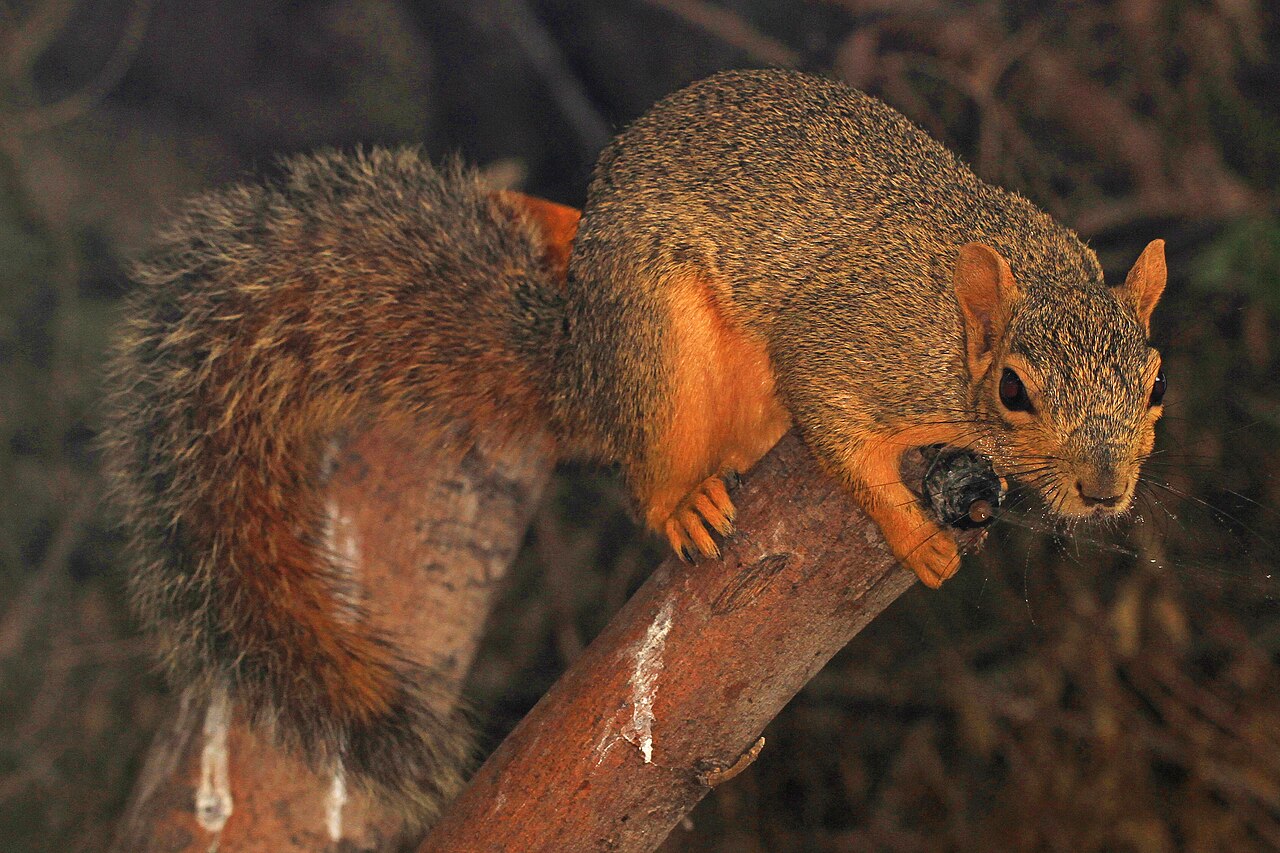
Tree squirrels do not hibernate. If you are asking do squirrels hibernate because your yard went quiet in January, the animals you know best, the eastern gray, the fox squirrel, and the American red squirrel, are awake out there every single day of winter. They just move less, start later, and spend far more time inside a nest than they do in June.
The confusion is fair, because “squirrel” covers two very different groups. Tree squirrels bank food outside their bodies in scattered caches and keep their engine running all winter. Ground squirrels, marmots, and woodchucks bank food inside their bodies as fat, then shut almost everything down. Those are the real hibernators in the family, and some of them stay underground for more than half the year.
Tree squirrels such as gray, fox, and red squirrels do not hibernate. They stay active all winter on cached nuts and body fat and sleep through storms in short bouts of torpor. Ground squirrels and woodchucks are true hibernators and can stay underground for five to eight months.
| Species | Hibernates? | Winter strategy | Visible in winter? |
|---|---|---|---|
| Eastern gray squirrel (Sciurus carolinensis) | No | Scattered nut caches, tree den, brief torpor | Yes, most days |
| Fox squirrel (Sciurus niger) | No | Caches plus heavy fall fat gain | Yes, most days |
| American red squirrel (Tamiasciurus hudsonicus) | No | One central larder hoard called a midden | Yes, most days |
| Southern flying squirrel (Glaucomys volans) | No | Communal nests, up to 20 animals huddling | Yes, after dark |
| Eastern chipmunk (Tamias striatus) | Partly | Long torpor, wakes every few days to eat | Rarely, on mild days |
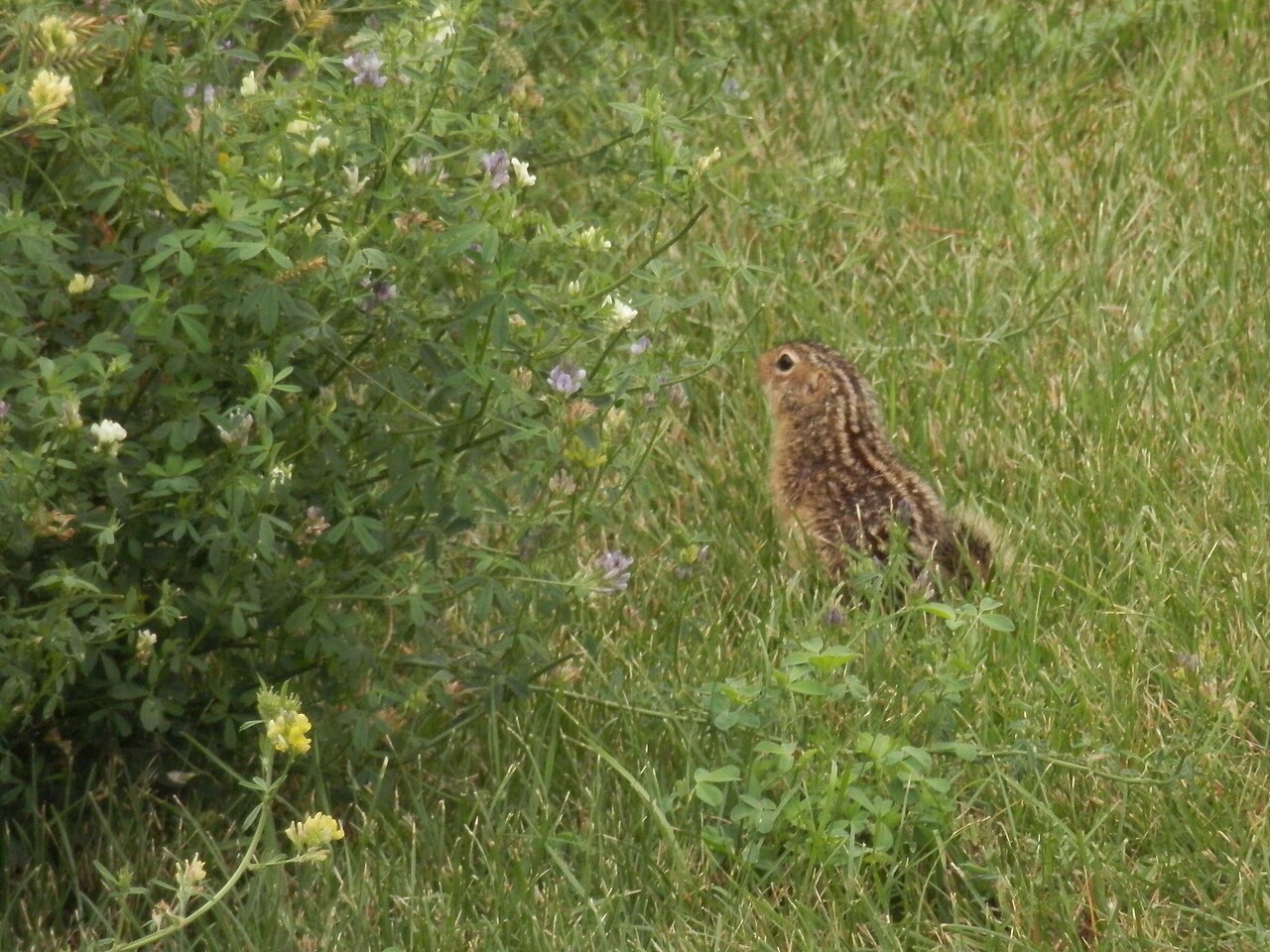
| Thirteen-lined ground squirrel (Ictidomys tridecemlineatus) | Yes | True hibernation, body close to freezing | No |
| Woodchuck (Marmota monax) | Yes | True hibernation on stored fat | No |
Which Squirrels Hibernate and Which Ones Stay Awake
Only the ground dwelling squirrels hibernate. Thirteen-lined ground squirrels, Richardson’s ground squirrels, Arctic ground squirrels, and woodchucks drop their body temperature and heart rate to a fraction of normal and live off fat until spring. An Arctic ground squirrel can let its core fall below freezing, which is the lowest body temperature measured in any mammal.
Every squirrel that lives in a tree stays awake. Gray, fox, red, and flying squirrels all keep a normal body temperature through winter and leave the nest to feed. Chipmunks sit in between: they sleep in long bouts underground but wake every few days to eat from a stored seed pile instead of burning fat, which is why chipmunk winter behavior is usually called torpor rather than true hibernation.
Where Do Squirrels Go During the Winter?
They go into a den, not into the ground. A gray squirrel prefers a cavity in a mature tree, often an old woodpecker hole widened over the years, lined with shredded bark and leaves. When no cavity is available it uses a drey, the bulky leaf ball you can see once the canopy drops, and it will pack that drey with extra insulation in October and November.
Cold pushes squirrels to share. Animals that chase each other off a feeder in summer will nest together in January, because two or three bodies in one cavity cut heat loss sharply. Flying squirrels take this furthest, piling into a single hollow in groups. Fresh tracks and squirrel droppings under a den tree are the easiest sign that a nest above you is occupied.
How Tree Squirrels Survive Without Hibernating
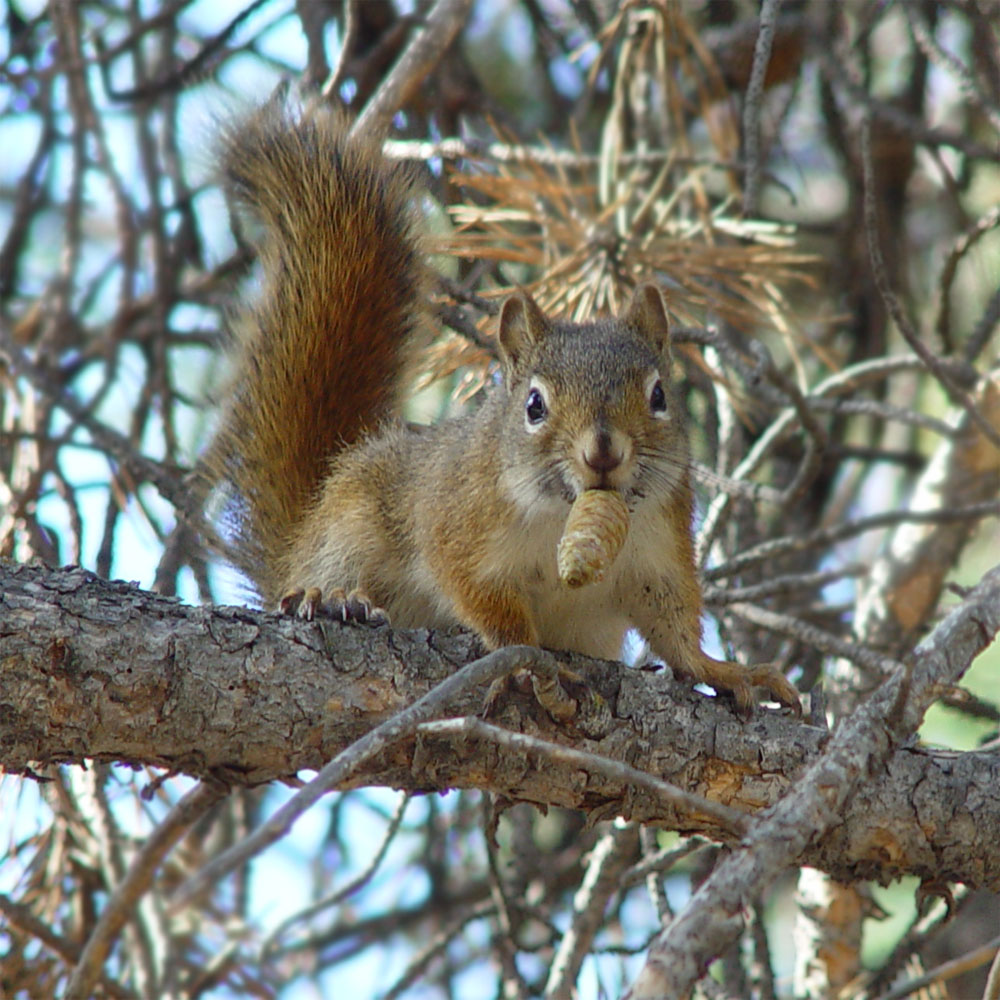
The whole system runs on autumn work. From late August a gray squirrel buries thousands of nuts one at a time, a habit called scatter hoarding, and relies on memory plus smell to find them again under snow. Red squirrels do the opposite and defend one huge pile of cones, which is why a red squirrel will scold you so loudly near its midden.
Body fat covers the gaps. Squirrels put on weight through fall and can lose a noticeable share of it by March. On the coldest days they use shallow torpor, a drop in temperature and heart rate that lasts hours rather than months, then come out to feed as soon as wind and snow ease. Because they are active in daylight rather than at night, you will see the heaviest feeding in the few hours after sunrise.
How Long Do Squirrels Hibernate and at What Temperature?
For the species that truly hibernate, the season is long. Thirteen-lined ground squirrels are typically underground from about October to late March, roughly five to six months. Arctic ground squirrels in Alaska can spend seven to eight months below the surface. Woodchucks usually run from October into February, with males emerging first.
Temperature is the trigger and the result. Hibernators go down as soil temperatures fall and daylight shortens, and their body temperature then settles a few degrees above their burrow, often near 32 to 41 F (0 to 5 C). They do not sleep straight through: every week or two they warm back up for a few hours, which is metabolically expensive and still not fully explained. Research summaries from the Smithsonian’s National Zoo are a good starting point on how these cycles work.
Do Squirrels Hibernate in Houses and Attics?
No, and that is exactly why attic problems run all winter. A squirrel in your roof is not a sleeping animal you can ignore until spring. It is awake, chewing, caching food in insulation, and in February it may be raising a litter, because gray squirrels have a winter breeding season that puts newborn squirrels in the nest while there is still snow outside.
Check for entry points before the cold sets in, especially along soffits and roof edges where a gap of 1.5 in (4 cm) is enough. If you already hear activity overhead, wait until the young are mobile before sealing anything, or you trap a litter inside. Unlike raccoons in winter, squirrels will not go quiet on their own for weeks at a time.
Related reading: do bats hibernate.
Related reading: types of squirrels.
Frequently Asked Questions
Do red squirrels hibernate?
No. American red squirrels stay active through winter and depend on a defended cone pile called a midden, which they build under conifers in late summer. They tunnel through snow to reach it and will confront intruders loudly. Eurasian red squirrels behave the same way, resting in the drey during storms but never entering true hibernation.
Do squirrels remember humans?
To a degree, yes. Squirrels learn individual routines and locations rather than faces in a human sense, and a squirrel fed regularly will approach the same person, at the same spot, at the same hour. That is learned association, not affection, and it fades within weeks if the feeding stops.
What time do squirrels go to bed?
Tree squirrels are diurnal and usually settle into the nest within an hour of sunset, earlier on cold or wet days. Peak activity is the first two to three hours after sunrise and again in late afternoon. Flying squirrels are the exception and only leave the den after dark.
What is the lifespan of a squirrel?
Most wild gray squirrels live 1 to 3 years, with heavy losses in the first winter, though animals that reach adulthood can live 6 to 12 years. Ground squirrels rarely exceed 3 to 5 years in the wild. In captivity, with no predators and steady food, 15 years or more is possible.