Cuban Tree Frog: How to Identify It and What to Do When You Find One
The Cuban tree frog (Osteopilus septentrionalis) is the largest tree frog in North America and the most damaging amphibian introduced to the southeastern United States. It arrived in Florida in the 1920s, almost certainly as a stowaway in cargo shipped from the Caribbean, and it now occupies the whole peninsula and pockets of the Gulf Coast. Adults reach 1.5 to 5.5 inches (4 to 14 cm) and eat native frogs, lizards, and each other.
Most people meet one on a porch light, a patio door, or inside a utility box, because the species is drawn to insects around artificial light and to any tight, damp crevice. Telling it from Florida’s native tree frogs takes about ten seconds once you know what to check, and that identification matters more here than with most wildlife, since Florida wildlife agencies ask residents to remove them rather than release them.
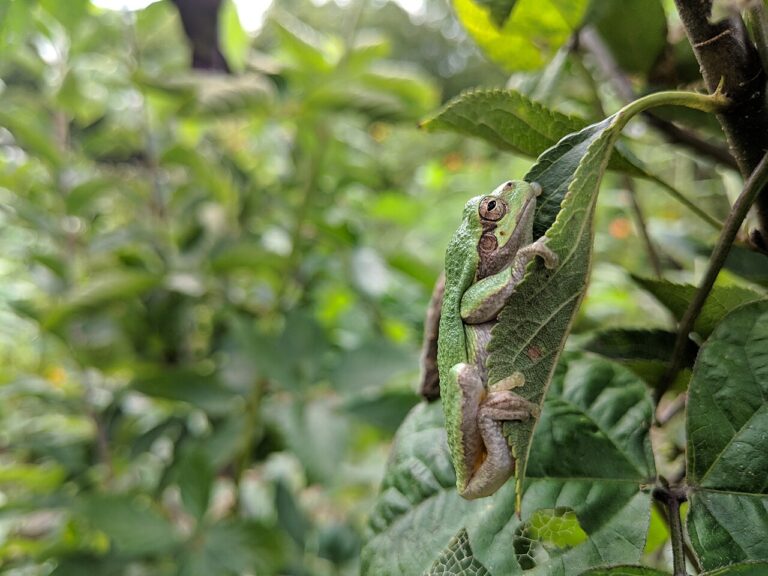
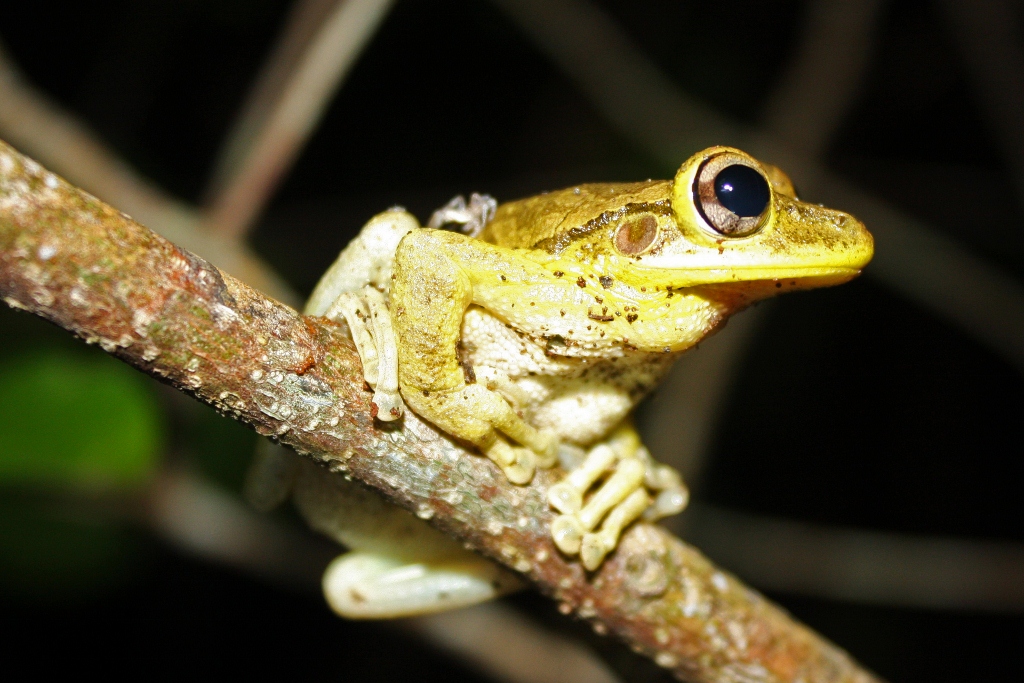
Cuban tree frogs are large invasive tree frogs found across Florida and parts of the Gulf Coast. They have warty skin, oversized toe pads, bulging eyes, and skin that hides the top of the skull. They are not venomous, but their skin secretion burns eyes and mucous membranes, so wash your hands after contact and never touch your face.
| Feature | Cuban Tree Frog | Native Florida Tree Frogs |
|---|---|---|
| Adult size | 1.5 to 5.5 in (4 to 14 cm) | Usually under 2.5 in (6.5 cm) |
| Toe pads | Very large, wider than the toe | Moderate, about as wide as the toe |
| Skin texture | Warty, bumpy | Smooth to slightly granular |
| Skull | Skin fused to the top of the skull | Skin loose over the skull |
| Color | Changes from white to bronze to dark green | Mostly stable green or gray |
| Eyes | Large and bulging, often red gold | Proportionate, gold or brown |
| Status | Invasive, removal encouraged | Native, protected |
How to Identify a Cuban Tree Frog
Start with the toe pads. A Cuban tree frog’s adhesive discs are dramatically oversized, clearly wider than the toe behind them, and on a large adult they look like small suction cups. No native tree frog in the southeast has pads anywhere near that proportion, and the feature works on juveniles as well as adults.
Next look at the head. In this species the skin is fused to the top of the skull, so if you run a finger gently over the crown the skin does not slide. Native tree frogs have loose skin there. Combined with the warty back and the bulging eyes set high on a broad head, the identification is solid.
Size closes the case for big individuals. Anything over about 3 inches (7.5 cm) of body length sitting on a Florida wall is a Cuban tree frog, since no native species in the region gets that large. Small ones need the toe pad and skull checks.
Why the Color Keeps Changing
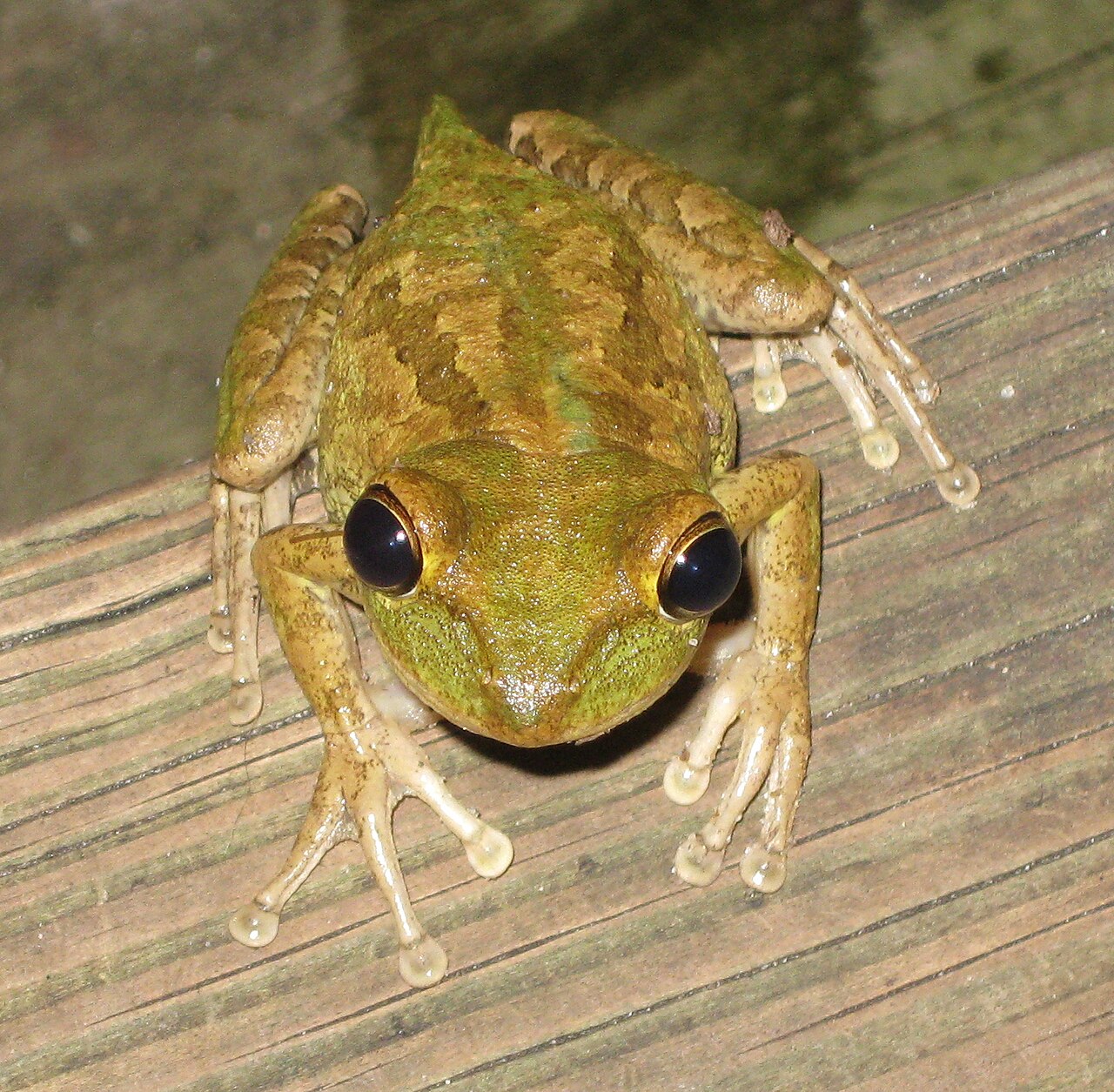
A single Cuban tree frog can be creamy white on a stucco wall at midnight and dark olive brown on bark the next morning. The species shifts color through chromatophore activity in response to temperature, humidity, light, and background, and the range spans white, tan, bronze, gray, pale green, and near black.
That variability is why color guides fail for this frog. Field keys that sort tree frogs by markings put the same animal in three different categories depending on when it was photographed. Some individuals show faint dark blotching or banded legs, others are entirely plain.
Use structure instead. Toe pad size, skin texture, and the fused skull skin do not change with mood or temperature, while the color does. Our guide to the white tree frog covers a species that is often confused with a pale Cuban tree frog in photographs.
Where Cuban Tree Frogs Live in the US
The established range covers essentially all of peninsular Florida, the Keys, and the panhandle, with breeding populations documented in coastal Georgia, and repeated introductions reported in Louisiana, Texas, and South Carolina. Isolated individuals turn up far outside that range in nursery plant shipments, including in the Northeast, though they do not survive winter there.
Within their range they are strongly associated with human structures. Surveys consistently find higher densities in suburbs and gardens than in undisturbed natural habitat, because buildings provide the warm crevices, artificial lights, and ornamental ponds the species exploits.
Cold is the main limit on further spread. Sustained temperatures below about 40 F (4 C) kill them, which is why hard freezes in north Florida periodically knock populations back. Unlike some temperate species they do not truly overwinter, a contrast covered in our piece on whether frogs hibernate.
Are Cuban Tree Frogs Safe to Touch?

They are safe to touch in the sense that they are not venomous and cannot poison you through the skin of your hands. What they do produce is a sticky, irritating mucus that causes a burning sensation if it reaches your eyes, nose, or mouth, and some people develop sneezing fits or a mild rash after handling one.
The practical rule is simple: handle with gloves if you can, wash thoroughly with soap afterward if you cannot, and keep your hands away from your face in between. People who have rubbed an eye after picking one up describe 20 to 30 minutes of significant pain.
Children should not handle them at all, for that reason rather than any risk of a bite. The frogs do not bite in any meaningful sense, though a large one gaping at a hand is startling.
Are Cuban Tree Frogs Toxic to Pets?

Dogs and cats that mouth a Cuban tree frog typically foam, drool heavily, and paw at the mouth for several minutes, then recover without treatment. The secretion is an irritant, not a cardiac toxin, and it does not carry the danger that the cane toad (Rhinella marina) poses in the same yards.
That distinction is worth knowing precisely because the two overlap in Florida. A dog that mouths a cane toad can develop seizures and cardiac arrhythmia within an hour and needs immediate veterinary care. A dog that mouths a Cuban tree frog usually needs its mouth rinsed forward with a hose, so the water runs out rather than down the throat, and nothing more.
Call a vet if symptoms persist beyond about 30 minutes, if the animal vomits repeatedly, or if you are not certain which species was involved. Misidentification is the real hazard here.
What Cuban Tree Frogs Eat
Adults eat almost anything they can swallow. Stomach content studies in Florida find beetles, roaches, moths, spiders, snails, and a substantial fraction of vertebrates: native tree frogs, anoles, small snakes, and juveniles of their own species. Cannibalism is routine rather than exceptional.
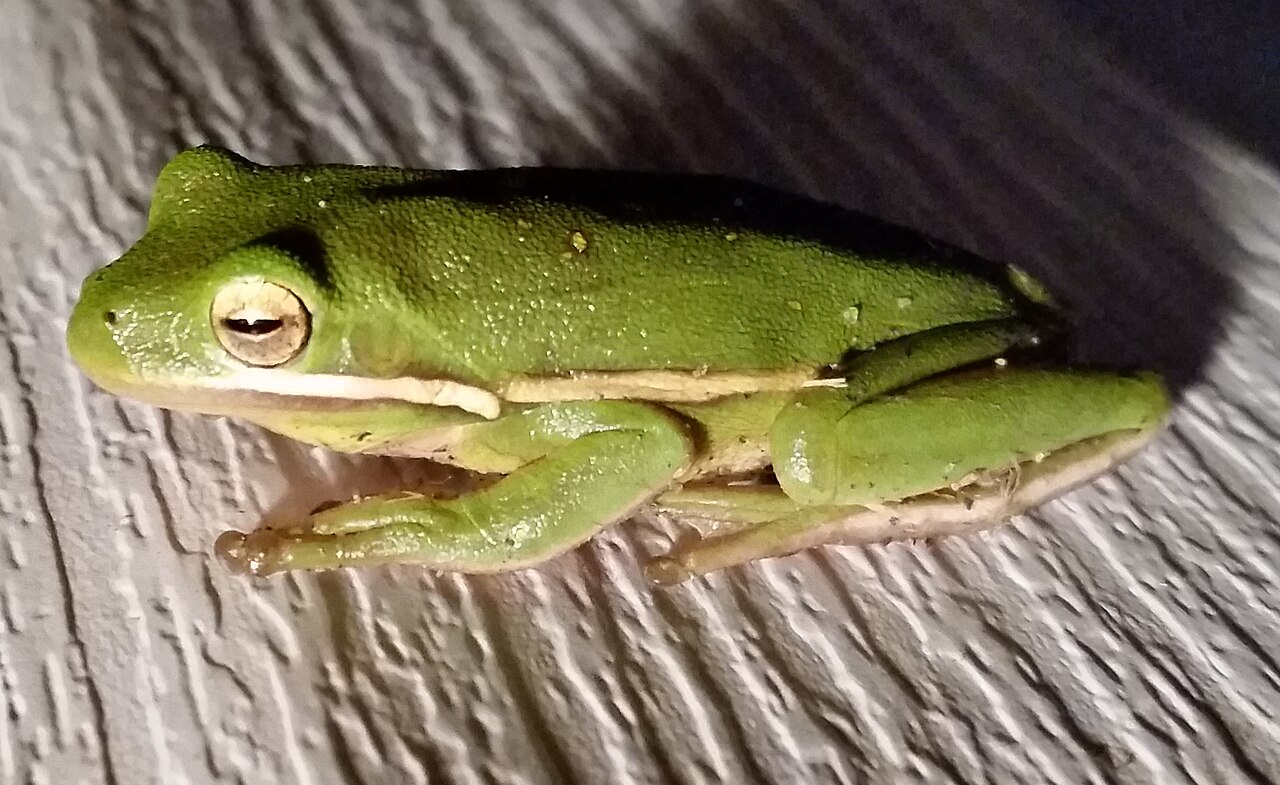
The vertebrate share is what separates this frog from the natives it displaces. Native green tree frogs (Hyla cinerea) are almost entirely insectivorous, so a Cuban tree frog in the same tree is both a competitor for insects and a predator of the competitor.
Tadpoles are equally disruptive underwater. They grow fast, reach high densities, and suppress the growth and survival of native tadpoles sharing the same pond through competition for algae.
Cuban Tree Frog Sounds
The call is a rasping, irregular snore, often described as a squeaky door or a wet rag being dragged over glass, delivered in uneven bursts rather than the steady rhythm of native species. Males call from vegetation and pond edges on warm, humid nights, heavily concentrated after rain.
They also produce a loud, sharp distress scream when grabbed by a predator or a person, which surprises anyone handling one for the first time. That scream is a startle defense and is common across large tree frogs.
Learning the call is the fastest way to survey a neighborhood, since the frogs are far easier to hear than to find. Our guide to tree frog sounds compares the calls of the common southeastern species side by side.
The Invasive Impact
Research in Florida has documented sharp declines in native green tree frogs and squirrel tree frogs where Cuban tree frogs become established, through the combination of direct predation, competition, and larval interference described above. In some suburban study sites the natives effectively disappear.
The damage is not only ecological. Cuban tree frogs regularly take shelter inside electrical boxes, switch gear, and pool pump housings, where they cause short circuits and power outages. Utility crews in Florida treat them as a recognised nuisance.
They also enter houses through plumbing vents and around door frames, and they leave dark, sticky droppings on walls and windows that stain. The University of Florida’s extension service at UF IFAS maintains the standing guidance and reporting channel for the species.
What to Do If You Find a Cuban Tree Frog
In Florida, wildlife authorities ask residents not to release them. Confirm the identification first using the toe pads and the fused skull skin, because killing a native green or squirrel tree frog by mistake is both illegal and counterproductive, and photograph the animal if you are unsure.
The method recommended by UF IFAS is to apply benzocaine ointment, the kind sold for toothache, to the frog’s back, which anesthetises it within minutes, then place the animal in a sealed bag in a freezer overnight. It is the humane standard used in amphibian research and it is what the state’s extension guidance specifies.
Outside Florida, a suspected Cuban tree frog found in a plant shipment should be reported to your state wildlife agency rather than released or relocated. Those isolated arrivals are how new populations start.
Are Cuban Tree Frogs Good Pets?
They are hardy, long lived, and undemanding, which is exactly the problem. Captive Cuban tree frogs live 5 to 10 years or more, eat readily, and tolerate a wide range of conditions, so they are easy to keep. They also cannot be legally released, must never be housed with other frog species, and have been spread through the pet trade.
If you do keep one, a single adult needs a vertical enclosure of at least 18 by 18 by 24 inches (46 by 46 by 61 cm), 60 to 80 percent humidity, temperatures of 75 to 85 F (24 to 29 C), and a diet of dusted crickets and roaches. Handling should be minimal for the reasons above.
For a first frog, most keepers are better served by a species bred for captivity. Our overviews of the pacman frog and the red eyed tree frog cover two of the usual starting points.
Breeding and Life Cycle
Breeding runs from roughly May to October, triggered by heavy rain, and a single female lays 100 to more than 1,000 eggs in a floating film on still water. Ornamental ponds, birdbaths, clogged gutters, and drainage ditches all serve, which is why suburban populations grow so fast.
Eggs hatch in about 30 hours at summer temperatures, and tadpoles complete metamorphosis in three to eight weeks depending on food and crowding. Froglets emerging at under half an inch (1 cm) are easily mistaken for native species, and this is where most misidentification happens.
Sexual maturity arrives within a year, and adults can breed repeatedly across a long season. A short generation time combined with a large clutch and a tolerance for degraded habitat is the whole explanation for how quickly this frog took over the peninsula.
Frequently Asked Questions
Can I pick up a Cuban treefrog?
Yes, with care. Wear disposable gloves or use a plastic bag turned inside out over your hand, and wash with soap immediately afterward if you handle one bare handed. The skin secretion burns on contact with eyes and nostrils, so the real rule is not about picking the frog up but about what you touch next.
Are Cuban tree frogs poisonous?
They are not poisonous in the way a poison dart frog is, and eating one would not be lethal to a person or a dog. The secretion is a defensive irritant that causes burning, drooling, and sneezing. For comparison, our page on the poison dart frog covers an amphibian whose skin toxins genuinely are dangerous.
Do frogs get attached to humans?
Frogs do not form social bonds, and there is no evidence that any species recognises an individual keeper with affection. What captive frogs do learn is association: a lid opening means food is coming, so the animal approaches. That looks like recognition and is better understood as conditioning.
What is the friendliest pet frog?
White’s tree frog (Litoria caerulea) is the usual answer, because it is calm, slow moving, tolerates brief handling better than most amphibians, and lives 15 years or more. No frog enjoys being held, but this one does not panic. American green tree frogs and fire bellied toads are the next tier down.
What is the hardest frog to take care of?
Poison dart frogs of the genus Oophaga are among the hardest, because they need stable high humidity, precisely sized live food, and in some species a diet of unfertilised eggs fed to tadpoles by the parents. Glass frogs are similarly demanding, as covered in our guide to the glass frog.
What is the cheapest frog to care for as a pet?
Fire bellied toads and American green tree frogs cost the least to keep, since both stay small, need no specialised lighting, and eat inexpensive crickets. Ongoing cost is driven mostly by heating and live food, so a small enclosure in a warm room is the cheapest arrangement, running perhaps 10 to 15 dollars a month.