Cabbage White Butterfly: ID, Damage, and Control
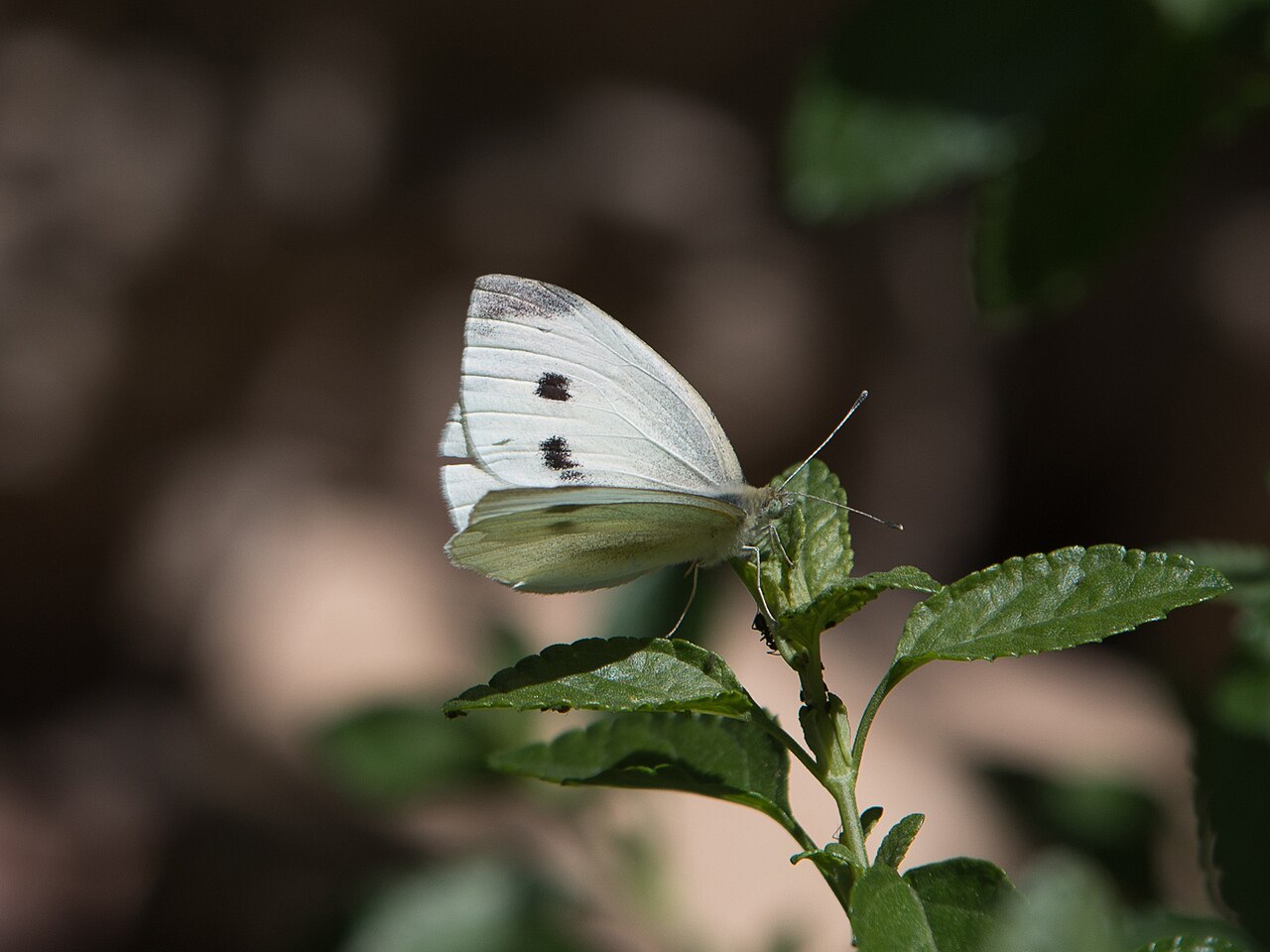
The cabbage white is a small white butterfly with black wingtips and one or two black spots on each forewing, spanning about 1.75 to 2.5 inches, and it is probably the most widely distributed butterfly in the world. It is also the one gardeners least want to see, because its caterpillars eat cabbage, kale, broccoli, and every other brassica down to the stems.
The species is not native to North America. It arrived in Quebec around 1860, spread across the continent within about thirty years, and is now abundant in every state, having done the same across Australia, New Zealand, and much of Asia. This guide covers identification, sexing, the caterpillar, control that actually works, and why the butterfly is more complicated than its reputation.
The cabbage white is a small white butterfly with black wingtips and black forewing spots, one on males and two on females. It is introduced to North America and its green caterpillars are major pests of cabbage, kale, and broccoli. Row covers before egg laying and Bacillus thuringiensis are the effective controls; hand-picking works on a small scale.
| Feature | Cabbage White |
|---|---|
| Scientific name | Pieris rapae |
| Wingspan | 1.75 to 2.5 in |
| Male | One black forewing spot |
| Female | Two black forewing spots |
| Host plants | Brassicas, nasturtium, mustard family |
| Caterpillar | Velvety green, faint yellow stripe |
| Broods per year | 3 to 8, depending on climate |
How Do You Identify a Cabbage White?
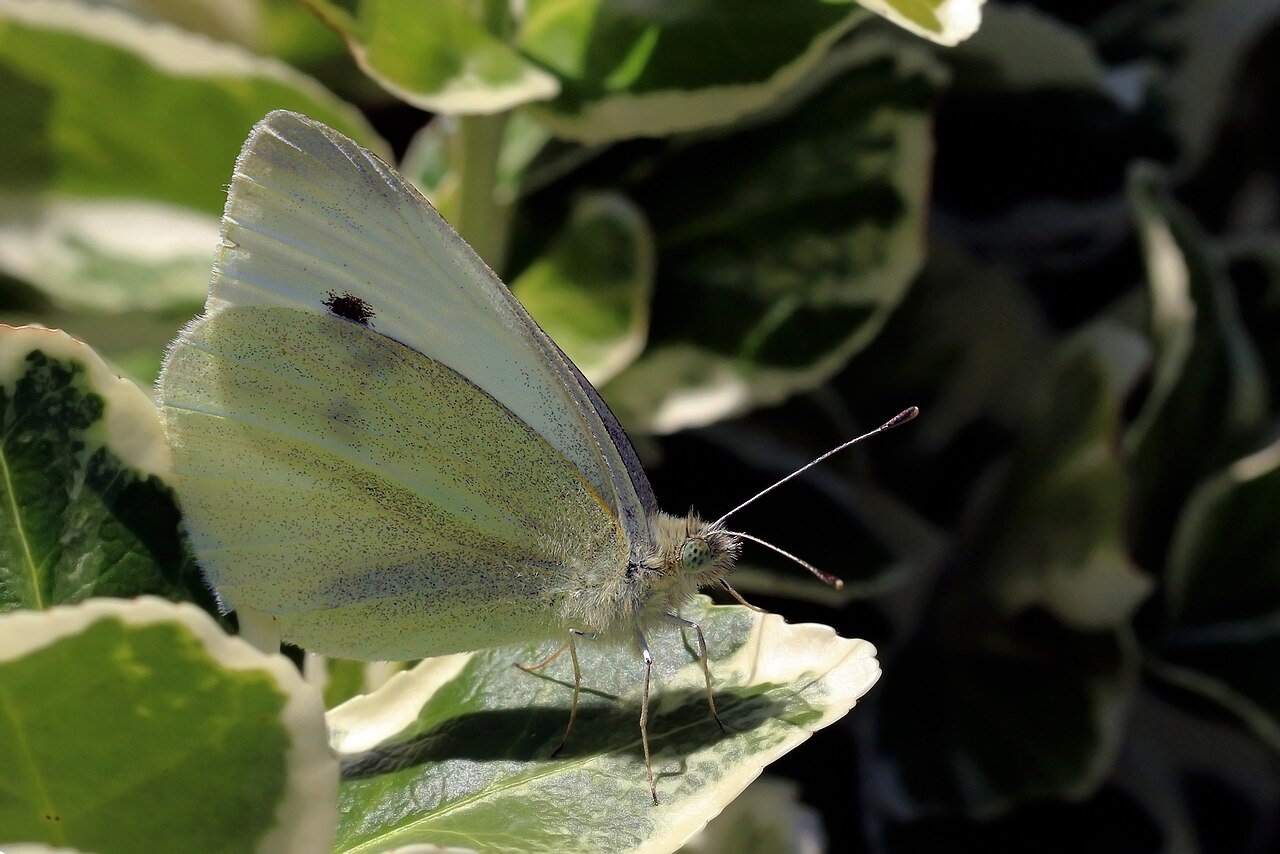
White or cream wings with a grey-black patch at the forewing tip, black spots on the upper forewing, and a pale yellowish underside on the hindwing that is often lightly dusted with grey. The flight is bouncing and erratic rather than direct, low over open ground and vegetable beds.
Sexing is unusually easy for a butterfly. Males have a single black spot on each upper forewing; females have two, plus a small dark dash along the lower wing edge. Females are also slightly larger and their black wingtip patch tends to be more extensive.
Spring individuals are paler with reduced black markings and summer ones more strongly marked, a seasonal variation driven by conditions during larval development. Fresh butterflies look crisp white; worn late-season ones fade to dingy cream. The white butterfly guide covers the other pale species people see.
Is the Cabbage White a Pest?
Yes, and one of the most significant vegetable pests worldwide. The caterpillars feed on plants in the mustard family, which covers cabbage, kale, broccoli, cauliflower, Brussels sprouts, collards, turnip, radish, mustard, and nasturtium, chewing large ragged holes through the leaves and boring into cabbage and broccoli heads.
Damage compounds over a season because there are so many generations. Three to eight broods run per year depending on climate, from early spring into autumn, so a garden faces continuous pressure rather than a single wave, and populations build if nothing is done.
The frass is often what ruins a crop rather than the feeding. Caterpillars deposit dark green pellets that pack into the crevices of a cabbage or broccoli head, and a head that is only lightly chewed can still be unusable. Checking under leaves in the morning is the standard practice. The monarch caterpillar guide covers a larva just as tied to one plant family, with the opposite reputation.
What Does the Caterpillar Look Like?
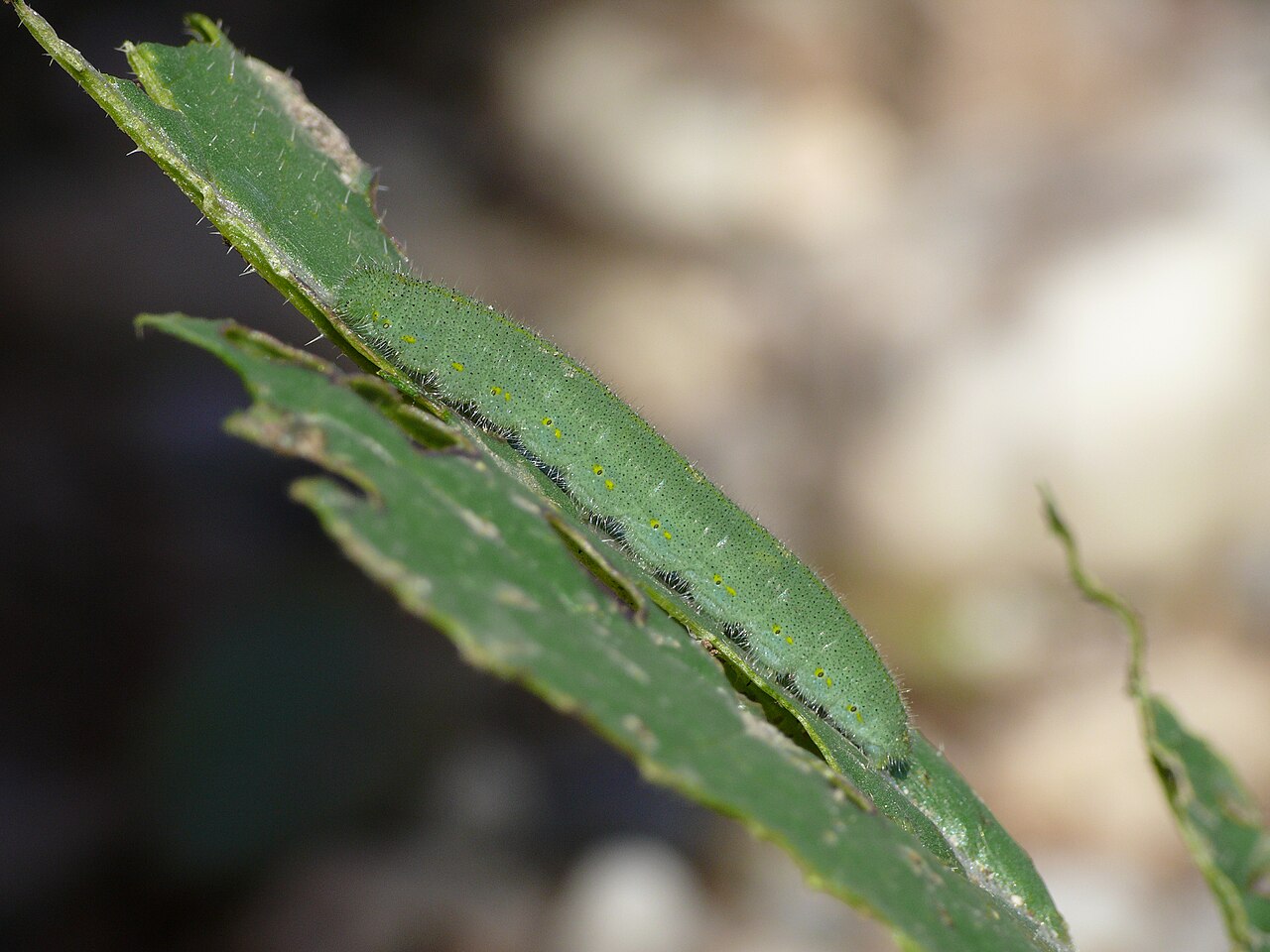
Velvety green, slightly fuzzy, with a faint yellow line down the back and a broken yellow line along each side, growing to about an inch. It is well camouflaged along leaf midribs and veins, which is exactly where it sits, and most people find the damage and the frass long before they find the caterpillar.
Eggs are laid singly on the undersides of leaves and are tall, pale yellow, and ribbed, about a millimetre long, standing upright. A single female lays several hundred over her life, spreading them across many plants rather than clustering them.
The confusion is with cabbage looper and diamondback moth larvae, which do similar damage. Loopers arch their backs into a loop as they walk, having fewer prolegs, and diamondback larvae are smaller, pointed at both ends, and wriggle violently and drop on a silk thread when disturbed. Cabbage whites do none of that. The caterpillar identification guide covers separating garden larvae by appearance and behaviour.
How Do You Control Them?
Floating row cover is the single most effective method. Lightweight fabric laid over brassicas from the moment they go in, sealed at the edges with soil or boards, prevents females from ever reaching the plants, and since brassicas do not need insect pollination it can stay on all season.
Bacillus thuringiensis subspecies kurstaki is the effective spray. It is a bacterial product that only affects caterpillars that eat it, breaks down in sunlight within days, and is approved for organic growing. It has to be reapplied after rain and hits every caterpillar on the treated plant, including species you might want, so use it on the crop rather than across the garden.
Hand-picking works well on a small scale, particularly in the morning when caterpillars are on leaf undersides and sluggish. Beyond that, encouraging parasitoid wasps by planting small-flowered umbellifers such as dill, fennel, and alyssum near the beds gives real background control. Extension programmes such as the University of Minnesota (umn.edu) publish threshold guidance for when treatment is worth doing.
What Are Their Natural Enemies?
Parasitoid wasps do most of the work. Cotesia glomerata and related species lay eggs inside cabbage white caterpillars, and the larvae emerge to spin clusters of small yellow cocoons on or beside the dying host, a sight familiar to anyone who grows brassicas. Parasitism rates in unsprayed gardens can be high.
Birds take both caterpillars and adults, with house sparrows, wrens, chickadees, and warblers all working brassica leaves, and paper wasps carry caterpillars back to their nests in quantity. Ground beetles, spiders, and predatory bugs take eggs and small larvae.
A viral disease also cycles through dense populations. Nucleopolyhedrovirus spreads rapidly when caterpillars are crowded and can collapse a local outbreak within weeks, leaving limp dark caterpillars hanging from leaves. That is the same class of natural control that limits many caterpillar populations, and broad-spectrum insecticides remove the predators and parasitoids while doing nothing about it. The guide to birds that eat caterpillars covers the bird side.
Should You Leave Cabbage White Caterpillars?
On brassicas you want to eat, no. On nasturtiums, ornamental kale, or wild mustard at a garden edge, there is a reasonable case for leaving them, since they feed birds and support the parasitoid wasps that then work your vegetable beds too.
The adults are also pollinators, and this is the part of the picture usually left out. Cabbage whites visit a wide range of flowers and are among the most numerous butterfly visitors in many gardens, and while they are less efficient than bees they contribute to pollination across the season and in cool weather when bees are inactive.
Where they do genuine harm is in commercial and home vegetable production, which is a real cost rather than a squeamish one. The workable position for most gardeners is to protect the crop physically and leave the butterfly alone elsewhere, rather than treating it as something to eliminate from the garden.
How Rare Is a Cabbage White?
Not remotely rare. It is one of the most abundant butterflies in North America, Europe, and much of Asia, present in gardens, farmland, roadsides, and city parks, and it is often the first butterfly seen in spring and the last in autumn.
The spread was remarkably fast. First recorded near Quebec around 1860, probably arriving with shipped produce, cabbage whites reached the Pacific coast within about thirty years, helped by a diet that matched the crops being planted across the continent and by the mustard-family weeds that grow in every disturbed field.
Its success has come partly at the expense of natives. The native mustard white and West Virginia white have declined in areas where cabbage whites are abundant, partly through competition and partly because both native species lay eggs on garlic mustard, an invasive plant that their caterpillars cannot survive on. The Xerces blue guide covers the other end of that story.
What Does Seeing One Mean?
White butterflies carry the strongest folklore of any colour, widely read as spirits, souls, or messages from the dead, and in several European traditions a white butterfly is taken specifically as a departed loved one making contact. Purity, peace, and new beginnings are the other common readings.
Seasonal omens attach to the first white butterfly of the year, and they contradict each other by region. In parts of England the first butterfly of spring being white meant good luck for the year; in other versions it meant the opposite, and in some Scottish and Irish traditions white butterflies were associated with the souls of children.
None of this is specific to the cabbage white, which has no folklore of its own and was not present in North America when most of this symbolism formed. What a sighting reliably means is that something in the mustard family is growing nearby, cultivated or wild. The guide to a butterfly landing on you covers the encounter symbolism.
How Long Do They Live?
About three weeks as an adult, and roughly a month from egg to adult in warm weather. Eggs hatch in four to eight days, the caterpillar feeds through five instars over ten to twenty days, and the chrysalis takes one to two weeks.
The chrysalis is where the year ends. The final generation overwinters as a chrysalis attached to a fence, wall, shed, stem, or plant debris, coloured green or brown to match the surface, and adults emerge in early spring, often flying on the first warm days of March or April before most other butterflies are active.
That overwintering habit means garden structures matter. Chrysalides on a fence or under a windowsill are easy to miss and are frequently scraped off during spring cleaning, and greenhouse frames are a favourite site. Leaving them is the simplest thing anyone can do either for or against the species, depending on how they feel about it. The painted lady guide covers a species that solves winter differently.
Frequently Asked Questions
How do you identify a cabbage white butterfly?
Small white butterfly with grey-black wingtips and black forewing spots, one on males and two on females, with a pale yellowish hindwing underside and a bouncing erratic flight.
Is the cabbage white butterfly a pest?
Yes, one of the most significant vegetable pests worldwide. Caterpillars eat cabbage, kale, broccoli, and other brassicas, and the frass packed into heads often ruins crops more than the chewing does.
What does the caterpillar look like?
Velvety green with a faint yellow line down the back and broken yellow side lines, up to about an inch, sitting along leaf midribs. Loopers arch their backs; cabbage whites do not.
How do you control cabbage whites?
Floating row cover from planting day is the most effective method, since brassicas need no insect pollination. Bacillus thuringiensis works as a spray, and hand-picking in the morning works on a small scale.
What are their natural enemies?
Parasitoid wasps above all, which leave clusters of yellow cocoons beside dying caterpillars, plus birds, paper wasps, ground beetles, and a virus that collapses crowded populations.
Are cabbage whites good pollinators?
They contribute, particularly in cool weather when bees are inactive, though they are less efficient than bees. In many gardens they are the most numerous butterfly flower visitor.
How long does a cabbage white live?
About three weeks as an adult and roughly a month from egg to adult. The last generation overwinters as a chrysalis on fences, walls, and stems, emerging on the first warm days of spring.

Similar Posts
What Do Mice Eat? Wild, House & Pet Diet Guide
What mice eat in the wild, indoors as a household pest, and as pets, plus the cheese myth and foods to avoid.
Hognose Snake
Hognose snakes are small, harmless North American snakes famous for playing dead and mimicking cobras. Here is how to identify them, what they eat, and whether they make good pets.
Southern House Spider: ID and the Recluse Confusion
Male southern house spiders are mistaken for brown recluses constantly. Here is how to tell them apart and why this harmless spider is worth keeping.
Cricket vs Grasshopper: Every Reliable Difference
Antennae length settles it instantly. Here is how crickets and grasshoppers differ in sound, hearing, diet and behavior, plus where katydids and locusts fit.
Jumping Spider Enclosure
Jumping spiders need tall, well-ventilated enclosures more than wide ones. Here is how to size, furnish, and maintain a setup where a pet jumping spider will actually thrive.
Red Butterfly: Which Species Are Actually Red
Most red butterflies are really orange. The red admiral comes closest in North America. Which species qualify, why true red is rare, and what a sighting means.