Orange Butterfly Meaning: Symbolism and Visits
An orange butterfly traditionally means joy, passion, creativity, and a change worth acting on, and in modern grief symbolism it is one of the colours most often read as a visit from someone who has died. Orange carries associations with energy, warmth, and encouragement across colour symbolism generally, and butterflies contribute the transformation and renewal layer on top.
Which butterfly you actually saw shapes the reading for anyone who wants specifics. A monarch, a painted lady, a fritillary, and a viceroy are all orange and carry slightly different associations, and in North America an orange butterfly in a garden is far more likely to be a common resident than anything unusual. This guide covers the symbolism, the cultural sources, colour by colour comparisons, and the species involved.
An orange butterfly means joy, passion, creativity, and encouragement to act on a change already underway, and is widely read as a visit from a departed loved one. No tradition treats orange butterflies as a bad omen. In North America most orange butterflies seen are monarchs, painted ladies, fritillaries, or viceroys.
| Context | Traditional Reading |
|---|---|
| Orange butterfly seen | Joy, energy, creativity, encouragement |
| Lands on you | A message from someone who has died |
| Crosses your path | Change already in motion |
| In the house | News or a visitor arriving |
| Pair of butterflies | Partnership, harmony |
| Christian reading | Resurrection and the soul released |
| Likely species | Monarch, painted lady, fritillary, viceroy |
What Does an Orange Butterfly Symbolize?
Joy and energy first, then creativity and the encouragement to act. Orange in colour symbolism is the outward-facing colour, associated with enthusiasm, warmth, sociability, and initiative, and unlike red it carries no aggressive or dangerous edge. Applied to a butterfly it reads as momentum rather than passion alone.
Transformation comes from the butterfly rather than the colour. Every butterfly symbol rests on the metamorphosis, in which the caterpillar’s body is largely broken down inside the chrysalis and rebuilt into something with a different diet, different body plan, and the ability to fly. That is the strongest available natural image for change, and it underpins every reading.
Combined, an orange butterfly is generally read as confirmation that a change already underway is the right one, with a push toward acting on it rather than waiting. That combination of change plus energy is what separates it from the calmer readings attached to blue and white butterflies. The guide to a butterfly landing on you covers the encounter.
Does an Orange Butterfly Mean a Loved One Is Near?
It is one of the most commonly reported readings, and orange butterflies carry it as strongly as any colour except white. People report butterflies at funerals, memorial gatherings, and on anniversaries, and take them as presence rather than coincidence.
The monarch is the reason orange in particular carries this. Monarchs arrive at their Mexican overwintering forests around the start of November, coinciding with Día de los Muertos, and in Purépecha and broader Mexican tradition they are understood as the returning souls of ancestors. That is a documented cultural association rather than a modern invention, and it has spread widely.
The practical explanation sits alongside rather than against it. Butterflies land on people for salt in sweat, are drawn to bright clothing that reads as flowers, and are simply conspicuous. Most people who find the symbolic reading meaningful are not troubled by knowing both. The monarch butterfly meaning guide covers the Día de los Muertos link in detail.
What Does an Orange Butterfly Mean in Christianity?
Resurrection. The three stages map onto a narrative directly: the caterpillar as earthly life, the chrysalis as the tomb, and the emerging butterfly as the soul released, and butterfly imagery appears on gravestones, in Easter iconography, and throughout memorial art for that reason.
The association is older than Christianity. In ancient Greece the word psyche meant both butterfly and soul, and the goddess Psyche was depicted with butterfly wings, so the link between the insect and the departing soul was already ancient when Christian writers took it up. That continuity is why the image feels so settled.
Colour does not change the Christian reading much, which is built on the life cycle rather than on hue. Where colour is discussed, orange is generally associated with the presence of the divine, with fire and light imagery, and with joy, none of which introduces a negative reading.
Are Orange Butterflies Rare?
No. Orange is one of the most common butterfly colours in North America, and a garden in summer will hold several orange species. Monarchs, viceroys, painted ladies, American ladies, great spangled fritillaries, gulf fritillaries, question marks, commas, and pearl crescents are all orange and all widespread.
What is less common is any specific species. Monarchs are far less numerous than they were, with the migratory population assessed as endangered by the IUCN in 2022, so seeing one carries more weight now than it did thirty years ago. Regal fritillaries and several prairie species are genuinely scarce.
The reading that a sighting is rare and therefore significant does not hold up biologically, and anyone who wants the symbolism to rest on rarity is on shaky ground. What holds up better is the seasonal reading: orange butterflies are creatures of high summer and early autumn, and a late one in October is genuinely notable. The orange butterfly identification guide covers which species you saw.
What Do Other Butterfly Colours Mean?
White butterflies carry the strongest association with spirits and departed souls in European folklore, and in several traditions a white butterfly is specifically read as a message from the dead. They also mean purity, peace, and new beginnings.
Yellow means hope, optimism, and new beginnings, and in some traditions the first yellow butterfly of the year is an omen for the season ahead. Blue means luck, rare good fortune, calm, and clarity, and is often treated as the most auspicious colour because blue butterflies are genuinely uncommon in temperate regions.
Black butterflies split by culture more than any other colour, read as endings, transitions, and in some European traditions as death omens, while in parts of Asia and in Mexican tradition they are auspicious. Red means passion, courage, and vitality. None of these readings are universal and several contradict each other outright. The blue bird meaning guide covers a parallel colour-based symbolism.
Which Orange Butterfly Did You See?
Monarchs are large, three and a half to four inches, orange with thick black veins and a white-spotted black border, and they fly with slow gliding wingbeats and long soaring stretches. Viceroys look almost identical but are smaller, faster, and have an extra black line crossing the hindwing veins.
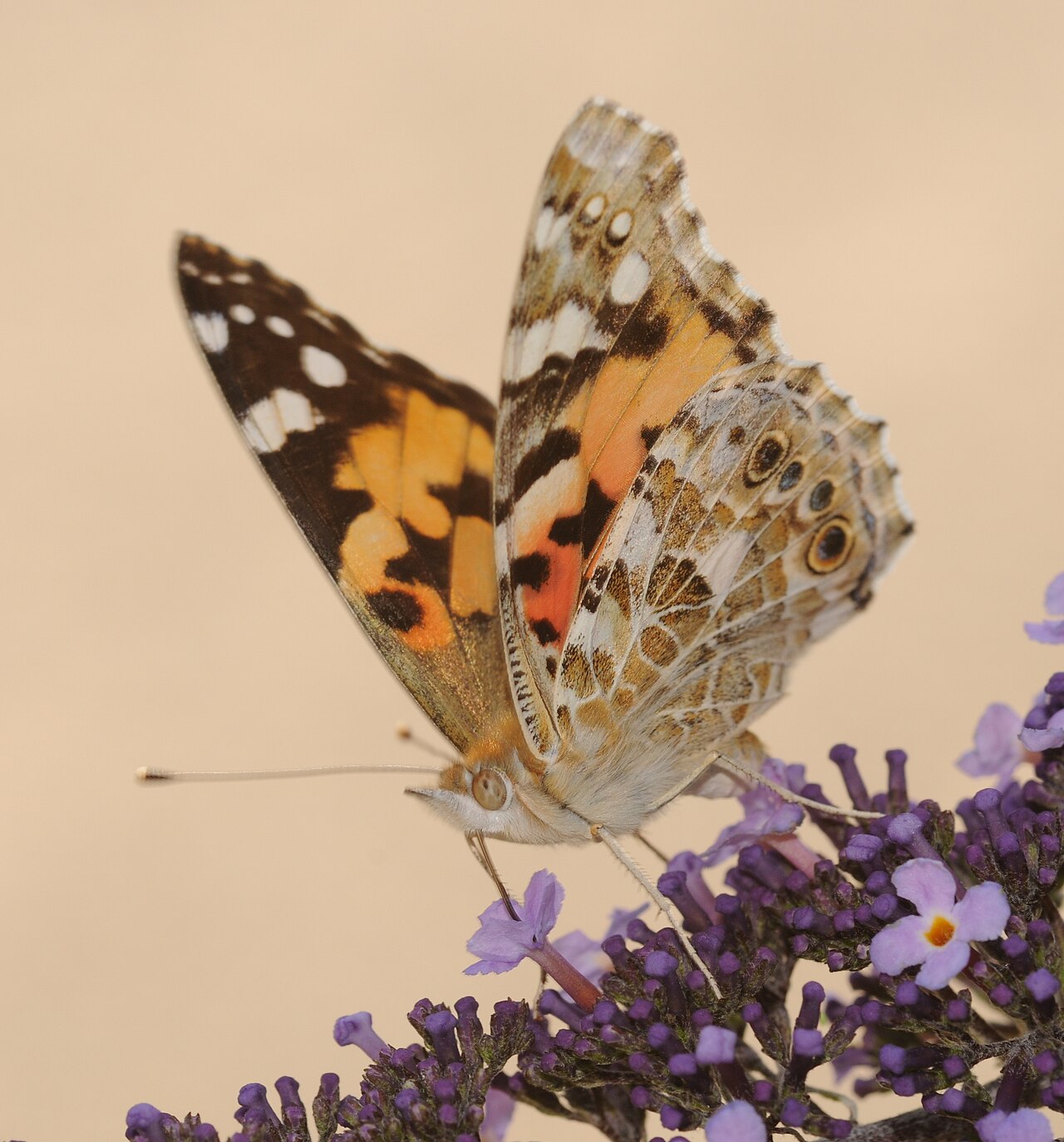
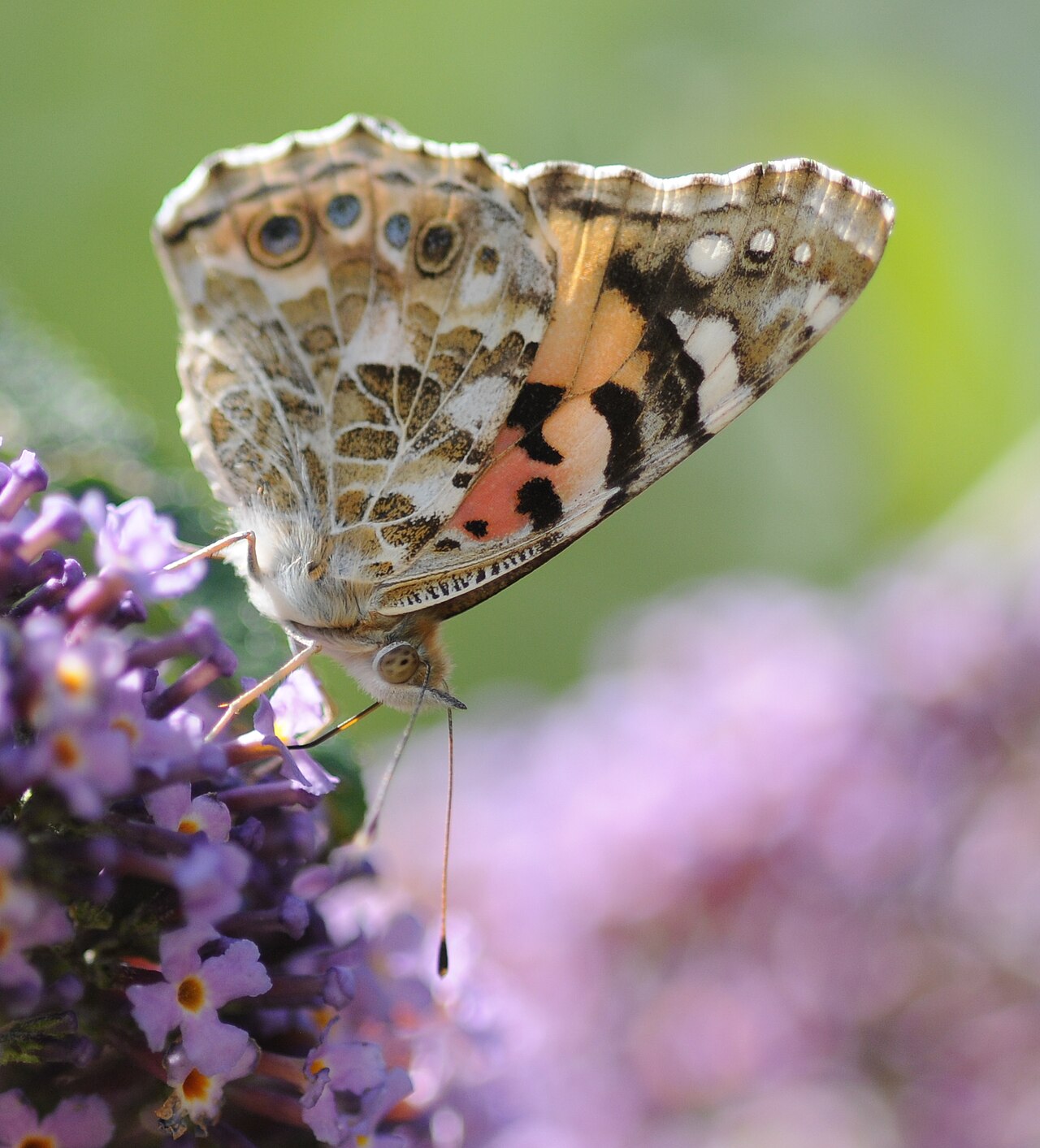
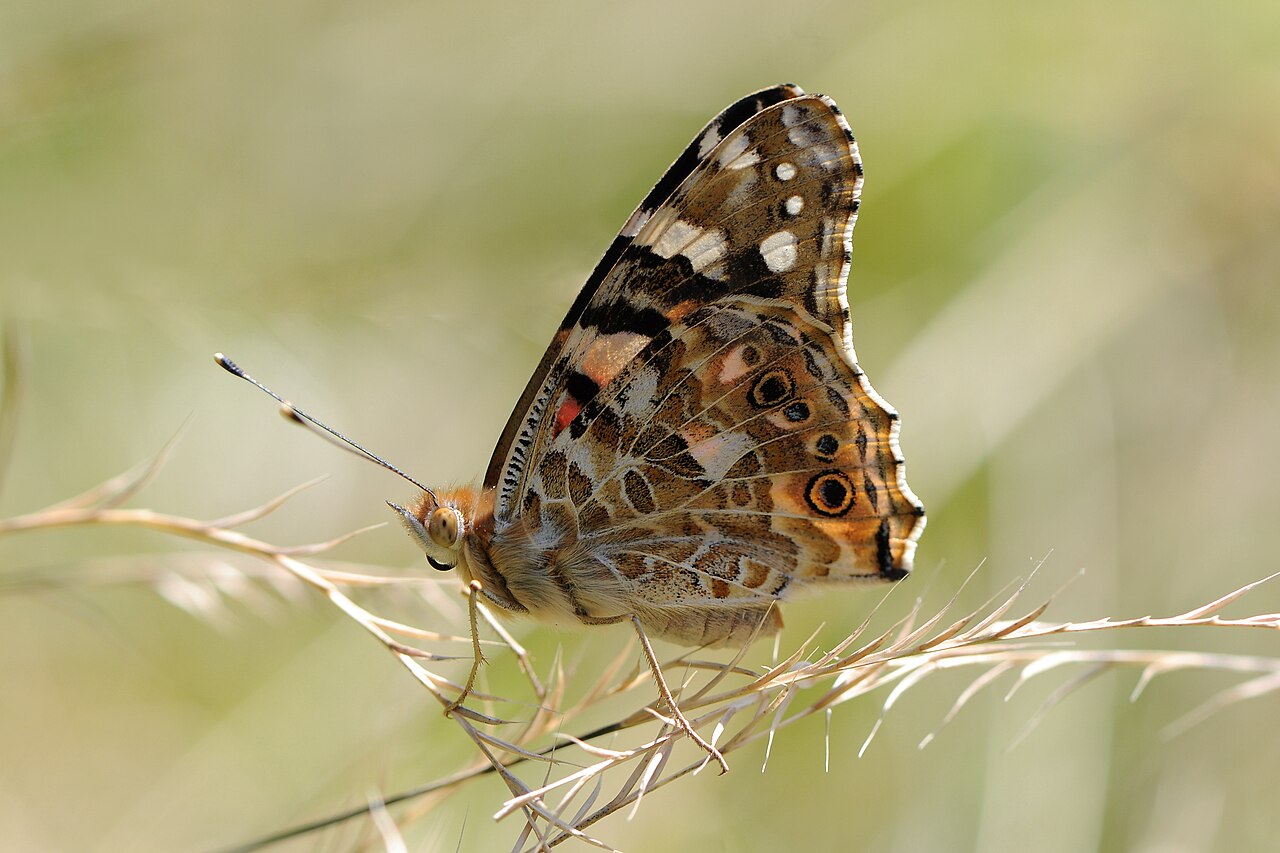
Painted ladies are smaller and more mottled, orange with black wingtips carrying white spots and a complex marbled underside, and they are among the most widespread butterflies in the world. American ladies are similar with two large eyespots on the hindwing underside rather than four small ones.
Fritillaries are orange above with black spotting and, in most species, bright silver spots on the hindwing underside, which is the confirming feature. Question marks and commas are ragged-edged orange butterflies that overwinter as adults and are often the first butterfly seen in spring, sometimes on a warm February day. The orange and black butterfly guide covers the identification properly.
What Does It Mean When a Butterfly Visits You?
A butterfly that lands and stays is read as the strongest form of the message, taken as confirmation, presence, or encouragement during a period of change. Landing on the hand or shoulder is treated as the most personal version, and repeated visits over days as reinforcement.
A butterfly crossing your path is read as change already in motion rather than something to begin, and one appearing indoors as news or a visitor arriving. A pair is read as partnership and harmony. None of these carry warnings, which is consistent across butterfly symbolism generally.
The correct response to a butterfly landing on you, if you want the practical answer, is to stay still and let it leave on its own. Wings are covered in scales that come off on contact and cannot be replaced, and handling risks damage even when done gently. Letting it go when ready is better for the insect and, for most people, more meaningful anyway.
Why Are So Many Butterflies Orange?
Because orange works as a warning colour and as a mimicry template. Monarchs are toxic from the milkweed their caterpillars eat, and their bright orange with black veining is aposematic, an advertisement that birds learn to avoid after a single bad experience.
Once a warning pattern is established, other species converge on it. Viceroys share the monarch’s pattern and are themselves distasteful, making the relationship Mullerian mimicry, where two defended species reinforce the same lesson so predators learn faster. Queens and soldiers, also milkweed feeders, sit in the same complex.
Orange also works for reasons unrelated to defence. It is highly visible to butterflies themselves, which matters for finding mates, and orange and brown pigments are produced from readily available compounds. Fritillaries, crescents, and commas are orange without being toxic and rely on camouflage from below instead, with cryptic mottled undersides that make a settled butterfly nearly invisible.
What Should You Do to Help Them?
Plant host plants, not just nectar. Nectar feeds adults that hatched somewhere else; host plants create local populations. Milkweed for monarchs, thistle and mallow for painted ladies, violets for fritillaries, and elm, hackberry, and nettle for question marks and commas each support a specific species from egg to adult.
Skip insecticides entirely, including the ones marketed as natural. Insecticidal soap, neem, and pyrethrin all kill butterfly eggs and caterpillars on contact, and systemic neonicotinoids move into leaf tissue and nectar and persist for a season or longer. A garden planted for butterflies and then sprayed is a trap.
Leave the garden untidy through winter. Many butterflies overwinter as chrysalides on stems or in leaf litter, and question marks and mourning cloaks overwinter as adults in log piles and loose bark, so autumn clearing removes next year’s butterflies along with the debris. Conservation organisations such as the Xerces Society (xerces.org) publish regional plant lists. The painted lady guide covers one of the easiest species to support.
Related reading: Orange Ladybug Meaning.
Frequently Asked Questions
What does an orange butterfly symbolize?
Joy, energy, creativity, and encouragement to act on a change already underway, combining orange colour symbolism with the transformation reading that underpins all butterfly symbols.
Does an orange butterfly mean a loved one is near?
It is one of the most commonly reported readings, and the monarch’s arrival in Mexico around Día de los Muertos gives it a documented cultural basis rather than a purely modern one.
Are orange butterflies rare to see?
No. Orange is among the most common butterfly colours in North America, with monarchs, viceroys, painted ladies, fritillaries, and crescents all widespread. Monarchs specifically have declined sharply.
What color butterfly is good luck?
Blue is most often treated as the luckiest, partly because blue butterflies are genuinely uncommon in temperate regions. Orange, yellow, and white all carry positive readings too.
What does a butterfly mean in Christianity?
Resurrection, with the caterpillar as earthly life, the chrysalis as the tomb, and the emerging butterfly as the soul released. The association predates Christianity in Greek thought.
What does it mean when a butterfly visits you?
Confirmation or presence rather than instruction, and repeated visits are read as reinforcement. Stay still and let it leave on its own; wing scales come off on contact and cannot be replaced.
Which orange butterfly did I see?
Likely a monarch, viceroy, painted lady, or fritillary. Monarchs are large with thick black veins, viceroys have an extra black line on the hindwing, and fritillaries have silver spots underneath.

Similar Posts
Armadillo Poop: Identification Guide
Armadillo scat is a hard clay-packed marble, rarely found in the open. The digging signs that identify them, the leprosy question, and how to check a burrow before filling it.
Japanese Beetle vs Ladybug: How to Tell Pest From Ally
Japanese beetles have metallic copper-green coloring and white hair tufts; ladybugs have solid colors with black spots. Identify both and why it matters.
Animals That Eat Wasps: Nature’s Wasp Control
Badgers, skunks, bears, bats, frogs, dragonflies, robber flies and mantises all eat wasps. How each gets around the sting, and why a torn-up ground nest needs no treatment.
Bat Poop vs Mouse Poop: The Crush Test and Location Clues
Bat poop vs mouse poop: crush a sample. Bat guano crumbles into shiny powder from insect fragments; mouse droppings stay firm. Location and health risks explained.
Southern House Spider: ID and the Recluse Confusion
Male southern house spiders are mistaken for brown recluses constantly. Here is how to tell them apart and why this harmless spider is worth keeping.