Dead Ladybug Meaning: 7 Spiritual Signs and the Real Reason You Found One
Finding a dead ladybug is traditionally read as a paused blessing: luck that was on its way to you has stalled, and the message is to look at what you have been neglecting. The dead ladybug meaning in folk belief is almost never framed as a curse. Across the traditions that spiritual writers draw on, the ladybug is a bringer of small, domestic good fortune, so its death reads as a delay or a closed chapter rather than a punishment.
Where you found it matters more than the fact that it died. A ladybug dead on a windowsill in February carries a very different folk reading than one found in a garden in July, and both have a plain biological explanation that sits comfortably alongside the symbolism. This guide separates the traditions, gives the situational readings, and ends with the reason most people find dead ladybugs indoors.
A dead ladybug symbolizes interrupted luck, a wish that will not arrive on the path you expected, and in grief contexts a visit from someone who has died. Most traditions treat it as a prompt to act rather than an omen of harm. Indoors in winter it usually means an overwintering beetle that dried out.
| Where you found it | Common traditional reading |
|---|---|
| Indoors on a windowsill | Luck that could not reach you; something blocked at the threshold |
| In the garden or on a plant | A natural cycle closing; harvest or effort coming to an end |
| On your doorstep | A message about the household rather than about you alone |
| In your hand or on your clothing | Read as personal: a wish to let go of or a goodbye |
| Repeatedly, over days | Treated as emphasis, not as a new message |
| In a dream | Associated with lost hope that the dreamer still controls |
What Does a Dead Ladybug Symbolize?
A dead ladybug symbolizes luck in suspension. The living beetle is one of the few insects with an almost unanimously positive reputation in European and North American folk belief, tied to good harvests, safe homes and granted wishes. When the symbol dies, folk readings do not flip it to bad luck; they read it as the same blessing arriving blocked.
The second common reading is closure. Gardeners and farmers watched ladybugs appear with aphids and vanish when the season turned, so a dead one marked the end of a productive stretch. Spiritual writers today frame that as a cycle finishing in your work, a relationship or a long effort.
The third reading is a personal visit. In bereavement, small bright insects are widely treated as contact from the dead, which is the same logic people apply to a dead bird found on the path. A dead ladybug in that context is read as a greeting rather than a warning.
Dead Ladybug Meaning in the Bible and Christian Tradition

The ladybug does not appear in scripture, so there is no biblical dead ladybug meaning in a literal sense. What exists is a medieval European naming tradition: in several languages the beetle is named for the Virgin Mary, as in the German Marienkafer and the English “Our Lady’s bird,” the source of the modern word ladybird.
From that naming, folk Christianity treated the insect as under Mary’s protection, and killing one was considered unlucky. In that frame a ladybug found already dead is often read as protection withdrawn for a reason, and as a prompt toward prayer or gratitude rather than toward fear.
Some devotional writing links the seven spots of Coccinella septempunctata to the seven sorrows and seven joys of Mary. That pairing is a later folk gloss, not doctrine, and the spot count varies widely between species.
Native American, Celtic and East Asian Views
Claims about a single Native American ladybug teaching should be treated carefully. There are hundreds of distinct nations with distinct beliefs, and most of the specific “Native American ladybug meaning” circulating online is modern spiritual writing rather than documented oral tradition. Where beetles do appear in recorded stories, they are usually tied to crops and renewal.
Celtic and wider European folk belief is better documented through rhymes and charms. Counting a ladybug’s spots to predict the number of lucky months, or asking it to fly home before a wish was granted, both appear in nineteenth century collections. A beetle that died before flying away was said to leave the wish unspoken.
In parts of East Asia the beetle carries agricultural rather than romantic associations, and its appearance signals timely pest control for a crop. In those readings a dead ladybug is practical news about the field, not a personal sign.
Where You Found It Changes the Message
Folk reading of insects has always been situational, and the table above summarizes the common versions. A beetle dead at a window is read as luck stopped at the boundary of the home, which is why many people connect it to the same themes as a live ladybug appearing in the house.
A dead ladybug in the garden is the gentlest version. The insect lived its short adult life among the aphids it hunted, and the reading is simply that a cycle closed on time. Nothing in the tradition asks you to act.
A dead ladybug on your skin or clothing is read as personal because contact is personal, exactly as with a ladybug that lands on you while alive. The usual interpretation is a goodbye you have not finished saying.
Dead Ladybug Meaning for Love, Grief and Death
In love symbolism the living ladybug is a wish-carrier, and the old charm had it fly toward the direction of a future partner. A dead one is therefore read as a romantic hope that will not take the shape you pictured, with the emphasis on the shape rather than on loss.
In grief the reading is warmer. Bright, harmless insects turning up at a funeral, a graveside or a difficult anniversary are commonly treated as a sign from the person who died, and the beetle being dead is usually not held against the message.
Neither reading predicts a death. Folk tradition reserves death omens for larger animals and for birds entering a house, and there is no historical record of the ladybug serving that role in Europe or North America.
Seeing Dead Ladybugs Repeatedly, and in Dreams
Repeated sightings are read as emphasis rather than as a new message, and in practice they almost always have the same cause: a cluster of beetles overwintering in a wall or attic, with a few dying each warm spell. The folk reading and the entomological one agree that the source is in the house.
In dream symbolism a dead ladybug is linked to hope the dreamer believes is gone but still controls, especially where the dreamer killed it. Dream dictionaries are not consistent here, and the honest summary is that the insect carries whatever the dreamer already associates with luck.
If the same spot keeps producing dead beetles, the useful response is to find the entry point. Symbolism does not require you to leave a draft gap open.
The Plain Reason You Found One Indoors
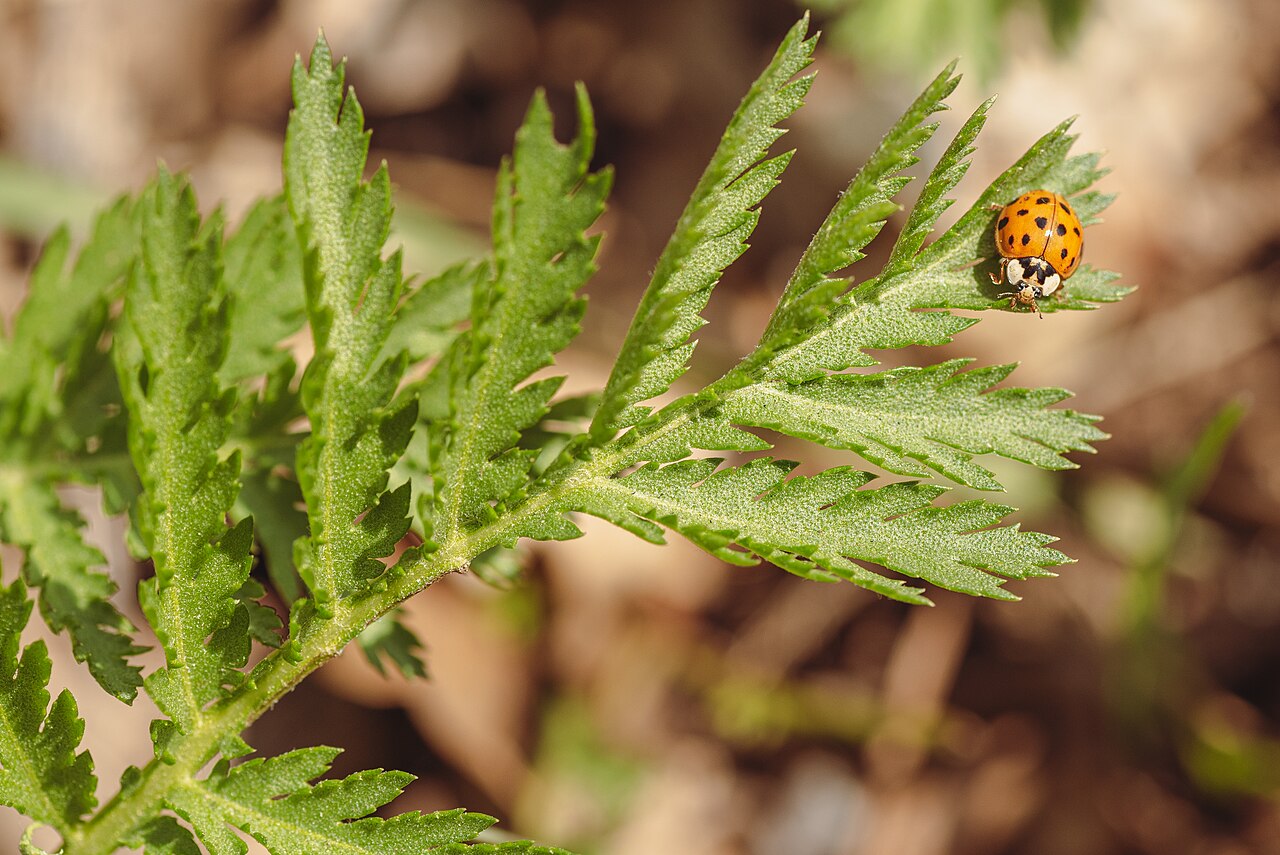
Most dead ladybugs found inside American homes are not native Coccinella but the introduced multicolored Asian lady beetle, which gathers in large groups to overwinter in buildings. The difference matters, and the markings are easy to learn once you have seen them side by side in an Asian lady beetle comparison.
Inside a heated house the beetles dehydrate, and a share of each cluster dies before spring. That is why they turn up on windowsills, in light fixtures and along baseboards from October through March. For infestations the recommended approach is a vacuum and sealing entry points, not insecticide, as university extension guidance from bodies like the University of Minnesota Extension sets out.
These beetles can give a faint pinch and can stain surfaces with a yellow fluid when disturbed, which surprises people who assume the family is entirely harmless; the detail is covered in our note on whether ladybugs bite.
Frequently Asked Questions
What color ladybug is lucky, and which ladybugs bring good luck?
Folk tradition treats the classic red beetle with black spots as the lucky one, and red remains the color named in the old wish charms. Which ladybugs bring good luck is answered the same way across European sources: the red seven-spot, with yellow and orange forms picking up their own separate meanings much later.
What is the spiritual meaning of a yellow ladybug?
Modern spiritual writing links a yellow ladybug to optimism, travel and a lighter phase after a hard one, borrowing from the general symbolism of yellow. There is no historical folk record behind it. Biologically, many yellow beetles are simply newly emerged adults whose color has not darkened yet.
Are ladybugs signs of angels?
Many people treat them that way, and the belief draws on the beetle’s old association with the Virgin Mary rather than on scripture. Grief support writing often encourages the reading because it is comforting and harmless. It is a devotional interpretation, not a documented teaching of any church.
What does an orange ladybug mean, and is it okay to touch an orange ladybug?
Orange is usually read as creativity and a change of pace in modern symbolism, and most orange individuals in the United States are Asian lady beetles. It is safe to touch one, though it may pinch or leave a staining yellow fluid on your fingers. See our fuller note on orange ladybug meaning.
What color ladybug is rare?
Gray, ash and genuinely black forms are the ones people encounter least, though several are common species with unusual color morphs rather than rare insects. Two-spot beetles in particular can appear almost entirely dark. Our guide to the black ladybug covers which species those dark beetles usually turn out to be.