What Do Moose Eat? Twigs, Water Plants, and Winter
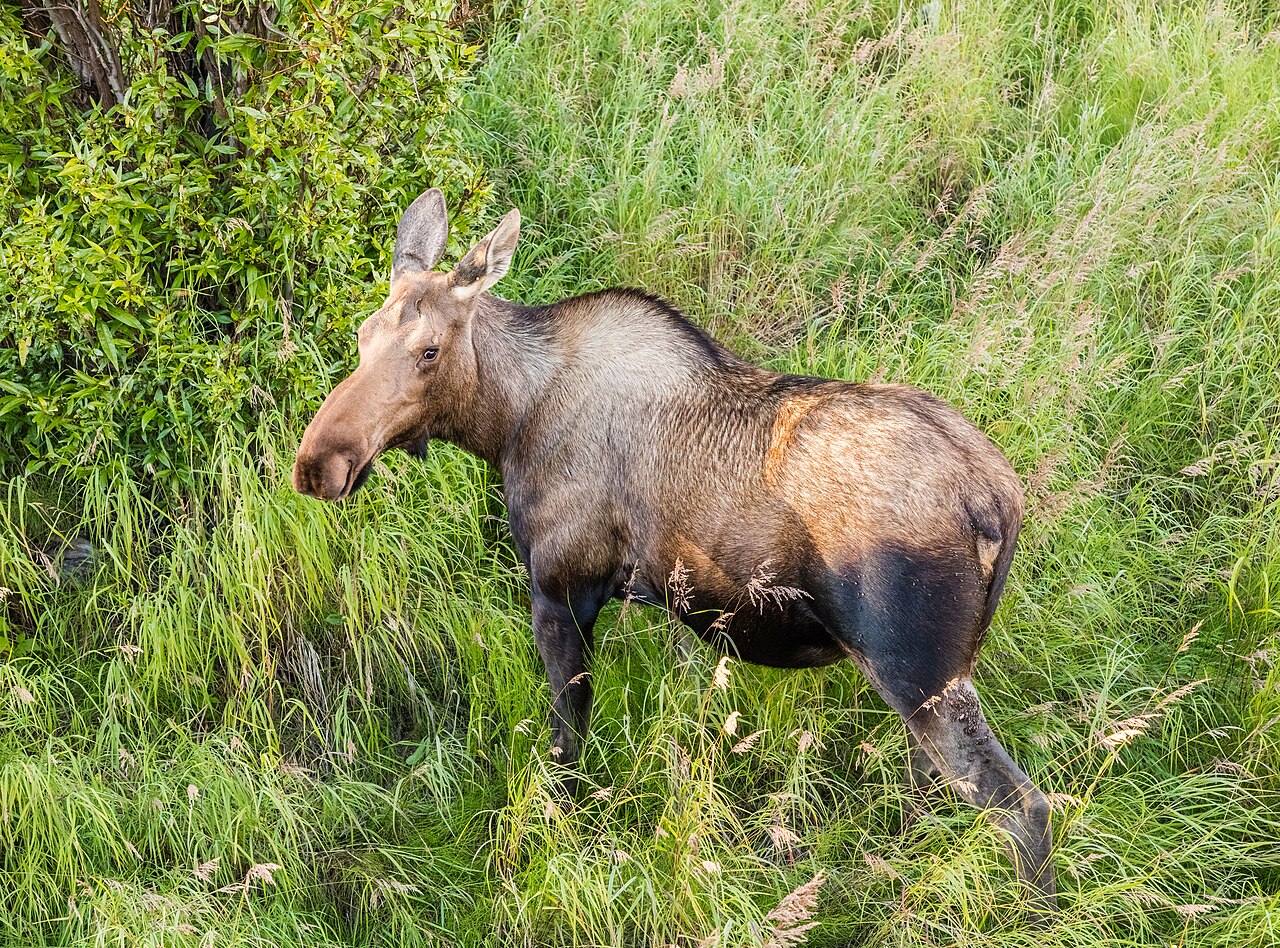
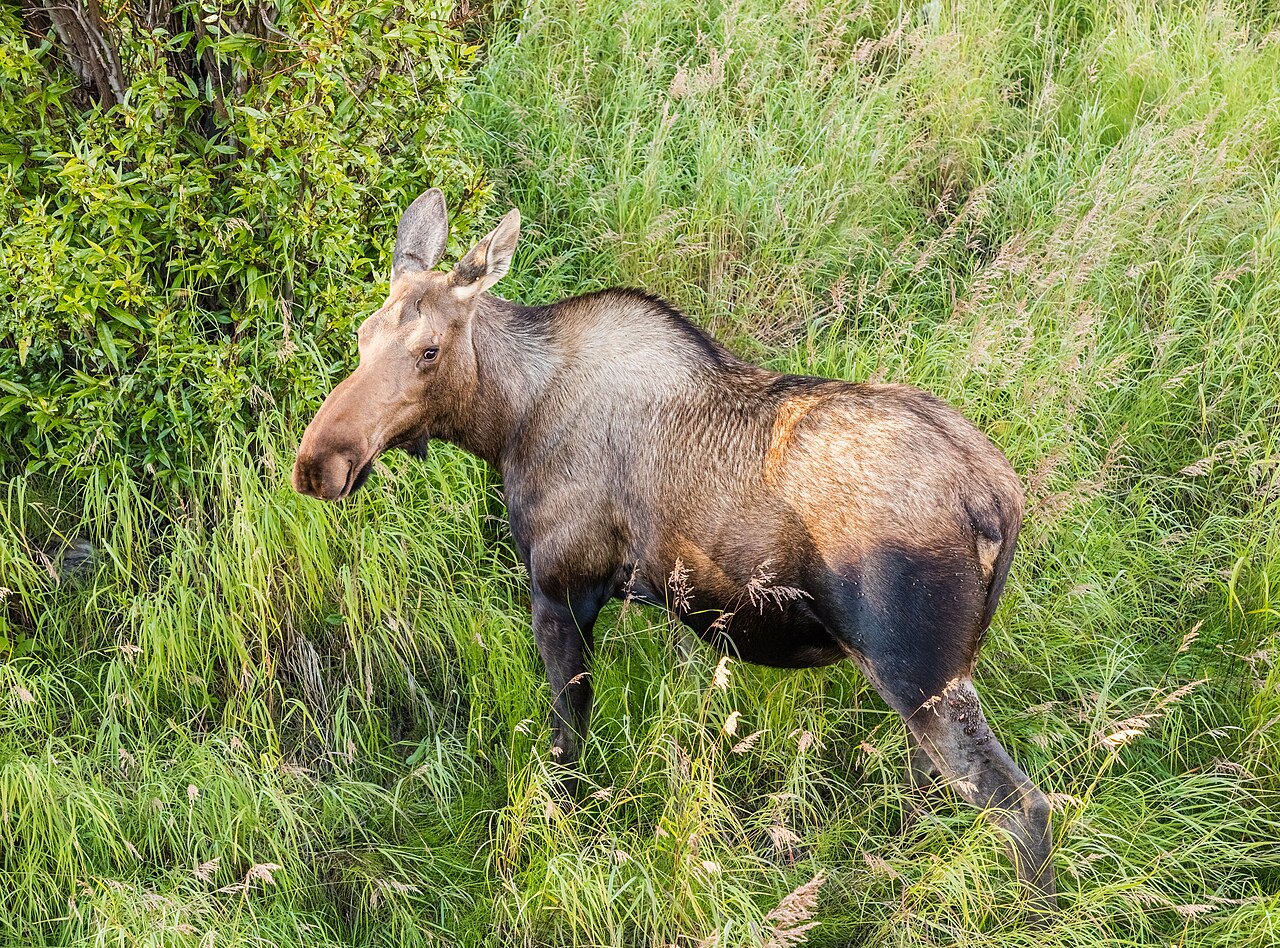
Moose eat twigs, and the name says so. The word comes from an Algonquian term usually translated as twig eater or bark stripper, and it describes the animal accurately. A moose is a browser rather than a grazer, feeding on the shoots, twigs, leaves, and bark of willow, birch, aspen, and maple, and it consumes 40 to 60 lb of vegetation on a summer day.
The stranger part of the diet is aquatic. Moose wade and dive for pondweed and water lilies, staying under for up to 30 seconds and reaching depths of nearly 20 ft, and the reason is sodium. Terrestrial browse is critically short of it, and aquatic plants can carry hundreds of times more. This guide covers the seasonal diet, the sodium problem, rumination, winter starvation, and why feeding moose is dangerous.
| Quick Facts | Moose Diet |
|---|---|
| Feeding type | Browser, eats woody plants and aquatic vegetation |
| Summer intake | 40 to 60 lb of vegetation per day |
| Winter intake | Roughly 10 to 20 lb, mostly twigs |
| Preferred browse | Willow, birch, aspen, maple, balsam fir |
| Aquatic feeding | Dives to 20 ft, holds breath up to 30 seconds |
| Stomach | Four chambers, ruminant |
What Do Moose Eat in Summer?
Summer is the season of abundance and moose exploit it hard. Leaves and new shoots of willow, birch, aspen, maple, and mountain ash form the bulk of the terrestrial diet, taken by stripping foliage from branches with the lips and tongue.
Aquatic plants make up the rest and are disproportionately important. Water lilies, pondweed, horsetail, and various submerged species are consumed in quantity, and a moose feeding in a pond may spend hours at it, submerging repeatedly.
Forbs and other soft vegetation fill the gaps, and moose take fireweed, mushrooms, and various herbaceous plants opportunistically. Total intake reaches 40 to 60 lb per day, which is what a 1,000 lb animal needs to build the fat reserves that carry it through winter. Comparable browsing pressure and the same reliance on woody plants appear in our guide to what giraffes eat, in an entirely different climate.
The Sodium Problem
This is the reason for the diving, and it is a genuine physiological constraint rather than a preference. Terrestrial browse in northern forests is extremely low in sodium, and a large mammal cannot maintain nerve and muscle function without it.
Aquatic plants solve the problem. Submerged vegetation concentrates sodium from the water, and studies have found levels hundreds of times higher than in the woody browse growing on the bank a few feet away. A moose feeding on pondweed is topping up a mineral it cannot get any other way.
The behavior it enables is remarkable for an animal this size. Moose swim strongly, dive to nearly 20 ft, hold their breath for around 30 seconds, and can close their nostrils while submerged. Calves swim within days of birth. This is also why roadside salt licks and treated highways attract moose in spring and create a serious collision risk, since the same sodium hunger draws them to the road.
Winter: Twigs, Bark, and Slow Starvation
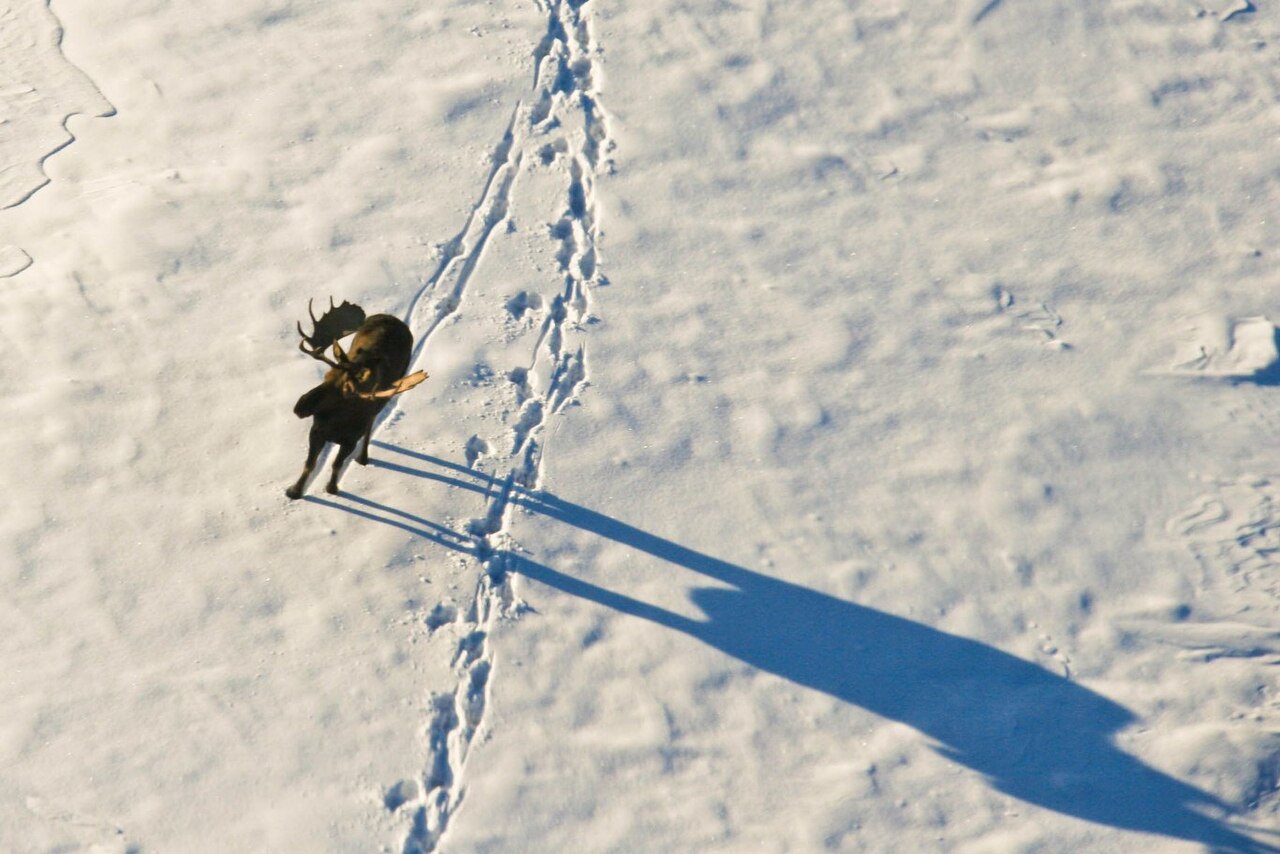
Winter inverts everything. Leaves are gone, ponds are frozen, and moose shift almost entirely to woody twigs and buds, stripping the current year’s growth from willow, birch, aspen, and balsam fir, and gnawing bark when browse runs short.
The nutrition is poor. Winter twigs are high in fiber and low in protein and energy, and moose typically cannot eat enough to meet their needs, so they run a calorie deficit through the season and live partly on fat reserves built in summer. Intake drops to roughly 10 to 20 lb per day, partly because there is less to eat and partly because they reduce activity to conserve energy.
Heavy browsing leaves a visible mark. In areas with high moose density, a browse line appears where every twig within reach, roughly 8 to 10 ft up, has been stripped, and the remaining vegetation grows in a distinctive shape. Winter starvation is a significant natural mortality factor, and a hard winter following a poor summer kills a substantial share of calves.
Rumination and the Four-Chambered Stomach
Moose are ruminants like cattle and deer, with a four-chambered stomach. Food enters the rumen where microbes ferment cellulose that no mammal can digest unaided, then passes through the reticulum, omasum, and abomasum, the last functioning like a conventional stomach.
Cud chewing does the mechanical work. A moose regurgitates a bolus of partly fermented material, chews it thoroughly, and swallows it again, which increases the surface area available to gut microbes. A moose spends a large part of each day lying down ruminating rather than feeding.
The microbial community adapts slowly to diet changes, and this has a practical consequence that matters for wildlife management. A moose switched abruptly to an unfamiliar food, including hay put out by well-meaning people in a hard winter, cannot digest it, and animals have died with full stomachs because the gut flora could not process what was in them.
What Moose Do Not Eat
They are selective despite the volume they consume. Grasses form a minor part of the diet at best, because a moose’s long legs and short neck make grazing at ground level awkward and its digestive system is tuned to woody browse rather than grass.
Conifers are generally avoided except balsam fir, which they take readily in winter, and they largely leave spruce and pine alone. Certain plants are avoided outright, and moose show clear preferences that shape forest composition where they are abundant.
They are strictly herbivorous. Occasional reports of moose eating fish or small animals are unsupported, and the anatomy makes it implausible. Their feeding also overlaps little with the omnivores sharing the same forest, such as the species in our guides to what bears eat and what possums eat, which take fruit and animal matter a moose ignores entirely. What is true is that they are strongly attracted to salt and mineral sources of any kind, which produces the roadside encounters and the raids on livestock mineral blocks that get misreported as unusual feeding behavior.
Moose Compared With Deer and Elk
All three are browsers to some degree, but the balance differs. Moose are almost pure browsers, taking woody plants and aquatic vegetation and very little grass. Elk are intermediate and take substantial amounts of grass alongside browse. White-tailed deer browse heavily but also graze and eat far more forbs, agricultural crops, and mast such as acorns.
Height separates their feeding zones and reduces direct competition. A moose reaches 8 to 10 ft when browsing, well above deer and elk, which is why browse lines differ so distinctly by species and why moose can persist in areas heavily browsed at lower levels.
One interaction matters more than competition. In areas where white-tailed deer expand into moose range, they bring the parasitic brainworm, which is harmless to deer but causes fatal neurological disease in moose. Combined with winter tick infestations that have worsened with milder winters, parasite pressure linked to warming is now a leading factor in moose declines at the southern edge of their range. Our guides to deer droppings and the baby deer cover the species involved.
Why Feeding Moose Is Dangerous
It is dangerous for the moose and for people, and it is illegal in most jurisdictions where moose occur. A fed moose loses its wariness, stays near roads and houses, and becomes habituated in ways that end badly.
Moose injure more people annually in Alaska than bears do, and habituated animals are responsible for a disproportionate share. A cow with a calf or a bull in rut will charge, and a 1,000 lb animal that kicks in any direction and strikes with the front hooves is genuinely dangerous. Warning signs include ears laid back, raised hackles along the shoulders, lip licking, and a lowered head.
Winter feeding also kills through the digestive mechanism described above. Hay and grain that a moose cannot digest displaces the browse it can, and starvation with a full stomach is a documented outcome. If a moose approaches, put a large solid object such as a tree or vehicle between you and it, and back away rather than running in the open.
Habitat and What It Means for Moose Numbers
State wildlife agencies across the northern tier monitor these trends closely, since moose are both a major game species and a tourism draw. Moose depend on early successional forest, meaning young regrowth after fire, logging, or windthrow, because that is where willow and birch shoots grow within reach. Mature closed-canopy forest offers little browse at moose height.
Wetlands matter equally for the sodium and for summer thermal relief, since moose overheat easily and wading cools them. A landscape with young deciduous regrowth adjacent to ponds and wetlands supports far more moose than either habitat alone.
That dependence explains recent population trends. Moose have declined sharply at the southern edge of their range in parts of the northeastern United States and around the Great Lakes, driven by winter ticks that thrive in milder winters, brainworm from expanding deer populations, and heat stress, while northern populations remain more stable. It is one of the clearer examples of a large mammal responding to a warming climate through parasites rather than through temperature directly.
Frequently Asked Questions
What do moose eat?
Twigs, shoots, leaves, and bark of willow, birch, aspen, maple, and balsam fir, plus aquatic plants including water lilies and pondweed. They consume 40 to 60 lb of vegetation daily in summer and roughly 10 to 20 lb of woody browse in winter.
Why do moose eat underwater plants?
For sodium. Terrestrial browse in northern forests is extremely low in it, while submerged plants concentrate sodium from the water at levels hundreds of times higher. Moose dive to nearly 20 ft and hold their breath around 30 seconds to reach it.
What do moose eat in winter?
Almost entirely woody twigs, buds, and bark, since leaves are gone and ponds are frozen. Winter browse is low in protein and energy, so moose run a calorie deficit and live partly on summer fat reserves. Winter starvation is a significant cause of death, especially among calves.
Do moose eat grass?
Very little. Their long legs and short neck make ground-level grazing awkward, and their digestive system is tuned to woody browse. They are browsers rather than grazers, which distinguishes them from elk and, to a lesser extent, from white-tailed deer.
Should I feed moose in winter?
No, and it is illegal in most jurisdictions with moose. Their gut microbes adapt slowly, so hay or grain cannot be digested and animals have died with full stomachs. Feeding also habituates moose, and habituated animals injure people, with moose causing more injuries in Alaska than bears.
How much does a moose eat in a day?
Around 40 to 60 lb of vegetation in summer, dropping to roughly 10 to 20 lb in winter as both availability and activity decline. That summer intake builds the fat reserves needed to survive the winter deficit.
Why are moose declining in some areas?
At the southern edge of the range, mainly through parasites linked to milder winters. Winter ticks now survive in far greater numbers, and brainworm carried harmlessly by expanding white-tailed deer populations causes fatal neurological disease in moose. Heat stress compounds both.