Baby Deer
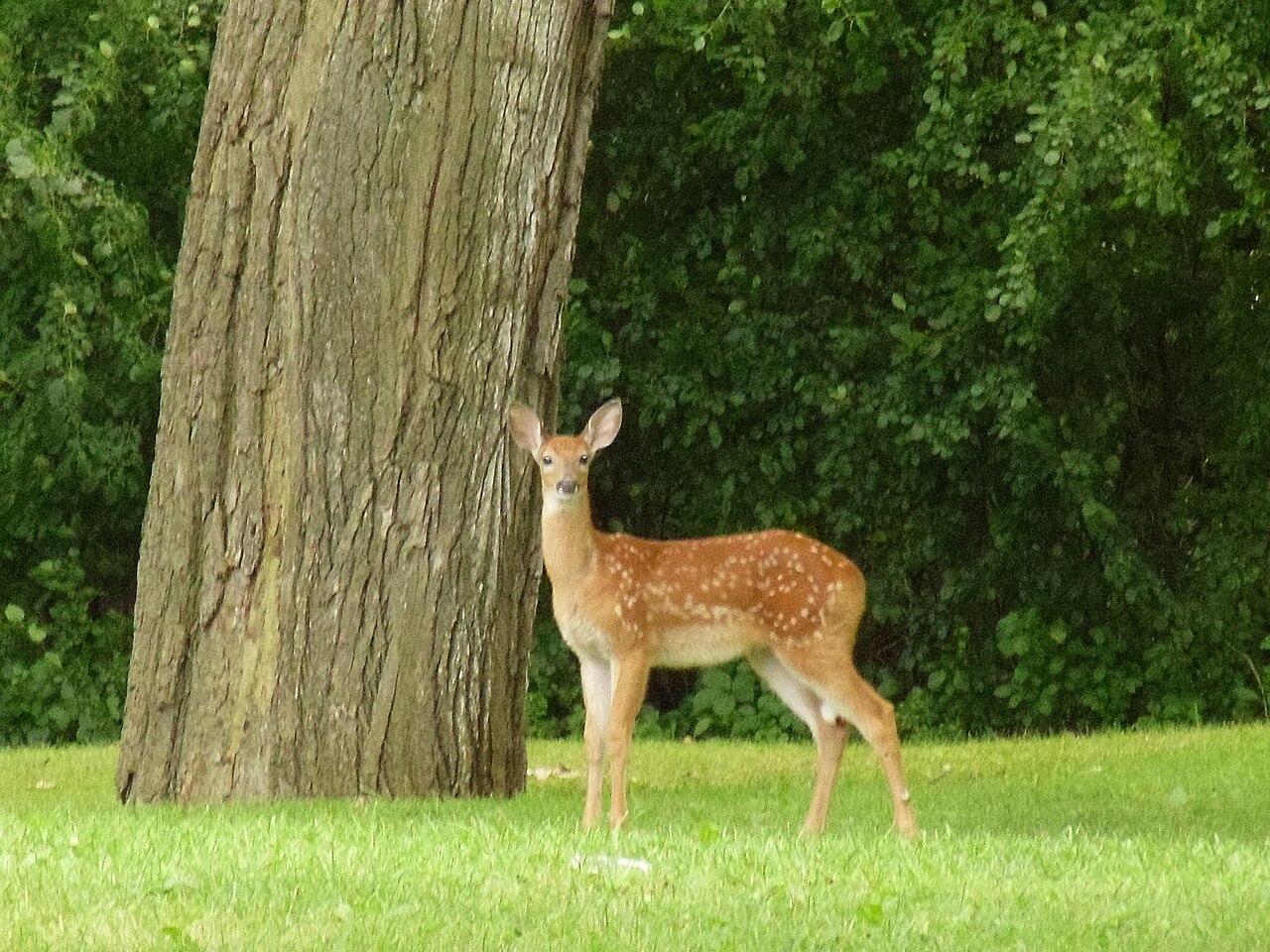
A baby deer, called a fawn, is born with a reddish brown coat covered in several hundred white spots that camouflage it against dappled sunlight on the forest floor. Most fawns weigh just 4 to 8 pounds at birth, yet they can stand within 10 to 30 minutes and take their first wobbly steps within hours, even though they spend most of their first few weeks lying motionless in tall grass or brush while their mother forages nearby.
Finding a fawn curled up alone in a yard or field is one of the most common wildlife encounters people misread as an emergency, when in fact it is almost always a healthy, unabandoned baby doing exactly what its instincts tell it to do.
| Quick Reference | Detail |
|---|---|
| Baby Name | Fawn |
| Birth Weight | 4 to 8 pounds |
| Standing Time | 10 to 30 minutes after birth |
| Litter Size | 1 to 3 fawns per doe, twins are common |
| Spots Fade | Around 3 to 4 months of age |
| Weaning | Begins around 2 to 3 weeks, complete by late summer |
| Time With Mother | Approximately one year |
What Is a Baby Deer Called?
A baby deer is called a fawn, a term used for the young of white-tailed deer and several other deer species during their first several months of life, much as a baby fox is called a kit or a baby rabbit is called a kitten or kit. The mother is called a doe, and she typically gives birth to one to three fawns after a gestation period of roughly 200 days, or about six and a half to seven months.
Twins are common among healthy, well-fed does, and triplets occur less frequently but are not unheard of. Interestingly, when a doe gives birth to more than one fawn in a season, each offspring can sometimes be sired by a different buck, since deer mating during the fall rut is not always limited to a single partner.
Most fawns in the United States are born between April and July, with May and June marking the peak of the season across much of the whitetail’s range, timed so fawns have an entire summer and fall to grow strong before winter arrives.
Why Are Baby Deer Born with Spots?
A newborn fawn’s coat carries roughly 300 white spots arranged in loose lines along its back and flanks, and this pattern is a form of camouflage known as disruptive coloration. The scattered white marks mimic the uneven patches of sunlight that filter through tree canopies and fall across the forest floor, breaking up the fawn’s outline against a background of shifting light and shadow.
Because most of a fawn’s predators, including coyotes, bobcats, and foxes, rely heavily on detecting movement and shape rather than color, a motionless spotted fawn tucked into tall grass or brush can be remarkably difficult to spot even at close range. The camouflage works best precisely because fawns instinctively freeze and stay still rather than trying to flee.
The spots are temporary. Most fawns lose them during their first molt, typically between three and four months of age, by which point they are large enough and fast enough that camouflage matters less than earlier in life. A handful of other deer species, including fallow deer, chital, and sika deer, keep their spots into adulthood, but white-tailed deer fawns shed theirs well before their first winter.
Do Baby Deer Really Have No Scent?
The claim that fawns are born completely scentless is a slight exaggeration, though the underlying idea is largely true. A newborn fawn’s scent glands are not yet fully developed, so it produces only a very faint odor compared to an adult deer, making it far harder for predators that hunt primarily by smell to detect.
The doe reinforces this natural advantage in several ways. Immediately after birth, she eats the placenta and cleans her fawn thoroughly, removing blood and other odors that could otherwise draw in predators. She also returns to nurse only a few times a day, typically around dawn and dusk, and deliberately keeps her own distance the rest of the time so her stronger scent does not rub off on the fawn’s hiding spot.
This combination of faint scent, camouflage, and total stillness is remarkably effective. Predators that hunt largely by smell and movement can walk within a few feet of a hidden fawn and never detect it, which is exactly the outcome a doe’s absence is designed to produce.
How Big Is a Newborn Fawn and How Fast Does It Grow?
Most fawns weigh between 4 and 8 pounds at birth, roughly the size of a large house cat, with single fawns generally weighing more than twins and male fawns typically outweighing females. That rapid early growth curve is fairly typical among mammal young overall, from a baby raccoon to the far larger cubs discussed in our cheetah vs leopard comparison, though a fawn’s specific survival strategy relies more on stillness than on early size. Despite its small size, a fawn can usually stand within 10 to 30 minutes of birth and take its first unsteady steps within a few hours, even though it remains weak and wobbly for the first day or two.
Growth in the first weeks is rapid. A fawn typically doubles in size within its first couple of weeks of life, aided by doe’s milk that is notably high in fat and protein. Around two to three weeks old, fawns begin nibbling at grass and soft vegetation alongside nursing, and by six to eight weeks they are actively grazing on their own.
By late summer, most fawns are fully weaned and eating the same adult diet of grasses, forbs, leaves, clover, acorns, and available agricultural crops that sustains them through the rest of the year.
Why Fawns Are Left Alone (and Why That’s Normal)
For roughly the first five to eight days of life, a fawn spends nearly all of its time bedded down alone in dense cover, moving only when its mother returns to nurse or reposition it. This “bed phase” can look alarming to someone stumbling across a motionless fawn, but wildlife agencies consistently describe it as the period of lowest predation risk in a fawn’s life, precisely because it stays so well hidden.
When a doe has twins or triplets, she deliberately beds them in separate locations, sometimes up to 200 feet apart, so that a predator finding one fawn does not automatically find its siblings too. The doe typically stays within about 100 yards, watching from a distance rather than remaining visibly close by.
As a fawn moves into its second and third week, it becomes noticeably more mobile and begins following its mother more consistently during a phase wildlife biologists sometimes call the “flush phase.” By this point, sightings of a fawn walking, grazing, or briefly wandering solo become far more common and are still entirely normal.
What to Do (and Not to Do) If You Find a Baby Deer Alone
According to the Wisconsin Department of Natural Resources, a fawn found alone in a yard, garden, or field has almost certainly not been abandoned. The single best action is to leave the area quietly and let the fawn continue doing exactly what its instincts are telling it to do.
Picking up or handling a fawn is discouraged even with good intentions, since unnecessary handling stresses the animal and, in many states, it is illegal to possess a wild white-tailed deer without a specific rehabilitation permit. If you have already touched a fawn, gently brushing it with dry grass or leaves can help reduce human scent before you move away.
Genuine intervention is rarely needed, but it can be appropriate if a fawn has been seen wandering and crying continuously for more than a full day, is visibly injured, or is found next to a doe that is confirmed dead. In any of those situations, the right move is to contact a licensed wildlife rehabilitator rather than attempting to care for the fawn at home.
What Do Baby Deer Eat?
For the first two to three weeks, a fawn’s diet is almost entirely doe’s milk, which is unusually rich in fat and protein compared to the milk of many other mammals its size. This calorie-dense milk supports the rapid early growth a fawn needs to gain strength quickly while still confined mostly to its hiding spot.
Solid food enters the picture gradually. Around two to three weeks of age, fawns begin sampling grass and other soft, easily digestible vegetation alongside continued nursing, and by six to eight weeks they are grazing actively on their own for meaningful portions of the day.
Full weaning is typically complete by late summer, at which point a fawn’s diet matches the same mix of grasses, forbs, leaves, clover, acorns, and crops that sustains adult deer through the rest of the year.
How Long Do Fawns Stay With Their Mother?
Fawns typically remain with their mother for approximately one year, a period of parental care roughly comparable to what a young baby otter spends learning from its own mother before striking out, gradually gaining independence and confidence throughout the fall and winter following their birth. By the time the next birthing season approaches, most does actively drive off their previous year’s offspring, now referred to as yearlings, to make room for the new fawns about to arrive.
That full year together gives a fawn time to learn essential survival behaviors from its mother, including where to find food through changing seasons, how to respond to predator threats, and the general layout of the home range it will likely continue to use as an adult.
By the time a fawn reaches yearling status and strikes out largely on its own, it has already absorbed most of the practical knowledge it needs to survive independently, completing a remarkably fast transition from a nearly scentless, spotted newborn to a fully capable adult deer in just twelve months.
Related reading: Mule Deer vs Whitetail.
Related reading: Deer Sounds.
Related reading: what is a group of deer called.
Related reading: are deer nocturnal.
Frequently Asked Questions
What is a baby deer called?
A baby deer is called a fawn, while its mother is called a doe. Fawns typically stay with their mother for about a year before becoming independent yearlings.
Why do baby deer have spots?
The white spots on a fawn’s coat provide camouflage by mimicking dappled sunlight on the forest floor, helping the motionless fawn blend into its surroundings and avoid detection by predators.
Do baby deer really have no scent?
Not entirely, but they come close. A fawn’s scent glands are underdeveloped at birth, producing only a very faint odor, and the mother further reduces any remaining scent by cleaning the fawn and staying away except to nurse.
How much does a newborn fawn weigh?
Most newborn fawns weigh between 4 and 8 pounds, roughly the size of a large house cat, with single fawns typically weighing more than twins.
Is a fawn alone in the yard abandoned?
Almost certainly not. Does regularly leave fawns hidden alone for hours at a time while foraging nearby, returning periodically to nurse, so a motionless fawn is very likely just following normal instinct rather than being abandoned.
Can you legally keep a baby deer as a pet?
In most states, no. Possessing a wild white-tailed deer without a specific wildlife rehabilitation permit is illegal, and a fawn’s best chance at survival comes from being left with its mother in the wild.
When do fawns lose their spots?
Most white-tailed deer fawns lose their spots during their first molt, typically between three and four months of age, well before their first winter.