Green Butterfly: Species, Rarity, and Why Green Is Hard
Green butterflies are genuinely uncommon, and the reason is chemical: butterflies have no green pigment. Every green butterfly in the world produces the color either by combining yellow pigment with blue structural color, or through microscopic wing scale architecture that reflects green light directly. Green is an engineering achievement rather than a paint job.
In North America the green butterfly you are most likely to see is the juniper hairstreak, a small jade-colored insect that stays close to red cedar trees. In Florida and south Texas the malachite adds a much larger green-and-black option. This guide covers the species you can actually find, the tropical spectaculars, the green caterpillars people search for alongside them, the symbolism, and the green moths that get mistaken for butterflies.
| Species | Where and What to Look For |
|---|---|
| Juniper hairstreak | Jade green underside, near red cedar, 0.9 to 1.2 in |
| Malachite | Large green and black panels, Florida and south Texas |
| Green hairstreak | Bright green underside, Europe and Asia |
| Emerald swallowtail | Iridescent green band, Southeast Asia |
| Cairns birdwing | Green and black, Australia, up to 6 in |
| Luna moth | Pale green, a moth rather than a butterfly |
Green butterflies are uncommon because butterflies produce no green pigment. Every green butterfly builds the color another way, either by layering yellow pigment under blue structural color or through wing scale architecture that reflects green light directly. The juniper hairstreak is the green species most North Americans will actually see.
Why Green Is So Rare in Butterflies
Butterfly wing colors come from two sources. Pigments absorb some wavelengths and reflect others, and structural color arises from microscopic layers in the wing scales that interfere with light waves. Butterflies produce plenty of pigments, including melanins for black and brown and pteridines for white, yellow, and red, but none of them produces green.
So green has to be built. One route combines a yellow pigment with a blue structural layer, producing green the way overlapping filters would. The other uses photonic structures alone, meaning three-dimensional lattices within the scales that reflect green wavelengths directly, which is how the most brilliant metallic greens are made.
Both routes are costly and neither is common, which is why green butterflies make up a small fraction of species. Blues face a similar constraint and are also structural, which our guide to the blue butterfly covers, and the same physics explains why so many butterflies shift color depending on the viewing angle.
Green Butterflies in North America
The juniper hairstreak (Callophrys gryneus) is the realistic answer for most of the United States. It is small at 0.9 to 1.2 in, and while the upper wing surfaces are brown, the undersides are a striking jade to grass green with fine white lines, which is what you see because hairstreaks perch with wings closed.
It is strictly tied to its host plant. Caterpillars feed only on eastern red cedar and related junipers, so the butterflies are found near those trees and almost nowhere else. If you have red cedar on or near your property and have never noticed juniper hairstreaks, check the trees on a warm spring afternoon, since they are easy to miss against foliage.
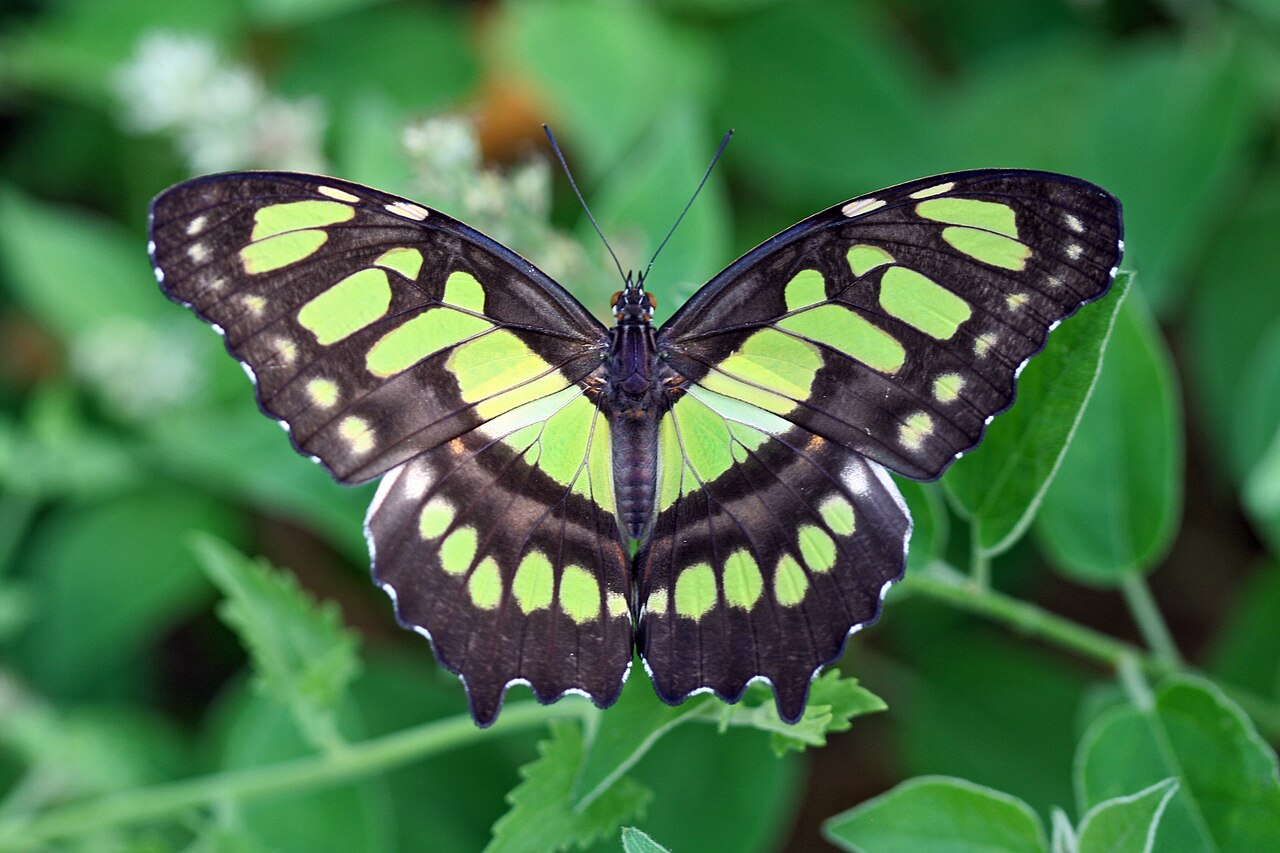
The malachite (Siproeta stelenes) is the other North American option and looks entirely different. It is large at 3 to 4 in, with bold translucent green panels set in black, and it occurs regularly in south Florida and south Texas as a resident, with occasional strays further north. It feeds on rotting fruit and animal dung rather than nectar, so a fruit feeding station attracts it more reliably than flowers.
Tropical Green Butterflies
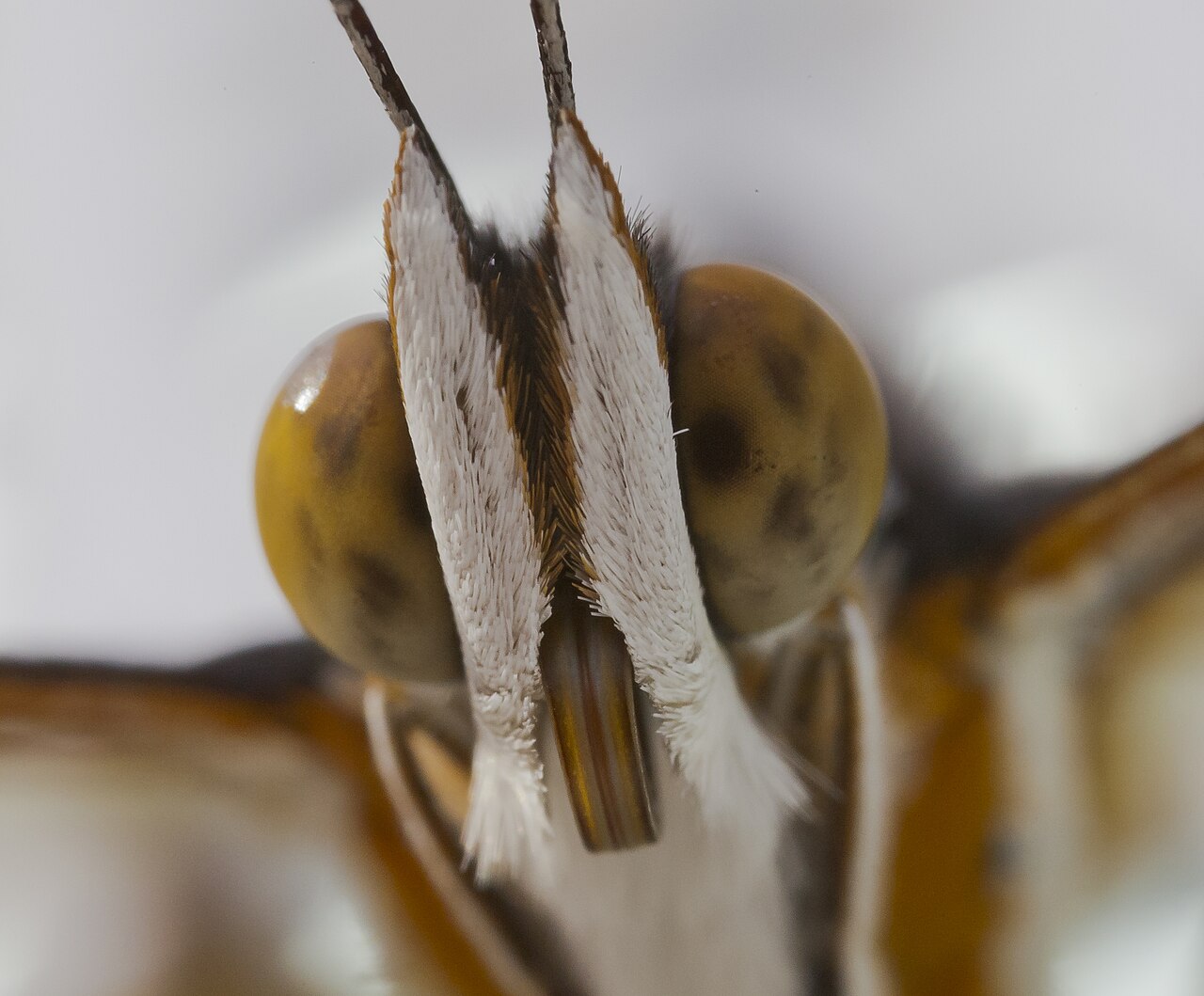
The emerald swallowtail (Papilio palinurus) of Southeast Asia is the classic photonic butterfly. Its wings carry a brilliant metallic green band that is not green pigment at all: bowl-shaped microstructures in the scales reflect yellow from the center and blue from the sides, and the eye combines them into green. It is one of the most studied examples of structural color in nature, and university physics and entomology departments still use it as a teaching case.
Birdwings are the giants. The Cairns birdwing of Australia and the various Ornithoptera species of New Guinea and Indonesia reach wingspans up to 6 in or more, with males patterned in iridescent green and black while females are larger and brown. Several are protected and heavily restricted in trade.
Others fill out the group. The green dragontail of Southeast Asia has transparent wings with green markings and extraordinarily long tails, the Kaiser-i-Hind of the eastern Himalayas is prized and protected, and various swallowtails across the tropics carry green banding. Nearly every truly spectacular green butterfly lives in tropical forest, which is where the diversity of both host plants and photonic wing structures is greatest.
Black and Green Butterflies
Green paired with black is the most common green combination, because black scales provide the dark background that makes structural green appear brighter. Contrast is doing real optical work rather than just looking good.
The malachite is the accessible example in the United States, with green panels bordered heavily in black. Internationally, the emerald swallowtail, the Cairns birdwing male, and Papilio blumei of Sulawesi all follow the same design, as do several Charaxes species in Africa.
People also report black and green butterflies that turn out to be something else. Pipevine swallowtails and black swallowtails show blue-green iridescence on dark wings in certain light, and worn or wet individuals of several species look greener than they are. Angle and light matter enormously with structural color, so two photographs of the same butterfly can disagree.
Green Caterpillars and What They Become
A large share of green butterfly searches are actually about caterpillars, and the relationship is not what people expect. Green caterpillars are extremely common while green adults are rare, because green in a caterpillar is straightforward camouflage against leaves and needs no photonic engineering.
Common green caterpillars in North America include black swallowtail larvae in their later stages, which are smooth green with black bands and yellow dots on parsley and dill, monarch caterpillars with their bold yellow, black, and white banding on milkweed, and the various sphinx moth larvae with a prominent tail horn, including the tomato and tobacco hornworms.
Cabbage white caterpillars are the ones gardeners meet most often, small velvety green larvae on brassicas that become the plain white butterflies seen everywhere. None of these green caterpillars produces a green adult, which is the point worth taking away: caterpillar color predicts nothing about the butterfly. Our guides to the black caterpillar and the fuzzy caterpillar handle identification for the other common larval types.
Green Moths Mistaken for Butterflies
The luna moth is the most spectacular green insect in North America and it is not a butterfly. It has a wingspan up to 4.5 in, pale sea-green wings with long sweeping tails, and it flies only at night, which is why sightings feel like events. Adults have no functional mouthparts and live about a week, existing solely to mate.
Emerald moths in the family Geometridae are the other group, small delicate insects in soft mint and jade greens that come to porch lights and are frequently photographed and misidentified. The wavy-lined emerald has an unusual caterpillar that attaches bits of flower petal to its body as camouflage.
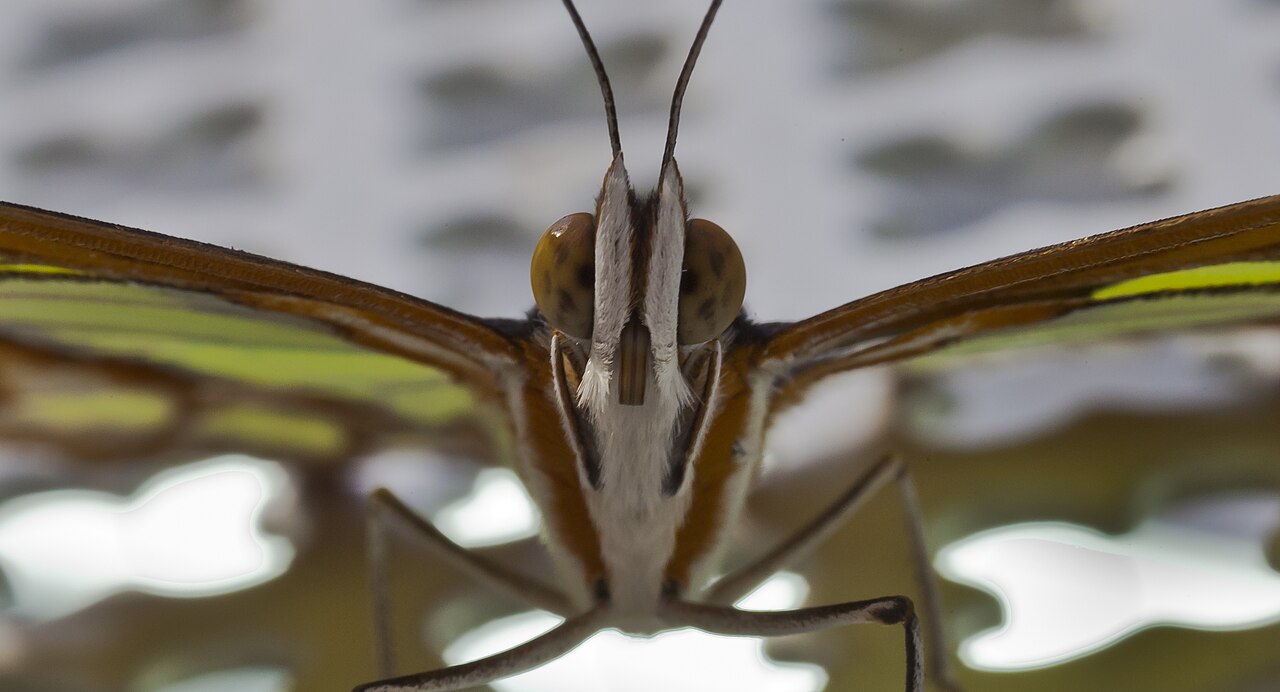
Telling moths from butterflies is straightforward once you know what to check. Butterflies have clubbed antennae with a knob at the tip, rest with wings held vertically over the back, and fly by day. Moths have feathery or thread-like antennae without a club, rest with wings flat or tented, and are mostly nocturnal. Our guide to the white moth works through the same identification logic for the pale species.
Green Butterfly Meaning and Symbolism
Green carries consistent symbolic weight across cultures, and butterflies add their own. Green is associated with growth, renewal, nature, health, and prosperity in most traditions, while the butterfly represents transformation because of its complete metamorphosis. Combined, a green butterfly is commonly read as a sign of new growth, healing, or a fresh financial or personal start.
Some interpretations lean specifically toward abundance and material good fortune, drawing on the color’s association with money in modern Western symbolism. Others emphasize connection to nature and physical healing, and in a few traditions green butterflies are linked to fertility and new life.
The naturalist reading is more concrete and, given the rarity, arguably more meaningful. Seeing a green butterfly means you are near its host plant, since these species are unusually specialized. A juniper hairstreak means red cedar within a short distance. That is a genuine piece of information about the place you are standing, which the symbolic reading cannot provide.
How to Attract Green Butterflies
Host plants decide everything, and for green species they are unusually specific. Juniper hairstreaks need eastern red cedar or another native juniper, and no amount of nectar planting substitutes for it. If you have the space and the right region, a red cedar is the single most effective thing you can plant for them.
Nectar and fruit support the adults. Juniper hairstreaks take nectar from dogbane, milkweed, sumac, and white clover, and they perch on the host tree between visits. Malachites prefer fermenting fruit, so a shallow dish of overripe banana or orange in a shaded spot works better than a flower bed in southern Florida and Texas.
The rest is standard butterfly gardening with one addition. The Xerces Society for Invertebrate Conservation advises avoiding insecticides entirely, since neonicotinoids persist in plant tissue and kill caterpillars on plants that look perfectly healthy, provide a sunny sheltered spot out of the wind and a damp patch of sand for puddling, and leave leaf litter and standing stems through winter to protect overwintering pupae. Our guides to the orange butterfly and the purple butterfly cover the same approach for species that are far easier to attract.
Related reading: Green Grasshopper.
What Is the Rarest Butterfly Color?
Blue and green are the rarest butterfly colors, and for the same reason: neither can be made with pigment. Butterfly pigments cover the warm end of the spectrum well, producing white, yellow, orange, red, brown and black, but there is no blue or green pigment in the group. Any butterfly showing those colors is building them optically.
That is why blue and green species are concentrated in the tropics, where the wing scale structures that produce them are most developed, and why they look so different depending on the light. Research on wing coloration has shown that some green patterns are not purely structural either but a combination, with blue structural color layered over yellow pigment so the two mix in the eye, which is the same principle as mixing paint.
Purple sits close behind for the same reason. If you want the underlying chemistry, the survey of pigment and structural color mixing in butterfly wings sets out which pigments occur in which families and how green patterns are assembled.
Frequently Asked Questions
Why are green butterflies so rare?
Because butterflies produce no green pigment. Green has to be built either by layering yellow pigment over blue structural color or through photonic microstructures in the wing scales that reflect green light directly. Both routes are costly, so relatively few species evolved them.
What green butterflies live in North America?
The juniper hairstreak is the widespread one, a small butterfly with jade green undersides found near eastern red cedar. The malachite is a large green and black species resident in south Florida and south Texas that feeds on rotting fruit rather than nectar.
What does a green butterfly symbolize?
Green is associated with growth, renewal, healing, nature, and prosperity, and the butterfly adds transformation through its metamorphosis. Practically, seeing one means you are near its host plant, since green species are unusually specialized. A juniper hairstreak means red cedar nearby.
Is the luna moth a green butterfly?
No, it is a moth. Luna moths have pale green wings up to 4.5 in across with long tails, fly only at night, and have feathery antennae with no club. Butterflies have clubbed antennae, rest with wings held vertically, and fly by day.
Do green caterpillars turn into green butterflies?
Usually not. Green is common in caterpillars because it camouflages them against leaves, while green in adults requires structural color. Black swallowtail, monarch, sphinx moth, and cabbage white caterpillars are all green and none produces a green adult.
What is a black and green butterfly?
In the United States, most likely a malachite in Florida or south Texas. Internationally, the emerald swallowtail of Southeast Asia, the male Cairns birdwing of Australia, and Papilio blumei of Sulawesi all pair structural green with black, since dark scales make the green appear brighter.
How do I attract green butterflies to my garden?
Plant the host plant, which for juniper hairstreaks means eastern red cedar or a native juniper. Add nectar sources such as dogbane, milkweed, and sumac, and for malachites in the far south offer overripe fruit in a shaded dish. Avoid all insecticides, especially neonicotinoids.