Black Ladybug: What It Actually Is and Why
A black ladybug is most often either a genuine color variant of a common species, particularly the Asian lady beetle, which occasionally occurs in a form so dark it appears almost entirely black rather than its more familiar orange, or an entirely different beetle species, the mealybug destroyer, which is naturally black with a distinctive orange head as an adult and looks nothing like a typical ladybug in its earlier life stages. Both possibilities are genuinely beneficial predatory insects despite the unusual, sometimes unsettling all-black or near-black appearance that leads many people to assume something is wrong or dangerous about an insect that dark.
Because “black ladybug” describes what is actually two quite different biological situations, a rare color variant of a familiar species versus an entirely distinct species that happens to be naturally dark, correctly identifying which one you have encountered helps clarify both what to expect behaviorally and whether any of the home-invasion or biting concerns associated with Asian lady beetles specifically apply to your particular sighting. This guide covers both possibilities in detail, the specific field marks that separate them, and what a black ladybug’s coloration means for pest control both in your garden and, if applicable, inside your home.
| Type | Key Identifying Feature |
|---|---|
| Dark Asian lady beetle | Still shows the M-shaped pronotum mark |
| Mealybug destroyer (adult) | Black body with distinctly orange head |
| Mealybug destroyer (larva) | White, waxy, mealybug-mimicking appearance |
| Twice-stabbed lady beetle | Black with two red spots only |
A black ladybug is usually a dark form of the Asian lady beetle (Harmonia axyridis), black with two or four red spots, or the mealybug destroyer, a small all-black beetle with a rust-colored head. Neither is dangerous: they do not sting and are not poisonous, though Asian lady beetles can nip and leave a yellow stain when handled.
Dark-Form Asian Lady Beetles
The Asian lady beetle, already well known for its considerably variable coloration ranging from pale yellow through deep red, occasionally occurs in individuals dark enough to appear almost entirely black, particularly when spots merge together or when the background coloration itself runs unusually dark rather than the more typical orange-red base most people associate with the species.
Despite this unusually dark coloration, these individuals remain identifiable as Asian lady beetles specifically through the same diagnostic feature covered in our Asian lady beetle vs ladybug guide: a distinctive black M-shaped or W-shaped marking on the pronotum, the small plate directly behind the head, which remains visible even on otherwise very dark individuals and provides the most reliable way to confirm this species identification regardless of how dark the overall body coloration happens to run.
Because Asian lady beetles are well documented for entering homes in large numbers seeking overwintering shelter, and for occasionally delivering a mild, generally harmless bite when handled, similar in character to the mild reactions covered in our do ladybugs bite guide, encountering a notably dark individual carries the same practical considerations as encountering the more typical orange-red form, meaning the home-invasion and mild-bite information covered in that guide applies regardless of exactly how dark a specific Asian lady beetle individual happens to appear.
The Mealybug Destroyer: A Naturally Black Species
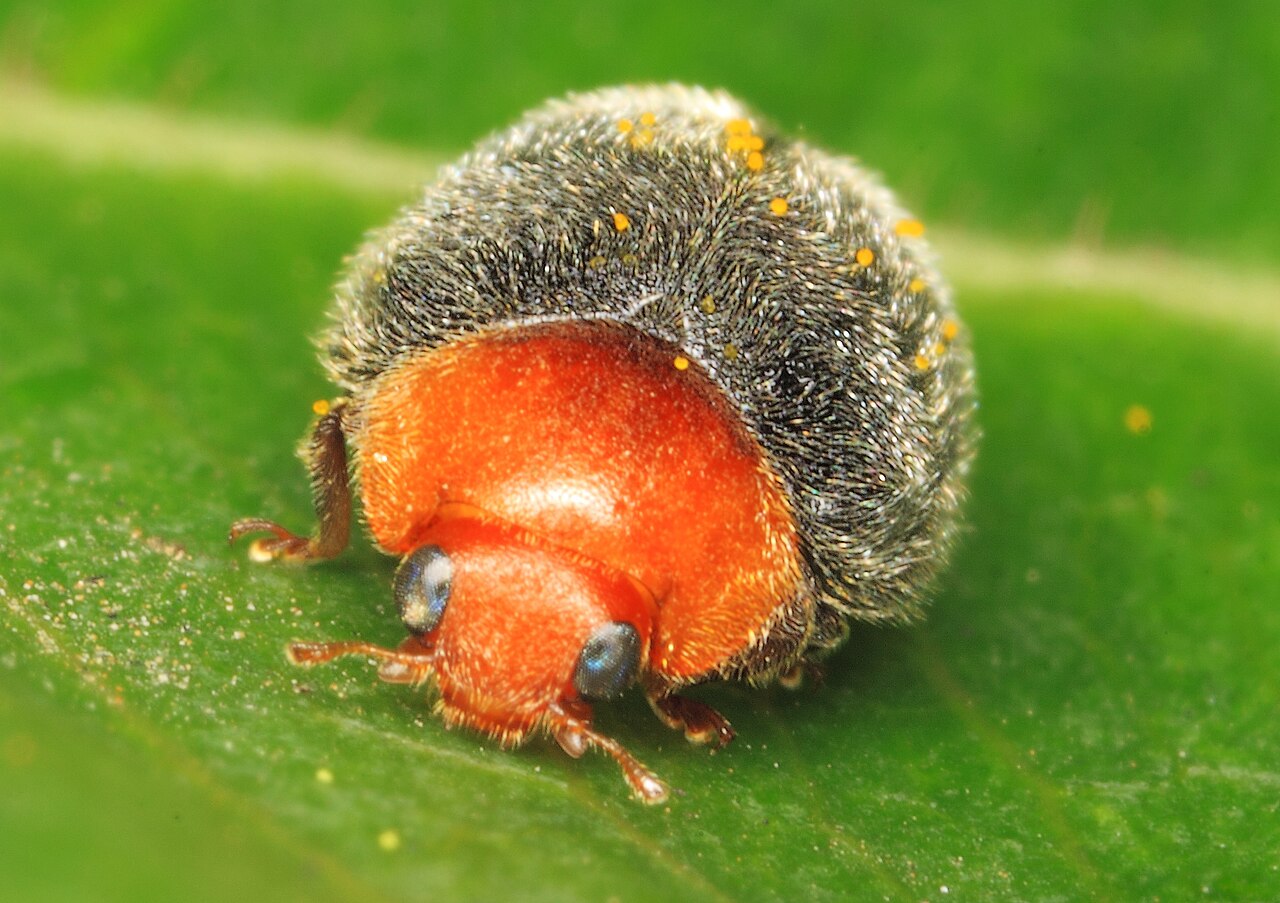
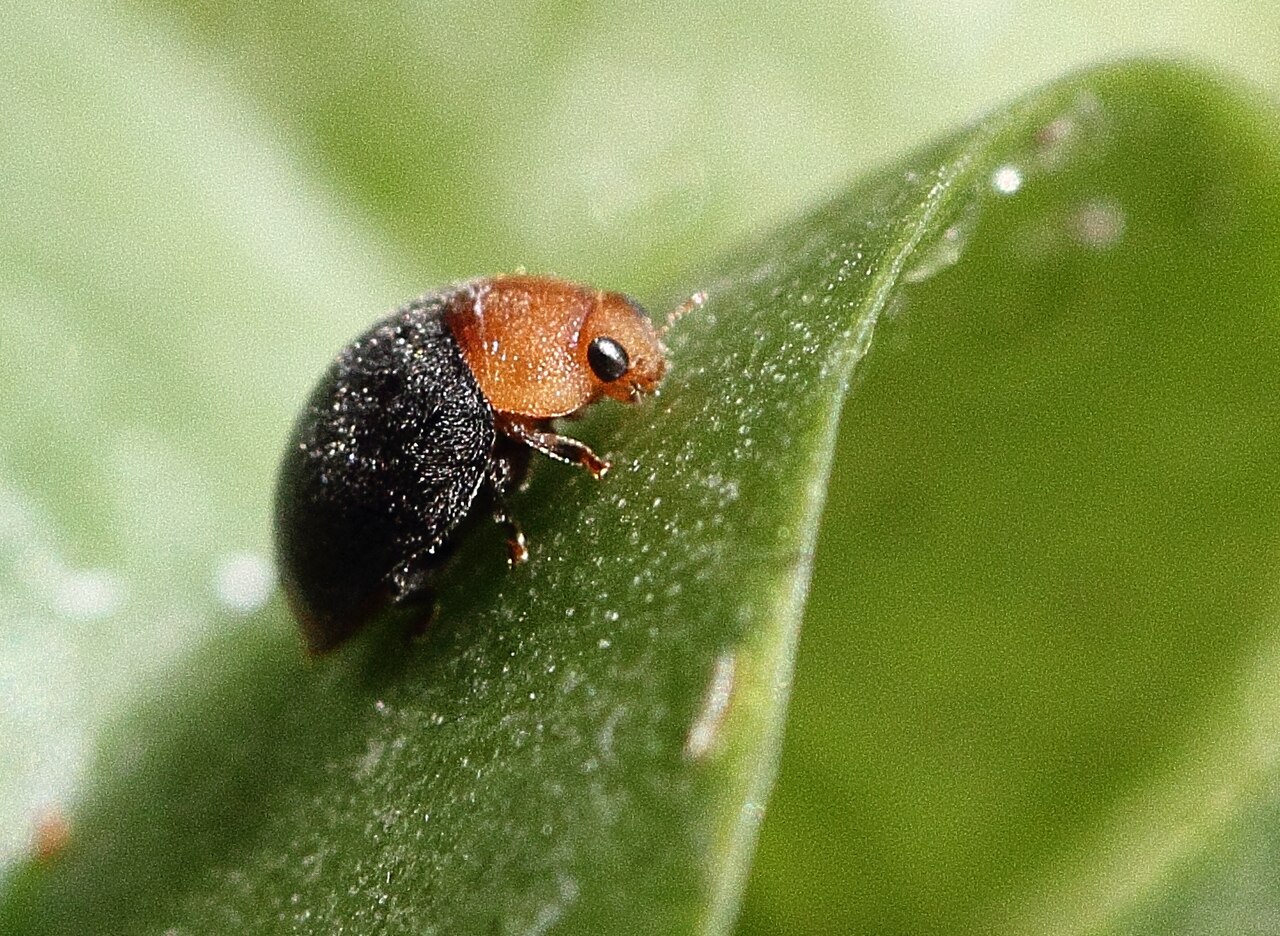
The mealybug destroyer (Cryptolaemus montrouzieri) represents a genuinely different situation entirely: a distinct lady beetle species that is naturally black as an adult, marked with a contrasting orange-brown head and sometimes a touch of orange on the thorax, giving it a considerably different overall appearance than any color variant of the more familiar Asian lady beetle or native seven-spotted ladybug.
This species is specifically valued in agricultural and greenhouse pest control settings for its highly effective predation on mealybugs, a common and often destructive greenhouse and houseplant pest related in feeding style to the aphid predation covered in our what do ladybugs eat guide, making the mealybug destroyer a deliberately introduced beneficial insect in many commercial growing operations rather than simply an incidental garden visitor, and its presence specifically often indicates an active mealybug infestation nearby that the beetle is actively working to control.
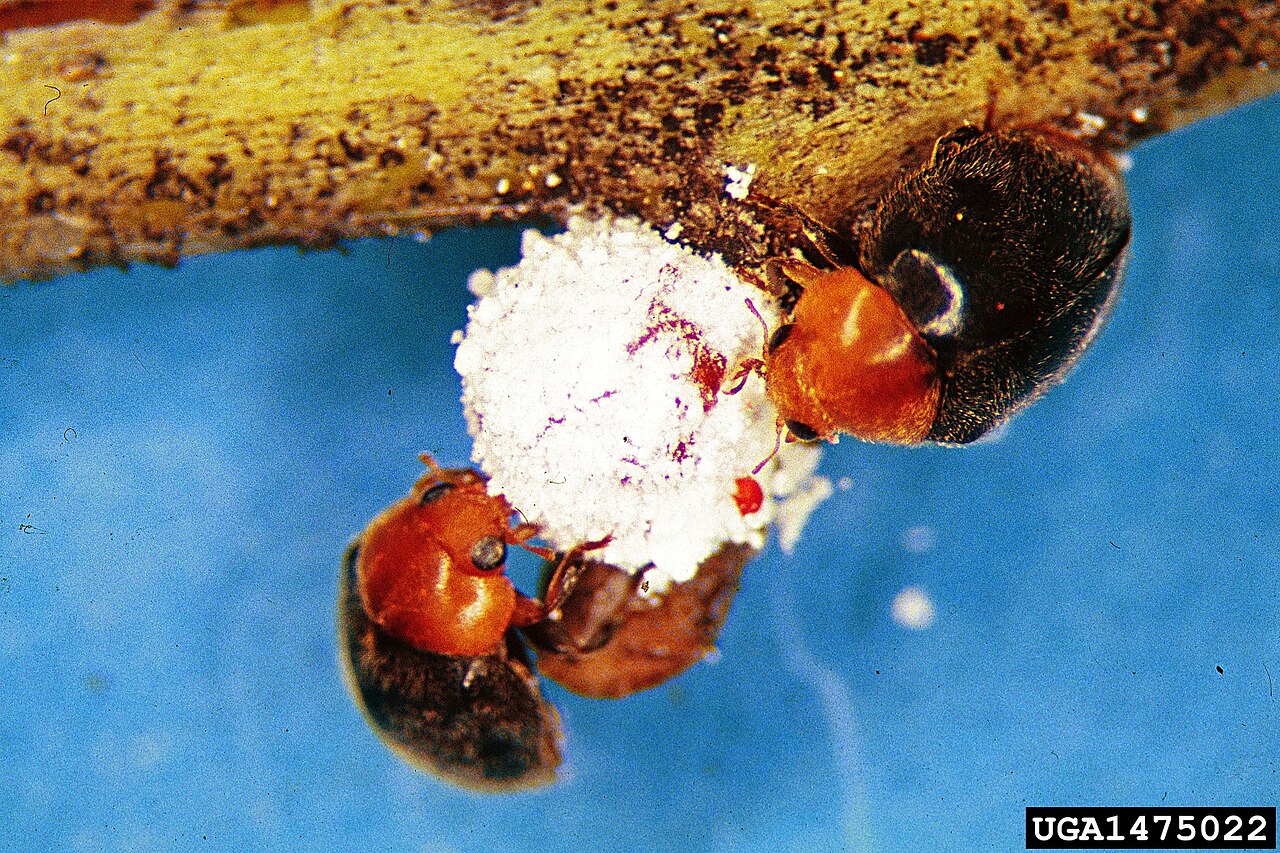
The larval stage of the mealybug destroyer adds a further layer of identification interest, since larvae are covered in white, waxy filaments that make them look remarkably similar to the mealybugs they prey upon, a form of mimicry documented alongside other ladybug larvae identification cases, that likely helps larvae approach and consume mealybug prey more easily, meaning gardeners encountering these fuzzy white larvae alongside a mealybug infestation are very likely observing beneficial predators actively at work rather than an extension of the pest problem itself.
Twice-Stabbed Lady Beetle: Black With Just Two Spots
Another naturally dark species contributing to black ladybug sightings is the twice-stabbed lady beetle (Chilocorus species), named for its distinctive appearance: a black body marked with exactly two prominent red or orange spots, one on each wing cover, giving the beetle a simple, easily recognized pattern quite different from the more heavily spotted patterns typical of many other common ladybug species.
This species feeds primarily on scale insects, another common plant pest affecting a wide range of garden and landscape plants, making twice-stabbed lady beetles a genuinely beneficial predator in gardens dealing with scale problems specifically, similar in ecological role to how other specialized lady beetle species target particular pest insects rather than the more generalist aphid-focused diet of the classic seven-spotted ladybug.
The stark, minimal two-spot pattern makes this species relatively easy to distinguish from both the dark-form Asian lady beetle and the mealybug destroyer covered above, since neither of those alternatives shows this specific simple two-spot arrangement, making the twice-stabbed lady beetle a genuinely distinct third possibility worth checking for specifically when encountering an unusually dark, sparsely marked ladybug-type beetle in the garden.
Why Black Coloration Does Not Mean Danger
A recurring concern people express upon encountering a black or unusually dark ladybug-type insect is whether the dark coloration itself signals something dangerous or unhealthy about the insect, a concern rooted in a common but mistaken assumption that unusual coloration in insects generally correlates with increased risk to humans, when in reality coloration in lady beetles, including these black variants and species, relates primarily to camouflage, mimicry, or simple genetic variation rather than any indication of danger.
None of the black or dark ladybug possibilities covered in this guide, dark-form Asian lady beetles, mealybug destroyers, or twice-stabbed lady beetles, pose any meaningfully greater risk to humans than their more typically colored relatives, with the same general considerations applying across the board: generally harmless, occasionally capable of a mild pinch-like bite if handled roughly (most notably in Asian lady beetles specifically), and considered beneficial predators from a gardening and pest control perspective in essentially every case.
This pattern, dramatic or unusual coloration without corresponding danger, holds broadly true across the lady beetle family generally, and extension entomology resources consistently emphasize that people should evaluate potential insect risks based on documented species-specific behavior and biology rather than assumptions drawn from coloration alone, a principle that applies just as usefully to black ladybugs as it does to brightly colored insects that people sometimes mistakenly assume must be dangerous specifically because they stand out visually.
Photographing and Confirming an Identification
For anyone genuinely uncertain which specific black or dark ladybug type they have encountered, a clear photograph capturing both the overall body shape and, ideally, a close view of the head and pronotum region provides the most useful basis for confident identification, since the key distinguishing features covered throughout this guide, the M-shaped mark, the orange head, or the two-spot pattern, are all readily visible in a reasonably clear photograph even without specialized equipment.
Local extension offices and university entomology departments often welcome insect identification photographs from home gardeners and homeowners specifically, and submitting a clear image alongside basic details about where and when the insect was found frequently yields a confident species-level identification within a short time, a genuinely useful resource for anyone wanting definitive confirmation beyond the general field marks covered in this guide alone.
Online identification communities and smartphone identification apps have also become increasingly reliable tools for insect identification generally, though cross-referencing any app-generated suggestion against the specific field marks covered throughout this guide, particularly the pronotum marking and head coloration details that distinguish the possibilities discussed here, remains a worthwhile step before fully relying on any single automated identification source alone.
Where Black Lady Beetles Are Typically Found
Mealybug destroyers are most commonly encountered in greenhouse settings, commercial nurseries, and on houseplants specifically, since they are deliberately introduced in many controlled growing environments precisely to manage mealybug infestations, meaning finding one indoors on a houseplant is often a genuinely positive sign that biological pest control, whether intentionally introduced or arriving naturally, is already addressing a mealybug problem you may only be starting to notice.
Twice-stabbed lady beetles, by contrast, are more commonly found outdoors on trees and shrubs affected by scale insects, their primary prey, making them a garden and landscape presence rather than the greenhouse and houseplant association more typical of mealybug destroyers, a habitat difference that itself provides a useful supporting clue alongside the pattern differences covered above when trying to determine which black ladybug species you have actually encountered.
Dark-form Asian lady beetles follow the same broad habitat pattern as their more typically colored relatives, appearing across gardens, agricultural areas, and, seasonally, inside homes during fall overwintering periods, connecting this dark color variant to the same well-documented home-invasion behavior and seasonal patterns covered in our ladybug infestation guide for anyone dealing with a fall influx of these insects regardless of their specific coloration.
What a Black Ladybug Sighting Means for Your Garden
Encountering a mealybug destroyer or twice-stabbed lady beetle specifically in your garden generally represents good news for a gardener, since both species indicate active, beneficial predation targeting specific pest problems, mealybugs and scale insects respectively, meaning their presence often signals that a natural pest control process is already underway rather than requiring any additional intervention on the gardener’s part.
A dark-form Asian lady beetle, meanwhile, carries the same broader implications as any Asian lady beetle sighting: generally beneficial aphid predation during the growing season, balanced against the well-documented tendency toward large-scale home invasion during fall as the insects seek overwintering shelter, meaning gardeners who value the pest control benefit but want to avoid indoor invasion may want to focus on sealing potential entry points around windows and doors as autumn approaches rather than trying to discourage the beetles’ beneficial garden presence during the growing season itself.
For gardeners specifically hoping to encourage beneficial predatory insects generally, understanding that black and dark-colored individuals within the broader ladybug family are just as valuable, and in the specific cases of mealybug destroyers and twice-stabbed lady beetles, sometimes even more specifically targeted toward particular pest problems, than their more typically colored relatives helps avoid the mistake of accidentally removing or discouraging beneficial insects simply because their unusual dark coloration initially seemed concerning or unfamiliar.
Are Black Ladybugs Poisonous or Venomous?
Black ladybugs are neither poisonous nor venomous. No lady beetle has venom or a stinger, and none are toxic to humans in any meaningful sense. The chemical defense they do have is reflex bleeding: when threatened, a beetle releases a small amount of yellow-orange fluid from its leg joints, which tastes foul to a bird and stains skin or fabric but is harmless to people.
Two caveats are worth stating plainly. Asian lady beetles, including the dark forms, can and do nip, producing a brief pinch rather than a bite that breaks skin. And a small number of people react to the reflex fluid with mild skin or eye irritation, or to large indoor aggregations with allergy symptoms. Pets that eat several beetles can develop mouth irritation, which is unpleasant but not an emergency.
Black Ladybug Meaning and Symbolism
A black ladybug carries the same broad symbolism as any lady beetle, usually read as good luck, protection and a change about to arrive, with the dark coloration adding a layer about hidden things or a transition still underway. The folklore is not species-specific, since the traditions predate any distinction between a dark Asian lady beetle and a mealybug destroyer.
The practical meaning is more useful. A black lady beetle in the garden signals a working aphid or mealybug population, because these beetles arrive where prey already is. The University of Minnesota Extension guide to lady beetles covers what that appetite is worth over a season.
Frequently Asked Questions
What does it mean if a ladybug is completely black?
It is likely either a dark color variant of the Asian lady beetle, still showing the characteristic M-shaped mark behind the head, or the mealybug destroyer, a naturally black species with a distinctive orange head, both of which are beneficial insects.
Are black ladybugs dangerous?
No. Black coloration does not indicate any increased danger; black lady beetle species and dark color variants are just as harmless and generally beneficial as their more typically colored relatives.
What is a black beetle with an orange head that looks like a ladybug?
Almost certainly the mealybug destroyer, a distinct species specifically valued for controlling mealybug infestations on garden and houseplants, with white, waxy larvae that mimic the mealybugs they prey upon.
What is a black ladybug with only two red spots?
Likely the twice-stabbed lady beetle, named for its simple pattern of exactly two red or orange spots on an otherwise black body, a species that primarily feeds on scale insects.
Do black ladybugs bite?
Dark-form Asian lady beetles can occasionally deliver a mild, generally harmless bite similar to their more typically colored relatives, while mealybug destroyers and twice-stabbed lady beetles are not typically associated with biting behavior.
Should I get rid of black ladybugs in my garden?
Generally no; both the mealybug destroyer and twice-stabbed lady beetle are beneficial predators actively controlling specific pest problems, and dark-form Asian lady beetles provide the same aphid control benefits as their more typical orange relatives.
Why do some Asian lady beetles look black instead of orange?
Asian lady beetles show naturally variable coloration, and in some individuals spots merge or the overall background color runs unusually dark, occasionally appearing almost entirely black while still retaining the characteristic M-shaped pronotum marking.