Green Ladybug: Why It’s Almost Never a True Ladybug
A green ladybug is almost never actually a true lady beetle at all, since genuine green coloration is genuinely rare within the lady beetle family specifically, and most insects reported as “green ladybugs” turn out to be a different beetle entirely, most commonly a tortoise beetle or various leaf beetle species that share a broadly similar rounded, sometimes shiny body shape but belong to an entirely different beetle family than true ladybugs. This distinction matters practically, since these green lookalikes typically feed on plant leaves rather than the aphids and other soft-bodied pests true ladybugs consume, making correct identification genuinely useful for gardeners deciding whether a green, dome-shaped insect on their plants represents a beneficial predator or a potential leaf-feeding pest.
A small number of genuine lady beetle species do show pale green or greenish-yellow coloration in certain individuals, though this remains considerably less common than the more typical red, orange, or yellow color forms most people associate with the family. This guide covers the tortoise beetles and other green lookalikes most commonly mistaken for ladybugs, the rare cases where true lady beetles do show greenish coloration, and the specific features that separate genuine beneficial ladybugs from the leaf-feeding beetles that share their general shape and occasional green coloring.
| Insect | Diet | Beneficial or Pest? |
|---|---|---|
| Tortoise beetle | Leaves (varies by species) | Pest (mild to moderate) |
| Green June beetle | Overripe fruit, some roots | Mixed, mostly pest |
| True green-form ladybug | Aphids, soft-bodied insects | Beneficial |
| Cucumber beetle (striped) | Cucurbit leaves and roots | Significant pest |
There is no green ladybug species. True ladybugs (Coccinellidae) come in red, orange, yellow, black and brown, but never green. A green beetle that looks like a ladybug is almost always a tortoise beetle, a spotted cucumber beetle or a young green June beetle, and the flattened, clear shell edge of a tortoise beetle gives it away.
Tortoise Beetles: The Most Common Green Lookalike
Tortoise beetles represent by far the most frequently encountered insect mistaken for a green ladybug, sharing a similarly rounded, dome-shaped body profile and, in several species, a genuinely striking metallic green or gold coloration that can appear almost jewel-like in direct sunlight, a visual effect that understandably leads many people to assume they have found an unusually colored ladybug rather than an entirely different beetle family.
Despite the superficial resemblance in overall shape, tortoise beetles belong to the leaf beetle family rather than the lady beetle family, and this taxonomic difference reflects a genuinely different diet and ecological role: tortoise beetles feed on the leaves of specific host plants, often morning glory family plants or sweet potato relatives depending on the specific species, making them plant-feeding pests rather than the predatory, generally beneficial insects true ladybugs represent.
The most reliable way to distinguish a tortoise beetle from a true ladybug, beyond checking for actual leaf-feeding damage nearby, involves examining the edge of the body, since tortoise beetles typically show a distinctly flattened, translucent margin extending around the body’s outer edge, almost like a thin skirt, a structural feature true ladybugs simply do not possess regardless of their specific color or spot pattern.
Do True Ladybugs Ever Come in Green?
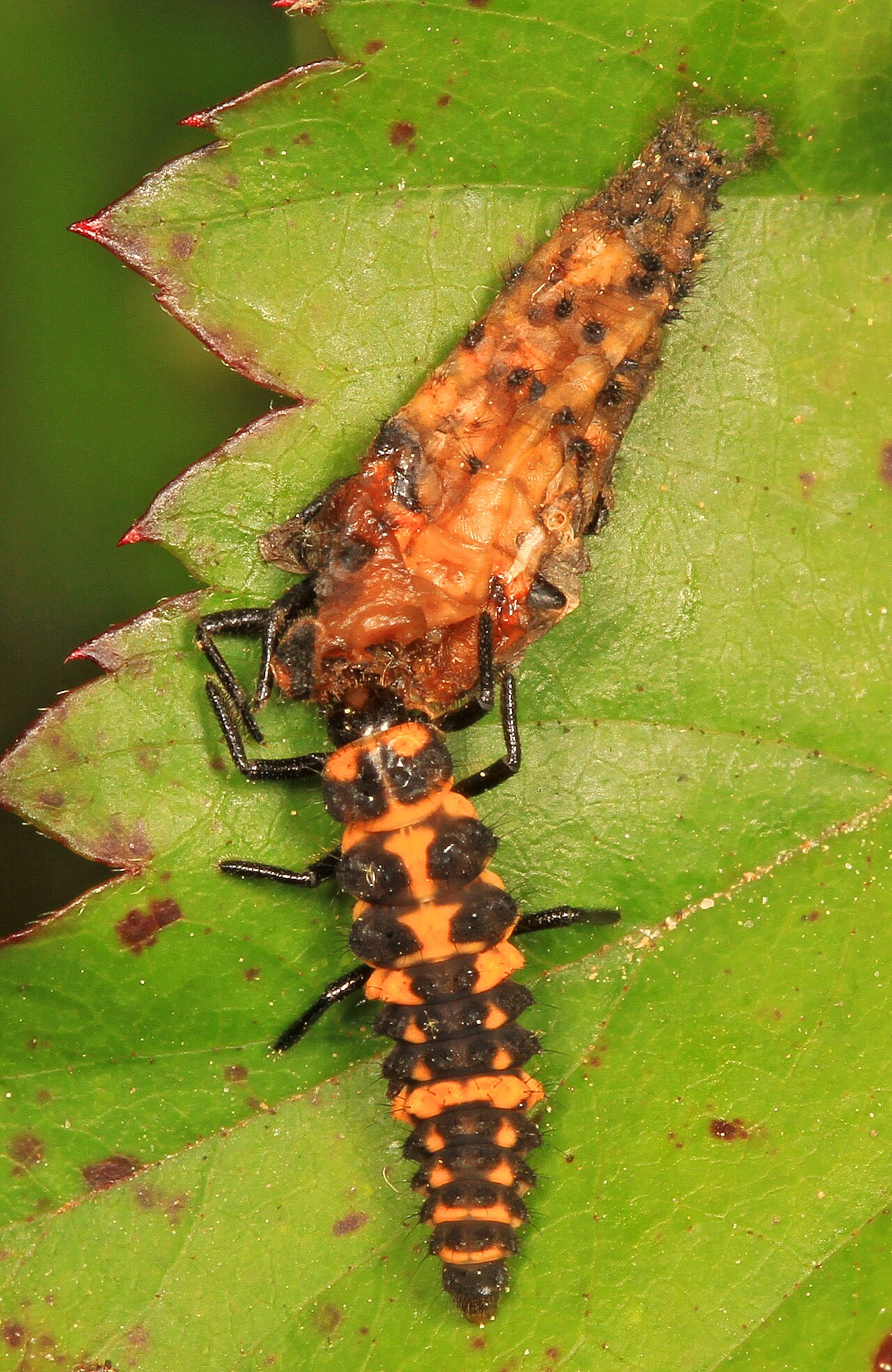
Genuine green coloration within true lady beetle species does occur, though it remains considerably rarer than the red, orange, and yellow forms covered throughout most ladybug identification guides, with a small number of species and occasional individual color variants showing pale green or greenish-yellow tones rather than the more typical warmer color palette most people associate with the family.
When true green-form ladybugs do occur, they generally retain the other diagnostic features that identify them as genuine lady beetles regardless of this unusual coloration: the characteristic rounded, domed body shape without the flattened translucent edge tortoise beetles show, along with a spot pattern, if present, consisting of discrete round or oval markings rather than the more textured, sometimes patterned surface tortoise beetles and other lookalikes can display.
Because true green ladybugs are genuinely uncommon, encountering a green, dome-shaped beetle in a garden setting statistically favors a tortoise beetle or other lookalike species considerably more often than it favors an actual rare green-form true ladybug, making the specific structural checks covered throughout this guide, particularly the flattened edge feature, considerably more useful for a confident identification than color alone would ever provide in this particular case.
Checking Spot Patterns and Surface Texture
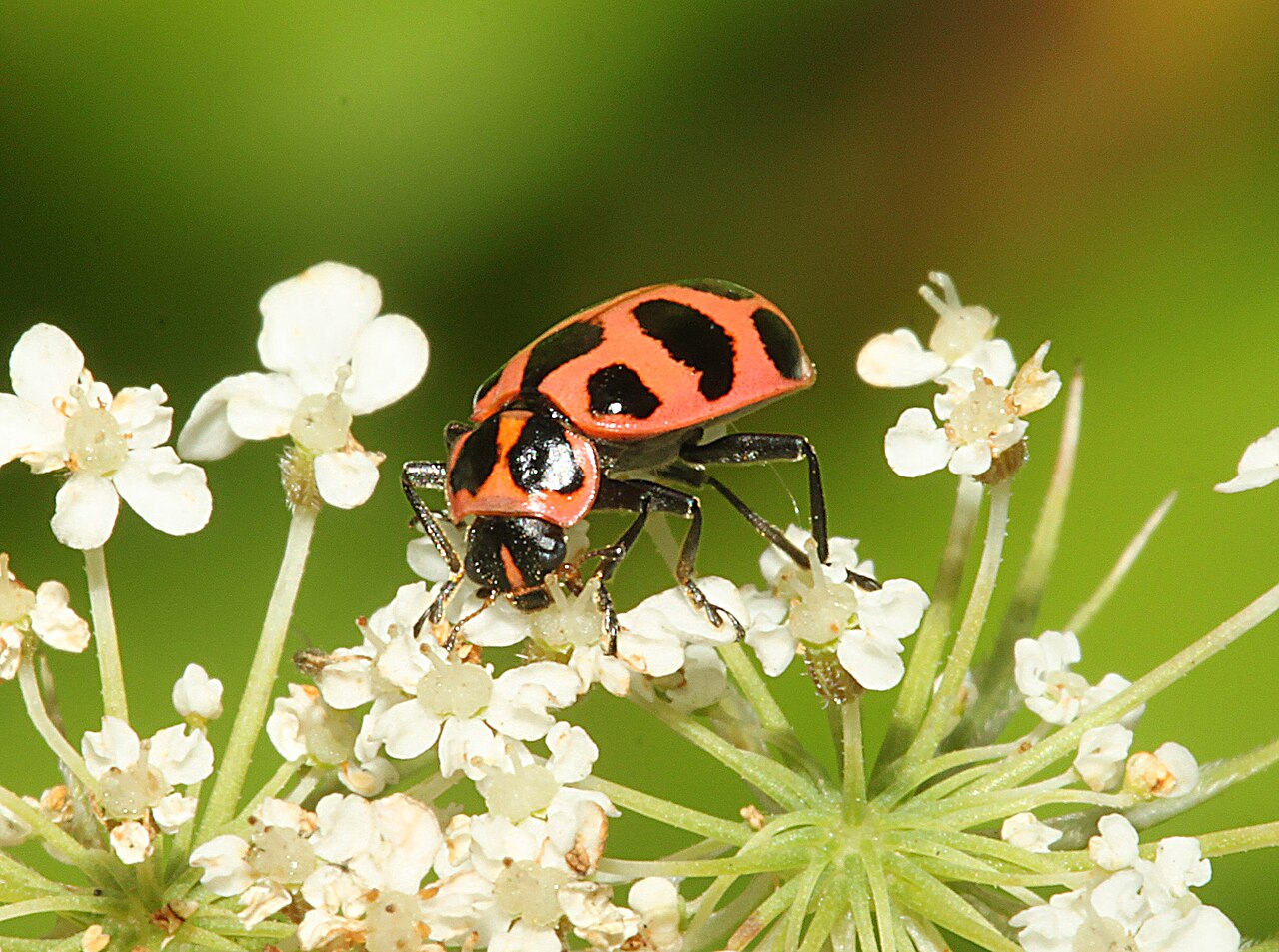
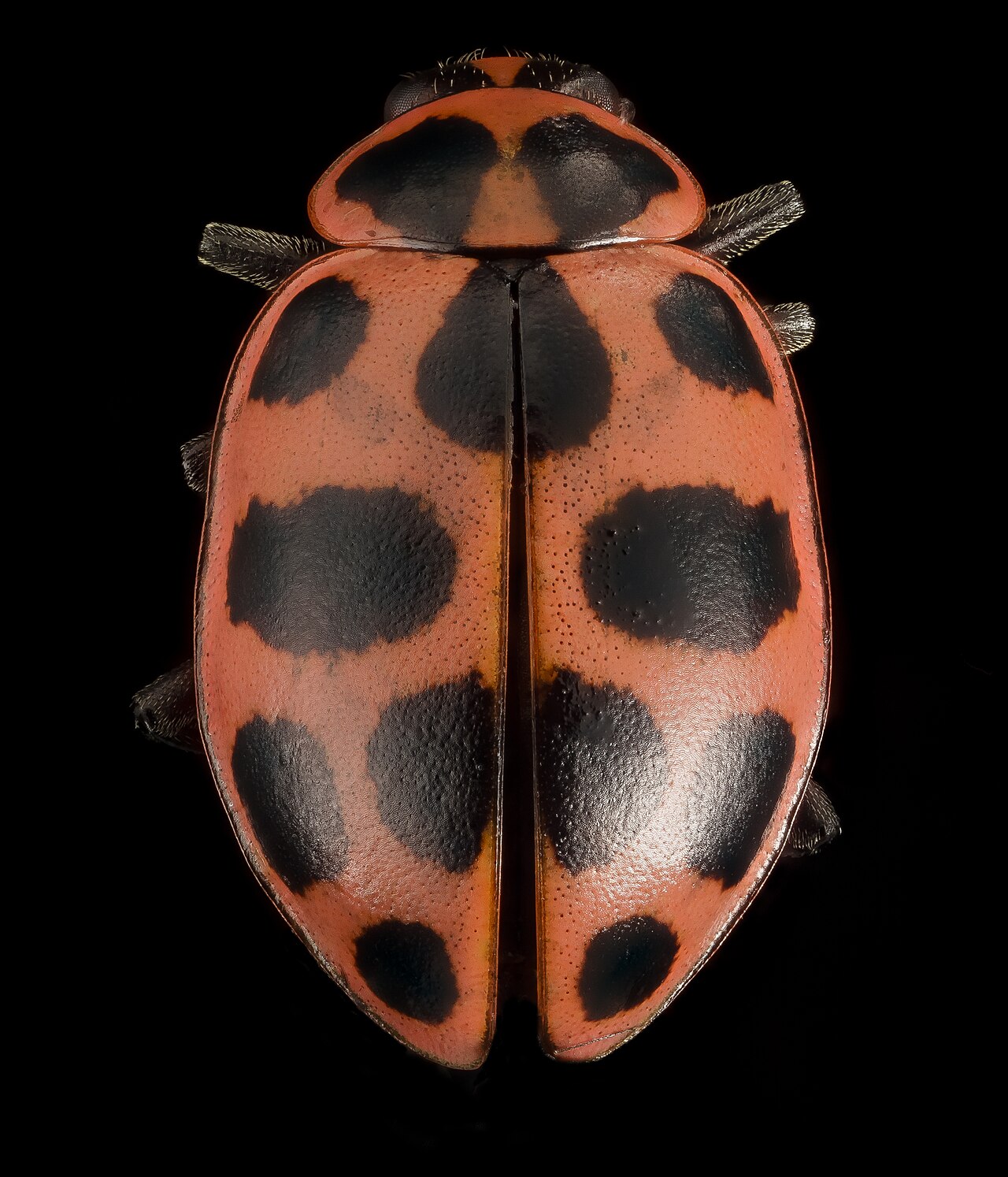
Beyond edge shape and size, surface texture and spot pattern offer additional useful distinguishing features between true ladybugs and their green lookalikes. True lady beetles typically show a smooth, glossy shell surface with discrete, well-defined round or oval spots, similar to the classic patterns covered in our orange ladybug and yellow ladybug guides, a clean pattern that contrasts with the somewhat more varied, sometimes mottled or irregular surface patterns many tortoise beetles and leaf beetles display instead.
Tortoise beetles in particular often show a more complex surface texture beyond simple spots, sometimes including ridges, a slightly bumpy shell surface, or coloration that shifts subtly across the body rather than the more uniform background color with clearly separated spots typical of true ladybugs, a textural difference that becomes more apparent with close observation even when overall color and rough shape might initially suggest a ladybug comparison.
Cucumber beetles and other elongated lookalikes covered later in this guide typically show spots or stripes running in patterns that follow the body’s more elongated shape rather than the more compact, evenly distributed spot arrangement typical of a true ladybug’s rounded dome, meaning checking whether a pattern seems to follow an elongated versus rounded body plan offers another useful supporting check alongside the edge-shape comparison covered above.
Confirming an Identification With a Closer Look
For gardeners genuinely uncertain whether a specific green, rounded insect on their plants represents a true ladybug or one of the leaf-feeding lookalikes covered throughout this guide, taking a moment to observe the insect’s behavior over a few minutes often resolves the question more definitively than a single glance, since true ladybugs actively hunt and consume other small insects when present, while tortoise beetles and similar lookalikes remain stationary while feeding directly on leaf tissue.
A clear photograph capturing the body edge specifically, held at an angle that shows whether a flattened translucent margin extends around the shell, provides genuinely useful documentation for later identification confirmation, whether through a local extension office, an online identification community, or simply comparing against reference images at a more convenient time than the moment of initial discovery in the garden.
Checking the underside of nearby leaves for actual feeding damage, characteristic irregular holes or skeletonized patches where only leaf veins remain, provides a final practical confirmation step, since finding clear evidence of leaf consumption near where the green insect was observed strongly supports a tortoise beetle or similar leaf-feeding lookalike identification rather than a true ladybug, which would leave the surrounding foliage entirely undamaged regardless of how long it remained in the immediate area.
Green June Beetle: A Different Kind of Confusion
The green June beetle, a considerably larger insect than any true ladybug at nearly an inch in length, occasionally gets included in general “green ladybug” search confusion despite bearing only a loose resemblance based on shared green coloration and a somewhat rounded overall body shape, since this species belongs to the scarab beetle family entirely, a lineage as distinct from true lady beetles as tortoise beetles are.
Adult green June beetles feed primarily on overripe or damaged fruit, making them a familiar and sometimes frustrating presence around fruit trees and gardens during their summer flight period, while their larvae, a type of white grub, feed on plant roots and organic matter in soil, giving this species a considerably more mixed pest reputation than the specifically leaf-feeding tortoise beetles covered above.
Size alone provides the fastest distinguishing feature here, since green June beetles run considerably larger than any true ladybug species, typically three to four times the length of even a large true lady beetle, making this comparison one of the easier green-insect confusions to resolve quickly once size is specifically taken into account rather than relying on color and general shape impressions alone.
Cucumber Beetles and Other Green Garden Pests
Striped and spotted cucumber beetles present another green-toned insect occasionally confused with ladybugs, particularly the spotted cucumber beetle, which shows a yellowish-green base color marked with black spots in a pattern that can superficially recall a true ladybug’s spotted appearance at a quick glance, despite these beetles belonging to yet another distinct beetle family entirely with a considerably different, more elongated overall body shape than a true ladybug’s compact dome.
These beetles represent genuinely significant garden pests specifically for cucumber, squash, and other cucurbit family plants, a pest pressure gardeners sometimes confuse with the beneficial larval stage of true ladybugs feeding nearby on aphids, both directly damaging leaves and flowers as adults and, more seriously, transmitting bacterial wilt disease between plants during feeding, making correct identification particularly practical for vegetable gardeners who specifically need to distinguish this genuine pest from any beneficial true ladybug that might be present on the same plants.
Body shape provides the clearest distinguishing feature from true ladybugs in this case: cucumber beetles show a notably more elongated, less rounded profile than the compact, domed shape characteristic of true lady beetles, and this elongated build, combined with the specific host plant association with cucurbit family vegetables, generally resolves the identification confidently even when the yellowish-green coloration and dark spotting pattern might initially suggest a comparison to the more common ladybug lookalikes covered more broadly elsewhere.
Why Correct Identification Matters for Gardeners
Distinguishing genuine green-form ladybugs, or more commonly, correctly identifying the various green lookalikes covered throughout this guide as something other than true ladybugs, carries real practical value for gardeners specifically deciding how to respond to a green, beetle-like insect discovered on garden plants, since the appropriate response differs meaningfully depending on which situation actually applies.
True ladybugs, including any genuine green color variants, represent beneficial predators worth actively encouraging and protecting, connecting to the broader beneficial insect principles covered in our what do ladybugs eat guide, while tortoise beetles, cucumber beetles, and similar lookalikes generally represent plant-feeding pests requiring some degree of management, particularly for cucumber beetles given their disease-transmission role specifically.
The practical checklist worth applying whenever a green, dome-shaped insect appears on garden plants involves checking body edge shape first (flattened translucent margin suggests tortoise beetle, cleanly rounded suggests true ladybug), then overall size (considerably larger than a fingernail suggests June beetle rather than any ladybug), and finally checking for actual feeding damage on nearby leaves, since true ladybugs simply do not cause the kind of leaf damage these various lookalike species typically leave behind on host plants.
What Is the Rarest Ladybug Color?
Among true lady beetles, green is not rare so much as absent, and the rarest genuine colors are the pale creams and the near-white forms. In North America the species people almost never see is the nine-spotted lady beetle, once common across the continent and now scarce enough to be the subject of dedicated survey projects.
The colors that do occur run red, orange, yellow, brown, black and the cream-and-brown patterns of the smaller species. Within a single species the shade can drift considerably: Asian lady beetles range from pale straw to deep orange to nearly black, which is where most reports of unusual ladybug colors come from. If the beetle in front of you is a saturated leaf green with a metallic sheen, the color itself is the identification, and it points away from Coccinellidae entirely.
Are Green Ladybugs Poisonous or Safe to Touch?
The beetles mistaken for green ladybugs are not poisonous and none of them sting. Tortoise beetles, cucumber beetles and green June beetles can all be picked up safely, and the worst you will get is a beetle walking across your hand before it drops or flies off.
What they do differ on is garden impact, which is the practical reason to identify one correctly. Tortoise beetles chew small holes in bindweed and sweet potato foliage and are largely harmless. Spotted and striped cucumber beetles are a genuine pest, feeding on cucurbits and spreading bacterial wilt between plants. True lady beetles, by contrast, are predators worth protecting: the University of Minnesota Extension guide to lady beetles as beneficial insects covers how many aphids a single larva clears in a season.
Frequently Asked Questions
Are there really green ladybugs?
True green-form ladybugs do exist but are genuinely rare. Most insects reported as green ladybugs are actually tortoise beetles or other unrelated leaf beetle species that share a similar rounded shape.
What is the difference between a tortoise beetle and a ladybug?
Tortoise beetles show a distinctly flattened, translucent edge around the body that true ladybugs lack, and tortoise beetles feed on plant leaves rather than the aphids and soft-bodied insects true ladybugs prey upon.
Is a green beetle on my plants a pest or beneficial insect?
Check for leaf damage first: true ladybugs do not feed on plants and leave foliage undamaged, while tortoise beetles, cucumber beetles, and similar green lookalikes actively feed on and damage leaves.
What is a large green beetle that looks like a ladybug?
Likely the green June beetle, a scarab beetle roughly three to four times larger than any true ladybug species, known for feeding on overripe fruit rather than aphids.
Do cucumber beetles look like ladybugs?
Somewhat, given their yellowish-green base color with black spots, but cucumber beetles show a more elongated body shape than a true ladybug’s compact dome, and they are a significant pest that can transmit bacterial wilt to cucurbit plants.
How can I tell if a green beetle is actually beneficial?
Check body shape for a cleanly rounded dome without a flattened edge, confirm no leaf-feeding damage nearby, and look for a spot pattern consisting of discrete round markings rather than a more textured or striped surface.
Should I remove green beetles from my garden?
If confirmed as tortoise beetles, cucumber beetles, or similar plant-feeding species causing damage, management may be warranted, but any confirmed true ladybug, including rare green-form individuals, should be left alone as a beneficial predator.