Bugs That Look Like Deer: 6 Species and How to Tell Them Apart
Bugs that look like deer fall into two groups: beetles with antler shaped jaws, and biting insects named after deer because they live on them. The only insects that genuinely resemble a deer are the stag beetles, whose males carry oversized mandibles that look like a miniature rack. Everything else with deer in its name, including the deer tick and the deer fly, looks nothing like one and matters for a different reason, which is that two of them bite people.
Telling them apart is quick: count the wings, look for antler shaped jaws, and measure the body. Size alone separates most of them, since the group runs from a tick the size of a poppy seed to a beetle 2.4 in long (6 cm). The dangerous ones come first below.
Stag beetles are the only bugs that truly look like deer, since males carry antler like mandibles up to half their body length. Deer ticks, deer flies, deer bot flies and deer louse flies are named for the host they feed on, not their shape. Ticks and deer flies bite people; the beetles and bot flies do not.
| Bug | Deer connection | Size | Risk to people |
|---|---|---|---|
| Deer tick (Ixodes scapularis) | Adults feed on whitetails | 0.05 to 0.15 in (1 to 4 mm) | High, carries Lyme disease |
| Deer fly (Chrysops spp.) | Bites deer and people | 0.25 to 0.4 in (6 to 10 mm) | Painful bite |
| Giant stag beetle (Lucanus elaphus) | Antler like mandibles | 1.3 to 2.4 in (3.3 to 6 cm) | None, a pinch at most |
| Reddish-brown stag beetle (Lucanus capreolus) | Named for the roe deer | 0.8 to 1.4 in (2 to 3.5 cm) | None |
| Deer louse fly (Lipoptena spp.) | Lives in deer hair | 0.15 to 0.25 in (4 to 6 mm) | Occasional itchy bite |
| Deer bot fly (Cephenemyia spp.) | Larvae live in deer noses | 0.5 to 0.6 in (12 to 15 mm) | None |
Deer Ticks: The One Deer Bug That Can Make You Sick
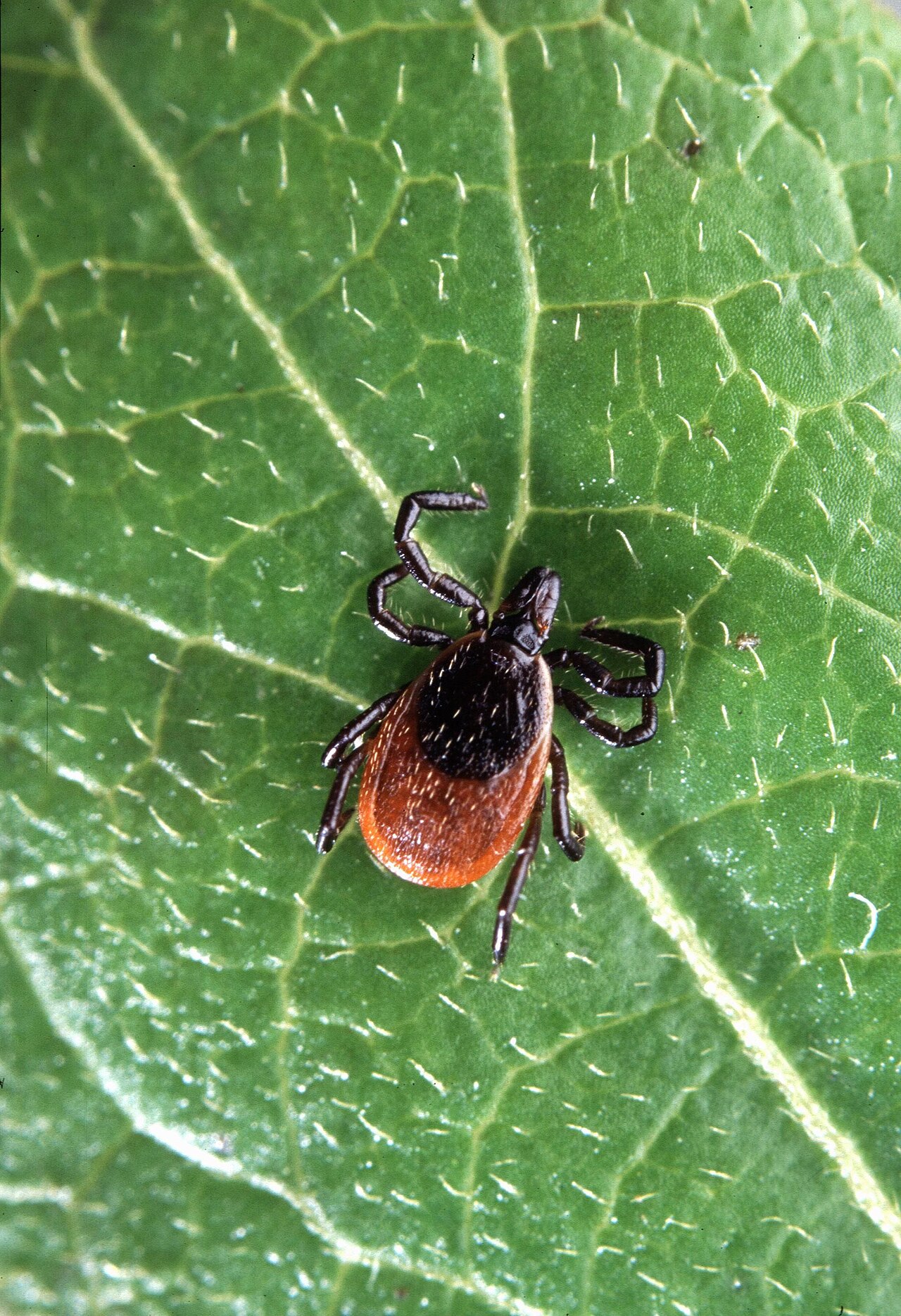
The blacklegged tick, Ixodes scapularis, is called the deer tick because adults depend on white-tailed deer to feed and mate. An adult female is about 0.1 in long (3 mm) with a reddish brown abdomen, a dark shield behind the head and black legs. The nymph, which causes most human infections, is roughly the size of a poppy seed.
This is the species that transmits Lyme disease, plus anaplasmosis and babesiosis in parts of its range. Adults are active in fall and again on mild winter days, which surprises people who think of ticks as a July problem. Check behind knees, waistbands and hairlines after any walk through leaf litter, and pull an attached tick straight out with fine tipped tweezers. Current maps and removal guidance come from the CDC.
Deer Flies: Small, Patterned and Painfully Aggressive
Deer flies in the genus Chrysops are the bug most people actually meet. They run 0.25 to 0.4 in long (6 to 10 mm), smaller than a horse fly, with dark bands across clear wings and brilliant green or gold eyes. Only females bite, using scissor like mouthparts that cut rather than pierce, which is why the bite burns at once and often bleeds. For a closely related question, see our guide to bugs that look like fleas.
They hunt by sight in daylight, favor humid air near ponds, and circle a person’s head because they aim for the highest moving point. Peak season runs from late May through July. Light clothing and a hat help, and repellents work less well on them than on mosquitoes. Dark compact fliers get mistaken for them constantly, as in bugs that look like stink bugs.
Stag Beetles: Antlers on an Insect
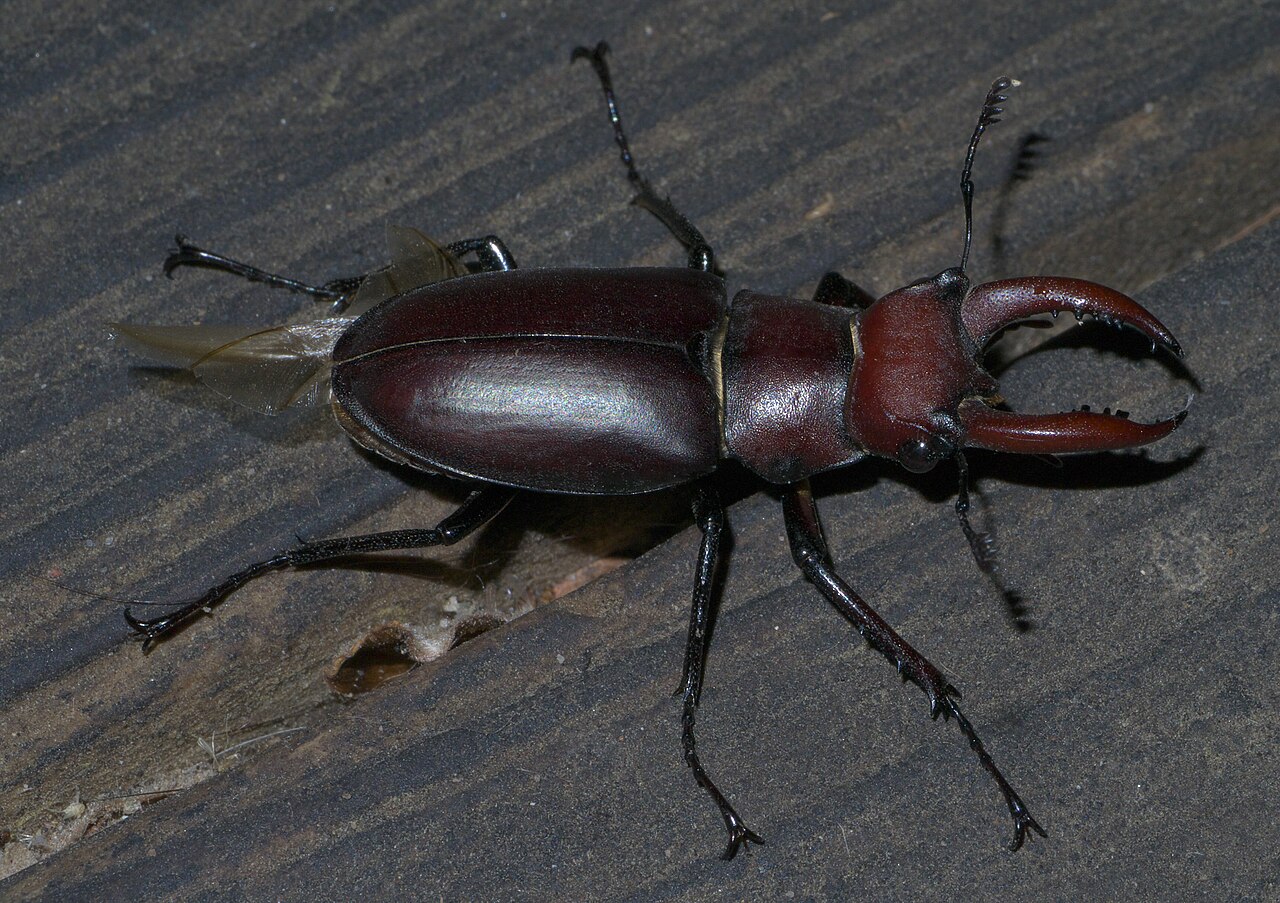
If a bug truly looks like a deer, it is a stag beetle. The giant stag beetle, Lucanus elaphus, reaches 2.4 in (6 cm) including mandibles that branch and fork like a small antler, inner tines included. The species name elaphus means stag, and its smaller eastern relative Lucanus capreolus is named for the roe deer, Capreolus capreolus.
Males use those jaws to wrestle rivals off a branch, and a large male can pinch hard enough to startle without breaking skin. Females have short, strong mandibles and are the ones that can nip. Both develop in rotting hardwood over one to two years, so they appear at porch lights in early summer near oak and beech. Antlered flies in the genus Phytalmia carry the same look in New Guinea, with branched stalks growing from the cheeks.
Deer Louse Flies and Deer Bot Flies
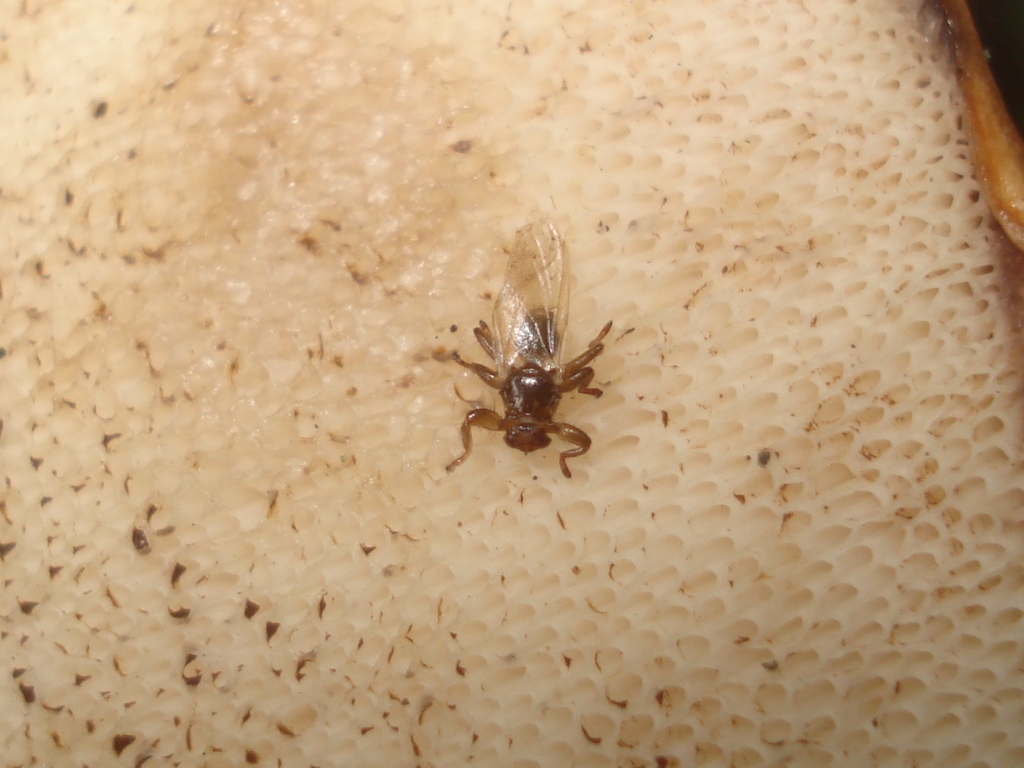
Deer louse flies, Lipoptena species, are the oddest bugs on this list. They fly only until they find a deer, then shed their wings at the base and spend the rest of their lives crawling through the hair as a flattened, hard shelled fly about 0.2 in long (5 mm). Hunters field dressing a whitetail often find dozens. They will land on people and sometimes bite, which itches for days but transmits no established human disease in North America.
Deer bot flies, Cephenemyia species, look like stout bumblebees and never feed as adults. A female squirts live larvae into a deer’s nostrils, where they develop in the throat pouch before being sneezed out. They cannot parasitize humans, despite a stubborn rumor to the contrary. Their bee like disguise fools people the way the mimics in bugs that look like cockroaches do.
What Animal Looks Like a Deer but Is Not a Deer?
Several, and the one most often misidentified in the United States is the pronghorn (Antilocapra americana). It grazes western grassland in small herds and carries pronged horns with a shed outer sheath, but it is not a deer and has no close living relatives. Elk and moose are true deer, members of the family Cervidae, and so are mule deer and whitetails, which is why most counts of North American deer stop at four.
Outside North America the list grows: muntjac, chevrotain, musk deer with tusks instead of antlers, and antelope that share the leggy outline. Sorting them out comes down to horns against antlers, since antlers are bone and shed yearly while horns are permanent. The same exercise drives bugs that look like raccoons and bugs that look like ferrets.
How to Tell These Bugs Apart in the Field
Start with legs and wings. Eight legs and no wings means a tick, and size then decides nymph or adult. Six legs with one visible pair of wings means a fly: banded wings and bright eyes for a deer fly, clear wings on a bee like body for a bot fly, no wings at all on a flat brown body for a louse fly.
Six legs under hard wing covers means a beetle, and branched jaws confirm a stag beetle. Measure instead of guessing, because a 1 in beetle and a 0.1 in tick get described with the same words by someone who saw either one briefly. Photograph the bug on a coin, the habit that settles most arguments, as with bugs that look like silverfish and bugs that look like spiders.
Frequently Asked Questions
What are the four types of deer?
In North America the four native deer are the white-tailed deer, the mule deer including its black-tailed subspecies, the elk and the moose. Caribou are sometimes counted as a fifth. All belong to the family Cervidae, and the males grow and shed bone antlers every year instead of keeping permanent horns.
What animals live with deer?
Deer share habitat with wild turkey, squirrels, raccoons, coyotes and black bear, and all of them use deer trails and browse lines. On the deer itself live ticks, louse flies, chewing lice and nasal bot fly larvae, which is why so many bugs carry the deer name.
Are stag beetles dangerous to handle?
No. A large male can pinch hard enough to be felt but has weak jaw muscles relative to the size of its mandibles, which are built for leverage against rivals. Females have shorter jaws and more force, so a careless grip can produce a nip that breaks skin. Neither is venomous.
How can I tell a deer tick from a dog tick?
An adult deer tick has solid black legs, a plain dark shield behind the mouthparts and a reddish abdomen, at about 0.1 in long (3 mm). The American dog tick is larger, grayer and mottled with white on the shield. Female lone star ticks carry a single white dot.
When is deer fly season in the United States?
Most regions see deer flies from late May into early August, peaking in June and early July. Activity tracks daylight and warmth, so the flies vanish at dusk and on cool overcast days. Northern states get a shorter, sharper season than the Gulf Coast.