8 Bugs That Look Like Stink Bugs: One Is a Health Risk
Most bugs that look like stink bugs are harmless seed and plant feeders, but one is not: the kissing bug (Triatoma sanguisuga) can transmit the parasite behind Chagas disease, and the wheel bug delivers one of the most painful stabs of any North American insect. The rest do nothing worse than smell bad and overwinter in your window frames.
True stink bugs belong to the family Pentatomidae, named for the broad shield shaped back, and a dozen unrelated insects share that outline. Separating them comes down to the shoulders, the hind legs, and the head.
The insects most often mistaken for stink bugs are the western conifer seed bug, boxelder bug, squash bug, leaf footed bug, kudzu bug, elm seed bug, kissing bug, and wheel bug. Only the kissing bug is a disease risk, and only the wheel bug can inflict a serious bite. The rest are nuisance pests at worst.
What’s the Poisonous Bug That Looks Like a Stink Bug?
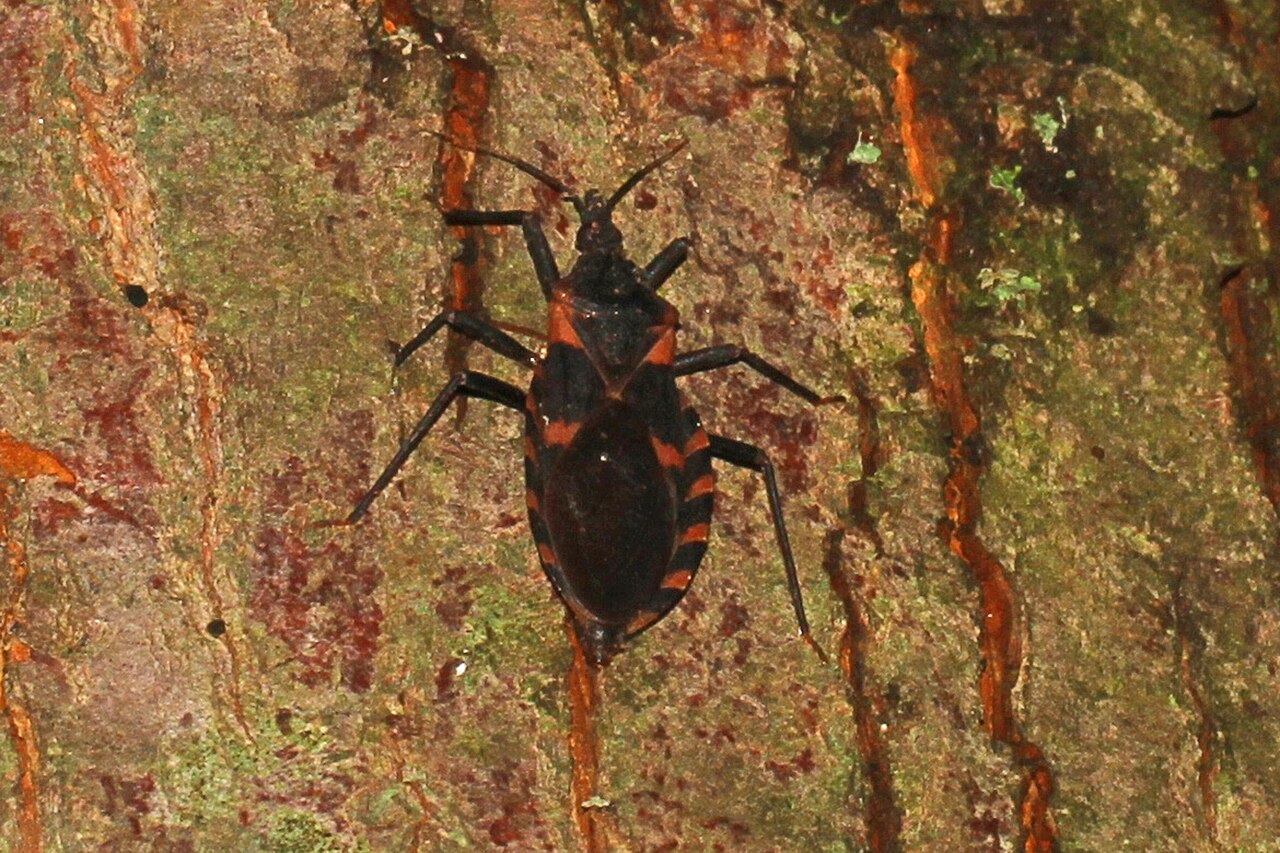
The insect behind that search is the kissing bug, also called the conenose bug. It is not poisonous to touch, but its feces can carry Trypanosoma cruzi, the parasite responsible for Chagas disease. It feeds on blood at night, usually near the face. The CDC reports that locally acquired human cases are rare, though the bug is established across the southern US.
Tell it apart by the head and the margin. A kissing bug has a narrow, cone shaped head with a straight beak and a flattened body edged with orange rectangles. A brown marmorated stink bug has a blunt, broad head and alternating light and dark bands on the antennae and wing edges. If the insect bit you while you slept, it was not a stink bug. The wheel bug (Arilus cristatus) is the other one worth respecting: its cog shaped crest is unmistakable and the bite is reported as worse than a hornet sting.
| Insect | Giveaway feature | Size | US range | Risk |
|---|---|---|---|---|
| Western conifer seed bug | Flared, leaf like hind legs | 0.75 in (19 mm) | Nationwide | None |
| Leaf footed bug | Leg paddles, white band | 0.75 in (19 mm) | South and West | None |
| Boxelder bug | Red orange lines forming an X | 0.5 in (13 mm) | Nationwide | None |
| Squash bug | Dull gray, narrow, on vines | 0.6 in (15 mm) | Nationwide | None |
| Kudzu bug | Tiny, olive, nearly square | 0.2 in (5 mm) | Southeast | Stains skin |
| Elm seed bug | Rusty red and black pattern | 0.3 in (8 mm) | Intermountain West | None |
| Kissing bug | Cone head, orange edge bands | 0.75 to 1 in (19 to 25 mm) | Southern US | Chagas disease |
| Wheel bug | Cogwheel crest on thorax | 1 to 1.4 in (25 to 36 mm) | East and Midwest | Painful bite |
Western Conifer Seed Bug
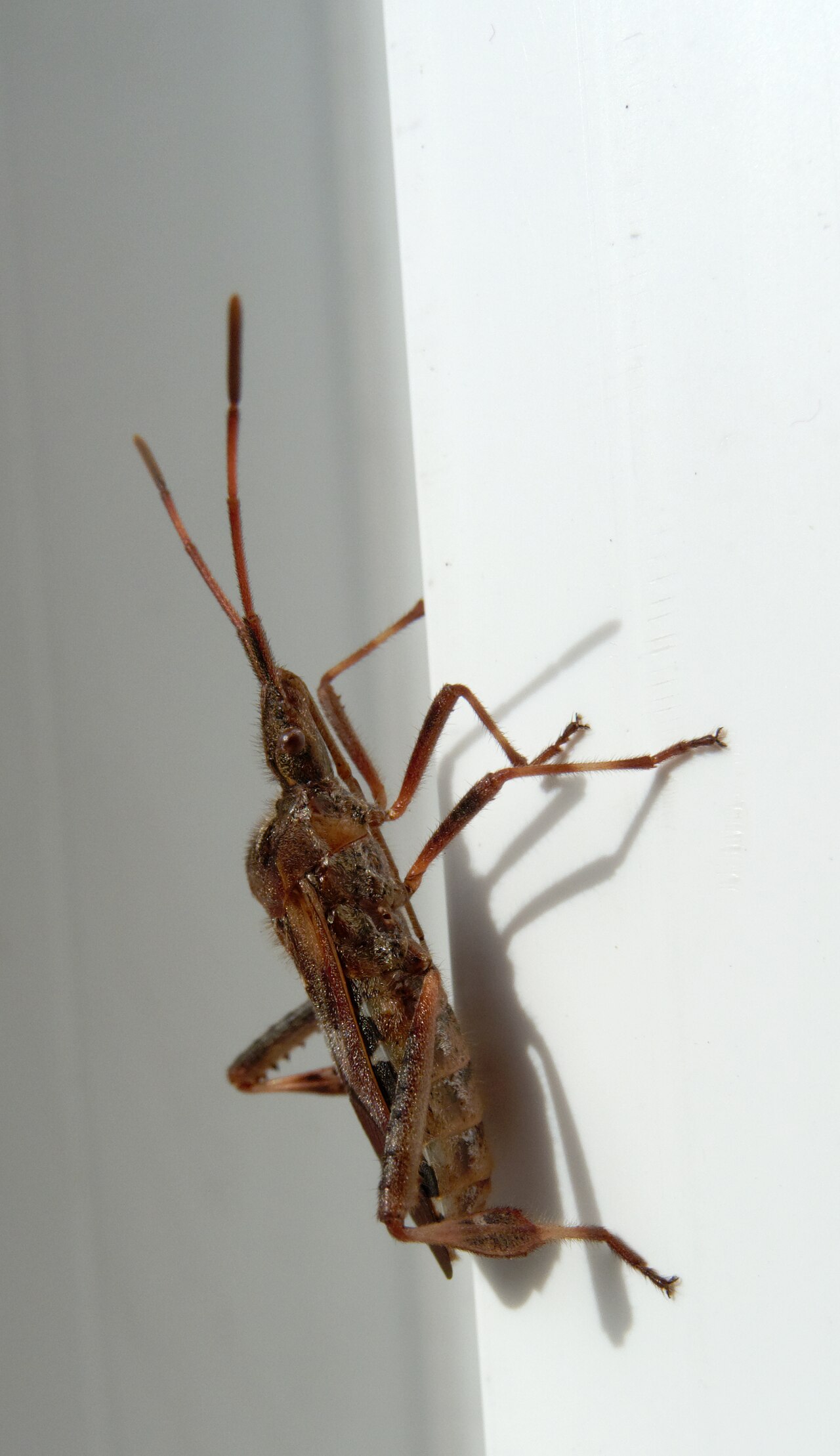
The single most common case of mistaken identity. It matches the size and color of a brown marmorated stink bug, enters houses in the same October rush, and smells similar when crushed. The difference sits in the hind legs, which carry wide flattened flares like small leaves. It feeds on pine and fir seeds and damages nothing indoors.
Leaf Footed Bug
A southern relative with the same leg paddles and a crisp white band across the back. It feeds on tomatoes, citrus, and pecans, so gardeners meet it on fruit. Nymphs are bright orange and get mistaken for hatchlings from stink bug eggs.
Boxelder Bug
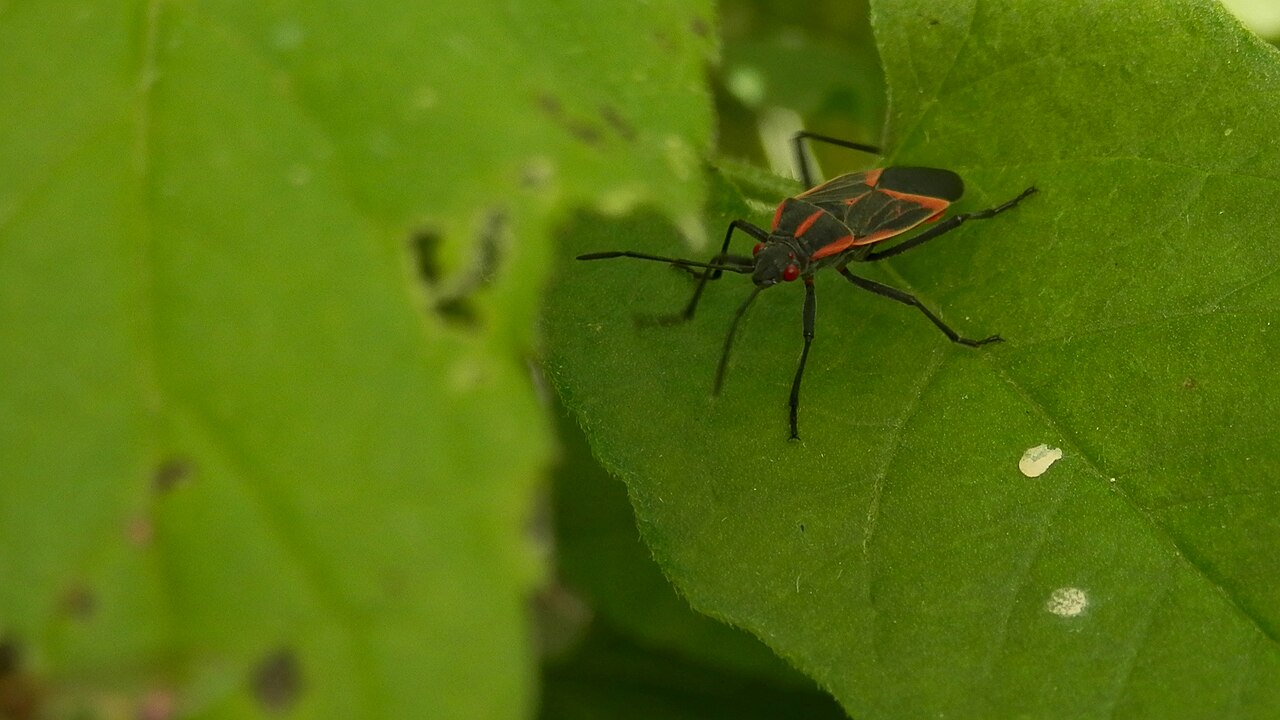
Smaller and flatter, marked with three red orange lines on the thorax and red veins forming an X on the folded wings. It swarms sunny south facing walls in fall in numbers no stink bug matches. The droppings stain siding and curtains.
Squash Bug
Gray brown, dull, and almost always on squash, pumpkin, or cucumber vines. The body is a narrower oval than a stink bug’s shield, and the eggs sit in neat bronze clusters under leaves. It smells when crushed, which deepens the confusion.
Kudzu Bug
An olive green insect the size of a lentil, nearly square, found in huge aggregations on kudzu, soybeans, and pale house walls across the Southeast. It belongs to the same superfamily as stink bugs and stinks just as badly.
Elm Seed Bug
A European arrival now common in Idaho, Utah, and Oregon. Rusty red and black with an alternating pattern along the abdomen edge, a third the length of a stink bug, and it floods homes in July rather than October.
What Kind of Bugs Look Like Stink Bugs but Are Bigger?
The wheel bug runs 1 to 1.4 in (25 to 36 mm) and is the largest true bug most people find on a porch light. Leaf footed bugs and the western conifer seed bug both reach 0.75 in (19 mm), longer than the 0.65 in (17 mm) of a brown marmorated stink bug, though the extra length is in the abdomen rather than the shield. Indoors the error runs the other way, with small brown insects taken for stink bug young; those are often the species in our guide to bugs that look like cockroaches.
The Lookalike That Is Actually a Stink Bug
The spined soldier bug (Podisus maculiventris) is a genuine pentatomid, shield shaped and mottled brown, and it gets killed as a pest constantly. It is one of the most useful predators in a vegetable garden, taking potato beetle larvae, armyworms, and the nymphs of the brown marmorated stink bug itself.
Check the shoulders. The spined soldier bug has sharp points projecting sideways from each shoulder and no banding on the antennae; the marmorated species has smooth, rounded shoulders and clear white bands on antennae and wing margins. The EPA lists the marmorated one as invasive. Before reaching for a spray, confirm which you have and read our notes on what stink bugs eat.
Should I Be Worried if I Find a Stink Bug in My House?
No. Stink bugs and their lookalikes do not bite, breed indoors, feed on anything in the house, or damage wood or fabric. They enter in autumn to overwinter and spend the cold months behind trim and in attic insulation, emerging on warm days. Remove them with a jar or a vacuum fitted with a disposable bag, since crushing releases the odor. Sealing gaps around windows and soffits in late summer does more than any spray; the full approach is in how to get rid of stink bugs. Small silver insects in the same rooms are a different problem, covered under bugs that look like silverfish.
Frequently Asked Questions
Why should you not kill a stink bug?
Crushing one releases the defensive compounds that give the family its name, and the odor clings to skin, fabric, and vacuum filters for hours. Some species also release an alarm signal that attracts others. Several shield shaped bugs are beneficial predators, so killing on sight removes allies along with pests.
What scent do stink bugs hate?
Strong aromatics reduce landings on treated surfaces: mint, clove, lemongrass, thyme, and ylang ylang oils all show an effect. Dryer sheets and garlic spray have anecdotal support. None of it substitutes for sealing entry points.
What month are stink bugs the worst?
September and October, when adults leave crops for warm walls, then March and April when they wake and try to get back out. Elm seed bugs peak earlier, in July. Midwinter sightings indoors mean overwintering insects, not new entry.
What is the natural enemy of a stink bug?
The samurai wasp (Trissolcus japonicus), a parasitoid that lays eggs inside stink bug egg masses, is the leading biological control for the invasive species. Wheel bugs, spined soldier bugs, spiders, and lizards take adults and nymphs, as do the birds that eat stink bugs.