Stink Bug Eggs
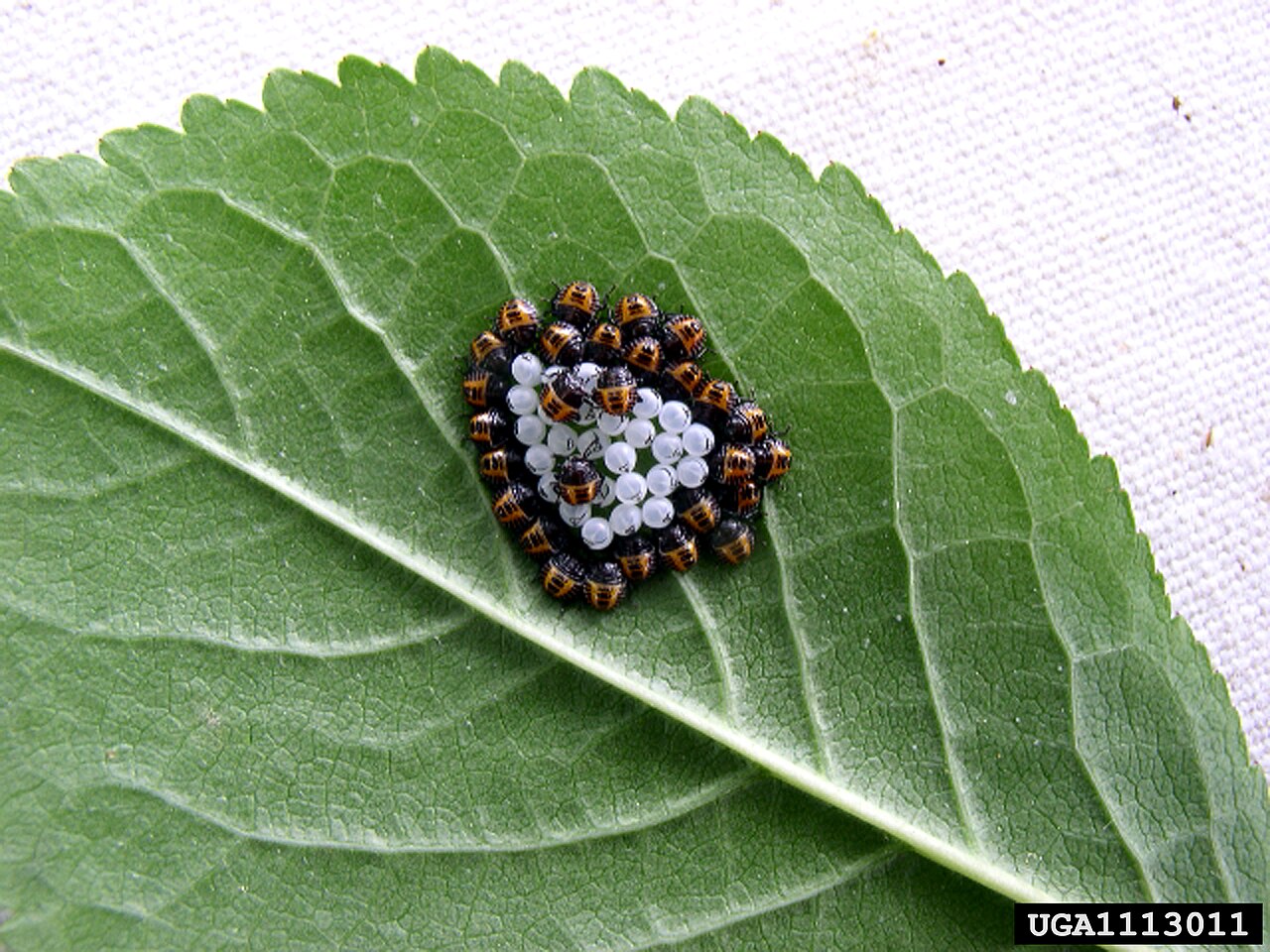
Stink bug eggs are tiny, barrel-shaped clusters usually found stuck to the underside of leaves in gardens, on fruit trees, or occasionally on window screens as summer winds down. Each egg measures only about 1 to 2 millimeters across, and a female stink bug lays them in neat, tightly packed rows of 20 to 30 at a time, sometimes producing several hundred eggs across her lifetime.
Fresh eggs are usually pale green, white, or yellow, and they darken slightly as the young inside develop before hatching into small, brightly colored nymphs within about four to seven days in warm weather. Spotting these clusters early is one of the most effective ways to head off a backyard stink bug problem before it really gets going.
| Quick Reference | Detail |
|---|---|
| Representative Species | Halyomorpha halys, the brown marmorated stink bug |
| Egg Shape | Barrel-shaped with a flat, hinged top |
| Egg Size | About 1 to 2 millimeters in diameter |
| Cluster Size | 20 to 30 eggs per mass, laid in tight rows |
| Egg Color | Pale green, white, or yellow, darkening before hatching |
| Hatching Time | 4 to 7 days in warm conditions |
| Common Location | Underside of leaves on fruit trees, vegetables, and ornamentals |
What Do Stink Bug Eggs Look Like?
Stink bug eggs are small, rounded, and distinctly barrel-shaped, with a flat, slightly raised top that pops open like a tiny hatch when the nymph inside is ready to emerge. Freshly laid eggs tend to be pale green, white, or light yellow, and gardeners often describe them as looking like a tiny row of pearls or beads glued firmly to a leaf.
As the eggs mature, their color can shift toward a duller gray or yellowish tone, and under close magnification a small, darker ring or spot sometimes becomes visible near the top just before hatching. Some closely spaced eggs even develop faint markings that people have nicknamed “grumpy face” patterns, which appear right around the time the nymphs are close to emerging.
The surface of each egg is smooth rather than textured, and because the eggs are so small and blend in with leaf color, they are genuinely easy to miss unless you are specifically checking the undersides of leaves. A magnifying glass or a close, deliberate look at garden foliage during spring and summer is usually the only reliable way to catch an egg mass before it hatches.
Where Do Stink Bugs Lay Their Eggs?
Female stink bugs strongly prefer the underside of leaves, where the eggs are shielded from direct sun and rain while staying close to a food source the emerging nymphs can start feeding on immediately. Favorite host plants include tomatoes, beans, corn, soybeans, peppers, raspberries, and a wide range of fruit trees and ornamental shrubs.
Outdoors, egg masses occasionally turn up on structures too, including the exterior walls of sheds, fences, and homes, particularly in areas close to a garden or fruit tree. It is worth clearing up a common myth here: stink bugs do not lay eggs on humans, in hair, on clothing, or anywhere indoors, since females need a stable outdoor surface like a leaf to attach eggs to and complete their reproductive cycle.
Adult stink bugs that move indoors in the fall are seeking shelter for the winter, not a place to reproduce, and they enter a dormant state called diapause rather than laying eggs while inside a house. Any claim of stink bugs laying eggs on a person or pet is confusion with an entirely different pest, such as lice or fleas, rather than an accurate description of stink bug biology.
The Stink Bug Life Cycle From Egg to Adult
A stink bug’s life moves through three distinct stages: egg, nymph, and adult, with no true larval or pupal stage in between. Once an egg hatches, usually within four to seven days under warm conditions, the young nymph that emerges is often red, black, or orange and looks quite different from the shield-shaped adult it will eventually become.
Nymphs pass through five separate instars, or growth stages, shedding their exoskeleton and gradually taking on more adult coloring and proportions at each molt. Newly hatched nymphs typically stay clustered near the empty egg shells for several hours before dispersing to begin feeding on nearby plant tissue.
Depending on the local climate, a stink bug population can complete anywhere from one to three generations in a single year, with warmer regions supporting faster, more frequent breeding cycles. This reproductive pace is part of why a small early-season egg mass, left unchecked, can turn into a substantial late-summer infestation surprisingly quickly.
Stink Bug Eggs vs. Other Insect Eggs
Several beneficial insects lay eggs that can look superficially similar to stink bug eggs at a quick glance, which sometimes leads gardeners to remove helpful insects along with genuine pests. Ladybug eggs, for example, are typically yellow or orange, more spindle-shaped than barrel-shaped, and stand upright in a tightly packed cluster rather than lying in the flatter, more spaced rows typical of stink bug eggs.
Lacewing eggs are even easier to tell apart once you know the trick, since each one is laid individually at the tip of a thin, hair-like stalk rather than in a dense cluster directly on the leaf surface. Boxelder bug eggs are another common look-alike, sharing a similar habitat and rough size range but generally appearing in looser, less uniform groupings than the neat rows a stink bug produces.
Because ladybugs are themselves voracious predators of many garden pests, it helps to know that people also frequently ask whether ladybugs bite, largely out of the same instinct to identify which backyard insects are worth worrying about and which ones are actually working in a gardener’s favor.
Are Stink Bug Eggs Harmful to Plants, Pets, or People?
The eggs themselves are essentially harmless on contact and pose no direct risk to people or pets, since stink bugs neither sting nor carry disease at any life stage. The real concern is what hatches out of them: nymphs begin feeding on plant tissue almost immediately, and large numbers can cause visible stippling, discoloration, or scarring on developing fruit and vegetables.
Adult stink bugs occasionally bite if trapped directly against skin, but this is uncommon and typically results in nothing more than a small red mark with mild, short-lived irritation. Compared to genuinely painful garden encounters, a stink bug bite is a minor nuisance rather than a health concern for most people.
The bigger practical impact tends to be agricultural and cosmetic rather than medical, since a heavy infestation can meaningfully reduce the marketable quality of a home garden’s fruit and vegetable harvest even though no individual bug or egg poses a real threat to the people tending that garden.
How to Remove Stink Bug Eggs Safely
Manual removal is the most reliable first step: gently scrape egg clusters off leaves with a fingernail or soft brush, or lift them off intact using a strip of tape, then drop the eggs into soapy water to make sure they cannot hatch after removal. Crushing the eggs directly is best avoided, since it can release odor compounds that discourage the very predators that would otherwise help control the population.
A light spray of neem oil or insecticidal soap on affected leaves is an effective natural follow-up, since both products interfere with egg development and can also discourage adult stink bugs from laying additional eggs in the same spot. Diatomaceous earth sprinkled around known hot spots offers another natural option, working through physical rather than chemical means against many soft-bodied insects.
For larger infestations that outpace manual control, targeted insecticides labeled for stink bugs can help, though broad-spectrum products should be used cautiously since they also kill the beneficial insects that naturally keep stink bug numbers in check over the long run. When an infestation is severe, calling a licensed pest control professional is a reasonable next step rather than repeatedly escalating home treatments.
Natural Predators That Keep Stink Bug Populations in Check
Several common backyard predators feed on stink bug eggs and nymphs, and encouraging their presence is one of the most sustainable long-term controls available to home gardeners. Praying mantises, jumping spiders, grass spiders, and various parasitic wasps all take a toll on stink bug populations well before they reach adulthood.
According to entomologists at Ohio State University, researchers have been tracking the spread of the samurai wasp, a tiny parasitic species that lays its own eggs inside stink bug eggs and has already been found controlling brown marmorated stink bug populations in parts of West Virginia and Pennsylvania. Trichogramma wasps, a related group of egg parasitoids, provide similar biological control benefits when a garden supports a diverse enough population of flowering plants to sustain them.
Because squashing an adult stink bug releases a scent that can repel these same helpful predators, choosing removal methods like vacuuming or soapy water over crushing helps protect the very insects working in a gardener’s favor behind the scenes.
Preventing Stink Bug Infestations Long Term
Sealing potential entry points is one of the most effective preventive steps homeowners can take, since stink bugs seek shelter indoors as days shorten in early fall rather than simply reacting to cooler temperatures. Caulking gaps around doors, windows, utility pipes, and fascia boards closes off the routes these insects use to move from the garden into a house.
In the garden itself, removing weeds, leaf litter, and old boards eliminates hiding spots that support adult populations between egg-laying cycles, while planting a diverse mix of flowering species helps sustain the parasitic wasps and other predators that keep numbers down naturally. Fine mesh netting or garden row covers over the most vulnerable crops physically block females from reaching leaves to lay eggs in the first place.
Trap plants, essentially sacrificial crops planted specifically to lure stink bugs away from more valuable produce, can also concentrate the pest population in one manageable spot, making periodic removal far easier than trying to protect an entire vegetable garden at once. Gardeners dealing with several small pest issues at once often find it worth learning to identify common yard insects like the potato bug alongside stink bugs, since correct identification prevents wasted effort treating the wrong target.
Related reading: Potato Bug.
Related reading: Ladybug Eggs.
Frequently Asked Questions
How many eggs can a stink bug lay?
A single female stink bug can lay several hundred eggs over her lifetime, often producing multiple egg masses of 20 to 30 eggs each across the warmer months of the year.
How long does it take for stink bug eggs to hatch?
Under warm conditions, stink bug eggs typically hatch within 4 to 7 days, though cooler temperatures can slow this process down noticeably.
Do stink bugs lay eggs inside houses?
No, stink bugs lay their eggs outdoors on plant leaves and occasionally on outdoor structures. Adults that come indoors in fall are seeking winter shelter and enter a dormant state rather than reproducing inside a home.
What color are stink bug eggs?
Freshly laid stink bug eggs are usually pale green, white, or light yellow, and they tend to darken slightly toward gray or a duller yellow as the nymphs inside get closer to hatching.
Can you vacuum up stink bug eggs?
Yes, a vacuum can remove egg clusters from leaves and surfaces without crushing them and releasing odor, though the vacuum bag or canister should be sealed and disposed of promptly afterward.
Do ladybugs eat stink bug eggs?
Ladybugs are known to feed on a wide range of small garden pests, and along with lacewings and parasitic wasps, they contribute to natural control of stink bug eggs and young nymphs in a healthy garden ecosystem.
What is the samurai wasp and how does it help?
The samurai wasp is a tiny parasitic wasp that lays its own eggs directly inside stink bug eggs, killing the developing stink bug before it can hatch. Researchers have documented it establishing itself in parts of the eastern United States, where it is helping to naturally suppress brown marmorated stink bug populations.