Orange Ladybug: Identification & What It Means
An orange ladybug clustering on a window or wall is almost always the multicolored Asian lady beetle (Harmonia axyridis), an introduced species from eastern Asia, not a native North American ladybug. This guide covers how to reliably identify an orange ladybug, why it behaves so differently from a native ladybug, whether it is harmful, and what to do if you find them gathering indoors.
| Feature | Asian Lady Beetle (orange) | Native Ladybug |
|---|---|---|
| Head marking | Black “M” or “W” shape on white pronotum | No M-shape marking |
| Color range | Pale yellow to deep orange to brown | Usually bright red |
| Shape | Larger, more oval | Smaller, rounder |
| Winter behavior | Swarms indoors in large numbers | Shelters outdoors under bark/leaves |
| Bite risk | Can bite/pinch, harmless but noticeable | Rarely bites |
What Is an Orange Ladybug?
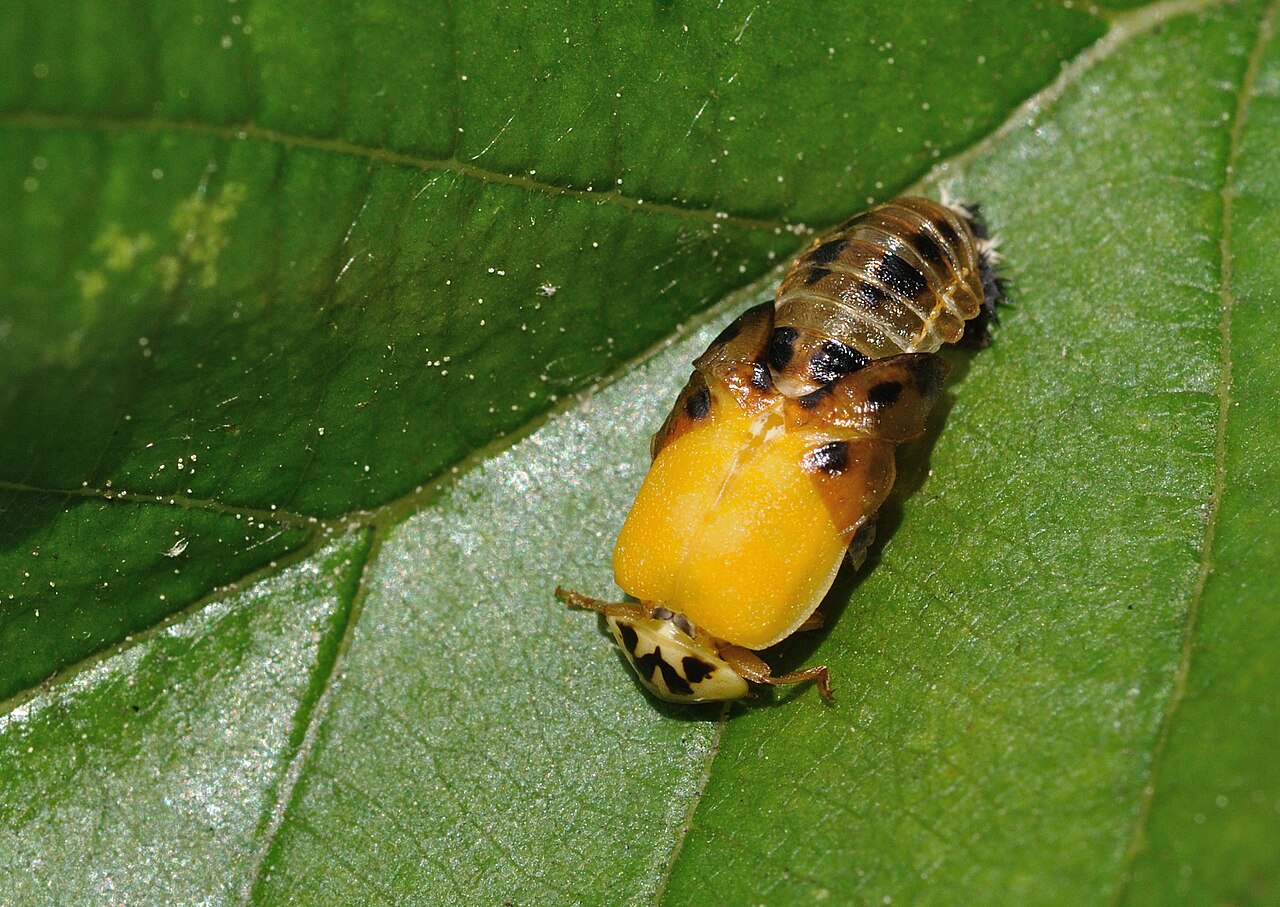
The insect most people describe as an “orange ladybug” is the multicolored Asian lady beetle (Harmonia axyridis), also called the harlequin or Halloween lady beetle. It was deliberately introduced to North America from eastern Asia between the 1960s and 1990s specifically to help control agricultural pests like aphids, and it has since become extremely widespread and successful, to the point of now being considered invasive in many regions. Despite the common name confusion, entomologists note it is a genuine coccinellid, the same family as native ladybugs, just an introduced species with a dramatically wider range of color variation than people typically expect from a “ladybug.”
Orange ladybugs are not the only strikingly colored small creature people find in the garden and wonder about; see our guide to fuzzy caterpillars for which colorful, hairy species are safe to touch and which actually sting.
If an orange ladybug has ever pinched you, see our guide to whether ladybugs bite for why it happens and how concerned to be about it.
How to Identify an Orange Ladybug
The single most reliable identifying feature is the black “M” or “W” shaped marking on the white pronotum, the area directly behind the head; this marking varies in thickness and can appear as anything from a few scattered black spots to an almost solid black pattern, but it is present on the vast majority of individuals regardless of body color. Body coloration itself is highly variable, ranging from pale yellow through deep orange to reddish-brown, sometimes with as many as 19 black spots and sometimes with none at all. Size and shape offer a secondary clue: Asian lady beetles run larger than most native ladybugs, typically about a quarter to a third of an inch long, with a more oval, elongated shape compared with the smaller, rounder profile of most native species.
Orange Ladybug vs Native Ladybug
Beyond the M-marking, several practical differences help separate an introduced Asian lady beetle from a native ladybug species. Native ladybugs are most commonly bright red with well-defined black spots, generally smaller and rounder, and they overwinter outdoors, sheltering under bark, in leaf litter, or inside hollow logs rather than seeking shelter inside human structures. Asian lady beetles, by contrast, actively seek out buildings in fall, are drawn specifically to sun-warmed, light-colored surfaces on tall structures, and will gather in large aggregations both outside and, if given any entry point, inside walls, attics, and living spaces. This dramatic difference in overwintering behavior, more than color alone, is usually what first tips people off that they are dealing with the introduced species rather than a native one.
Why Do Orange Ladybugs Swarm Homes in Fall?
As outdoor temperatures cool in late September and October, Asian lady beetles instinctively search for protected overwintering sites, and they show a strong preference for the sunny sides of tall, light-colored buildings, particularly those situated near wooded areas where the beetles are already active during the growing season. When one beetle locates a suitable crack or crevice, it releases an aggregation pheromone that attracts many others to the exact same spot, which is why a single promising entry point on a house can result in dozens or even hundreds of beetles converging on the same location within days, a chemical recruitment strategy similar in principle to how other insects use pheromones to coordinate group behavior. According to university extension research, buildings that combine dark and light color contrast on their exterior are particularly attractive to swarming beetles, likely because the contrast makes warm, sun-exposed surfaces easier for the beetles to visually locate.
Do Orange Ladybugs Bite or Sting?
Yes, unlike most native ladybugs, Asian lady beetles are capable of delivering a noticeable bite, more accurately described as a pinch from their mandibles, when they land on skin searching for moisture or a food source. These bites are not medically dangerous and do not inject venom, but they can be surprisingly sharp for such a small insect and are a common source of complaint during fall swarming events. When disturbed or crushed, the beetles also release a foul-smelling, yellowish defensive fluid through a process called reflex bleeding, which can stain walls, curtains, and fabric, adding a second reason people find large indoor infestations genuinely unpleasant beyond the sheer number of insects involved, not unlike the defensive fluid released by other cornered household insects such as a startled potato bug.
Are Orange Ladybugs Dangerous or Harmful?
Despite the bite and staining fluid, Asian lady beetles pose no serious health threat to people or pets in the vast majority of cases; they do not carry disease, do not damage wood or fabric the way some other household pests do, and generally do not reproduce indoors, meaning any beetles found inside during winter and spring entered the previous fall rather than breeding on-site. In rare cases, some individuals report mild allergic reactions to repeated exposure, similar to other minor insect-related sensitivities. The larger practical issue is simply the sheer nuisance of large numbers gathering in living spaces, along with the reflex-bleeding stains, rather than any genuine safety concern.
How to Get Rid of Orange Ladybugs
Prevention is significantly more effective than dealing with an established indoor swarm, and the most effective single step is thoroughly sealing cracks and crevices around windows, doors, siding, and utility entry points before mid-September, ahead of the fall swarming season. For beetles already inside, a vacuum cleaner with a hose attachment is the recommended removal tool, since crushing beetles releases the smelly, staining defensive fluid that a simple sweep or swat would spread across the surface. University extension sources generally do not recommend spraying insecticides inside a home for these beetles, since the population indoors is limited to whatever entered the previous fall and cannot be prevented from being present already; exterior treatments applied by a pest control professional in early fall, before beetles arrive, tend to be more genuinely effective than reactive indoor treatment.
Do Native Ladybug Species Come in Orange Too?
Yes, which adds a layer of genuine complexity to identification: several native North American species, including the convergent ladybug and the seven-spotted ladybug, a European species also long established in the US, can appear orange rather than the classic bright red people typically expect. This means color alone is never a fully reliable identifier on its own; the black M-shaped pronotum marking remains the single most dependable feature specifically pointing to the introduced Asian lady beetle, since none of the commonly confused native orange species carry that particular marking, the same kind of single, reliable field mark that helps distinguish similarly confusable wildlife species from more dangerous look-alikes.
Are Orange Ladybugs Beneficial to Gardens?
Outdoors, Asian lady beetles are genuinely beneficial predators, and both adults and their alligator-like larvae consume large numbers of aphids and other soft-bodied pests across gardens, crops, and landscape plantings, which was the entire original rationale for their intentional introduction. This dual identity, a valuable pest predator outdoors but an unwelcome nuisance indoors, is part of why many people find the species genuinely conflicting to deal with, and it is a major reason experts generally recommend simply excluding and removing indoor beetles rather than trying to eliminate the outdoor population entirely, since doing so would sacrifice real pest-control benefits like those provided by native ladybug species in the same gardens.
Related reading: Bullet Ant.
Related reading: Asian Lady Beetle vs Ladybug.
Related reading: Yellow Ladybug.
Related reading: Orange Butterfly.
Related reading: Ladybug Eggs.
Related reading: Ladybug Look Alike.
Related reading: Green Ladybug.
Related reading: Brown Ladybug.
Related reading: Japanese Beetle vs Ladybug.
Related reading: Ladybug Life Cycle.
Related reading: Orange Ladybug Meaning.
Related reading: Orange Caterpillar.
Frequently Asked Questions
What is an orange ladybug?
An orange ladybug is almost always the multicolored Asian lady beetle (Harmonia axyridis), an introduced species from eastern Asia, identifiable by a black M or W shaped marking on its white pronotum, distinct from native ladybug species.
How do you tell an orange ladybug from a native ladybug?
Look for the black M-shaped marking behind the head, which native ladybugs lack. Asian lady beetles are also larger, more oval, and swarm indoors in fall, while native ladybugs are smaller, rounder, and overwinter outdoors.
Do orange ladybugs bite?
Yes, unlike most native ladybugs, Asian lady beetles can deliver a noticeable pinching bite when searching for moisture or food on skin. It is not dangerous but can be surprisingly sharp for such a small insect.
Why do orange ladybugs swarm my house in fall?
They seek warm, protected overwintering sites and are drawn to sunny sides of tall, light-colored buildings. One beetle finding a good spot releases a pheromone that attracts many others to the same location.
Are orange ladybugs dangerous?
No, they pose no serious health threat, don’t carry disease, and don’t reproduce or damage property indoors. The main issues are the sharp bite, a smelly staining fluid if crushed, and general nuisance from large numbers.
How do I get rid of orange ladybugs in my house?
Seal cracks around windows, doors, and siding before mid-September to prevent entry. For beetles already inside, vacuum them gently rather than crushing them, which releases a foul-smelling, staining defensive fluid.
Are orange ladybugs good for gardens?
Yes, outdoors they are beneficial predators that eat large numbers of aphids and other soft-bodied pests, which is why they were originally introduced for agricultural pest control despite being a nuisance indoors.
Whether the goal is confirming which species is clustering on a window or simply satisfying curiosity about an unusually large orange beetle, checking for that black M-shaped marking first remains the fastest, most reliable way to settle the question before considering color, size, or behavior at all.
Careful, patient observation, ideally with a magnifying glass or a zoomed photo, remains the best approach for anyone genuinely uncertain, since the M-marking is small but consistently visible once you know exactly where to look, a reliable a-ha moment much like finally spotting the distinguishing features between two similar-looking reptile species after enough close comparison.
Whatever the final identification turns out to be, both native and introduced ladybugs remain harmless, beneficial garden visitors overall, worth appreciating even when one particular species overstays its welcome indoors each fall.