Orange Caterpillar: How to Identify What You’re Seeing
An orange caterpillar spotted in a garden or on a porch railing is most likely a milkweed tussock moth caterpillar, a woolly bear with wide orange bands, or an io moth larva going through a late color change. All three show up across most of the United States between late spring and early fall, and each has a distinct texture and pattern once you know what to look for. Size, hair type, and the exact shade of orange narrow the identification quickly.
Color alone is not enough to identify an orange caterpillar, since dozens of species pass through an orange phase at some point in their larval stage. What separates them is whether the body is smooth or bristly, whether the orange appears in solid bands or scattered tufts, and how the caterpillar reacts when disturbed. The sections below cover the species people encounter most often in yards, gardens, and along woodland edges.
An orange caterpillar in the US is usually a milkweed tussock moth larva, an orange-banded woolly bear, or an io moth caterpillar. Tussock moth larvae have dense orange and black tufts, woolly bears have fuzzy orange and black bands, and io moth larvae are pale green with orange stripes before pupation, not solid orange.
| Species | Texture | Typical Length | Host Plant | Sting Risk |
|---|---|---|---|---|
| Milkweed Tussock Moth | Dense hair tufts | 1 to 1.5 in | Milkweed | Low, mild irritant |
| Woolly Bear (banded) | Fuzzy, uniform hair | 1 to 2 in | Weeds, grasses | None |
| Io Moth Larva | Branched spines | 2 to 2.5 in | Wide variety | High, painful sting |
| Saltmarsh Caterpillar | Long soft hairs | 1.5 to 2 in | Low weeds | None |
What Orange Caterpillar Species Are Most Common
The species people run into most often are milkweed tussock moth larvae, banded woolly bears, and io moth caterpillars, since all three are widespread and active during the warmer months. Milkweed tussock moths cluster in groups on milkweed leaves, which makes them easy to spot in numbers. Woolly bears wander alone across sidewalks and driveways, especially in early fall. Io moth caterpillars feed on a broad range of shrubs and trees and tend to show up singly rather than in clusters.
Regional overlap matters here, since a caterpillar that is common in the Northeast may be rare or absent in the Southwest. Milkweed tussock moths follow milkweed distribution closely, so they appear wherever monarch habitat exists. Woolly bears are found almost everywhere in the lower 48 states. Io moths are more common east of the Rockies and become scarcer moving west.
Checking the host plant a caterpillar was found on often confirms the species faster than color alone. A caterpillar on milkweed with tufted orange and black hair is almost certainly a tussock moth larva. One found wandering on pavement with no plant nearby is more likely a woolly bear on the move to find a place to overwinter.
Milkweed Tussock Moth Caterpillars
Milkweed tussock moth caterpillars are identified by dense tufts of orange, black, and white hair arranged in rows down the body, giving them a bottlebrush appearance rather than a uniform fuzzy coat. They feed exclusively on milkweed and often strip a plant down to the stem when several larvae feed together. Older caterpillars show more black and white mixed into the orange, while younger ones are almost entirely orange.
These caterpillars sequester toxic compounds from milkweed sap, the same defense strategy monarch butterflies use, which makes them unpalatable to most birds. The hair tufts can cause mild skin irritation in sensitive people but do not carry venom or a true sting. Handling one is generally safe if done gently, though washing hands afterward is a reasonable precaution.
Gardeners growing milkweed for monarchs sometimes worry that tussock moth caterpillars compete with monarch larvae for food. In practice, a single milkweed patch usually supports both species without shortage, since tussock moths tend to cluster on a subset of plants rather than spreading evenly. Removing them is rarely necessary unless the milkweed stand is small and heavily defoliated.
Woolly Bear Caterpillars With Orange Bands
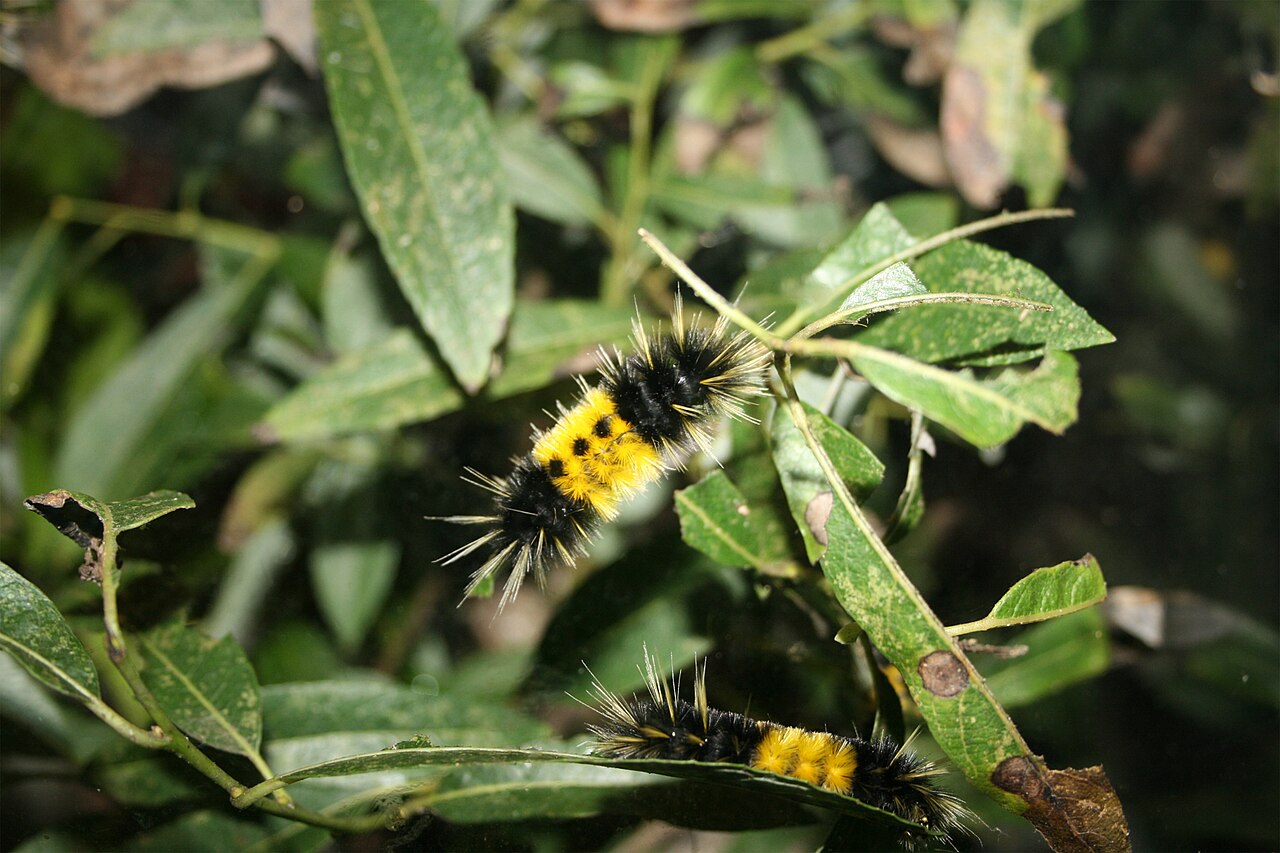
The common woolly bear, banded in black at both ends with a wide orange middle section, is one of the most recognizable caterpillars in North America. Folklore claims the width of the orange band predicts how severe the coming winter will be, though entomologists have found no reliable link between band width and actual weather outcomes. Band width instead reflects the age of the caterpillar and how recently it molted.
Woolly bears are most visible in autumn, when they leave their feeding areas to search for sheltered spots to overwinter as larvae. They tolerate freezing temperatures by producing a natural antifreeze compound in their tissues, then thaw out and resume feeding briefly in spring before pupating. This freeze tolerant strategy is unusual among caterpillars, most of which overwinter as eggs or pupae instead.
The hairs on a woolly bear are not toxic and picking one up rarely causes irritation, though some people are sensitive to the bristly texture. Unlike the tussock moth, woolly bears feed on a wide range of low-growing plants and weeds rather than a single host, which is part of why they turn up in so many different settings.
Io Moth Caterpillars and Color Change
Io moth caterpillars are pale green with a red and white stripe along each side for most of their life, but late-stage larvae approaching pupation can take on an orange or brownish cast that leads people to search for an orange caterpillar identification. The branched spines covering the body deliver a genuinely painful sting on contact, caused by a toxin in hollow bristle tips rather than a bite or venom injection.
Reactions to an io moth sting range from a brief stinging sensation to welts and swelling that can last for an hour or more, depending on how many spines make contact and individual sensitivity. Washing the area and applying tape to lift out broken spine tips reduces ongoing irritation. Severe reactions are uncommon but warrant medical attention if swelling spreads or breathing is affected.
Because io moth larvae feed on such a wide range of host plants, from roses to corn to many ornamental trees, they turn up in gardens far more often than their vivid green coloring alone would suggest. The color shift toward orange in later instars is a normal part of development and does not signal illness or stress in the caterpillar.
How to Tell Orange Caterpillars Apart by Texture
Texture separates these species faster than color in most cases, since dense hair tufts, uniform fuzz, and stiff branched spines each point to a different caterpillar. Milkweed tussock moths show distinct tufted clumps rather than an even coat. Woolly bears have soft, uniform bristles across the entire body with no clumping. Io moth larvae have stiff, branching spines that look almost plant-like rather than hairy.
Body shape offers a second clue when hair type is ambiguous from a distance. Tussock moth and woolly bear caterpillars both have a fairly uniform cylindrical shape along their length. Io moth larvae are slightly more tapered and show visible ridges where the spine clusters attach, giving the body a faceted look under close inspection.
Movement style can help as well, particularly with woolly bears, which curl into a tight ball when disturbed, a defensive behavior the other two species do not display in the same way. Tussock moth larvae tend to stay put on the leaf surface even when touched. Io moth larvae rarely curl and instead rely on the sting itself as their primary defense.
Where Orange Caterpillars Are Found
Milkweed patches, weedy roadsides, and garden edges are the most common places to find orange caterpillars, since these habitats support the host plants each species depends on. Milkweed tussock moths stay close to milkweed stands and rarely wander far from their food source until ready to pupate. Woolly bears are found almost anywhere with low vegetation, including lawns, parks, and sidewalks during fall migration to overwintering sites.
Io moth caterpillars show up on a wider range of plants, including landscape shrubs, fruit trees, and even corn in agricultural areas, which means they are less tied to a single habitat type. Suburban gardens with diverse plantings are prime io moth territory for this reason. Wooded edges and hedgerows also support all three species where host plants overlap.
Time of year affects where you are likely to see each one. Tussock moth caterpillars peak in mid to late summer while milkweed is at its fullest growth. Woolly bears become most visible in September and October as they travel to find shelter. Io moth larvae are usually seen from midsummer through early fall, with the orange color shift appearing closer to pupation time.
What Orange Caterpillars Eat
Each species has a distinct diet that ties directly back to where you are likely to find it. Milkweed tussock moth caterpillars eat only milkweed, making them a true specialist among the three. Io moth caterpillars are generalists that feed on roses, willows, maples, corn, and dozens of other plants, which explains their wide distribution across garden types.
Woolly bears fall somewhere in between, feeding on a range of low herbaceous plants, grasses, and weeds without being tied to one specific host. This flexible diet is part of why woolly bears are the most commonly seen orange and black caterpillar across nearly every US state. None of the three species causes serious damage to healthy, established plants under normal population levels.
Heavy feeding pressure is only a concern when milkweed tussock moths cluster in large numbers on a small or young milkweed planting, since repeated defoliation can stress an immature plant. Established milkweed patches generally recover without intervention. Io moth and woolly bear feeding is rarely dense enough on any single plant to warrant control measures.
Are Orange Caterpillars Dangerous to Touch
Whether an orange caterpillar is safe to touch depends entirely on which species it is, since io moth larvae sting on contact while tussock moths and woolly bears do not. The stinging spines on an io moth caterpillar are the main hazard among common orange species, and the reaction can range from mild to genuinely painful depending on contact area. Faunalist Tip: if you are unsure which orange caterpillar you are looking at, treat any caterpillar with stiff, branching, spine-like structures as a stinging species and avoid direct contact until you can confirm otherwise.
Milkweed tussock moth hairs and woolly bear bristles are not connected to venom glands and typically cause no reaction beyond mild itchiness in sensitive individuals. Neither species bites or injects any toxin through contact. Washing hands after handling either one is a reasonable habit but not a medical necessity.
Children and pets are more likely to make unintended contact with a caterpillar than adults, so teaching a simple rule, look but do not touch spiny or unfamiliar caterpillars, avoids most sting incidents without requiring exact species identification in the moment.
What Orange Caterpillars Turn Into
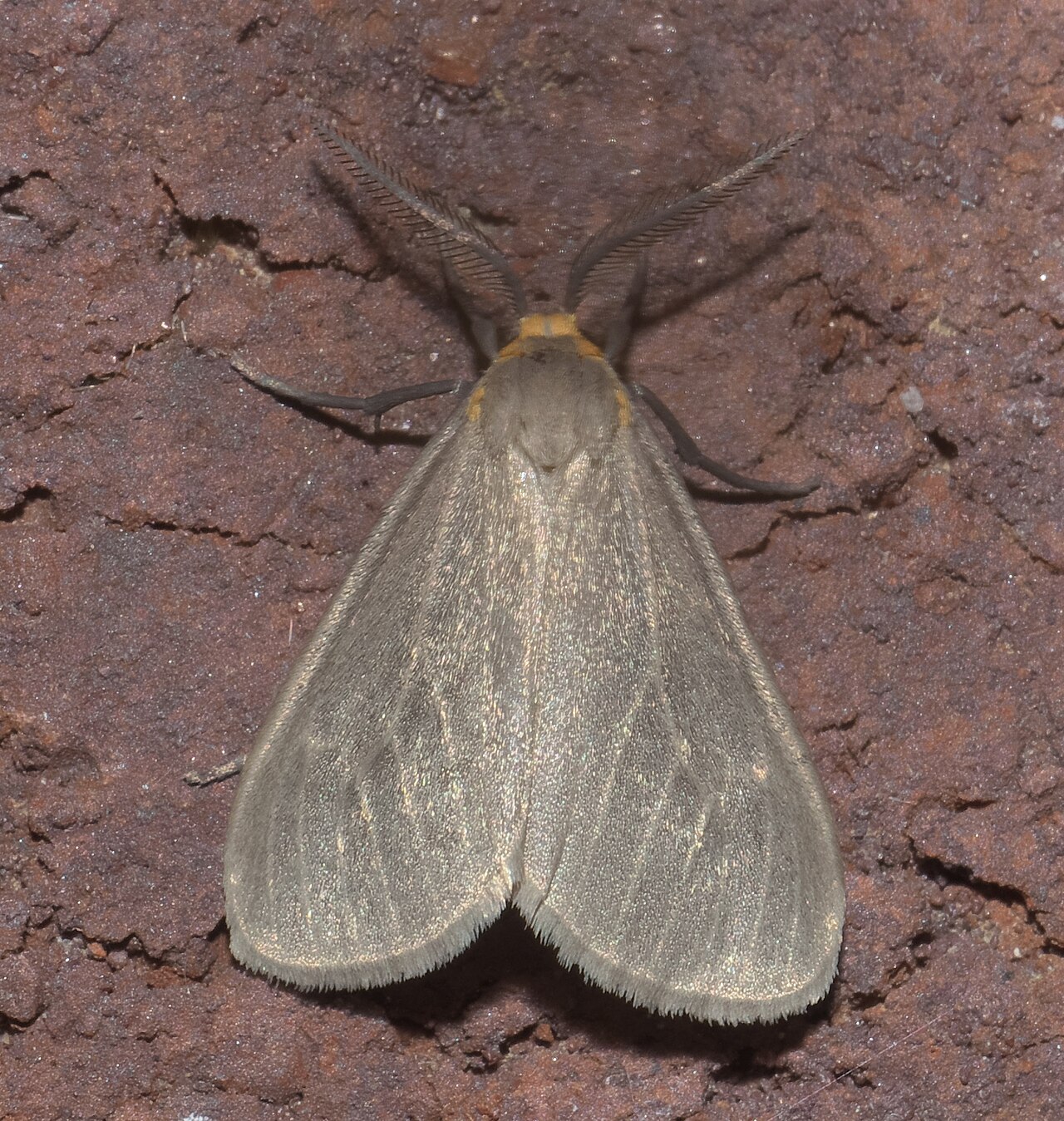
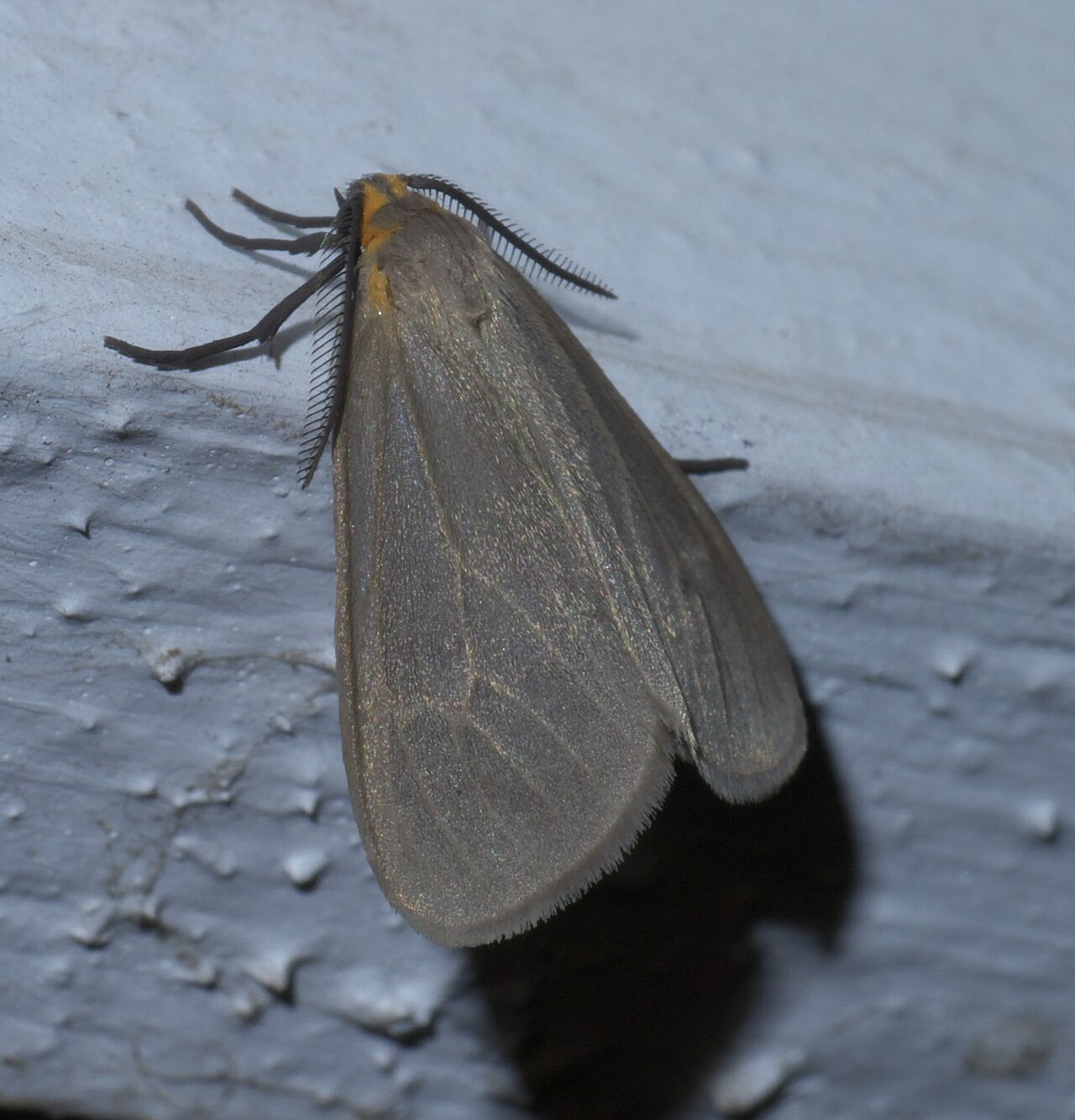
Milkweed tussock moths, woolly bears, and io moth caterpillars each become a distinct adult moth, none of which resembles the caterpillar stage in color or pattern. The milkweed tussock moth caterpillar becomes a gray-brown moth with a yellow-orange abdomen, active mainly at night and rarely noticed by comparison to its striking larva.
The woolly bear caterpillar becomes the Isabella tiger moth, a medium-sized moth in warm yellow-orange and tan tones with a scattering of small black spots. This transformation happens the following spring after the caterpillar overwinters, making the woolly bear one of the longer-lived caterpillar stages among common US moths.
Io moth caterpillars become one of the more dramatic transformations on this list, emerging as a moth with vivid yellow wings and large eyespots on the hindwings meant to startle predators. The eyespots are hidden at rest and revealed suddenly when the moth is disturbed, a defense strategy completely different from the caterpillar’s reliance on stinging spines.
How Long the Caterpillar Stage Lasts
The larval stage for these species typically runs four to six weeks under normal summer conditions, though exact timing depends on temperature and food availability. Milkweed tussock moths move through several molts in this window before spinning a cocoon incorporating their own hair for protection. Io moth larvae follow a similar timeline before dropping to the ground to pupate in leaf litter or loose soil.
Woolly bears are the exception, since they pause their development to overwinter as a caterpillar rather than pupating in fall. This means a woolly bear seen in October may already have completed most of its feeding for the year and could spend five or more months in a dormant state before finishing development the following spring.
Understanding this timeline matters for anyone trying to protect or relocate a caterpillar, since a woolly bear found late in the season is preparing to overwinter and should be left in a sheltered spot rather than moved to an exposed area where it cannot find adequate cover.
Predators That Eat Orange Caterpillars
Birds are the primary predators of all three species, though toxin-loaded tussock moth and io moth larvae are avoided by birds that have learned to recognize the warning coloration. Woolly bears, lacking any chemical defense, are eaten more readily by birds, ground beetles, and small mammals when found exposed.
Parasitic wasps and flies pose a bigger threat to caterpillar populations overall than direct predation in many cases, laying eggs inside or on caterpillars that are then consumed from within by the developing larvae. This process controls caterpillar numbers naturally in most healthy garden ecosystems without any human intervention needed.
Predation pressure is generally lower on milkweed tussock moths specifically, since the toxins absorbed from milkweed carry over into the adult moth stage as well, giving both life stages a measure of protection that woolly bears and even io moths do not share to the same degree.
How to Discourage Caterpillars From Your Garden
Hand removal is the most direct way to manage caterpillar numbers on a specific plant without harming beneficial insects nearby, and it works well for both tussock moth clusters and individual io moth larvae. Wearing gloves when handling io moth caterpillars specifically avoids any risk of a sting during removal.
Encouraging natural predators such as songbirds and parasitic wasps by maintaining diverse plantings and avoiding broad-spectrum insecticides tends to keep caterpillar populations in balance over a full growing season. Insecticides that kill caterpillars indiscriminately also harm monarch larvae and other desirable species sharing the same plants.
For milkweed specifically, planting enough for both monarchs and tussock moths, rather than trying to eliminate one species in favor of another, is usually more effective than any removal effort, since a well-established patch can support both without either species stripping it bare.
Frequently Asked Questions
What does an orange caterpillar turn into?
Depending on the species, it becomes a milkweed tussock moth, an Isabella tiger moth from a woolly bear, or an io moth. Each adult moth looks completely different from the caterpillar stage in color and pattern.
What kind of caterpillar is orange?
The milkweed tussock moth caterpillar, the banded woolly bear, and late-stage io moth larvae are the three most common orange caterpillars encountered in the US. Texture and host plant help distinguish between them quickly.
Can you touch orange caterpillars?
Woolly bears and milkweed tussock moth caterpillars are safe to touch gently, but io moth caterpillars have stinging spines and should not be handled bare-handed. When unsure, treat any spiny orange caterpillar as a potential stinger.
What caterpillars should I avoid?
Avoid handling any caterpillar with stiff, branching spines, since these are the species most likely to sting, including the io moth. Fuzzy or hairy caterpillars like woolly bears are generally low risk by comparison.
What kills caterpillars instantly?
Bacillus thuringiensis (Bt) sprays and direct contact insecticides can kill caterpillars quickly, but both also harm desirable species like monarchs and swallowtails feeding nearby. Hand removal is safer for targeted control on a single plant.
What smell do caterpillars hate?
Strong scents like peppermint, garlic, and neem oil are commonly used to discourage caterpillars from host plants, though results vary by species and reapplication is usually needed after rain.
For more on caterpillar identification and moth life cycles, the Xerces Society maintains detailed guides on invertebrate conservation and species biology.
Related reading: woolly bear caterpillars, cecropia moths, black fuzzy caterpillars, fuzzy caterpillar identification, and what moths eat.