Orange Iguana: Why They Turn Orange and What Morphs Cost
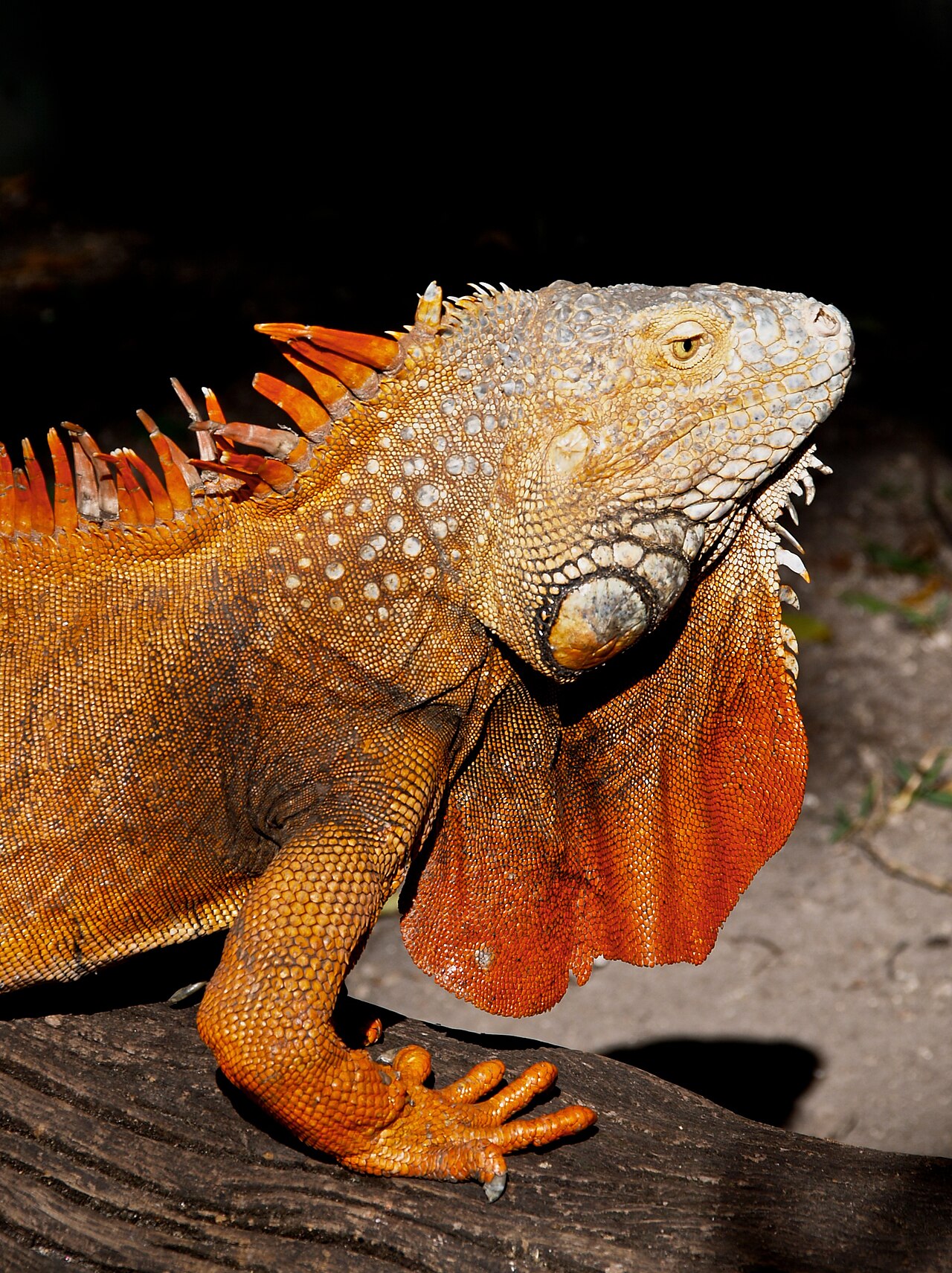
An orange iguana is almost always a green iguana (Iguana iguana) in one of two states: a mature male in breeding color, or a captive bred red morph sold under names like red, super red or orange zero. The orange iguana is not a separate species, and in South Florida the color arrives on schedule every winter when males flood with testosterone.
That leaves two very different animals behind the same search. One is a wild lizard on a seawall in Fort Lauderdale that will be green again by March. The other is a deliberately bred pet that holds orange for life and costs ten times what a normal green iguana does.
Orange iguanas are green iguanas showing breeding coloration or a bred red morph. Wild males in Florida turn orange from roughly November through February, when testosterone peaks and they defend territories. Captive red morphs, produced by selective breeding from Peruvian stock, stay orange year round and sell for 300 to 1,500 USD.
| Type | Color lasts | Typical price | Adult size | Notes |
|---|---|---|---|---|
| Wild male, breeding color | 2 to 4 months | Not sold | 5 to 6 ft (1.5 to 1.8 m) | Florida, winter only |
| Normal green iguana | Green year round | 30 to 90 USD | 5 to 6 ft (1.5 to 1.8 m) | Males still color up seasonally |
| Red or orange morph | Permanent | 300 to 900 USD | 5 ft (1.5 m) | Selectively bred, Peru lineage |
| Super red, hypo red | Permanent | 900 to 1,500 USD | 5 ft (1.5 m) | Deep orange to red overall |
| Blue axanthic | Permanent | 1,000 USD and up | 5 ft (1.5 m) | Rarest captive color |
| Albino | Permanent | 3,000 USD and up | 4 to 5 ft (1.2 to 1.5 m) | Very few breeders worldwide |
What Kind of Iguana Is Orange?
The green iguana is the orange one. Despite the name, Iguana iguana ranges from green through gray, brown, orange and near red depending on age, temperature, mood, origin and above all sex and season. Mature males in breeding condition turn the brightest orange of any common pet lizard.
A second candidate is the Mexican spiny tailed iguana (Ctenosaura pectinata), which carries orange and rust tones on the flanks of adult males. It is a smaller, faster and more aggressive animal, established as an invasive species in parts of Florida, and it is not what breeders sell as an orange iguana.
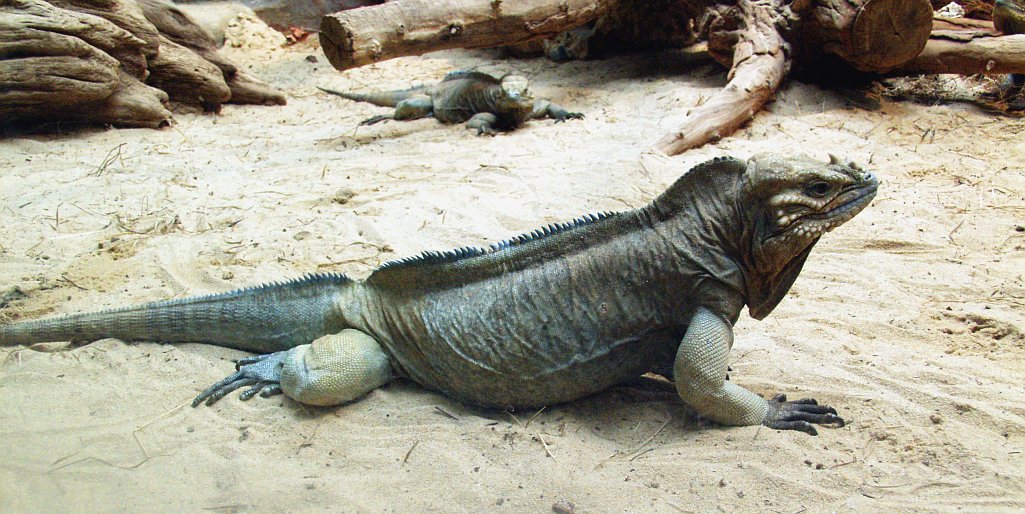
If a listing names any other species as orange, look closer. Rhinoceros iguanas (Cyclura cornuta) are gray, Grand Cayman blue iguanas are blue, and no rock iguana in the genus Cyclura produces a true orange animal.
Why Do Florida Iguanas Turn Orange?
Male green iguanas turn orange in winter because breeding season testosterone changes pigment cells in the skin. In South Florida the shift runs from about November into February, peaking around the holidays, which is why local news stories about orange iguanas appear every December.
The color is an advertisement. An orange male with a swollen jowl and a tall crest is telling rival males to stay off a basking territory and telling females that he holds it. Dominant males color up most strongly; subordinate males in the same population stay dull.
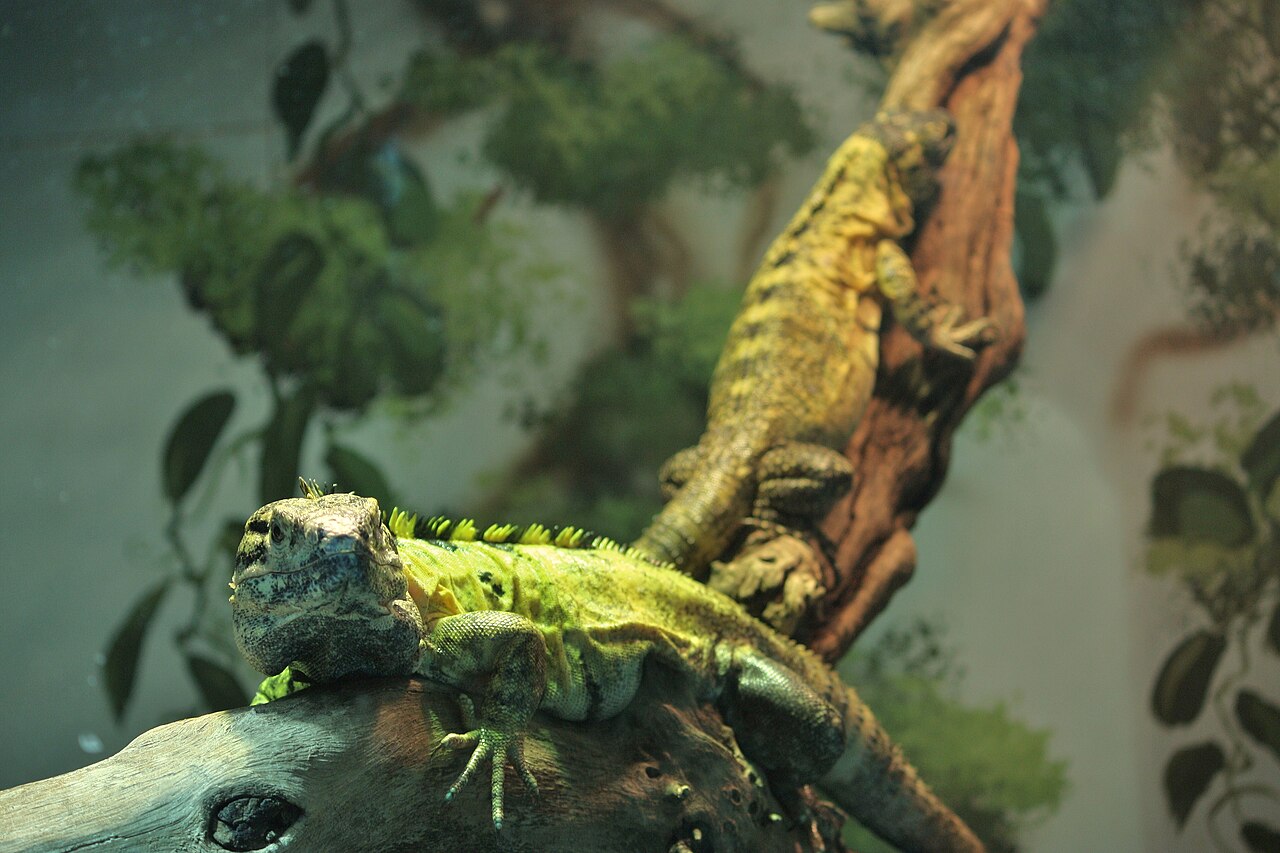
Females do not make the change. A green iguana that stays green through winter is either female, immature or a male too low in the hierarchy to bother. Florida’s population descends from the pet trade, and the animals now number in the millions across the southern counties according to survey work summarized by the US Geological Survey.
Color Changes That Are Not Breeding Color
Not every orange cast is a good sign. A dull orange or brownish tone that appears with sunken eyes, lethargy or refusal to eat usually points to dehydration, low temperature or kidney trouble rather than hormones. Sick iguanas darken; healthy breeding males brighten.
Shedding produces patchy dull color in irregular sections, most obviously on the tail and legs. It resolves in a week with correct humidity around 70 percent. Cold animals go dark all over to absorb heat, a normal response that reverses once basking temperature reaches 95 F (35 C).
Keepers should also watch droppings alongside color, since diet problems show there first. Our guide to reading iguana droppings covers what normal looks like and when the change matters.
Red and Orange Morphs Bred in Captivity
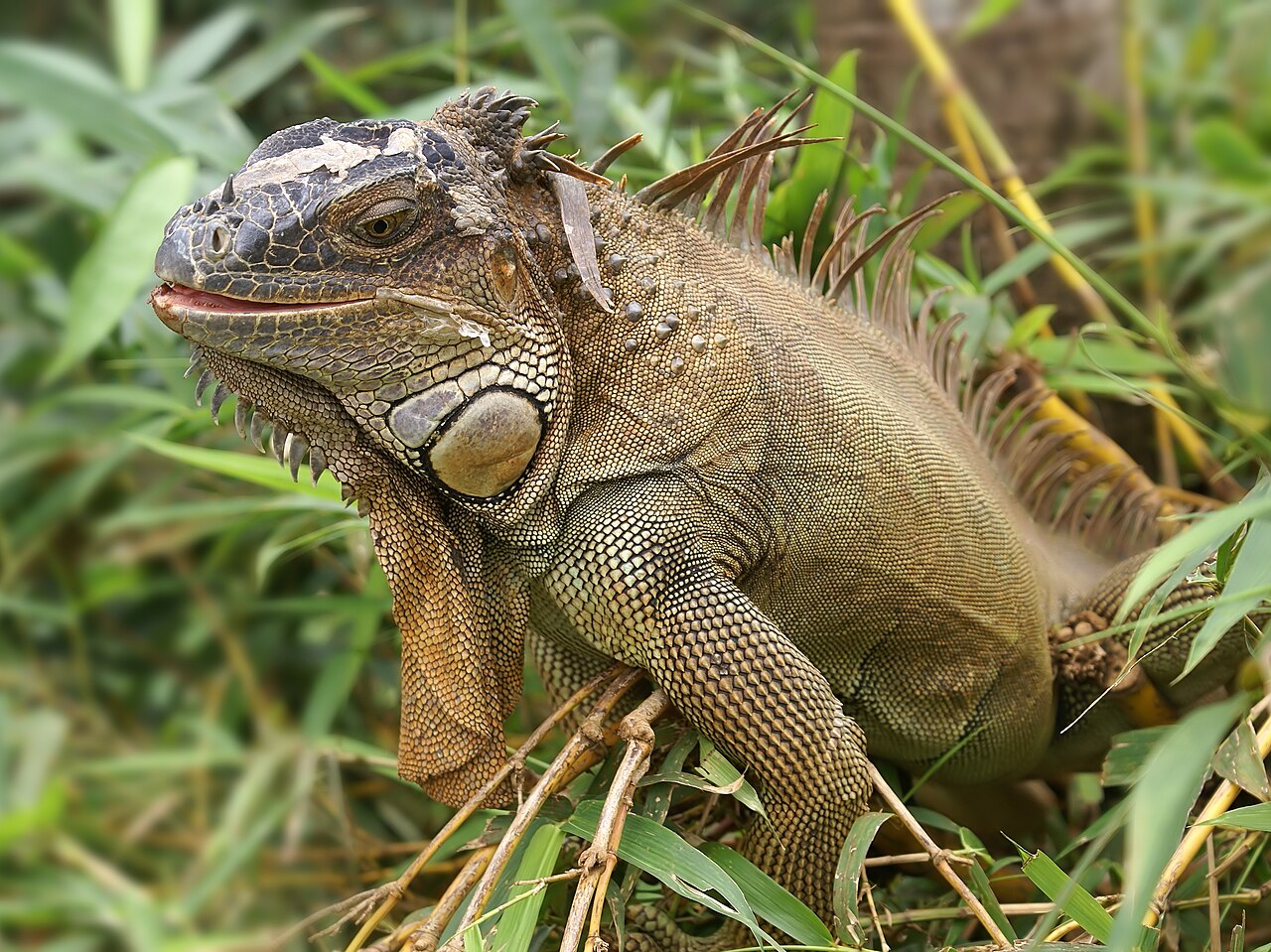
Captive orange iguanas come mostly from Peruvian bloodlines, worked by breeders in Central America and the United States since the 1990s. The trade names run red, super red, hypo red, orange zero and crimson, and none of them are formal genetic designations.
Color intensity in these animals is partly genetic and partly diet and light. Hatchlings often look pale orange or peach, deepen through the first two years and reach full color at sexual maturity around 18 months to 3 years. Males end up brighter than females in every line.
Buying an orange hatchling is therefore a gamble on how the line matures. Ask for photos of both parents as adults. A breeder who cannot show the sire in adult color is selling a normal green iguana with a warm tint, which many hatchlings have anyway.
How Much Do Orange Iguanas Cost?
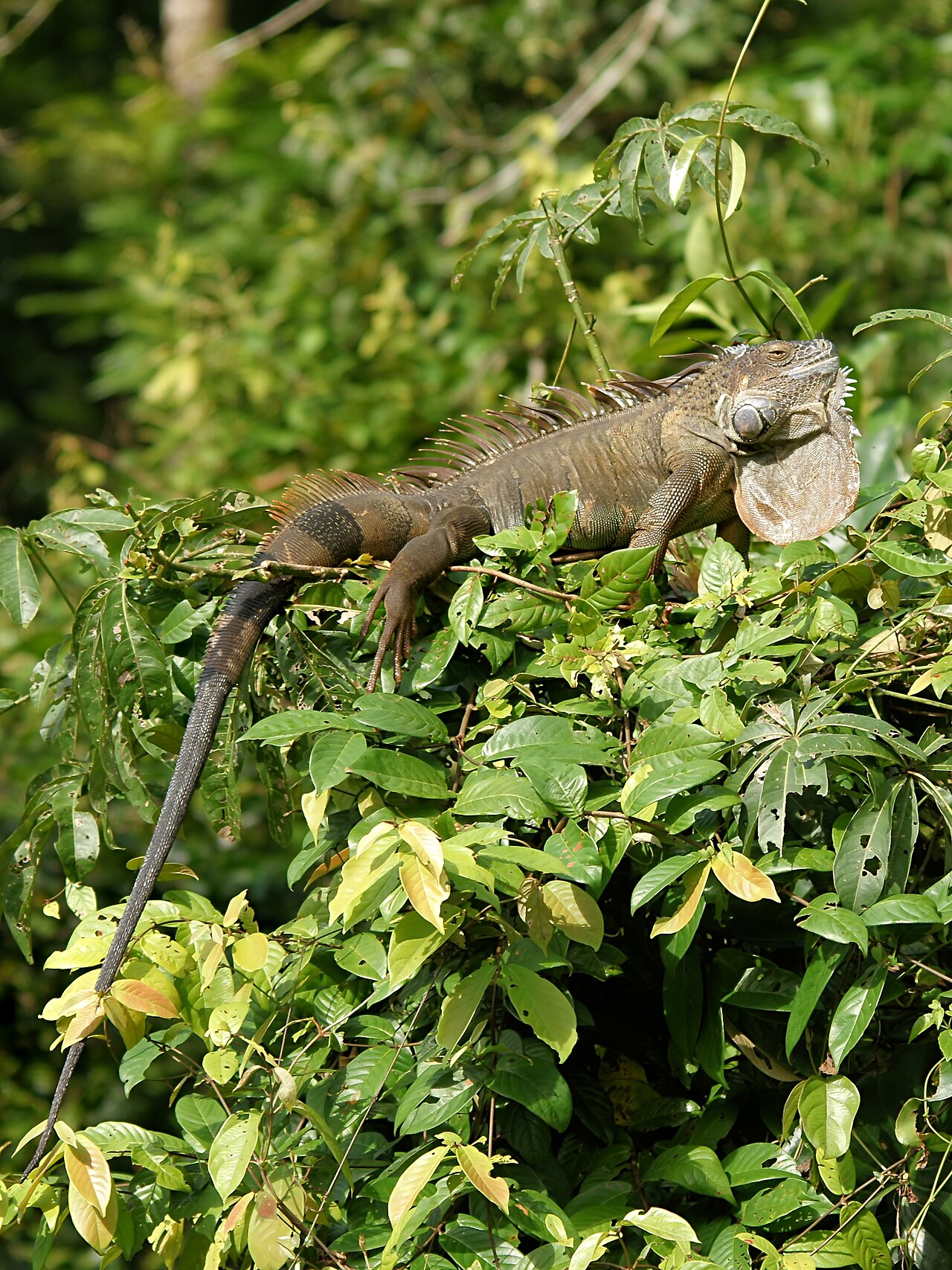
Expect 300 to 900 USD for a red or orange morph from a specialist breeder and 900 to 1,500 USD for a proven super red. A normal green iguana runs 30 to 90 USD at a reptile show, and chain stores such as Petco list juvenile green iguanas in roughly the 50 to 100 USD range when they stock them at all.
The animal is the cheap part. A single adult needs an enclosure of at least 8 by 4 by 6 ft (2.4 by 1.2 by 1.8 m), which almost always means a custom build costing 800 to 2,000 USD, plus UVB lighting replaced twice a year and a basking fixture running daily.
Annual costs after setup land around 400 to 800 USD for food, bulbs, electricity and routine vet visits. Reptile vets charge more than dog and cat clinics, and metabolic bone disease treatment can exceed the purchase price several times over.
Are Orange Iguanas Dangerous?
An orange male in breeding season is the most dangerous state a green iguana reaches. Testosterone driven males lunge, tail whip and bite, and a 15 lb (6.8 kg) animal with a 3 ft (0.9 m) tail can break skin, leave bruises and take a fingertip down to bone in a bad bite.
The classic injury pattern involves owners who handled a calm juvenile for two years and were unprepared when the animal matured. Many keepers report a personality change at sexual maturity, particularly toward one person in the household, often a woman during menstruation, which males appear to detect by scent.
Iguanas also carry Salmonella as normal gut flora without being sick. Hand washing after every contact is not optional, and reptiles are a poor match for households with children under five or with immunocompromised members.
Orange Iguana Size, Lifespan and Growth
Green iguanas of any color reach 5 to 6 ft (1.5 to 1.8 m) in total length, with the tail making up more than half, and weigh 10 to 20 lb (4.5 to 9 kg). Red morphs typically end up slightly smaller, near 5 ft (1.5 m), because generations of captive breeding selected for color rather than bulk.
Growth is fast. A 7 in (18 cm) hatchling doubles in the first six months and reaches 3 ft (0.9 m) inside two years, which is the point at which most owners discover their enclosure is too small. Full size arrives at 4 to 5 years.
Lifespan runs 15 to 20 years in good conditions, with records past 25. Most captive iguanas die well short of that from metabolic bone disease and kidney failure tied to poor UVB and an animal protein diet. The species is strictly herbivorous. Feeding stages from hatchling upward are covered in our guide to raising a baby iguana.
What Is the Rarest Color of Iguana?
Among captive green iguanas the rarest colors are albino and blue axanthic. Albinos lack melanin entirely and show cream to lemon tones with pink eyes; only a handful of breeders worldwide produce them, and prices start near 3,000 USD. Blue axanthics, which lack yellow pigment, are close behind.
Albinism in reptiles works the same way across species, and the market prices it the same way too, as our features on the albino ball python and the albino corn snake show. Albino iguanas are harder to keep, since reduced pigment means less tolerance for the intense UVB the species needs.
In the wild, the rarest color is blue, and it belongs to a different genus entirely. The Grand Cayman blue iguana (Cyclura lewisi) turns genuinely turquoise in males during breeding season, a color no green iguana line has matched.
What Is the Rarest Type of Iguana?
The Jamaican iguana (Cyclura collei) is the rarest. It was declared extinct in 1948, rediscovered in 1990 in the Hellshire Hills, and recovery work has since brought the wild population back to a few hundred animals. It is one of the most endangered lizards on earth.
The Grand Cayman blue iguana sits close behind, though its story is happier. Fewer than 25 animals remained in 2002; a captive breeding and release program has pushed the wild population past 1,000, and the species moved from critically endangered to endangered.
None of these rock iguanas enter the pet trade legally in any quantity, and any listing claiming a blue iguana for sale is offering either a blue axanthic green iguana or something taken illegally.
Which Iguana Is the Friendliest?
The rhinoceros iguana (Cyclura cornuta) has the best reputation for tolerating handling, and experienced keepers describe adults as calm and even dog like around familiar people. It is still a 20 lb (9 kg) lizard with a serious bite, and it needs more space than a green iguana.
Among green iguanas, temperament tracks handling rather than color. An animal handled daily from hatchling size, kept at correct temperatures and given room to retreat stays manageable. The same animal kept in a small tank and handled twice a month becomes unmanageable at maturity.
Nobody should buy an iguana of any color expecting affection. These are tolerant animals at best, and keepers who want interaction are better served by a bearded dragon, which stays under 2 ft (0.6 m) and handles far more readily.
Will Florida Pay You for Iguanas?
Florida does not pay a bounty for green iguanas. State rules allow humane killing of iguanas on private property year round with landowner permission, and on 25 public lands without a permit, but no payment program exists for the species. Paid removal contracts in Florida cover Burmese pythons, not iguanas.
Private pest control operators do charge homeowners for iguana removal, usually 100 to 500 USD per visit, and that is the only money moving in this market. Selling or transporting live green iguanas within Florida has been prohibited since 2021 under the state’s prohibited species rule.
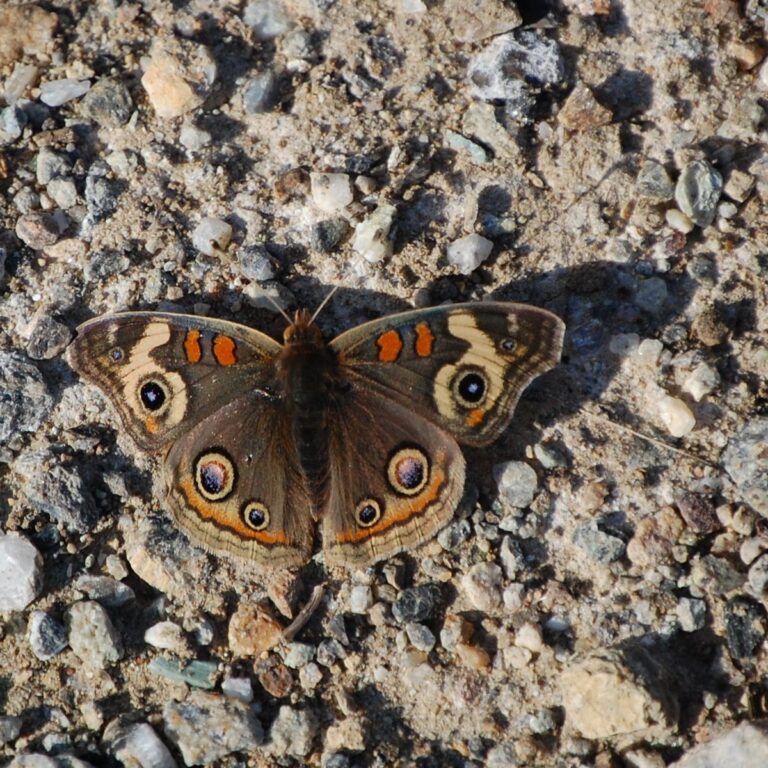
For homeowners, exclusion beats removal. Seawall caps, wire mesh over burrow entrances and removing fruiting plants such as hibiscus cut the population on a property faster than trapping does, because every removed animal is replaced from the neighborhood within weeks. Bright color is not limited to lizards in Florida either, as our roundups of orange birds and the orange butterfly show.
Related reading: Desert Iguana.
Related reading: Pink Iguana.
Frequently Asked Questions
Can you get orange iguanas as pets?
Yes. Captive bred red and orange morph green iguanas are available from specialist breeders in the United States for 300 to 1,500 USD depending on intensity. They hold color permanently, unlike wild males, whose orange fades after the winter breeding season ends.
Why is my green iguana turning orange?
If it is a male over 18 months old and the season is late fall or winter, it is breeding coloration and normal. If the animal is female, young, or the color is dull rather than bright and comes with lethargy or weight loss, it points to illness and needs a reptile vet.
What are the Orange Iguanas from Legends of the Hidden Temple?
Orange Iguanas was one of six team names on the 1990s Nickelodeon game show Legends of the Hidden Temple, alongside the Purple Parrots and Silver Snakes. The name drives a fair share of searches for orange iguana and has nothing to do with the animal.
How much does Petco sell iguanas for?
Green iguanas run roughly 50 to 100 USD at chain pet stores when available, though many locations have stopped stocking them because of the adult size. Reptile shows and breeders are cheaper for normal greens and are the only reliable source for orange and red morphs.
Are orange iguanas dangerous to people?
A mature orange male in breeding season is genuinely risky to handle. Bites, tail whips and claw injuries send people to urgent care every winter in Florida. All iguanas also carry Salmonella, so wash hands after any contact and keep them away from children under five.
Do orange iguanas stay orange?
Bred morphs do. Wild and normal green iguanas do not, and a male that glows orange in January is typically back to green or gray by early spring. Ask any seller whether the color is seasonal or genetic before paying a morph price for it.