Types of Foxes: The 12 True Foxes and 11 Pretenders
There are 12 true fox species in the genus Vulpes, and about 23 animals worldwide carry the name fox once the gray fox, the bat-eared fox and the South American zorros are counted. The types of foxes you can actually meet in the United States come down to five: the red fox, the gray fox, the kit fox, the swift fox and the Arctic fox, plus the island fox on six California islands.
The confusion starts with a number that circulates online: 37 species. That figure comes from older counts that lumped every fox-like canid together, including animals that are closer to wolves than to foxes. This guide sorts the group the way biologists do, then tells you which one is trotting across your lawn at dusk.
Foxes split into two groups. Twelve true foxes belong to the genus Vulpes, led by the red fox (Vulpes vulpes), the most widespread wild carnivore on earth. Roughly eleven more species are called foxes but sit in other genera, including the North American gray fox (Urocyon cinereoargenteus), the only canid that regularly climbs trees.
| Species | Scientific name | Weight | Where you find it | Field mark |
|---|---|---|---|---|
| Red fox | Vulpes vulpes | 8 to 15 lb (3.6 to 6.8 kg) | Most of the US and Canada | White tail tip, black stockings |
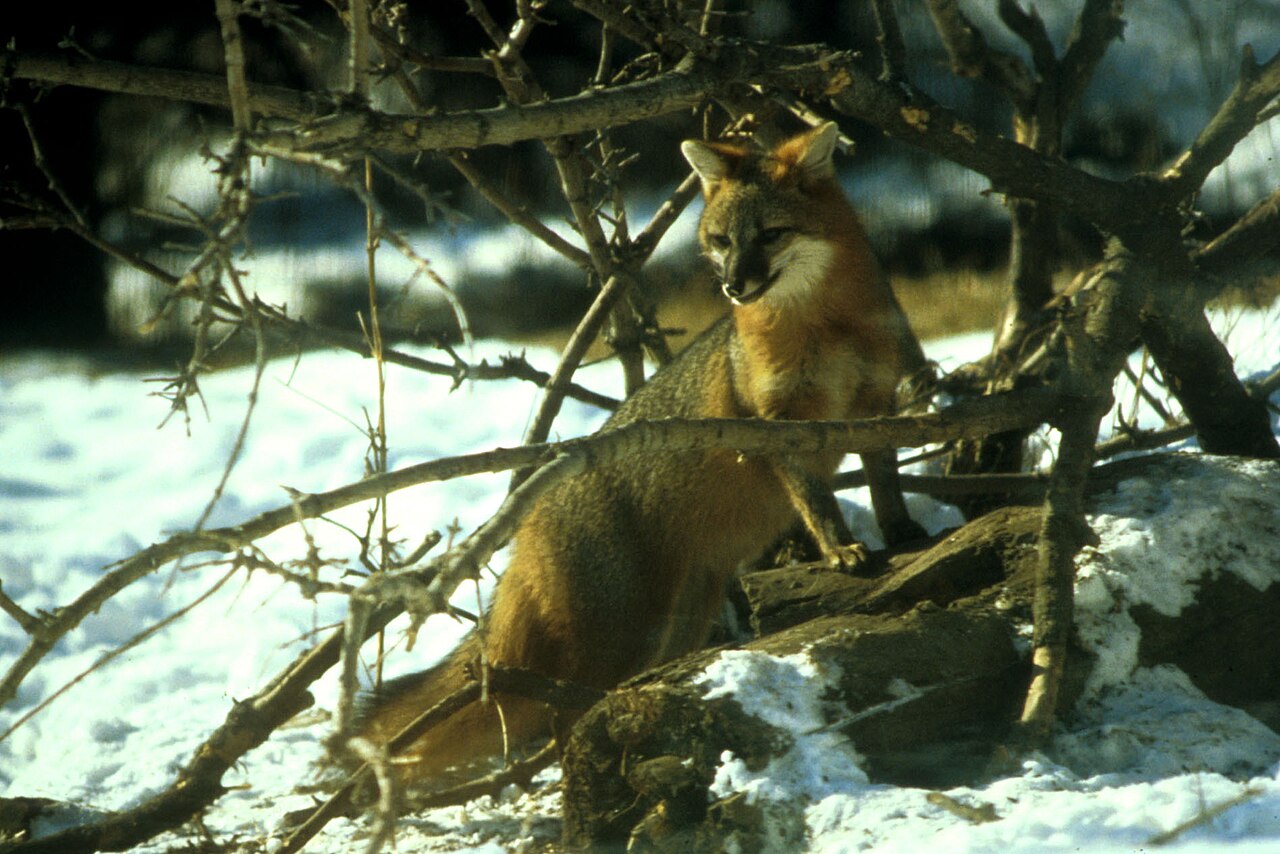
| Gray fox | Urocyon cinereoargenteus | 7 to 13 lb (3.2 to 5.9 kg) | East, Southwest, West Coast | Black tail stripe, climbs trees |
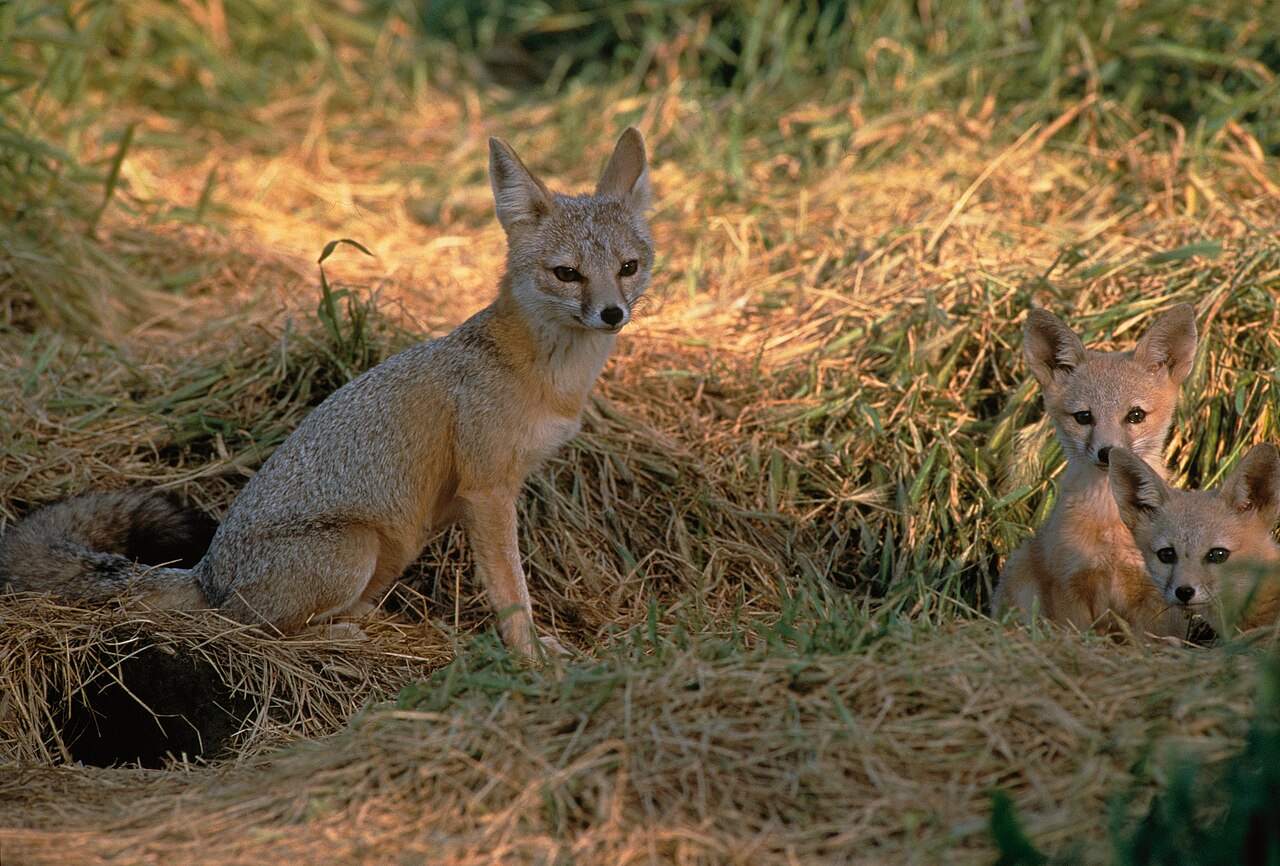
| Kit fox | Vulpes macrotis | 3 to 6 lb (1.4 to 2.7 kg) | Southwest deserts | Huge ears, slender body |
| Swift fox | Vulpes velox | 4 to 7 lb (1.8 to 3.2 kg) | Shortgrass prairie | Black muzzle patches |
| Arctic fox | Vulpes lagopus | 6 to 12 lb (2.7 to 5.4 kg) | Alaska tundra and sea ice | White winter coat, furred feet |
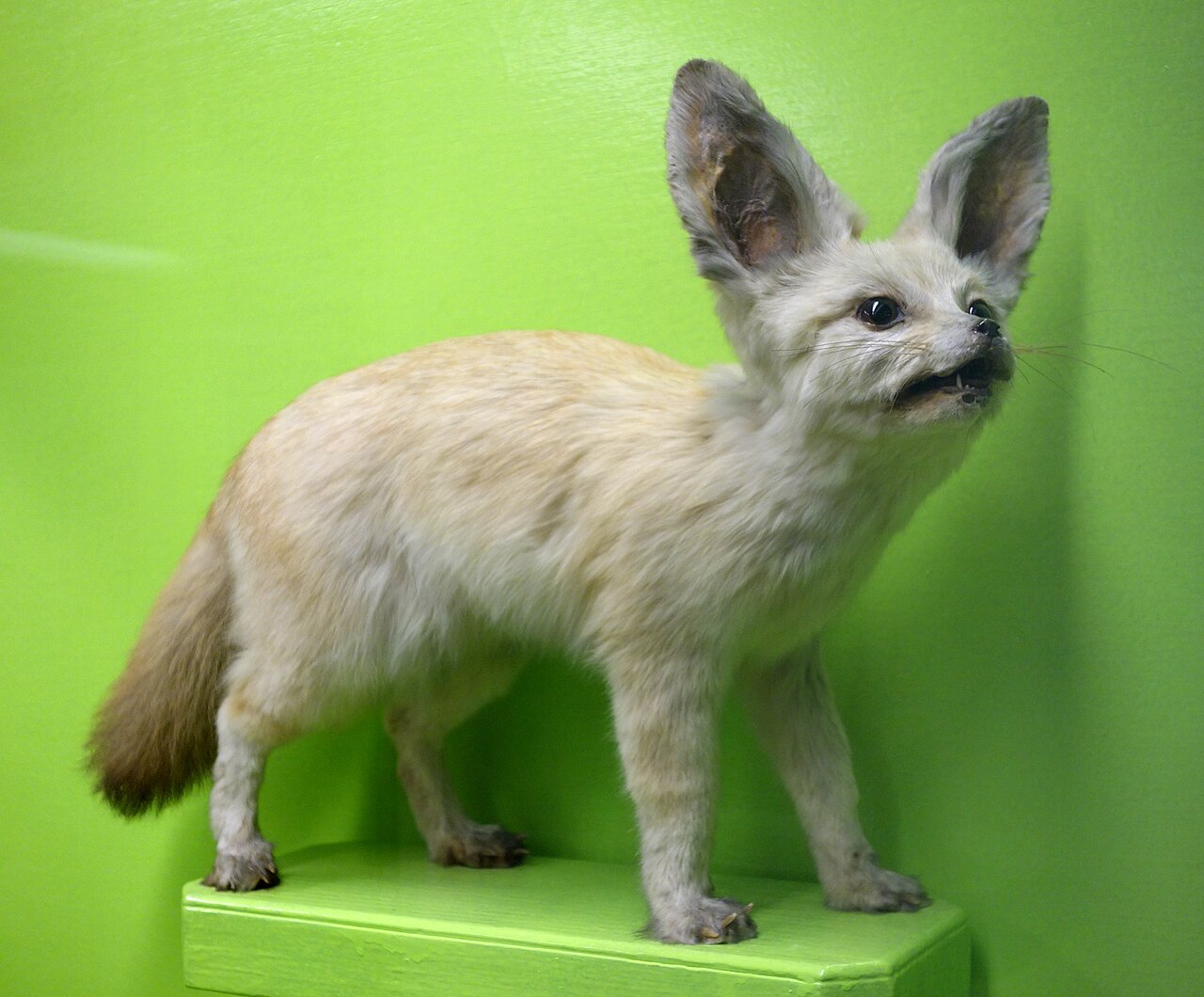
| Fennec fox | Vulpes zerda | 1.5 to 3.5 lb (0.7 to 1.6 kg) | Sahara, kept as a pet in the US | Ears up to 6 in (15 cm) |
How Many Types of Foxes Are There?
Twelve species sit in the genus Vulpes, and those are the true foxes. Add the animals that carry the name without the genus and the total lands near 23, which is the number most wildlife organizations use. The count moves a little because taxonomists keep splitting and merging the South American zorros.
The number 37 shows up in search results and in old encyclopedias. It counted every small canid with a pointed muzzle and a bushy tail, including jackals and the maned wolf. No current authority recognizes 37 fox species, so treat that figure as a leftover rather than a correction to the 23.
The practical answer for a US reader is smaller still. Six fox species live wild inside the country, and only two of them, the red fox and the gray fox, turn up in suburbs and farmland with any regularity.
All 12 True Foxes in the Genus Vulpes
The genus Vulpes contains the red fox, Arctic fox, fennec fox, kit fox, swift fox, corsac fox, Tibetan sand fox, Blanford’s fox, Cape fox, pale fox, Ruppell’s fox and Bengal fox. They share a narrow skull, vertical slit pupils and a scent gland on the upper side of the tail that most other canids lack.
Size across the genus spans a factor of ten. A fennec weighs about as much as a guinea pig, while a big northern red fox can reach 15 lb (6.8 kg). That range exists because true foxes colonized deserts, tundra, steppe and city edges, and body size tracks the heat each habitat throws at them.
Four of the twelve live in North America: red fox, Arctic fox, kit fox and swift fox. The other eight are spread across Africa, Asia and Europe, and none of them occurs in the wild anywhere in the Americas.
Red Fox: The One You Are Most Likely to See
The red fox is the largest true fox and the most widespread wild carnivore on the planet, present across North America, Europe, Asia, North Africa and introduced Australia. In the US it uses farm edges, golf courses, cemeteries and suburban yards, often within a few hundred feet of houses.
Color is a poor identifier. Red foxes come in red, cross (a dark saddle over the shoulders), silver and black phases, all in the same litter. The reliable mark is the white tail tip, which no other North American fox carries, paired with black fur on the lower legs.
Its diet explains where it shows up. Voles, mice, rabbits, ground nesting birds, beetles and fallen fruit all make the list, and in late summer a fox will spend an evening catching insects such as bees and grasshoppers. A full breakdown lives in our guide to what foxes eat through the year.
Arctic Fox: Built for 58 Below
The Arctic fox survives temperatures near minus 58 F (minus 50 C) without shivering, the lowest threshold measured in any mammal. Its coat doubles in thickness for winter, and dense fur covers the soles of the feet, which is what the species name lagopus, meaning hare foot, refers to.
Two color morphs exist. The white morph turns brown and gray in summer, while the blue morph stays charcoal all year and dominates on coastal islands where snow cover is thin. In the US the species is limited to northern and western Alaska and the sea ice beyond it.
Arctic foxes follow polar bears across the ice for scraps and cache hundreds of eggs in summer for winter use. That scavenging habit makes them the fox most likely to appear at a remote camp or research station.
Fennec Fox: The Smallest and Loudest
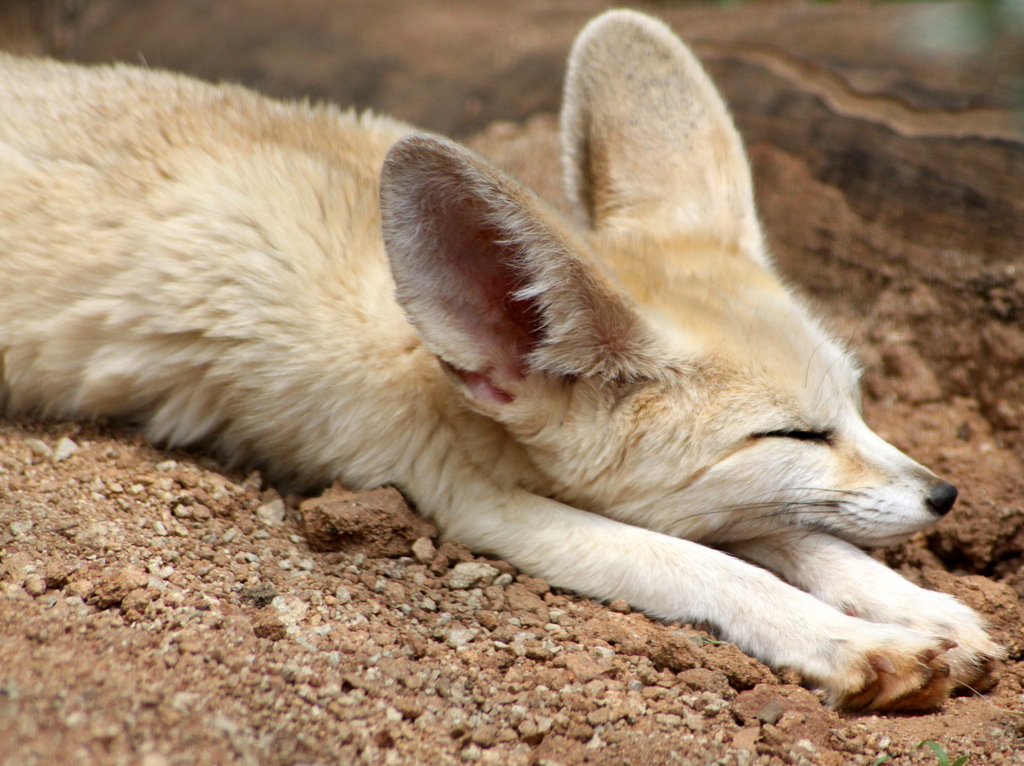
The fennec fox weighs 1.5 to 3.5 lb (0.7 to 1.6 kg) and carries ears up to 6 in (15 cm) long, the largest ear to body ratio of any canid. Those ears dump heat and pick up insects moving under the sand, which is how the species hunts on Sahara nights.
It is the only fox species kept legally as a pet in much of the United States, and that status drives most of the search traffic around it. Fennecs are loud, nocturnal and prolific diggers, and several states including Washington and Missouri restrict or ban private ownership.
Despite the pet trade, wild fennecs are not threatened. They live in family groups in burrow systems that can run 30 ft (9 m) long, which is unusual among true foxes, since most are solitary outside the breeding season.
Kit Fox and Swift Fox: The Small American Foxes
The kit fox and the swift fox are the two smallest wild canids in North America, each roughly cat sized at 3 to 7 lb (1.4 to 3.2 kg). The kit fox holds the deserts of the Southwest, the swift fox the shortgrass prairie from Texas to Montana.
Telling them apart in the field comes down to ears and range. Kit foxes have distinctly larger ears set closer to the midline of the head; swift foxes have shorter ears and two dark patches on the muzzle. Where the ranges meet in New Mexico and Texas the two interbreed, which keeps taxonomists arguing about whether they are one species.
The San Joaquin kit fox of California is federally endangered, and the swift fox vanished from most of Canada before reintroduction in the 1980s. Both depend on open ground with burrows and lose out when coyotes move in.
The Seven Old World Foxes Most People Never See
The corsac fox of the Central Asian steppe, the Tibetan sand fox of the high plateau, Blanford’s fox of the Middle Eastern cliffs, the Cape fox of southern Africa, the pale fox of the Sahel, Ruppell’s fox of the desert belt and the Bengal fox of the Indian subcontinent round out the genus. None occurs in the Americas.
Blanford’s fox is the odd one out mechanically. It has semi retractile claws and hairless footpads for grip on rock, and it climbs cliff faces that would stop a red fox. The Tibetan sand fox lives above 13,000 ft (4,000 m) and hunts pika, often alongside brown bears that dig the pika out.
These seven matter to a US reader mostly for identification of photos. If an image shows a fox with a square looking face, it is a Tibetan sand fox, and it is not a photoshop.
Foxes That Are Not in the Genus Vulpes
Eleven or so species carry the name fox without belonging to Vulpes. The gray fox and the island fox sit in Urocyon, the oldest surviving lineage of living canids. The bat-eared fox of Africa has its own genus, Otocyon, and 46 to 50 teeth, more than any other placental land mammal.
South America holds the zorros of the genus Lycalopex, including the culpeo, the South American gray fox and the critically rare Darwin’s fox, of which fewer than 1,000 remain. The crab-eating fox, Cerdocyon thous, is common from Colombia to northern Argentina.
The gray fox deserves its own note. It climbs trees with rotating forearms and hooked claws, dens in hollow trunks 30 ft (9 m) up, and is the only US canid that does. Where red foxes and gray foxes share ground, the gray usually holds the brushy cover and the red takes the open edges.
What Looks Like a Fox but Is Not a Fox?
The animal mistaken for a fox most often in the US is the coyote (Canis latrans), which is two to three times heavier, carries a straight tail held low, and travels in loose family groups. Our comparison of coyotes and wolves covers the same confusion one size class up.
The red panda is called a firefox and is not a canid at all. The maned wolf of Brazil looks like a red fox on stilts and is neither fox nor wolf. In eastern woodlands, the fox squirrel earns its name from rusty fur and nothing else.
Domestic dogs cause the rest of the mistakes. Shiba Inus, Finnish Spitz and small mixed breeds get reported as foxes every spring, usually at a distance and usually in poor light.
What Is a Fox’s Worst Enemy?
Coyotes are the leading cause of death for red foxes and swift foxes in open country, and they kill foxes without eating them. Where coyote numbers rise, fox numbers fall or the foxes shift toward towns, which is one reason suburban fox sightings have increased in the Midwest.
Kits face a different set of threats. Golden eagles, great horned owls and red-tailed hawks take young foxes from den mouths, the same predators covered in our guide to birds of prey and their hunting styles. Adult foxes also lose ground to sarcoptic mange, which can clear a local population in two seasons.
Wolves suppress coyotes, and coyotes suppress foxes, so fox density can actually rise inside wolf range. That chain is documented in Yellowstone, where the return of wolves changed the numbers all the way down. The sound behind that chain is explained in our piece on what a wolf howl means, and the young of that species in the first year of a wolf pup.
Should I Be Concerned If I See a Fox in My Yard?
A fox crossing your yard in daylight is normal behavior, not a rabies sign. Red foxes hunt voles at any hour, and urban foxes learn that people are harmless. Concern is warranted only for staggering, circling, daytime aggression or an animal that ignores loud noise and approach.
Foxes rarely threaten pets. A red fox averages 11 lb (5 kg) and avoids animals near its own size, so adult cats and all but the smallest dogs are left alone. Chickens, rabbits, guinea pigs and kittens are the real risk, and the fix is hardware cloth rather than removal.
If a den appears under a shed, the family will usually leave on its own by late summer. State wildlife agencies, and the guidance published by the US Fish and Wildlife Service, recommend hazing and exclusion over trapping, because a removed fox is replaced within weeks by the next one.
Frequently Asked Questions
What are the 12 foxes?
The 12 true foxes in the genus Vulpes are the red fox, Arctic fox, fennec fox, kit fox, swift fox, corsac fox, Tibetan sand fox, Blanford’s fox, Cape fox, pale fox, Ruppell’s fox and Bengal fox. Everything else called a fox, including the gray fox, sits in a different genus.
What is the 37 fox species claim about?
There is no list of 37 fox species recognized today. The number survives from older popular sources that counted jackals, the maned wolf and other small canids as foxes. Current counts give 12 true foxes and roughly 23 animals that carry the fox name in total.
What are some common types of foxes?
In the United States the common types are the red fox and the gray fox, which between them cover nearly the whole country. The kit fox, swift fox, Arctic fox and island fox are regional. Worldwide, the red fox is by far the most common fox species.
What is the weird looking fox called?
The Tibetan sand fox (Vulpes ferrilata) is the one with the flat, square looking face and narrow eyes. The shape comes from a thick ruff of neck fur and a broad skull suited to hunting pika on the Tibetan Plateau at elevations above 13,000 ft (4,000 m).
Will a fox eat a dog or a cat?
Almost never. An adult cat is close to a red fox in weight and defends itself, so foxes avoid the confrontation. Kittens, very small dogs and injured pets are at some risk, mostly at night. Chickens, ducks and rabbits are the animals foxes actually target in yards.
Can foxes breed with dogs?
No. Red foxes carry 34 chromosomes plus variable B chromosomes, dogs carry 78, and the two genera separated roughly 10 million years ago. No verified fox dog hybrid exists. Photos labeled as hybrids are usually Shiba Inu mixes or German Spitz.