Baby Turtle: Hatchlings, the 4-Inch Rule, and What to Do
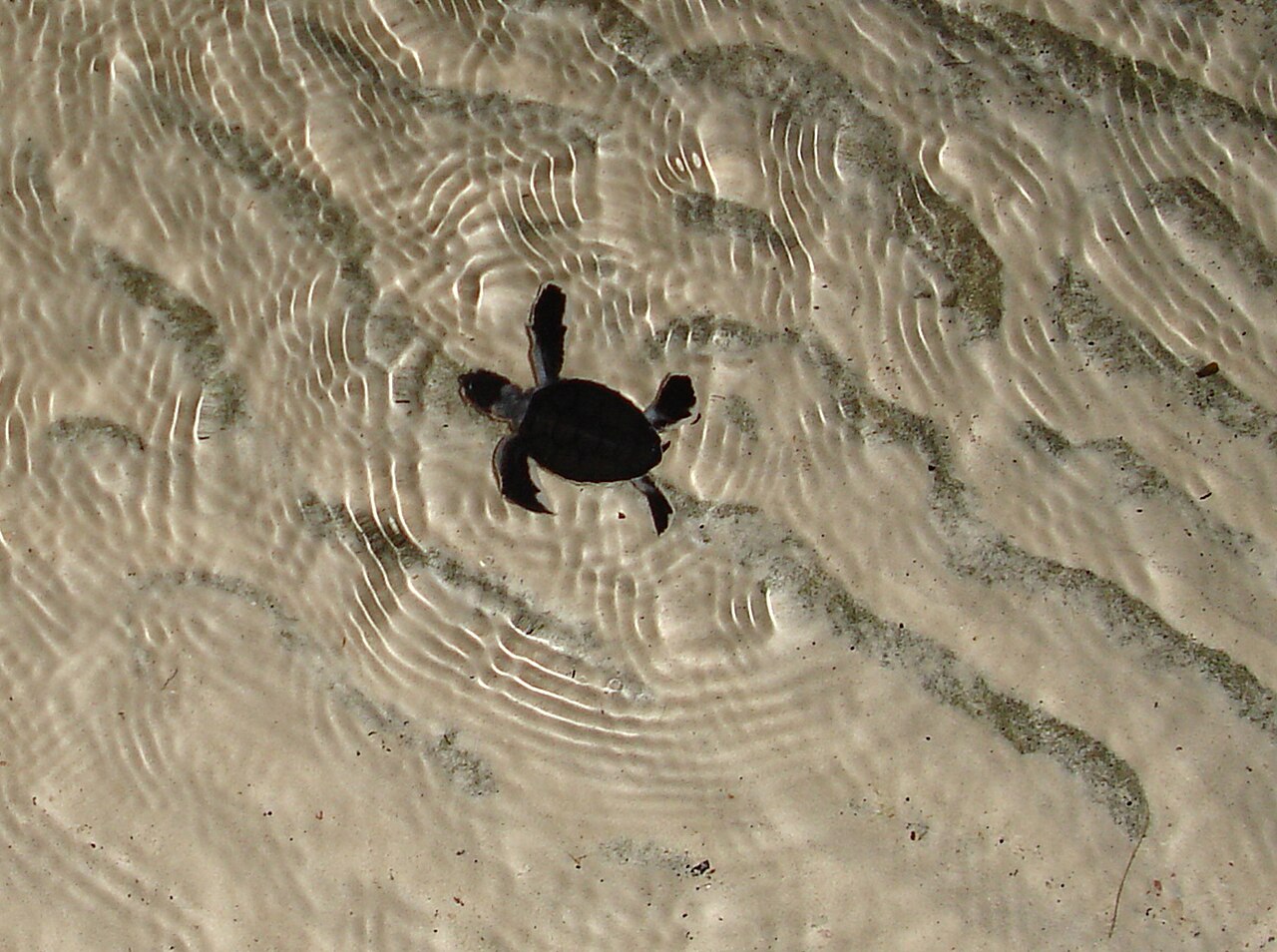
A baby turtle is called a hatchling, and it emerges from the egg fully formed, self-sufficient, and roughly the size of a large coin. Turtles provide no parental care whatsoever: the female digs a nest, lays, covers it, and leaves, and the hatchling digs its own way out weeks or months later and immediately begins life alone. Depending on the species, a hatchling measures 25 to 50 mm across the shell and weighs a few grams.
In the United States it is federally illegal to sell any turtle with a shell under 4 inches, a rule the FDA introduced in 1975 after tens of thousands of salmonella infections in children traced to pet hatchlings. Anyone looking to buy a baby turtle is looking at a product that cannot legally be sold as a pet, which is the single most important thing to know before going further.
| Feature | Baby Turtle (Hatchling) |
|---|---|
| Name for young | Hatchling |
| Shell length at hatching | 25 to 50 mm by species |
| Parental care | None at all |
| Incubation | 45 to 90 days, temperature dependent |
| Sex determination | Set by nest temperature, not genes |
| First year survival | Often under 5 percent |
| US sale under 4 inches | Federally prohibited since 1975 |
What a Baby Turtle Looks Like
Hatchlings are miniature versions of the adult in outline but differ in proportion and texture. The head and eyes are disproportionately large, the shell is softer and more flexible than an adult’s, and the carapace often carries a pronounced central keel that flattens with age. Colours are typically brighter and patterns sharper than on a weathered adult.
Nearly all hatchlings carry a yolk sac remnant on the plastron, the underside of the shell, for the first days to weeks after emerging. It appears as a soft pinkish or yellowish bulge and supplies nutrition while the animal establishes itself. A hatchling with a visible yolk sac should never be handled or moved, since the tissue is fragile and infection-prone.
An egg tooth, a small hard projection on the snout used to break the shell, is present at hatching and falls off within a few weeks. Its presence indicates a very recently hatched animal. For species-level identification, our guides to the baby painted turtle and the baby snapping turtle cover the two most commonly encountered North American hatchlings.
How Baby Turtles Are Born
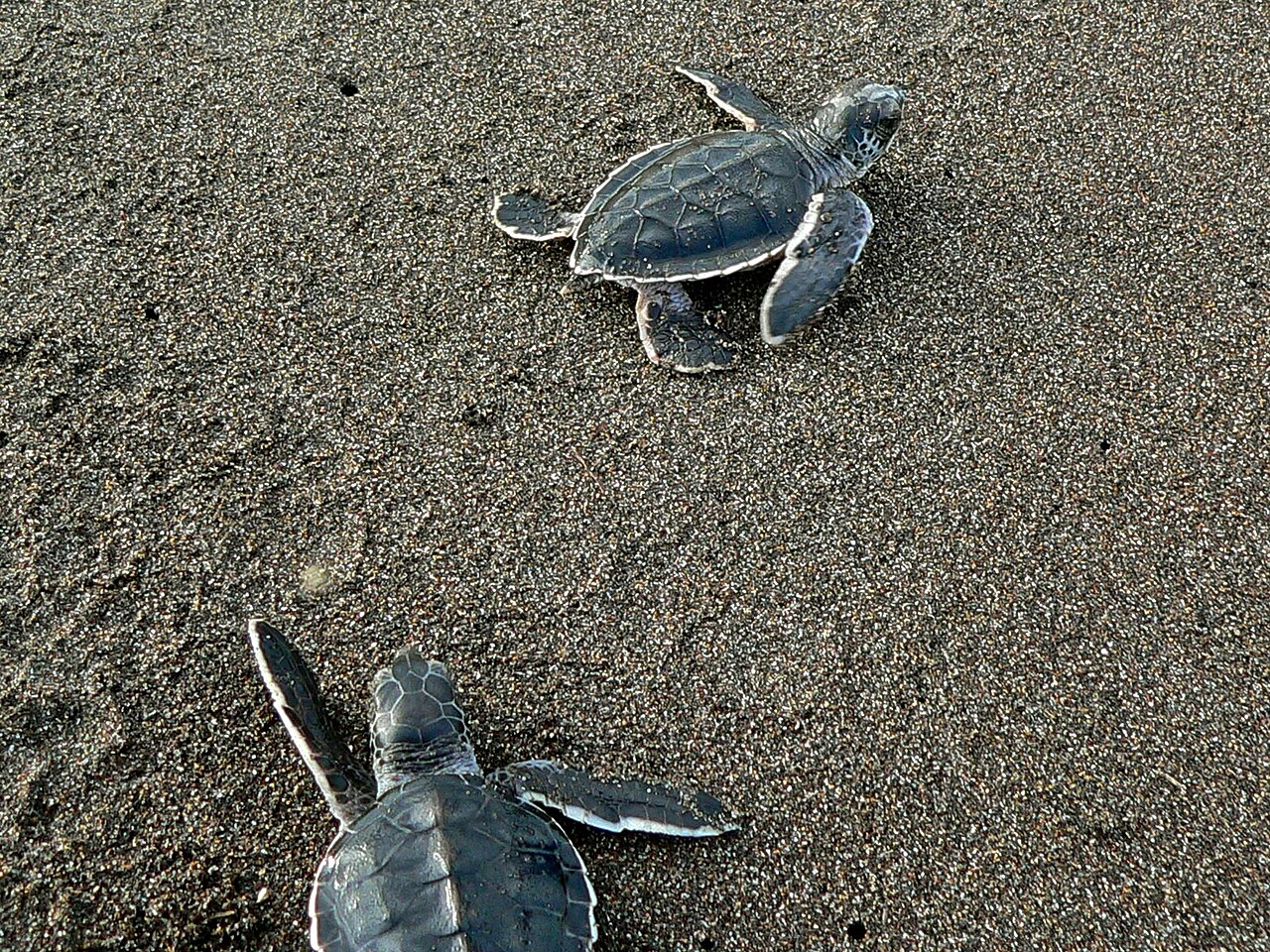
Female turtles come ashore or move to open ground, dig a flask-shaped chamber with the hind legs, deposit the clutch, backfill, and leave. Clutch sizes range from 1 or 2 eggs in some small species to over 100 in sea turtles. The female never returns and the eggs are entirely on their own.
Incubation runs roughly 45 to 90 days in most species and depends heavily on soil temperature. Warmer nests develop faster. In several northern species including painted turtles, hatchlings emerge from the egg in late summer but stay underground through winter, tolerating freezing conditions inside the nest chamber and surfacing the following spring.
Emergence is often synchronised. Hatchlings in a clutch dig upward together, and the collective effort loosens soil that a single animal could not shift. Emerging at once also swamps predators, which is the same numerical strategy sea turtles use on a much larger scale.
Emergence timing within the day is not random either. Many species surface at night or in the early morning, when ground temperatures are lower and visually hunting predators such as gulls and crows are least active. A clutch surfacing in the middle of a hot afternoon usually means the nest was disturbed rather than that the hatchlings chose the moment.
Temperature Decides the Sex
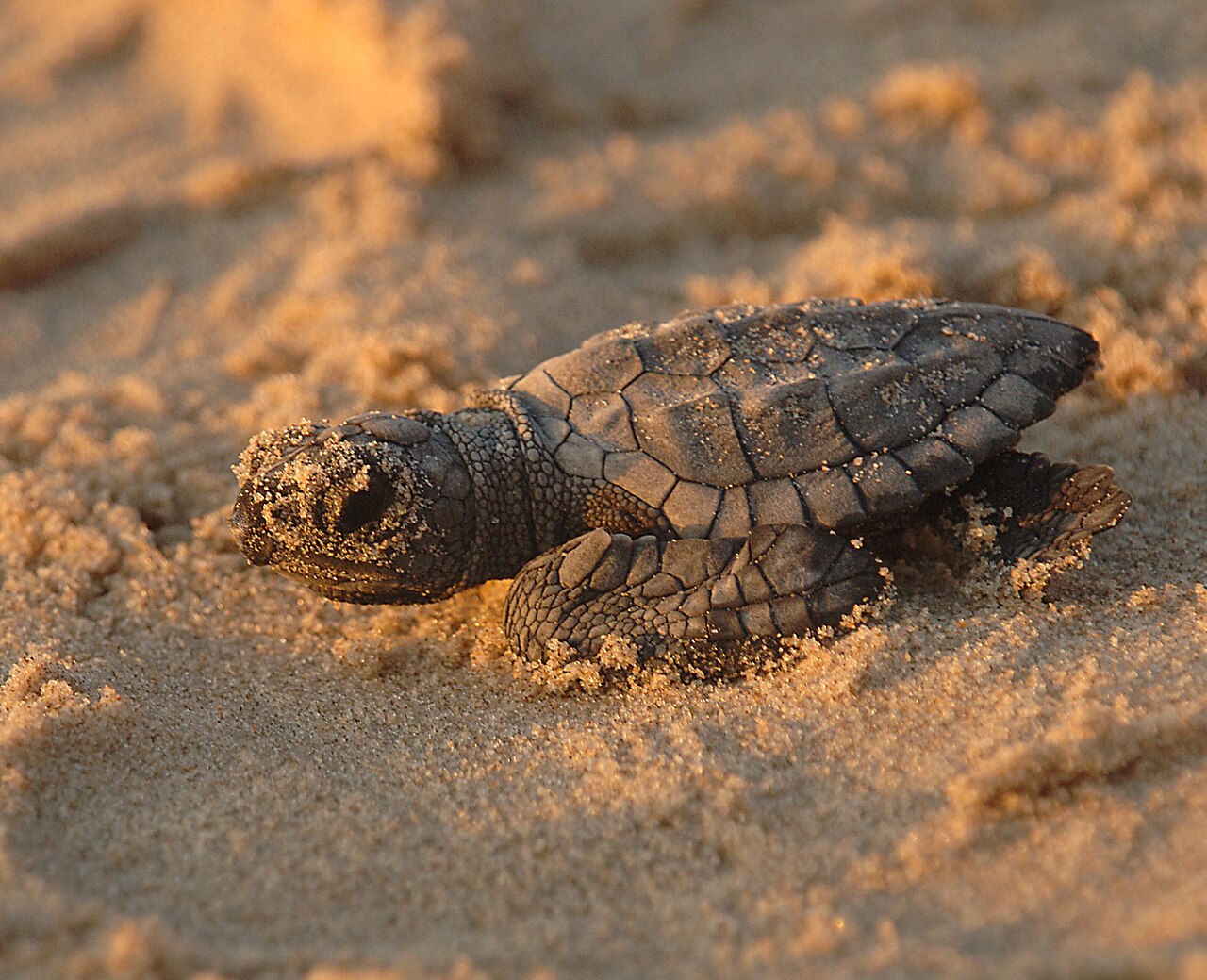
Most turtle species have no sex chromosomes. Sex is determined by the temperature of the nest during a critical window in the middle third of incubation, a mechanism called temperature-dependent sex determination. In most freshwater turtles, cooler nests produce males and warmer nests produce females.
The transition is narrow. A shift of 2 to 3 degrees Celsius can move a clutch from all male to all female, and nests that straddle the threshold produce mixed clutches, often with the warmer top of the nest yielding females and the cooler bottom males.
This makes turtles unusually exposed to a warming climate, and researchers monitoring sea turtle nesting beaches have documented populations producing overwhelmingly female hatchlings. It is one of the more direct links between temperature change and a specific reproductive outcome in any vertebrate group.
What to Do If You Find a Baby Turtle
The default answer is leave it alone. A hatchling moving across ground is doing exactly what it should, and it knows where it is going better than an observer does. Picking it up and relocating it to what looks like better habitat frequently drops it somewhere it cannot survive.
The one useful intervention is moving a turtle out of immediate danger, and only in the direction it was already heading. A hatchling on a road should be carried straight across to the side it was facing. Turning it back means it will simply try again, which is how most road mortality happens.
Never take a hatchling home. Beyond the legal issues, wild hatchlings have specific habitat, temperature, and dietary requirements that are difficult to meet, and removing one from the wild eliminates any contribution it might make to a local population already under pressure. If an animal is clearly injured, a licensed wildlife rehabilitator is the correct contact.
The 4-Inch Rule and Salmonella
The FDA has prohibited the sale and distribution of turtles with a carapace under 4 inches in the United States since 1975. The rule followed an estimated 280,000 salmonella infections a year in the country, concentrated among young children, traced to small pet turtles that children handled and put in their mouths.
The size threshold exists precisely because a turtle under 4 inches fits in a child’s mouth. Turtles of all sizes carry salmonella on their skin and shell as normal flora, so the rule does not make larger turtles sterile, it just removes the specific route that was driving paediatric infections.
Enforcement is uneven and hatchlings still appear at flea markets, roadside stands, and online, sometimes sold as educational specimens to exploit a narrow exemption. Buying one funds a trade that is both illegal and a documented public health problem. Anyone who wants a pet turtle should buy a captive-bred animal over 4 inches from a reputable source and expect a commitment of decades.
What Baby Turtles Eat
Most freshwater hatchlings are more carnivorous than the adults of the same species. Young painted turtles, sliders, and cooters eat insect larvae, small crustaceans, worms, and carrion heavily during their first year, shifting progressively toward plant material as they grow. Rapid early growth requires protein.
Snapping turtle hatchlings are carnivorous from the start and remain largely so, taking invertebrates, tadpoles, and small fish. Box turtle hatchlings sit at the other end and are opportunistic omnivores taking earthworms, slugs, insects, fungi, and fallen fruit. Our guide to the baby box turtle covers the terrestrial pattern.
Hatchlings do not eat at all for the first days after emergence, living on the remaining yolk sac. Feeding begins once that is absorbed. In captivity this is a common source of panic among new keepers who assume a non-feeding hatchling is ill when it is simply still running on yolk.
Why So Few Baby Turtles Survive
First-year mortality is severe across essentially every turtle species, frequently exceeding 95 percent. The hatchling is small, soft-shelled, slow, and edible, and the list of animals that will take one includes raccoons, skunks, foxes, herons, gulls, crows, large fish, bullfrogs, and other turtles.
Nest predation happens before that stage and is often worse. Raccoons and skunks locate and excavate turtle nests with high success, and in some monitored populations the majority of nests are destroyed within 48 hours of laying. A female may nest for decades before successfully producing a single surviving adult.
This is why adult mortality matters so disproportionately for turtle populations. The species strategy is long adult life and repeated attempts across many years, so losing breeding adults to roads or collection does damage that high hatchling numbers cannot offset. Our guide to the snapping turtle covers one of the adults most often killed on roads.
How Fast Baby Turtles Grow
Growth is fastest in the first few years and then slows sharply. A hatchling painted turtle may double its shell length within two seasons, but reaching adult size takes several more years and sexual maturity generally arrives between 5 and 10 years in freshwater species. Box turtles are slower still.
Growth rate depends heavily on temperature, food availability, and the length of the active season. The same species reaches maturity years earlier in the southern part of its range than in the north, where a shorter active season and longer hibernation compress the growing window considerably.
Shell growth rings are often described as a way to age turtles, and they work only roughly and only in young animals. Rings can form more than once a year under variable conditions, and in older turtles the shell wears smooth. Counting rings gives a rough estimate for a juvenile and essentially nothing useful for an adult. Our guide to the painted turtle covers the adult growth pattern.
Frequently Asked Questions
What do you call a baby turtle?
A hatchling. There is no separate folk name comparable to duckling or fawn. Once past the first year the animal is generally called a juvenile until it reaches sexual maturity, which takes 5 to 10 years in most freshwater species.
Can you keep a baby turtle as a pet?
Not legally in the United States if the shell is under 4 inches. The FDA has banned the sale and distribution of turtles under that size since 1975 because of salmonella infections in children. Captive-bred turtles over 4 inches can be kept legally, and they routinely live 30 years or more.
What should I do if I find a baby turtle?
Leave it alone unless it is in immediate danger. If it is on a road, carry it straight across in the direction it was already facing and release it at the edge. Do not relocate it elsewhere and do not take it home. Contact a licensed wildlife rehabilitator only if it is visibly injured.
How big is a baby turtle when it hatches?
Between about 25 and 50 mm of shell length depending on species, roughly the size of a large coin. Painted turtle hatchlings are near the small end, snapping turtle hatchlings around 28 to 33 mm, and sea turtle hatchlings around 40 to 50 mm.
Do baby turtles need their mother?
No. Turtles provide no parental care of any kind. The female lays, covers the nest, and leaves permanently, and hatchlings dig themselves out and are fully independent from the moment they surface. Finding a hatchling alone is normal rather than a sign that something is wrong.
What do baby turtles eat?
Most freshwater hatchlings are strongly carnivorous in the first year, eating insect larvae, worms, small crustaceans, and carrion before shifting toward plants as they grow. They do not eat at all for the first days after emerging, since they are still absorbing the remaining yolk sac.
Why are so many baby turtles female?
Because sex is set by nest temperature rather than by chromosomes in most species, and warmer nests produce females. A shift of 2 to 3 degrees Celsius can push a clutch from all male to all female, and monitored sea turtle beaches have documented increasingly female-skewed hatchling production.