Bat Poop: How to Identify Guano and Clean It Up Safely
Bat poop, properly called guano, looks like dark elongated pellets 6 to 12 mm long that crumble into glittering fragments when pressed. That glitter is the diagnostic feature and nothing else in a house produces it: bats eat insects, and the undigested fragments of chitinous exoskeleton catch light like tiny flecks of mica. Mouse droppings, the most common confusion, crumble into dull grey powder instead.
Guano accumulates in piles rather than trails because bats defecate from a fixed roost position, so a growing mound directly below one spot on an attic floor, a soffit, or a porch beam is the classic signature. It also carries a genuine health risk through Histoplasma capsulatum, which makes cleanup method more important than identification for anyone who finds a substantial deposit.
| Feature | Bat Guano |
|---|---|
| Length | 6 to 12 mm, roughly 1/4 to 1/2 inch |
| Shape | Elongated pellet, often slightly segmented |
| Colour | Dark brown to black, dulls with age |
| Crush test | Crumbles into glittering fragments |
| Pattern | Piles below a fixed roost point |
| Smell | Strong ammonia as deposits accumulate |
| Main health risk | Histoplasmosis from inhaled spores |
How to Identify Bat Droppings
Start with size and shape. Individual guano pellets from common North American house-roosting species such as the little brown bat and the big brown bat run 6 to 12 mm long and 2 to 3 mm across, elongated and slightly curved, often with faint segmentation along the length. Fresh pellets look moist and almost black.
The crush test is what confirms it. Press a dry pellet with a gloved finger or a tool and it disintegrates into fine fragments that visibly sparkle under a flashlight. Those are pieces of beetle wing case, moth scale, and other insect cuticle that pass through undigested. No rodent dropping does this, because rodent diets contain no chitin in comparable quantity.
Texture and structural integrity matter too. Guano is dry and friable even when relatively fresh, and it does not hold together the way a rodent dropping does. A dropping that stays intact under moderate pressure and crumbles to dull powder is from a mouse or rat, not a bat.
Diet explains why the test is so reliable. Insectivorous bats consume beetles, moths, and flies whose exoskeletons are built from chitin, a material no mammal digests. Those fragments pass through intact and end up making up a substantial share of the dropping by volume, which is why the pellet holds no structural integrity at all once dried.
Bat Poop vs Mouse Poop
These two overlap almost exactly in size, which is why the confusion is so common. Both fall in the 6 to 12 mm range and both are dark brown to black when fresh. Neither size nor colour resolves them, so the identification has to come from three other features.
End shape is the first. Mouse droppings taper to sharp points at both ends. Guano pellets have blunter, rounded, or squared ends and often a slight segmented look. The second is the crush test already described, and it is the most reliable of the three.
Location is the third and often the fastest. Mice work at floor level along walls, inside cabinets, behind appliances, and they leave scattered trails as they travel. Bats deposit from an overhead roost in concentrated piles, and finding droppings on an attic floor directly under a ridge beam with clean floor all around strongly indicates bats. Our dedicated bat poop versus mouse poop comparison covers this in full, and mouse poop covers the rodent side alone.
Where Bat Guano Accumulates
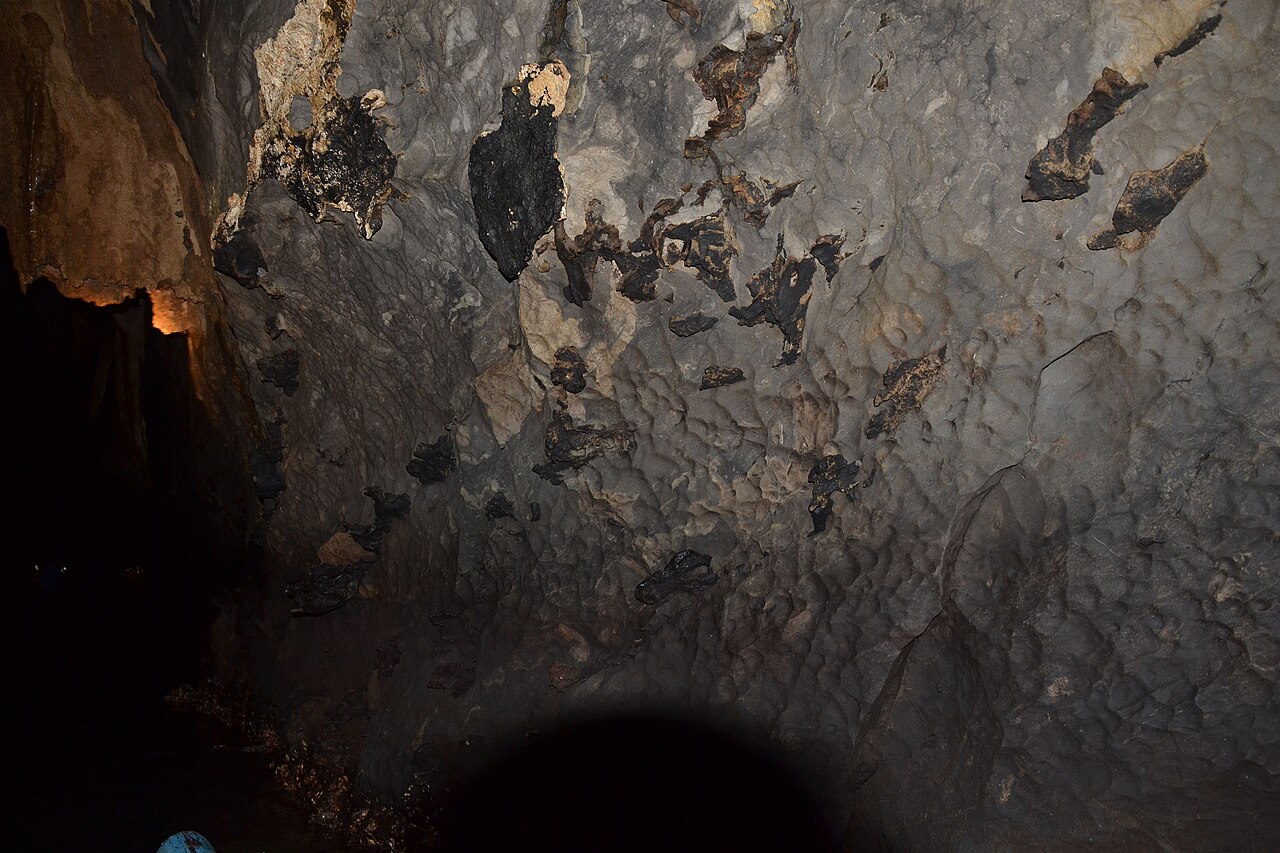
Attics are the most common location in houses, specifically along ridge beams, in the angle where rafters meet the floor, and on top of insulation directly below a roost cluster. In a maternity colony, which forms in late spring and summer, deposits can build several inches deep over a season.
Exterior locations are just as informative. Guano on a porch floor, a deck rail, or a windowsill directly below a shutter, soffit gap, or fascia board indicates a roost in that specific gap. Smears and dark staining around the entry point itself come from body oils and are a useful secondary sign.
Chimneys, barns, sheds, and the space behind loose siding all host roosts. The consistent pattern is a vertical drop line: bats do not wander while defecating, so the deposit sits directly below where they hang. That vertical relationship is what separates the pattern from any rodent sign.
Are Bat Droppings Harmful?
Yes, and the main risk is histoplasmosis. Histoplasma capsulatum is a fungus that grows in soil enriched by bird or bat droppings, and inhaling airborne spores can cause a respiratory infection that ranges from asymptomatic to serious. The CDC (cdc.gov) identifies disturbance of accumulated guano as a recognised exposure route.
Risk scales with the size of the deposit and with disturbance. A handful of pellets on a windowsill in a dry, well-ventilated spot presents minimal risk. Several inches of accumulated guano in an enclosed attic being swept or shovelled presents a genuine one, because the process aerosolizes large quantities of spores in a confined space.
Rabies is a separate and much-misunderstood concern. Guano does not transmit rabies. The virus is transmitted through saliva via a bite or scratch, and while a small percentage of bats carry rabies, their droppings are not a transmission route. Any direct contact with a bat, however, warrants immediate medical advice.
How Long Bat Poop Stays a Hazard
Longer than most people assume, because the risk is fungal rather than bacterial. Histoplasma can persist in accumulated guano and in the soil beneath long-used roosts for years as long as conditions stay suitable, and dry undisturbed deposits do not become safe simply through age.
Moisture and darkness favour persistence. A damp crawlspace or a soil floor under a barn roost holds the fungus far better than a dry, hot, well-ventilated attic, where survival is poorer though not eliminated. Deposits that have been dry for many years in a hot attic are lower risk but should still be treated as contaminated.
The practical implication is that an old deposit gets the same handling as a fresh one. Age is not a reason to skip a respirator, and the ammonia smell fading does not indicate the fungal hazard has gone with it. Ammonia comes from urine breakdown and tracks a completely different timeline.
How to Clean Up Bat Guano Safely
Never sweep or vacuum dry guano. Both actions launch spores into the air in exactly the way that produces infection. The correct method is wet cleanup: mist the deposit thoroughly with water or a disinfectant solution, let it settle for several minutes, then scoop or wipe it up while it stays damp.
Protective equipment is not optional for anything beyond a few pellets. A fitted N95 or better respirator, disposable gloves, eye protection, and coveralls that can be removed and bagged on exit are the standard set. A simple dust mask does not filter Histoplasma spores and gives false confidence.
Ventilate the space for at least 30 minutes before entering and keep it ventilated throughout. Bag the waste in sealed heavy plastic and dispose of it as regular waste unless local rules say otherwise. Wipe down the underlying surface afterward rather than leaving residue, since the fine material left behind is the fraction most easily disturbed later. For deposits deeper than roughly an inch, or anything in insulation, professional remediation is the appropriate call rather than a weekend job.
What Guano Tells You About the Colony
Volume indicates colony size and duration. A single bat produces roughly 20 to 30 pellets a night, so a small pile of a few dozen pellets suggests one animal roosting briefly, while a deposit measured in inches indicates a maternity colony that has used the site for one or more seasons.
Freshness indicates current occupancy. Fresh guano is dark, slightly moist, and pliable, drying and dulling within a couple of days. Clearing a marked patch and rechecking after three nights is the definitive occupancy test, and it is worth doing before any exclusion work because sealing a roost with bats inside is both inhumane and creates a far worse problem.
Timing matters legally and ethically. Most jurisdictions prohibit exclusion during the maternity season, roughly May through August, because flightless pups would be sealed in and die. Exclusion is done in early autumn or in spring before pups are born, using one-way devices rather than sealing. Our guide to getting rid of bats covers the process and the timing rules.
Other Droppings Mistaken for Bat Guano
Mouse and rat droppings account for most misidentifications, resolved by the crush test and by end shape. Rat droppings are considerably larger at 12 to 19 mm and are found at ground level, so confusion with guano is less common than with mice. Our rat poop guide covers the size ranges.
Cockroach droppings are the other frequent mix-up and are smaller, blackish, and often ridged lengthwise in the larger species. They accumulate in tight cracks and behind hinges rather than in open piles below a fixed point, and they do not glitter when crushed.
Squirrel droppings in an attic can look superficially similar in a dim space but are larger at 8 to 13 mm with blunt ends, appear in latrine clusters rather than under a single vertical drop point, and do not crumble to glitter. Our comparison of squirrel poop versus mouse poop covers the attic rodent side.
Frequently Asked Questions
How do you identify bat droppings?
Look for dark elongated pellets 6 to 12 mm long with blunt ends, deposited in piles directly below a fixed overhead point. Crush a dry pellet: guano disintegrates into glittering insect fragments, while rodent droppings crumble to dull powder. The glitter is the definitive test.
Are bat droppings harmful?
Yes. The main risk is histoplasmosis, a respiratory infection caused by inhaling spores of Histoplasma capsulatum, which grows in accumulated guano. Risk rises sharply when deposits are disturbed in enclosed spaces. Guano does not transmit rabies, which spreads only through saliva from a bite or scratch.
Is it safe to clean up bat poop?
Small amounts can be handled with gloves, an N95 respirator, and a wet cleanup method that avoids raising dust. Never sweep or vacuum dry guano. Deposits deeper than about an inch, or guano in insulation, should be handled by professional remediation rather than by the homeowner.
How long does bat poop stay toxic?
Histoplasma can persist in accumulated guano and in the soil below long-used roosts for years, particularly in damp, dark conditions. Old dry deposits are lower risk than fresh ones but should still be treated as contaminated, and age alone is not a reason to skip protective equipment.
What is bat poop called?
Guano. The term comes from Quechua via Spanish and is also applied to seabird droppings. Bat guano has been mined commercially as fertiliser because of its high nitrogen and phosphorus content, and it is still sold as a garden amendment.
How do you tell if you have mice or bats?
Pattern and the crush test. Bats leave concentrated piles directly beneath an overhead roost point with clean surroundings, mice leave scattered trails along walls and inside cabinets. Crushed guano glitters with insect fragments, crushed mouse droppings turn to dull powder. Bats also produce a strong ammonia smell as urine accumulates.
Does bat guano smell?
A small deposit has little odour. Accumulations produce a strong ammonia smell from urine breaking down, which is often the first thing homeowners notice, particularly on warm days when attic temperatures rise. The smell fading does not mean the fungal hazard has gone, since the two follow different timelines.