Sulcata Tortoise Lifespan: 70 to 100 Years and What Decides It
The sulcata tortoise lifespan runs 70 to 100 years in captivity, and well kept animals in US homes routinely pass 80. That number is not a curiosity. It is the single most important fact to understand before one of these tortoises arrives, because a hatchling bought for forty dollars today will very likely still be eating grass in 2100.
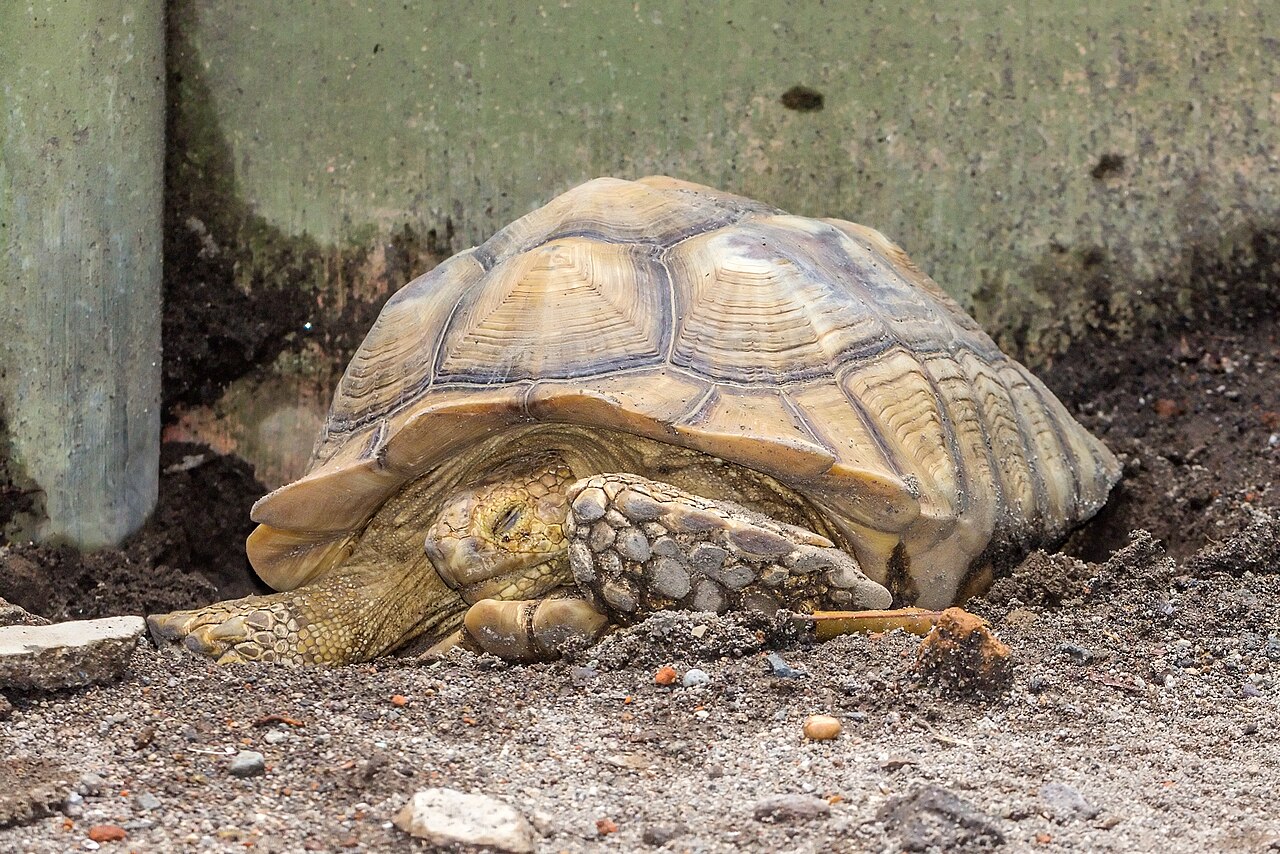
African spurred tortoises (Centrochelys sulcata) are the third largest tortoise on Earth and the largest mainland species. Wild animals in the Sahel face drought, predators and habitat loss, so wild averages sit lower than captive ones. In a backyard with shade, a heated shelter and the right diet, the limiting factor stops being biology and starts being whether the keeper can commit for four decades or more.
Sulcata tortoises live 70 to 100 years in captivity, with 80 to 90 the realistic range for a well cared for animal. Wild sulcatas average closer to 50 to 70 years because of drought and predation. Most captive deaths before age 20 come from poor diet, cold exposure or respiratory infection, not from old age.
| Life stage | Age | Typical size | Main risk |
|---|---|---|---|
| Hatchling | 0 to 1 year | 2 to 3 in (5 to 8 cm) | Dehydration, pyramiding |
| Juvenile | 1 to 5 years | 6 to 12 in (15 to 30 cm) | Improper diet, cold |
| Subadult | 5 to 15 years | 14 to 22 in (36 to 56 cm) | Space, escape, injury |
| Adult | 15 to 50 years | 24 to 30 in (61 to 76 cm) | Obesity, bladder stones |
| Senior | 50 to 100 years | Full size, 80 to 150 lb | Kidney and shell issues |
How Long Do Sulcata Tortoises Live?
A sulcata tortoise in good captive care lives 70 to 100 years. The most commonly cited working figure among US keepers and zoos is 80 years, and animals documented past 90 exist in private collections and reptile rescues. Because the species only entered the American pet trade in numbers during the 1980s and 1990s, the oldest captive born animals in the country are still middle aged.
That matters when you read lifespan claims online. Nobody has yet watched a full captive generation from hatchling to natural death under modern husbandry, so the upper end of the range is an estimate built from growth rates, related species and the handful of very old imports. The Smithsonian’s National Zoo and similar institutions describe the species as capable of living over 70 years, which is the conservative floor rather than a ceiling.
The practical takeaway is simple. If you acquire a hatchling at age 30, plan on the tortoise outliving you. A sulcata is closer to a parrot or a horse in commitment terms than to a gecko or small lizard, and it needs a written succession plan, not a vague hope.
Sulcata Tortoise Lifespan in Captivity vs the Wild
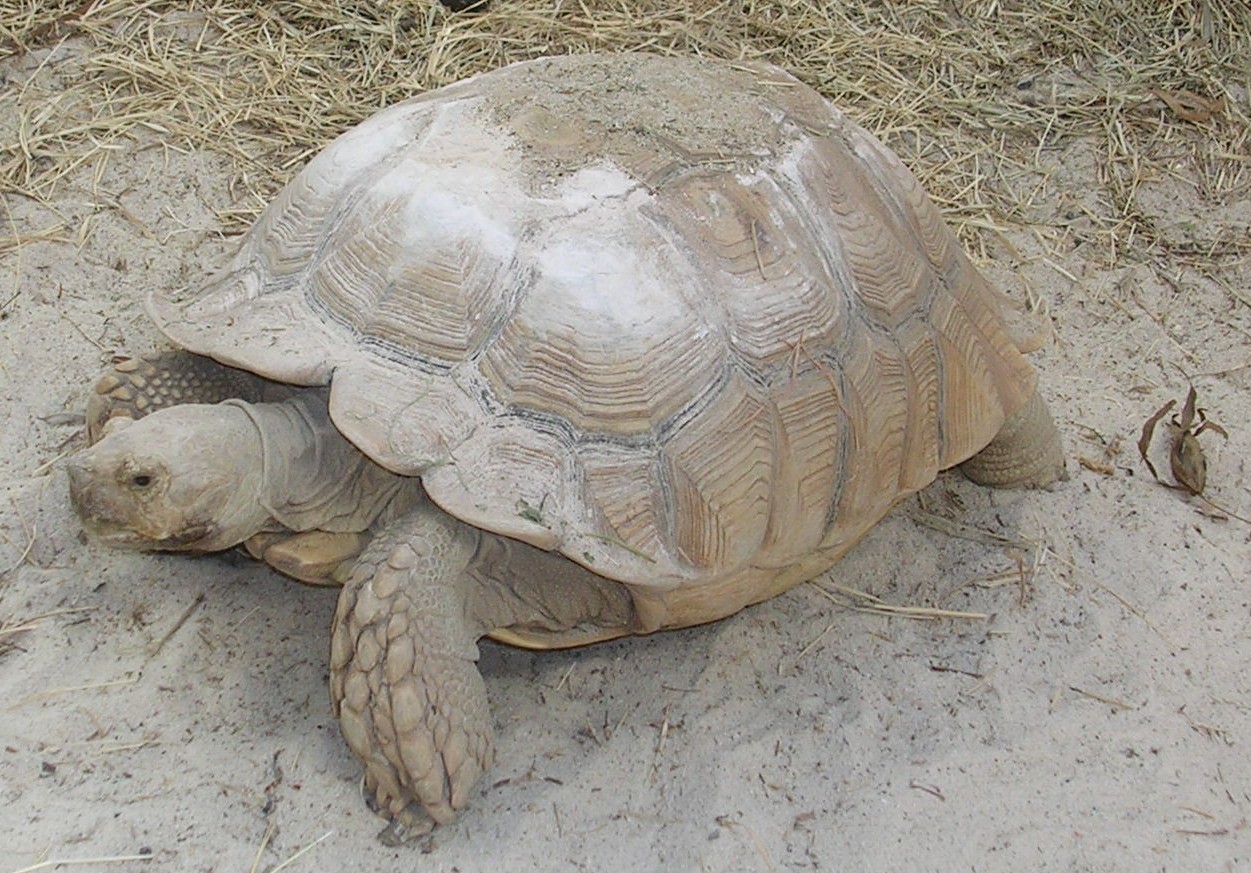
Captive sulcatas outlive wild ones, which is unusual among reptiles. Wild animals in Senegal, Mali, Chad and Sudan face a brutal dry season, and estimates for wild lifespan generally land at 50 to 70 years. Drought years kill juveniles at high rates, and adults lose body condition when forage disappears for months.
Captivity removes the drought and the predators. A backyard tortoise gets water on demand, greens year round and veterinary care for injuries that would be fatal in the Sahel. Zoo and rescue records show that animals with consistent hydration and unlimited grazing reach adult size faster and hold weight through winter without the seasonal crashes wild tortoises endure.
The trade off is that captivity introduces new killers. Wild sulcatas do not develop bladder stones from a fruit heavy diet, and they do not sit in a damp garage at 48 degrees F developing pneumonia. The captive lifespan advantage is real but conditional, and it disappears entirely under poor husbandry.
Sulcata Tortoise Lifespan Female vs Male

There is no strong evidence that sex changes the sulcata tortoise lifespan. Males and females both fall in the same 70 to 100 year window, and keeper records do not show one sex consistently outliving the other. What differs is the risk profile at each end.
Females carry the reproductive burden. A gravid female that cannot find suitable nesting substrate may become egg bound, a condition that turns fatal without veterinary intervention. Repeated clutches also deplete calcium, and females on marginal diets develop shell and bone problems earlier than males on the same food.
Males carry the behavioral burden. Adult males ram, bite and flip rivals, and a flipped tortoise in summer sun can die of hyperthermia within hours. Most premature adult deaths in mixed groups trace back to male aggression rather than disease, which is why experienced keepers house adult males separately.
Baby Sulcata Tortoise Lifespan and the First Two Years

Baby sulcata tortoise lifespan is the same 70 to 100 years on paper, but the first two years carry the highest mortality of any stage in captivity. Hatchlings measure 2 to 3 in (5 to 8 cm) and lose water fast through a shell that has not yet hardened.
Two mistakes account for most hatchling losses. The first is chronic dehydration, which shows up as sunken eyes, white urates and refusal to eat. Daily shallow soaks in warm water for 15 to 20 minutes largely solve it. The second is a dry, low humidity enclosure that produces pyramiding, the lumpy raised scute growth that permanently distorts the shell.
Pyramiding does not usually kill on its own, but severe cases compress internal organs and are associated with shorter lives. A humid hide, daily soaking and a grass based diet in the first 24 months set the shell growth pattern that the tortoise carries for the next eight decades.
How Big Will a Sulcata Tortoise Get?
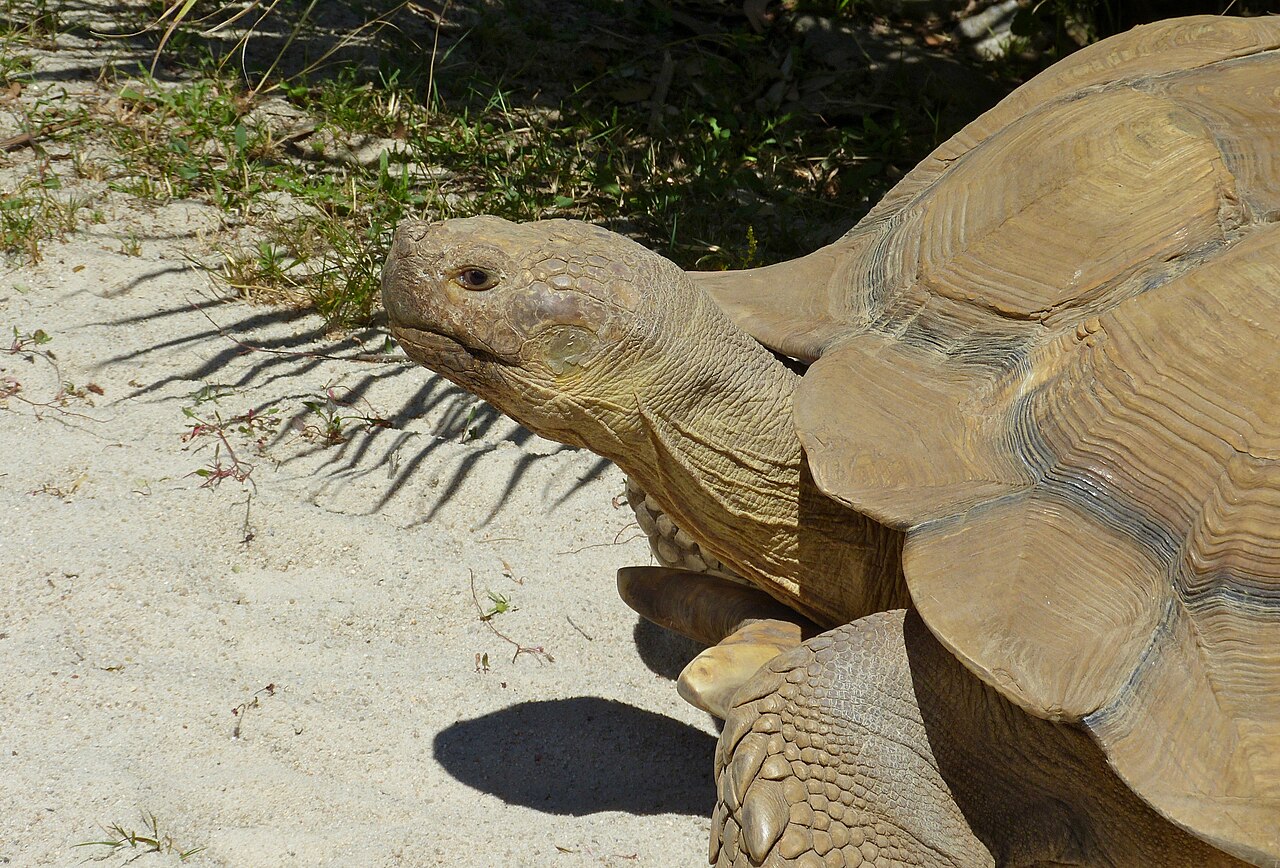
An adult sulcata reaches 24 to 30 in (61 to 76 cm) in shell length and 80 to 150 lb (36 to 68 kg), with large males occasionally exceeding 200 lb (91 kg). Growth is fast for a tortoise. Most animals pass 10 in (25 cm) by year five and reach near adult size between 15 and 20 years.
Size drives nearly every housing failure. The hatchling in a 20 gallon tank becomes a 60 lb animal that pushes through chain link fencing, digs burrows 10 ft (3 m) deep and destroys garden beds. Rescues across the southwestern US take in surrendered sulcatas by the hundreds every year for exactly this reason.
Feeding for slow steady growth is better than feeding for size. Fast grown animals raised on protein rich pellets reach adult dimensions early and show more shell deformity, more kidney stress and, in keeper experience, shorter lives than animals grown slowly on grass and hay.
What Shortens a Sulcata Tortoise Lifespan
Most captive sulcatas that die young die from one of four causes: respiratory infection from cold or damp housing, bladder stones from a dry protein heavy diet, metabolic bone disease from insufficient calcium or UVB, and trauma including flipping, dog attacks and lawn mowers.
Respiratory infection is the most common and the most preventable. A tortoise kept below 60 degrees F (16 C) for extended periods stops digesting, becomes immunosuppressed and develops nasal discharge and wheezing. Untreated, this progresses to pneumonia and death, often weeks after the cold exposure that caused it.
Bladder stones form when a tortoise is chronically underhydrated and fed too much protein. Sulcatas concentrate urates, and those urates crystallize into stones that can reach the size of a fist. Surgical removal is possible but expensive, and a recurring stone problem generally signals a diet that needs rebuilding from the ground up.
Diet: The Single Biggest Lifespan Lever
Sulcatas are grazers, and a correct diet is roughly 80 to 90 percent grass and hay. Bermuda grass, orchard grass, timothy hay and a mixed lawn free of pesticides form the base. Weeds like dandelion, plantain and hibiscus leaves add variety and calcium.
Fruit, dog food, bread and high protein commercial pellets are the classic lifespan shorteners. Sulcatas evolved on dry fibrous forage, and sugar and animal protein produce gut flora disruption, rapid shell growth and kidney strain. A tortoise that begs for strawberries is not telling you it needs them.
Calcium supplementation matters through the growth years. A cuttlebone left in the enclosure lets the animal self regulate, and a light dusting of calcium carbonate two or three times a week supports shell and bone development in juveniles. Adults on a varied grass diet with sunlight usually need far less.
How Cold Is Too Cold for Sulcatas?
Below 50 degrees F (10 C) is dangerous for a sulcata, and sustained exposure under 60 degrees F (16 C) is enough to trigger respiratory illness. Unlike some tortoises, sulcatas do not brumate. They estivate in hot dry conditions instead, which means cold weather offers them no natural strategy at all.
In the US this rules out unheated outdoor housing anywhere north of the Gulf states and the desert southwest. Keepers in Texas, Arizona, Florida and southern California can often manage year round outdoor setups with an insulated heated shed. Everyone else needs a genuine indoor winter plan for an animal the size of a coffee table.
The standard solution is an insulated dog house or shed with a pig blanket heat panel or ceramic heat emitter, thermostat controlled to hold 70 to 80 degrees F (21 to 27 C). Heat lamps above a sleeping tortoise are a fire risk in a straw filled shelter, so panels mounted flat are the safer choice.
Can I Keep a Sulcata Tortoise in My Backyard?
Yes, and an outdoor enclosure is the ideal setup, but only in a suitable climate and with serious fencing. An adult needs a minimum of 400 sq ft (37 sq m) of grazing space, and more is better. Natural sunlight provides the UVB that indoor animals need artificial lighting to replicate.
Sulcatas dig. Burrows 4 to 10 ft (1.2 to 3 m) long are normal, and a determined animal will tunnel under any fence that does not extend at least 12 in (30 cm) below grade. Solid barriers work better than chain link, because a tortoise that can see through a fence will keep pushing at it.
Remove hazards before the tortoise arrives. Pools need barriers because sulcatas sink and drown, steps and retaining walls cause fatal flips, and toxic ornamentals like oleander and azalea must go. Dogs and tortoises should never share unsupervised space; dog attacks are a leading cause of shell trauma in suburban yards where wildlife and pets overlap.
Is a Sulcata Tortoise a Good Pet?
A sulcata is a good pet for a narrow group of people: homeowners in warm climates with yard space, a real budget and a multi decade plan. For apartment dwellers, renters, people in cold states and anyone who might move often, it is a poor match, and the rescue system absorbs the consequences.
The appeal is genuine. Sulcatas are curious, active during the day, and unusually interactive for a reptile. They follow keepers around the yard, come when they associate a person with food and tolerate handling better than most tortoises. They are not delicate animals once past the hatchling stage.
The costs are also genuine. Housing construction, heating, veterinary care from a reptile specialist and food for an animal that grazes constantly add up. Compared with a smaller tortoise species or a contained reptile like an adult snake, a sulcata is closer to livestock than to a pet.
How Much Is a Full Grown Sulcata Tortoise Worth?
A full grown sulcata is worth surprisingly little on the open market, typically 150 to 500 dollars, and many adults are given away free. Hatchlings sell for 50 to 150 dollars, which is the whole problem: the animal is cheap to buy and expensive to keep.
The adult market is soft because supply is high. Every year, keepers who bought a palm sized hatchling discover they now own a 90 lb animal that has destroyed a fence, and tortoise rescues in California, Arizona and Texas run permanently at capacity. Adoption fees, when charged at all, are usually nominal.
For a prospective keeper this is actually good news. Adopting an adult from a rescue skips the highest risk years, gives you an animal whose size is already known, and costs less than a hatchling from a breeder. It also means the rescue has one more space for the next surrender.
Planning for a Tortoise That Outlives You
Because the sulcata tortoise lifespan often exceeds the keeper’s, succession planning is part of responsible ownership. Name the animal in your will or set up a pet trust, and identify a specific person or organization willing to take it, in writing, before the need arises.
Keep records that transfer with the animal: hatch date or acquisition date, weight log, veterinary history and known health issues. A tortoise handed over with forty years of documented care is far easier to place than one that arrives at a rescue with no history and an unknown age.
Long lived animals are not unique to reptiles, and the same planning logic applies to parrots and other species with decades long lifespans. What makes sulcatas distinctive is the combination of length, size and cost. Getting the plan right early is what turns an 80 year commitment from a burden into a manageable one.
Related reading: Sulcata Tortoise Diet.
Related reading: Greek Tortoise.
Related reading: Hermann Tortoise Care.
Related reading: Red Footed Tortoise.
Related reading: Russian Tortoise Lifespan.
Related reading: Sulcata Tortoise Care.
Related reading: Galapagos Tortoise Lifespan.
Frequently Asked Questions
Do Sulcata tortoises recognize their owners?
Sulcatas appear to recognize individual people, most likely through a combination of sight, movement pattern and association with food. Keepers consistently report that their tortoises approach them and ignore strangers. This is learned association rather than affection, but it is real and it strengthens over years of consistent handling.
Do tortoises get attached to humans?
Tortoises do not form emotional bonds the way dogs do, but they do form strong associations. A sulcata that has been hand fed for a decade will follow its keeper, tolerate contact and show relaxed body language around them. Call it recognition and comfort rather than attachment, and the behavior makes sense.
Does a Sulcata tortoise bite hurt?
Yes, an adult sulcata bite hurts and can break skin or bruise a finger badly. They have no teeth but a sharp keratin beak and strong jaws built for tearing tough grass. Bites are almost always feeding mistakes rather than aggression, so hand feeding directly from fingers is worth avoiding.
Can two sulcatas live together?
Two females or a female pair with abundant space can work, but two adult males almost never can. Males ram and flip each other, and a flipped tortoise in direct sun can die within hours. If you keep multiples, provide at least double the minimum space, multiple feeding stations and visual barriers.
What is the oldest recorded Sulcata tortoise?
No sulcata holds a verified record on the scale of Galapagos or Aldabra giants, partly because the species entered captivity in numbers only recently. Individuals documented in the 80 to 90 year range exist in private and zoo collections. Claims of animals over 100 years are plausible but generally lack hatch date documentation.
How can I tell how old my sulcata tortoise is?
You cannot determine age reliably from a sulcata. Counting scute growth rings fails because rings reflect growth spurts and diet, not years, and captive animals often lay down several per year. Size gives only a rough bracket. Without hatch records, most adults are described by size class rather than by age.