Greek Tortoise: Size, Lifespan, Diet, and Price Explained
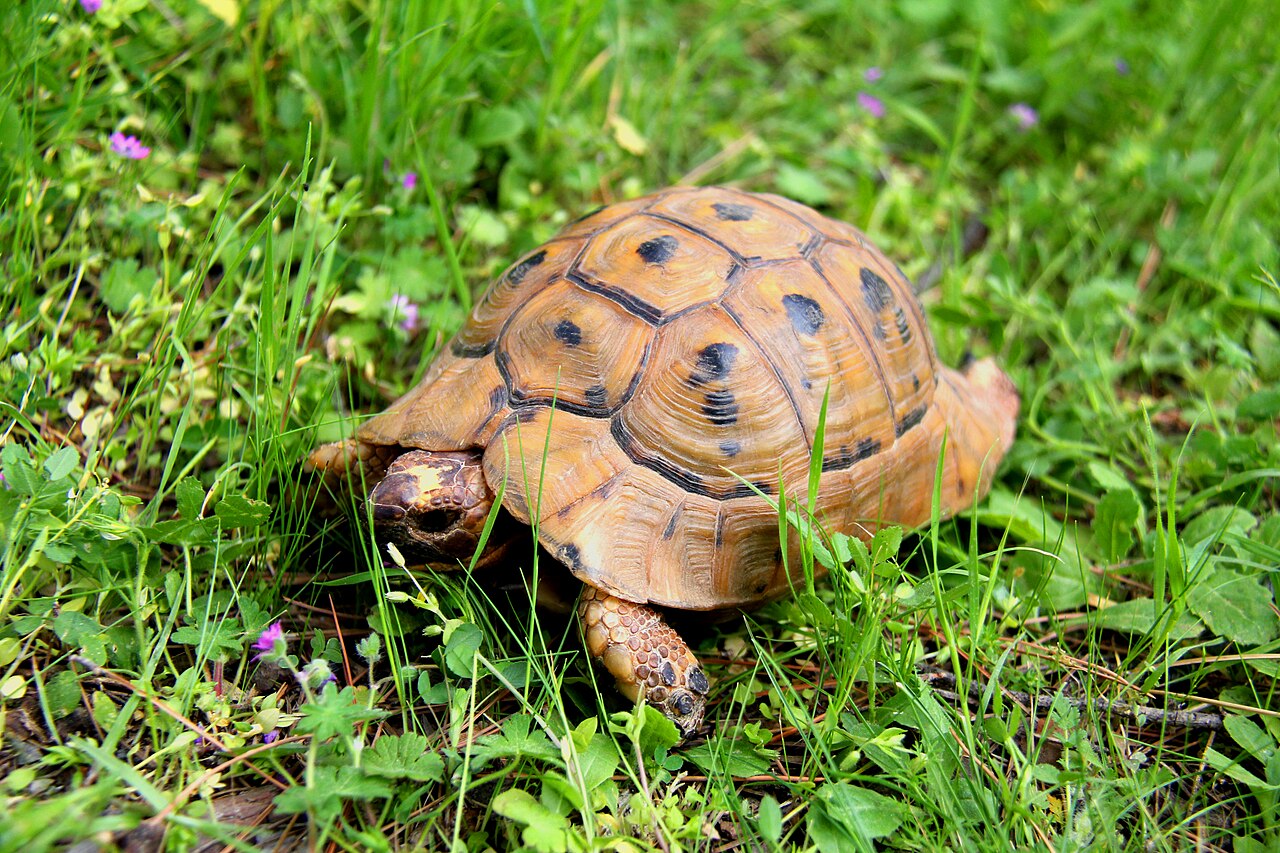
The Greek tortoise (Testudo graeca) is one of the few tortoises that stays small enough for an ordinary home and still lives long enough to outlast its owner. Adults reach 5 to 8 in (13 to 20 cm) in most subspecies, eat weeds rather than salad, and routinely pass 50 years. The common name has nothing to do with Greece: it refers to the mosaic pattern on the shell.
That pattern is also where confusion starts, because Greek tortoises are sold under several subspecies names with real differences in adult size and cold tolerance. A Tunisian animal that will never handle a cold night and an Ibera that brumates outdoors in Turkey look similar in a shop tank. Here is what separates them, and what the species actually needs.
The Greek tortoise is a small Mediterranean species reaching 5 to 8 in (13 to 20 cm), with Ibera animals hitting 11 in (28 cm). It lives 50 to 100 years, eats a high fiber diet of weeds and greens with no fruit or protein, and costs 150 to 400 USD. Identify it by the spur on each thigh.
| Trait | Detail |
|---|---|
| Scientific name | Testudo graeca |
| Adult size | 5 to 8 in (13 to 20 cm); Ibera to 11 in (28 cm) |
| Adult weight | 2 to 4 lb (0.9 to 1.8 kg) |
| Lifespan | 50 to 100 years |
| Price | 150 to 400 USD captive bred |
| Diet | Weeds, leafy greens, grasses; no fruit, no protein |
| Enclosure | 4 by 2 ft (1.2 by 0.6 m) minimum indoors, larger outdoors |
How Big Do Greek Tortoises Get?
Most Greek tortoises finish growing at 5 to 8 in (13 to 20 cm) of straight carapace length, which makes them one of the smallest tortoises kept as pets. Females run larger than males in every subspecies, typically by an inch or more, and they carry a flatter plastron while males have a concave one for mating.
The exception matters when you buy. Ibera Greek tortoises (T. g. ibera) from Turkey and the Balkans reach 9 to 11 in (23 to 28 cm) and can weigh double a Moroccan animal, while Tunisian tortoises (T. g. nabeulensis) often stop under 5 in (13 cm). Buying an unlabeled hatchling means committing to an enclosure you cannot size yet. Compare that to the sulcata tortoise, which reaches 30 in (76 cm) and 100 lb (45 kg), and the appeal of a small species is obvious.
What Is the Lifespan of a Greek Tortoise?
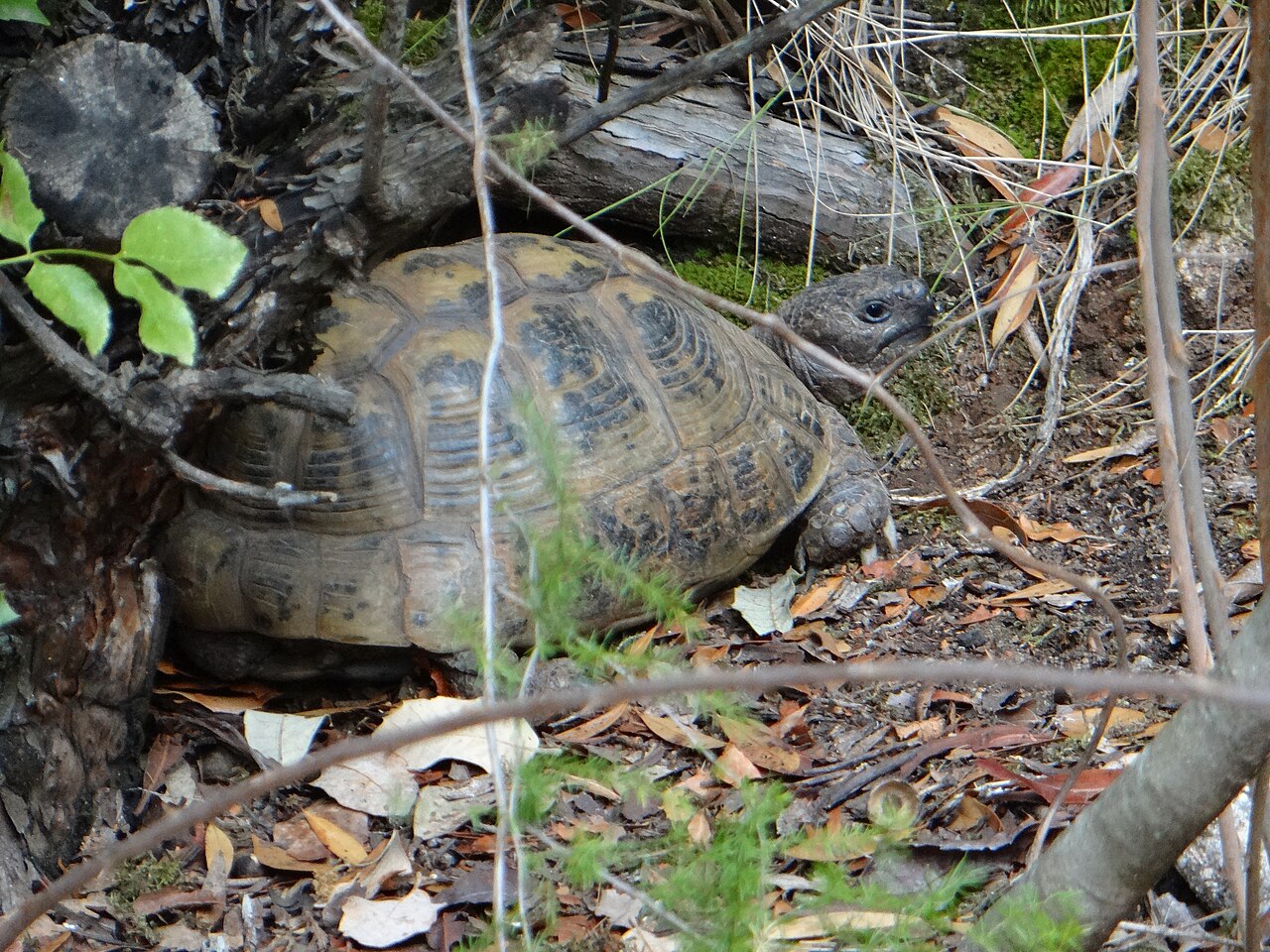
A Greek tortoise lives 50 to 100 years with proper care, and verified individuals have passed 125. This is an animal that outlives its first owner, and reptile rescues in the United States take in Mediterranean tortoises every year from estates. Plan for the animal in writing, the way you would plan for a parrot.
Captive lifespans fall short of that ceiling for predictable reasons: metabolic bone disease from missing UVB, shell pyramiding from a diet too rich in protein and too poor in fiber, and respiratory infection from a damp cold enclosure. None of those are subtle once they take hold. The pattern runs across the genus, and our figures for the sulcata tortoise lifespan show the same gap between potential and typical.
How to Identify a Greek Tortoise
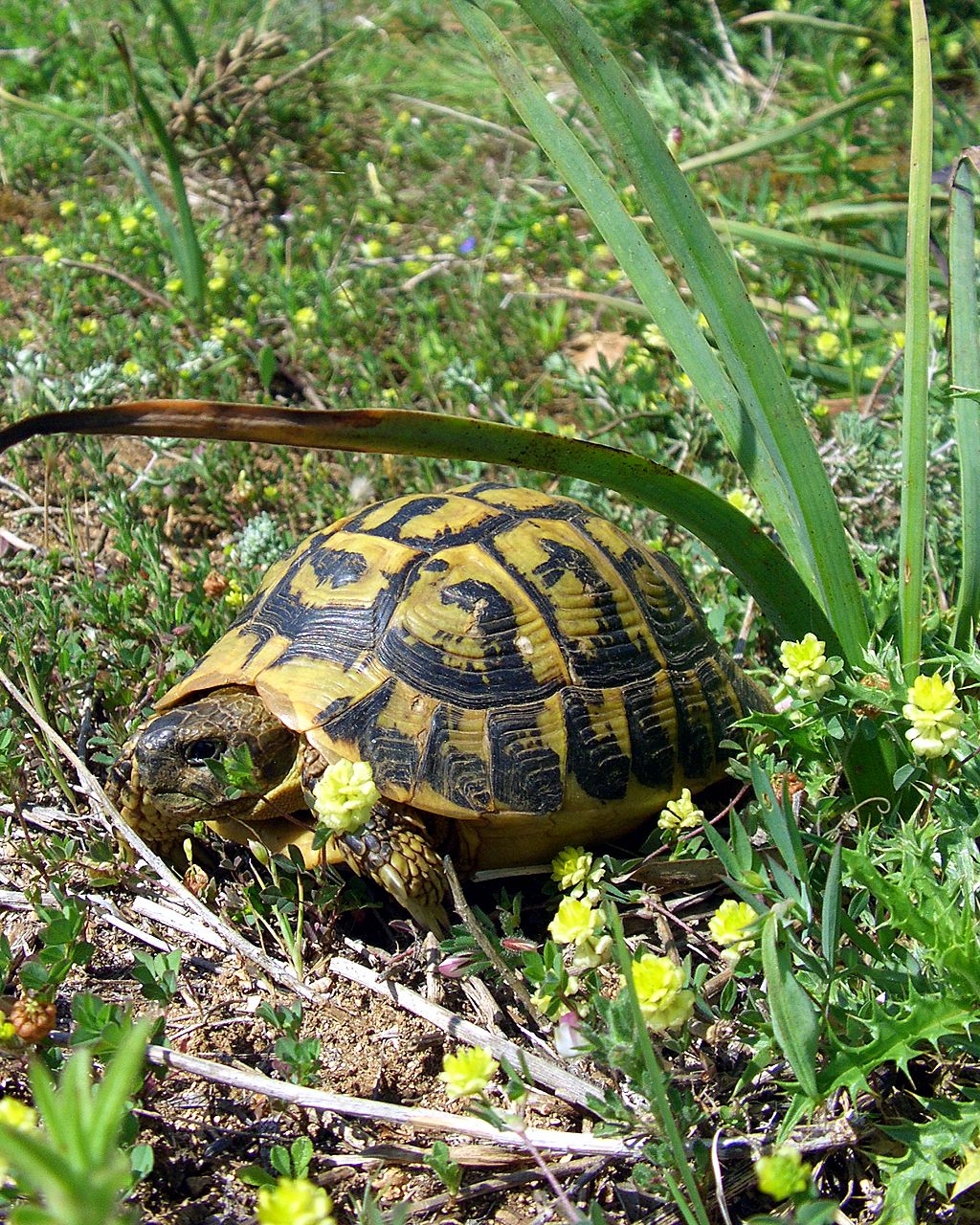
The reliable mark is a conical spur, called a tubercle, on each thigh just behind the back legs. That feature gives the species its other common name, the spur-thighed tortoise, and Hermann’s tortoise (Testudo hermanni) lacks it entirely. Check the tail as well: Hermann’s ends in a hard horny nail, and the Greek tortoise does not.
The supracaudal scute, the plate directly above the tail, offers a second check. It is usually single and undivided in the Greek tortoise and divided into two in Hermann’s. Shell color ranges from pale sand with black blotches in North African animals to olive and dark brown in Ibera stock, which is why color alone never settles the identification.
Is a Greek Tortoise a Good Pet?
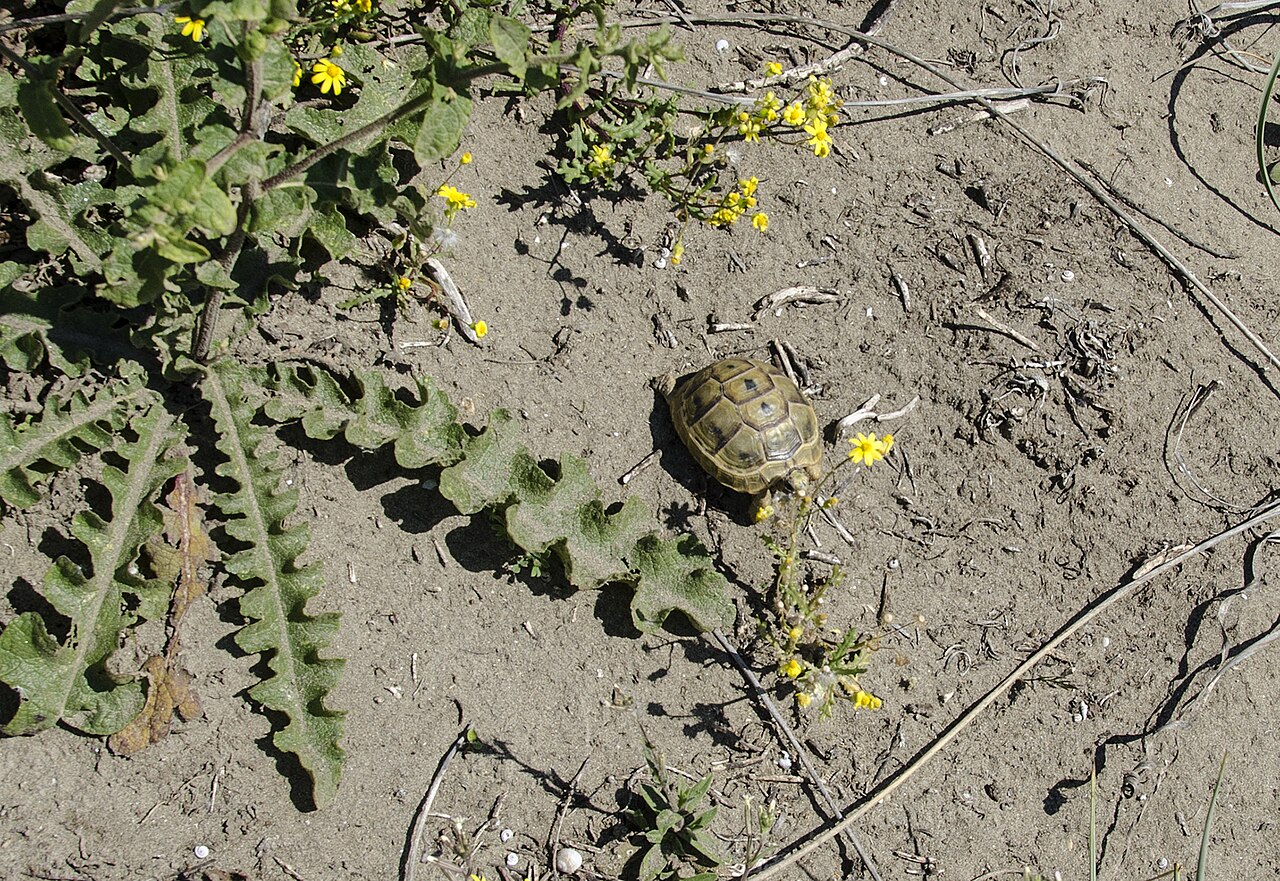
A Greek tortoise is a good pet for a patient keeper and a poor one for anyone expecting interaction. It is quiet, odorless when housed properly, entirely non aggressive, and small enough for a spare room. It is also a decades long commitment with specific lighting, temperature, and dietary needs, and it does not want to be handled.
Children do best with it as an observation animal rather than a hands on pet, partly because tortoises carry Salmonella as normal gut flora and hand washing has to be absolute. Compared with a small lizard such as the albino leopard gecko, the tortoise needs more floor space and far more years of commitment, but less equipment fuss once the enclosure is right.
What Should a Greek Tortoise Eat?
Feed dark leafy greens and broadleaf weeds: dandelion, plantain, clover, mallow, sow thistle, endive, escarole, collard greens, mustard greens, and hibiscus leaves. Grass hay, particularly timothy, should be available at all times as a fiber source. Variety matters more than any single item, and unsprayed yard weeds beat anything from a supermarket.
Fruit should be avoided almost entirely, because the sugars disrupt hindgut fermentation and cause loose stools. Animal protein is worse: it drives fast, deformed shell growth and long term kidney damage. That rule holds across herbivorous reptiles, as our guide to iguana food explains, and it is the mistake most new keepers make.
What Is Toxic to a Tortoise?
Avocado, rhubarb, buttercup, daffodil, foxglove, azalea, oleander, ivy, and nightshade family plants are all toxic to tortoises and should be kept out of any enclosure or outdoor pen. Check the whole pen before an animal goes into it, since a tortoise grazing freely will sample most of what grows there.
A second group is not toxic but still harmful in quantity. Spinach, beet greens, and chard bind calcium through oxalates. Kale, cabbage, and broccoli suppress thyroid function if fed as staples. Iceberg lettuce delivers nothing. Dog food, cat food, and commercial tortoise pellets high in protein cause the pyramided shell you see on so many pet store adults.
Housing, Heat, and Brumation
Indoors, use an open topped table at least 4 by 2 ft (1.2 by 0.6 m), with a basking spot of 95 F (35 C) at one end and an ambient range of 75 to 85 F (24 to 29 C). A UVB tube running the length of the enclosure is mandatory, replaced every 6 to 12 months. Substrate should be a soil and sand mix deep enough to dig, kept dry, with one humid hide.
Greek tortoises brumate, and Ibera animals brumate reliably for 8 to 12 weeks at 40 to 50 F (4 to 10 C). Tunisian animals often do not and should not be forced. Only a healthy adult with an empty gut and good weight should ever be cooled, and a first brumation is worth planning with a reptile vet rather than improvising.
How Expensive Is a Greek Tortoise?
Captive bred hatchlings run 150 to 400 USD depending on subspecies and locality, with well marked Ibera and Golden Greek animals at the upper end. Wild caught imports sometimes appear cheaper and are a poor buy: they arrive loaded with parasites and stress, and the species is protected under CITES Appendix II.
Setup costs more than the animal. Budget 300 to 600 USD for an enclosure, UVB fixture and tube, basking lamp, thermostat, thermometers, and substrate, then plan on an annual fecal test and a reptile vet who sees chelonians. Housing is the recurring cost as the animal grows, which is why the Indian star tortoise and other small species hold their value among keepers with limited space.
Do Greek Tortoises Like to Be Held?
No. Greek tortoises tolerate handling but do not enjoy it, and being lifted reads as predation to an animal whose only defense is withdrawing into a shell. A tortoise that hisses, empties its bladder, or clamps shut when picked up is telling you exactly that. Keep handling to health checks, soaks, and enclosure moves.
What a tortoise does respond to is routine and food. Many learn to approach a keeper who arrives at the same time each day, and that recognition is the closest thing to a bond the species offers. Reptile welfare research collected by the Smithsonian Institution consistently ranks space, thermal choice, and foraging opportunity above contact for these animals.
Frequently Asked Questions
How old is a 4 inch Greek tortoise?
A 4 in (10 cm) Greek tortoise is usually 3 to 5 years old, but size is a weak proxy for age. Growth depends on diet, temperature, and whether the animal brumates, so an overfed 2 year old can match a properly raised 6 year old. Growth rings on the scutes are equally unreliable.
Greek tortoise versus Russian tortoise: which is easier?
The Russian tortoise (Testudo horsfieldii) is hardier in cold and dry conditions and slightly smaller, while the Greek tortoise handles warmth better and is generally calmer. Both need the same diet and lighting. Russians dig far more aggressively, so their enclosures need deeper substrate and secure walls.
What will make a tortoise happy?
Space to walk, a real temperature gradient it chooses for itself, natural sunlight when weather allows, varied weeds to graze, and things to climb over and hide under. Enrichment for a tortoise is terrain and foraging, not toys. A bare tank with a heat lamp at one end produces an inactive, unhealthy animal.
Can Greek tortoises live outside in the United States?
Yes, seasonally, across much of the southern and western United States, provided the pen is predator proof and offers shade, a dry hide, and secure walls sunk into the ground. Raccoons, dogs, and rats all take tortoises. In cooler regions, outdoor time works from late spring to early fall with indoor housing the rest of the year.
Do Greek tortoises need a water dish?
Yes. Provide a shallow dish the animal can climb into without tipping, and soak young tortoises in warm water for 15 minutes two or three times a week. Soaking supports hydration and helps them pass urates. Dehydration is a common and largely invisible cause of kidney problems in captive Mediterranean tortoises.
Can two Greek tortoises be housed together?
Two males will fight, ramming and biting at the legs, and should never share an enclosure. A single male housed with one female will harass her constantly. Groups of females work in large enclosures with multiple hides and feeding stations. Never mix species, since sulcata tortoise diet needs, humidity requirements, and pathogens all differ.