Ball Python Poop: Normal Size, Color, and 6 Warning Signs
A healthy ball python poop is a soft brown log with a chalky white cap on one end, and a well fed adult passes one every two to six weeks. That long gap worries new keepers more than anything else about the species, but a snake that eats one rodent every ten to fourteen days simply has very little waste to move. The size, the color and the white part tell you almost everything you need to know about how the animal is digesting.
Ball pythons (Python regius) are ambush predators with slow metabolisms, so their droppings look nothing like the scattered pellets most people picture when they think of animal waste. One meal produces one deposit, usually in the water bowl or the cool hide. This guide covers the normal look, the size in inches and centimeters, the three lookalikes keepers mix it up with, and the warning signs that justify a call to a reptile vet.
Normal ball python poop is a single brown to dark brown log, 1 to 3 inches (2.5 to 7.5 cm) long, soft but holding its shape, with a chalky white or yellowish urate cap attached. It often contains rodent hair and may smell musty. Adults pass one every two to six weeks, usually after a meal has fully digested.
What does a normal ball python poop look like?
A normal deposit is one continuous brown mass, not a string of pellets. The color runs from medium brown to almost black depending on how long the stool sat in the gut, and the texture is soft enough to flatten under its own weight but firm enough to lift out in one piece with a paper towel.
Attached to it you will find a separate white or pale yellow portion. That is the urate, the semi solid waste snakes produce instead of liquid urine. A small amount of clear liquid around the deposit is normal, especially if the snake went in its water bowl.
Look closely and you will usually see rodent hair compacted into the stool, sometimes a few tooth or claw fragments. Fur in the poop is a good sign: it means the prey was fully broken down and only the indigestible keratin came through. Bone shards are less common, because snake stomach acid dissolves most of the skeleton.
Ball python poop size, shape, color and content
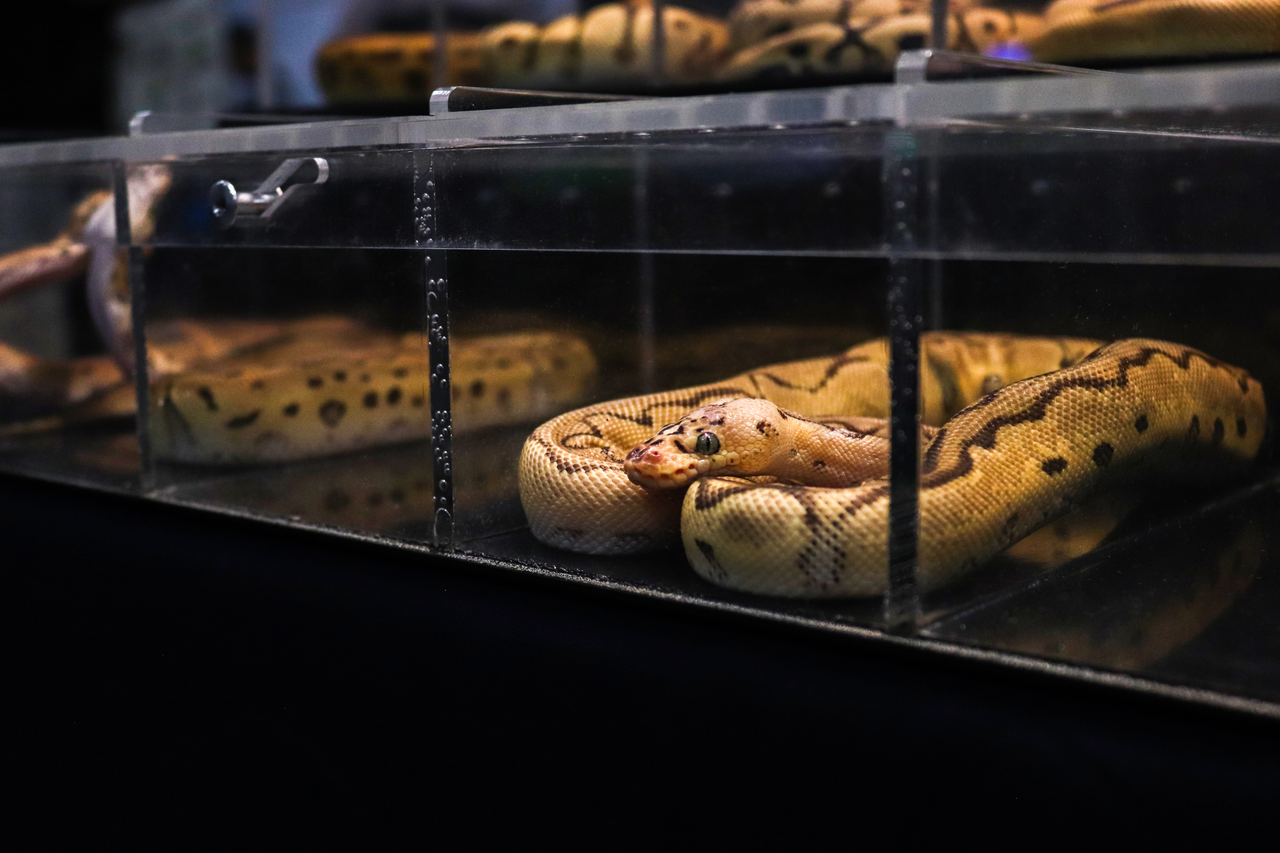
Size scales with the snake and with the meal. A hatchling eating a fuzzy mouse leaves something the size of a pencil eraser, while a 1,500 gram female that just processed a large rat can leave a deposit as thick as your thumb. Use this table as the reference point when something looks off.
| Feature | Normal ball python poop | What a change means |
|---|---|---|
| Length | 1 to 3 in (2.5 to 7.5 cm), hatchlings 0.4 to 1 in (1 to 2.5 cm) | Much larger than usual after a long gap means retention |
| Shape | Single soft log, slightly tapered, holds together | Watery or shapeless points to parasites or stress |
| Color | Medium brown to dark brown, nearly black | Green, yellow or black and tarry needs a vet |
| White part | Chalky urate cap, white to pale yellow, attached or separate | Hard, gritty, orange urates suggest dehydration |
| Content | Compacted rodent hair, occasional bone or claw bits | Whole undigested prey parts mean digestion failed |
| Where you find it | Water bowl, cool hide, or a corner the snake rarely rests in | Smeared across the enclosure means the snake was disturbed |
| How often | One deposit every 2 to 6 weeks, one per digested meal | Daily small stools point to incomplete digestion |
The white part: what urates tell you

The white chalk is the single most useful diagnostic in the enclosure. Snakes convert nitrogen waste into uric acid and pass it as a paste rather than diluting it in water, which is why there is no puddle of urine to find. Soft, moist, bright white urates mean the animal is properly hydrated.
Hard urates that crumble like dry plaster, or urates with an orange or brown tint, point to a humidity or water problem first. Check that the water bowl is full and that your enclosure sits in the 55 to 65 percent range; keepers chasing color genetics through the many ball python morphs sometimes run dry racks that push urates in exactly this direction.
Occasionally a snake passes urates alone with no brown stool at all. That is normal between meals and after a fast, since the body keeps producing nitrogen waste even when the gut is empty.
How often are ball pythons supposed to poop?

Most adults defecate once per digested meal, which on a ten to fourteen day feeding schedule means roughly every two to four weeks. Juveniles eating weekly often go every seven to twelve days because their metabolism runs faster and their meals are proportionally larger.
Longer gaps are common and not automatically a problem. Ball pythons routinely hold stool for four to six weeks, and a snake in a winter fast or in shed can go longer without anything being wrong. What matters is the pattern: a snake that always went every three weeks and suddenly stops for eight deserves attention.
Temperature drives all of it. A cool side below 76 F (24 C) or a warm side that never reaches 88 to 90 F (31 to 32 C) slows digestion, and slow digestion is the most frequent cause of a constipated looking snake in an otherwise clean setup.
What is the 3 poop rule?
The 3 poop rule is keeper shorthand, not a veterinary standard: if your snake has eaten three meals without passing stool, start investigating. It exists because three retained meals is roughly where impaction risk becomes real in an adult ball python, and it gives owners a countable threshold instead of a vague feeling.
Treat it as a prompt to check husbandry rather than a diagnosis. Verify warm side temperature with a probe thermometer, confirm the water bowl is large enough for the snake to soak in, and feel gently along the last third of the body for a firm immobile mass.
If all three check out and the snake is active and alert, waiting another week is reasonable. If the snake is lethargic, refusing food and visibly lumpy, the rule has done its job and a reptile vet should take it from there.
How to tell if your ball python is about to poop
The clearest tell is a change in routine. A snake that has spent two weeks wedged in its hide and suddenly cruises the enclosure at night, pushes at the lid or parks itself in the water bowl is usually about to go. Soaking in particular tends to precede a deposit by a few hours.
You can often see it too. A firm, slightly widened section in the last quarter of the body, closer to the vent than to the middle, is the stool in position. The snake may also refuse a scheduled meal, which is a normal priority decision rather than a feeding strike.
Ball python poop vs corn snake poop
Both are brown logs with white urates, so the difference is scale and frequency. Corn snakes (Pantherophis guttatus) eat smaller prey more often and defecate every two to seven days, leaving thinner deposits usually under 1.5 inches (3.8 cm) with less compacted hair.
Ball python stool is thicker relative to the enclosure, less frequent and more likely to be found in the water. If you keep both species and share tools between enclosures, that frequency difference is also your cue for cleaning schedules: the colubrid bin needs spot cleaning weekly, the python bin often does not.
Ball python poop vs rat poop
This is the mix up that matters in a feeder room. Rat droppings are 0.5 to 0.75 in (12 to 19 mm) dark pellets with blunt or pointed ends, and they come in scattered groups of dozens because rodents defecate as they move. There is never a white urate cap.
Snake stool is a single mass in a single spot with white attached. If you are finding pellet piles near a rack rather than in it, you are dealing with a rodent problem, and the pellet size tells you which one; the same logic separates the two most common house invaders in our guide to rat poop and mouse poop.
Ball python poop vs lizard poop
Lizard and gecko droppings also carry a white tip, which trips up keepers of mixed collections. The difference is proportion: a gecko dropping is a dark pellet 0.2 to 0.5 in (5 to 13 mm) long with a distinct white bead at one end, dry within hours, and it appears every day or two rather than monthly.
Ball python stool is larger, softer, and comes with a urate portion that can equal a quarter of the total volume. Amphibian waste is a third pattern again, soft and breaking apart quickly, which is why we treat frog and lizard droppings as a separate comparison. Reptile scat in the wild follows the same logic at a much bigger scale, as our breakdown of alligator scat shows.
Six warning signs in ball python poop
Runny or watery stool over two consecutive deposits is the most common red flag and usually means parasites, bacterial overgrowth or a thermal problem. Green or yellow mucus suggests inflammation in the gut. Visible blood, whether bright red streaks or a black tarry consistency, is an immediate vet case.
Small white threads or moving segments in the stool are worms and need a fecal exam. Whole undigested prey parts mean the meal never broke down, often after a cold spell or a meal that was too large. A sharply foul, rotten smell rather than a musty one is the sixth sign, and it often accompanies the first.
Collect a fresh sample in a sealed bag, refrigerate it, and bring it in. A fecal float costs little and answers the parasite question directly instead of leaving you adjusting temperatures for weeks.
Is snake poop toxic? Salmonella and safe cleanup
Snake poop is not toxic, but it can carry Salmonella, and the CDC names reptiles as a recognized source of human infection. The bacteria live in the gut of apparently healthy animals, so a clean, well kept ball python is still a potential carrier.
Use disposable gloves, lift the deposit out with paper towel rather than rinsing it around, and disinfect the spot with a reptile safe cleaner. Never wash bowls or hides in a kitchen sink, and wash your hands with soap for twenty seconds afterwards even if you wore gloves.
Households with children under five, pregnant members or anyone immunocompromised should keep enclosure cleaning away from food areas entirely. The risk is manageable with routine, and routine is easier when the deposit only appears once a month.
Frequently Asked Questions
How long can a ball python go without pooping?
A healthy adult can go six to eight weeks, and fasting snakes in winter sometimes stretch longer without harm. Past three digested meals with no deposit, check warm side temperature, water access and whether you can feel a firm mass near the vent, then consult a reptile vet.
Does snake poop stink in the house?
Fresh ball python poop has a musty, meaty smell that fades once removed, and a single monthly deposit rarely reaches the rest of the room. A sharp, rotten odor that lingers means either the deposit has been sitting in the water bowl or the snake has a gut infection.
Is snake poop toxic?
It is not toxic, but it can carry Salmonella bacteria that cause diarrhea, fever and cramps in people. Handle it with gloves and paper towel, disinfect the surface, keep cleaning out of kitchens and bathrooms used for food prep, and wash your hands thoroughly every time.
Why is my ball python’s poop all white?
An all white deposit is pure urate, passed when the gut holds no digested food. That is normal between meals, during a fast or after a shed. Dry, gritty or orange tinted urates are the signal to check hydration and enclosure humidity rather than the stool itself.
How can you tell a snake is happy?
Snakes do not show happiness, but a thriving ball python has clear eyes, smooth tight scales, steady weight, a relaxed grip when handled and regular full sheds. Consistent feeding responses and predictable droppings are better welfare indicators than any behavior that looks like affection.
What smell do snakes hate most?
Strong sulfur and ammonia based smells bother snakes, which is why cleaning products should never be used inside an occupied enclosure. Commercial snake repellent scents like cinnamon and clove oil have weak field evidence, so sealing entry points beats scent deterrents outdoors. Pale albino ball pythons and other color variants react no differently.