Alligator Poop: Why Gator Scat Is White and Where to Find It
Alligator poop is a chalky white to gray mass, sometimes tubular and sometimes a loose pile, usually 1 to 3 in (2.5 to 7.5 cm) thick and studded with bone fragments, scales and claws. Most people never find it because American alligators (Alligator mississippiensis) defecate in the water, where it disperses within minutes. What turns up on land is the exception: a deposit on a canal bank, a levee trail or a boat ramp, right next to a slide mark or a tail drag.
That chalky look throws people off, because almost every other large animal in the Southeast leaves dark brown scat. The white is calcium from digested bone, and once you know it, alligator scat becomes one of the easier wildlife signs to call with confidence. This guide covers the size and content, where to look, the three deposits it gets confused with, and what finding it actually tells you about the water next to it.
Alligator poop is whitish gray to tan and chalky, either a thick tube or a shapeless pile, 1 to 3 in (2.5 to 7.5 cm) across and up to 10 in (25 cm) long in large adults. It contains bone chips, fish scales, turtle shell and hair, smells strongly of rotting fish, and is found on banks, slides and trails beside water.
What do alligator droppings look like?
A fresh deposit is pale gray to tan with a wet sheen and a texture closer to thick paste than to a formed dropping. As it dries it turns almost white and crumbles, leaving a chalky crust that sits on the surface and bleaches further in the sun over a few days.
The shape depends on the meal. A gator that ate fish leaves a soft pile, while one that processed a turtle or a mammal leaves a thicker tube with a visible taper. Both forms carry the same tell: hard inclusions pressed into the mass rather than mixed through it.
Look for shell, bone and keratin. Turtle shell plates, fish scales, bird feather shafts, mammal hair and the occasional claw survive the gut, and in a dried deposit they stand out as dark specks against the white. Nothing else in the region produces that combination.
Alligator scat: size, shape, color and content
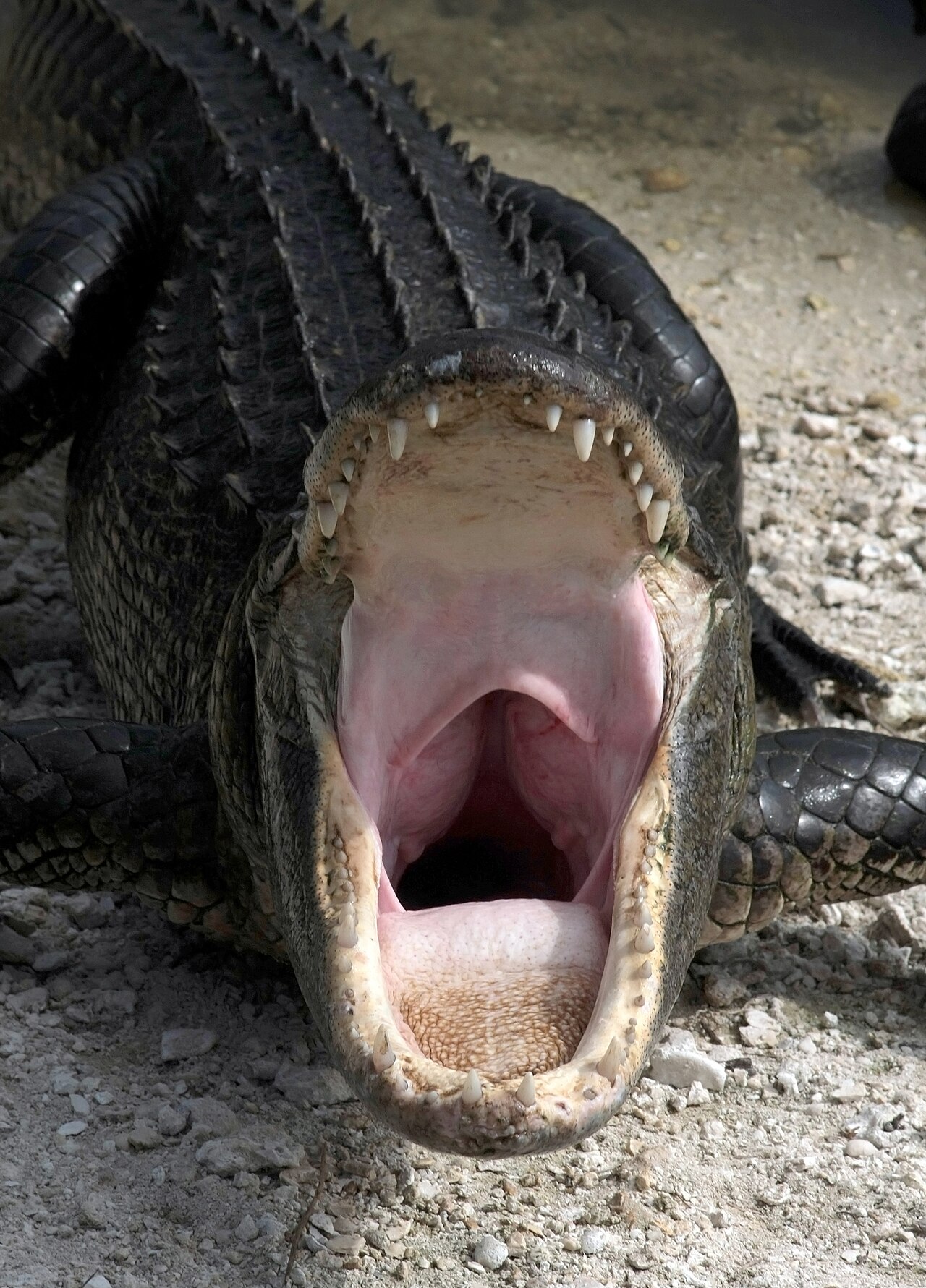
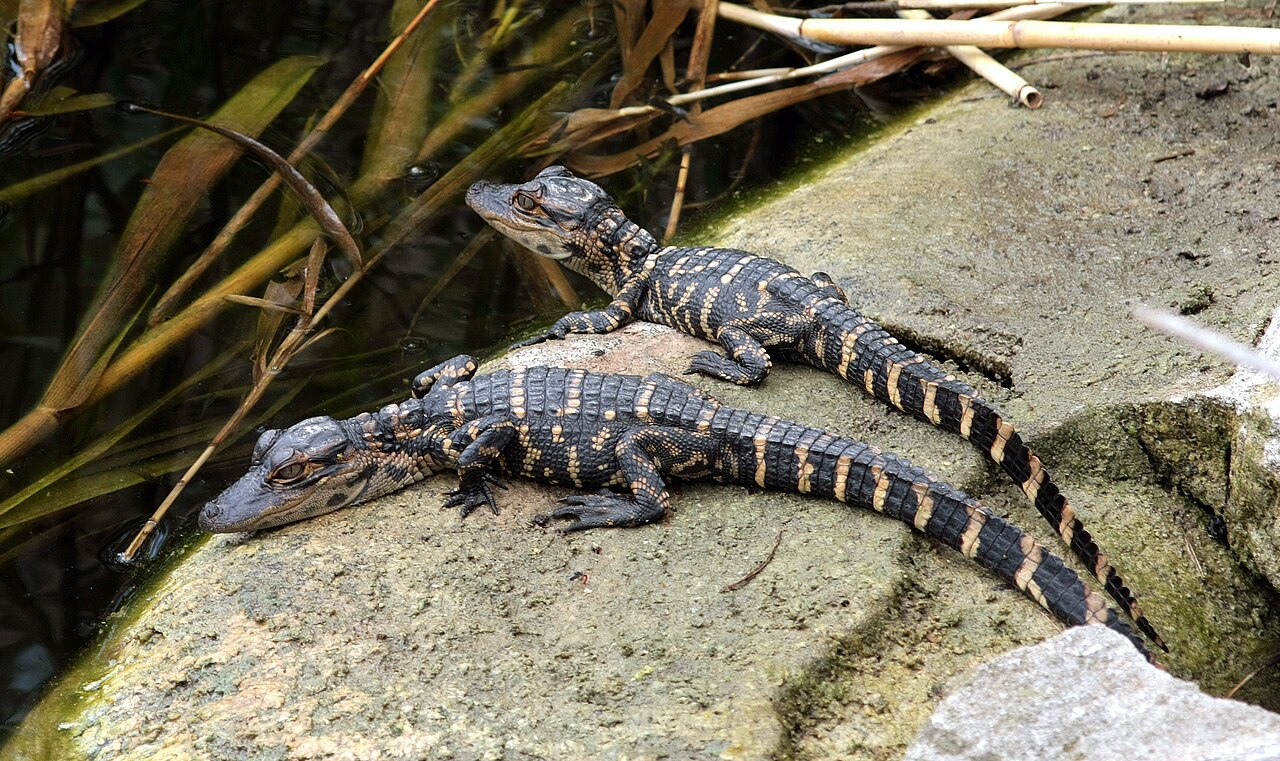
Size scales directly with the animal, and alligators in the US range from hatchlings under 10 in (25 cm) to bulls over 13 ft (4 m). A juvenile eating insects and crayfish leaves something easy to miss, while a large adult leaves a deposit the size of a dog’s but with completely different coloring.
| Feature | Alligator poop | What it tells you |
|---|---|---|
| Diameter | 1 to 3 in (2.5 to 7.5 cm) in adults, under 0.5 in (1.3 cm) in juveniles | Diameter is the best size proxy for the animal |
| Length | Up to 10 in (25 cm), often broken into segments | Long intact tubes come from large bulls |
| Shape | Thick tube or shapeless pile, no pellets | Pile form follows a fish or crustacean meal |
| Color | Whitish gray to tan fresh, near white when dry | Calcium from bone, not age or mold |
| Content | Bone chips, fish scales, turtle shell, hair, feathers, claws | Shell or hair means a vertebrate meal |
| Where you find it | Banks, slides, levee trails, boat ramps, basking spots | Always within a few yards of water |
| Smell | Strong, rotten fish, carries several feet | Sharp ammonia smell means fresh within a day |
Why alligator poop looks white and chalky
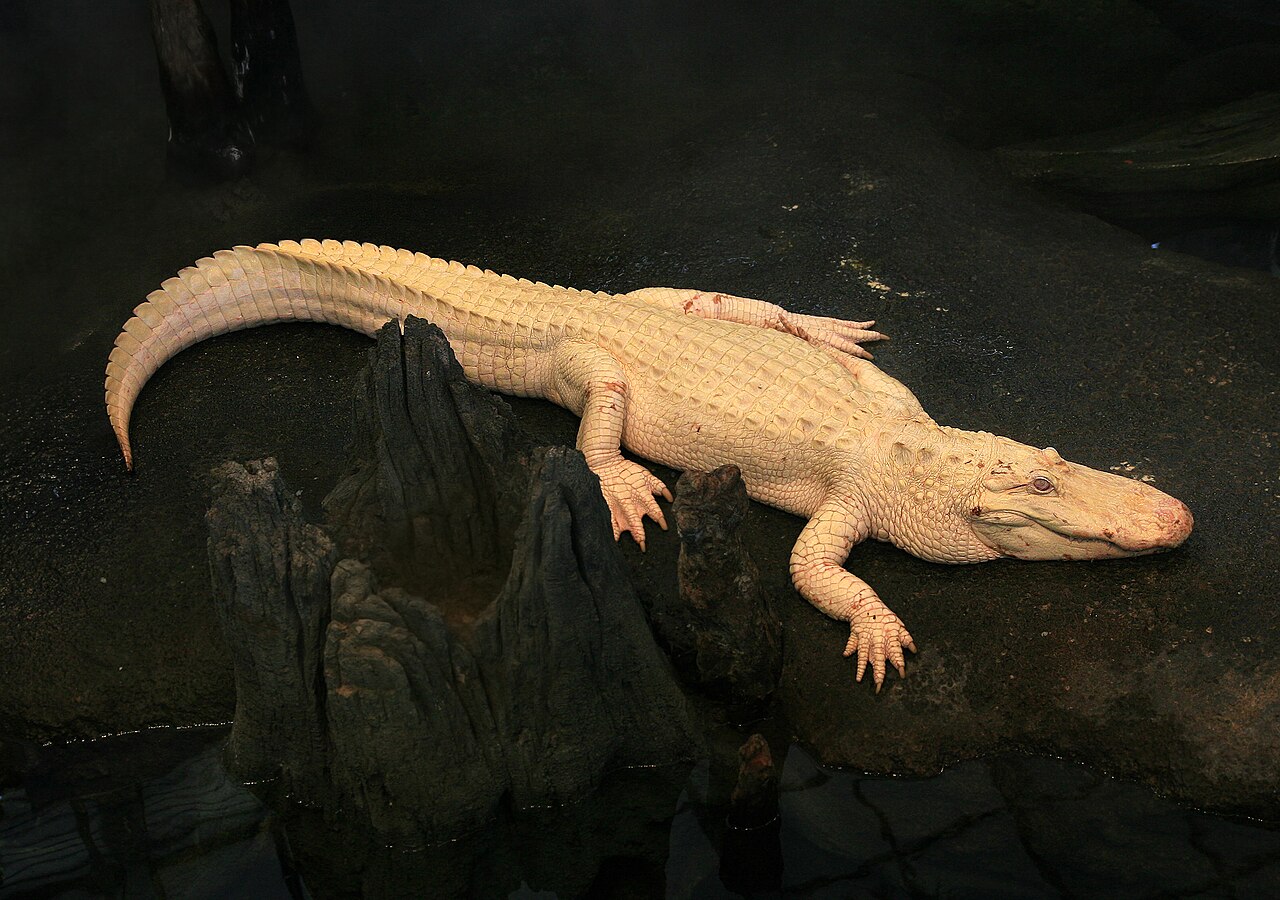
Two things make it pale. Alligator stomach acid is among the strongest of any vertebrate and dissolves most of the bone it swallows, so the calcium ends up in the waste as a fine mineral powder. That powder is what gives dried crocodilian scat its lime white finish.
The second source is urates. Like birds and other reptiles, alligators convert nitrogen waste to uric acid and pass it as a white paste rather than as liquid urine, and it leaves the body with the stool. On land the two often arrive as one deposit with a whiter smear at one end.
Pale scat alone is not diagnostic, since weathered scat from many species bleaches. Bear scat and dog waste both fade after a week of rain and sun, but they lose volume and turn fibrous, while alligator scat holds its mineral crust.
Do alligators poop on land or in the water?
Mostly in the water. Alligators spend the majority of their time submerged or floating, and defecation happens there without any particular effort to leave the water first, which is why scat is a scarce field sign for a very common animal.
Land deposits happen when a gator has been hauled out for a while, typically on a cool sunny morning while basking or overnight at a den entrance. Those are the deposits you find, and they are concentrated at the few spots where the animal rests rather than spread along the shoreline.
The practical consequence for identification is scarcity. If you walk a Florida canal for a mile and find one chalky deposit, that is a normal hit rate even in water holding several alligators. Tracks, slides and tail drags are far more common signs, and the National Park Service treats them as the standard field evidence in the Everglades.
Where to look for alligator scat
Start at the water’s edge and look for a slide: a smooth trough 1 to 3 ft (30 to 90 cm) wide pressed into mud or matted vegetation where an animal has pushed itself in and out repeatedly. Scat, when it exists, sits at the top of the slide or just beside it.
Other reliable spots are levee and dike trails in managed wetlands, the shaded mouths of bank dens, sandbars and spoil banks used for basking, and the concrete aprons of boat ramps. In each case the deposit is on open ground with a clear path to water.
Nesting mounds are worth a careful distance rather than a close look. Females build a heap of vegetation 2 to 3 ft (60 to 90 cm) high and defend it, and a mound with fresh scat nearby in June or July means an animal is present and will not move off.
How often do alligators poop?
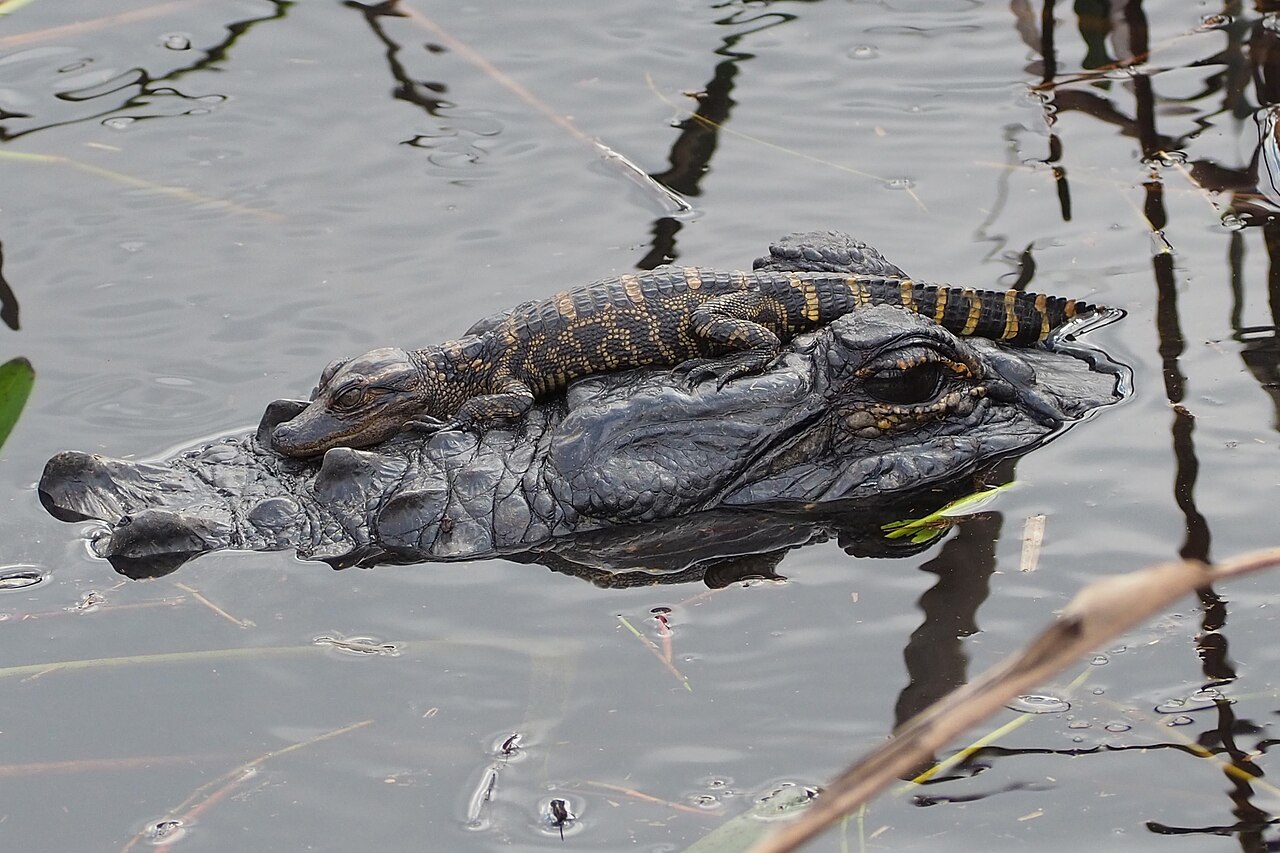
Far less often than a mammal of the same weight. Alligators are ectotherms with slow digestion and feed irregularly, sometimes going a week or more between meals in warm weather and eating almost nothing through the cool season.
In summer a feeding adult may defecate every few days. Below about 70 F (21 C) alligators largely stop eating, digestion halts, and output drops to near zero for months. A chalky deposit found in January is almost certainly old and bleached rather than fresh.
Alligator poop vs crocodile poop
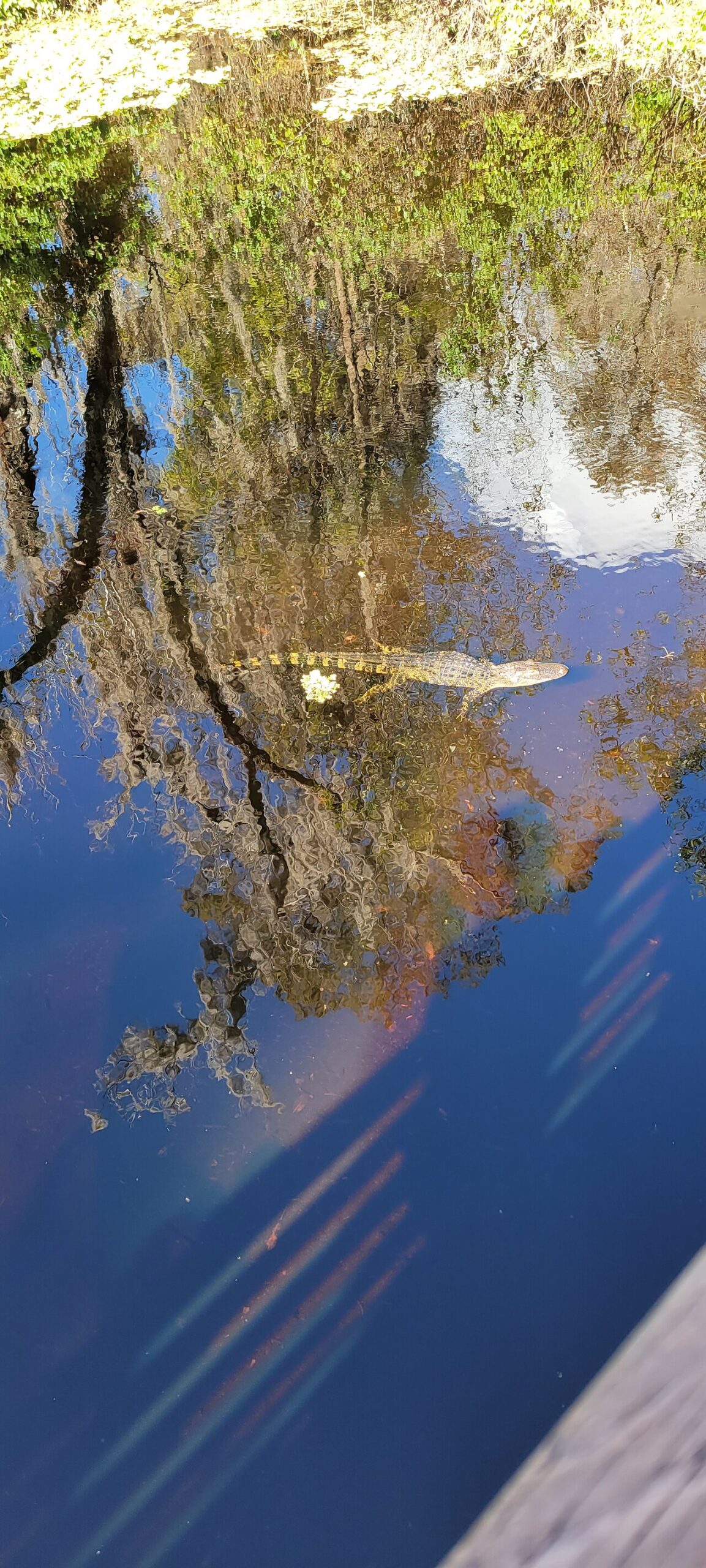
The two are nearly identical in form, color and content, because the digestion is the same. Geography does the work instead: in the United States, American crocodiles (Crocodylus acutus) occur only in extreme South Florida, coastal Miami Dade, Monroe County and the Keys, while alligators range across the whole Southeast.
Habitat refines it further. Crocodile scat is found at brackish and saltwater sites, mangrove creeks, tidal flats and canal mouths near the coast, while alligators dominate fresh water. Where the two overlap in Florida Bay, scat alone cannot separate them, and tracks, snout shape in photographs or local wildlife records have to settle it.
Alligator poop vs dog poop
This is the most common mix up on levee trails and park paths, since both end up on bare ground near water. Dog waste is medium to dark brown, uniform in texture, holds a smooth tube shape and contains no bone or shell, because kibble leaves nothing hard behind.
Alligator scat is pale, gritty and full of inclusions, and it smells of fish rather than of dog. Old dog waste does turn white, which is the usual source of confusion, but bleached dog waste becomes a dry powdery husk with no shell fragments and no mineral crust, and it is almost always on a lawn or a path rather than at the head of a slide.
Alligator poop vs otter poop
North American river otter scat, called spraint, shares the waterside location and the fish content, so it is the trickiest of the three. Spraint is a loose pile of fish scales and bone held together by mucus, dark olive to black when fresh, 1 to 2 in (2.5 to 5 cm) across, and it has a strong distinct smell.
Otters also deposit on raised features: logs, rocks, culvert headwalls and grass mounds used as latrines, often with several deposits of different ages at one spot. Alligator scat is paler, lies on flat open ground, and carries turtle shell and mammal hair that otters rarely produce. The same contrast between scale rich and hair rich waste runs through our guides to armadillo droppings and deer and rabbit pellets.
Is alligator poop dangerous to touch?
Do not handle it. Alligator waste can carry Salmonella, and the CDC names reptiles as a recognized source of human Salmonella infection; water around alligators also carries Aeromonas and Vibrio bacteria that cause wound infections.
If you need to remove a deposit from a dock or a yard, use disposable gloves and a shovel, bag it, and disinfect the surface and the tool. Keep dogs away from it, since dogs investigate scat by mouth and are the most frequent route of exposure in waterfront neighborhoods.
Aerosol risk is low. Unlike bat guano or accumulated bird droppings, alligator scat does not build up in enclosed spaces where fungal spores concentrate, so ordinary gloves and handwashing cover it. Amphibian waste such as tree frog droppings needs the same simple precautions for the same bacterial reason.
What alligator scat tells you about the water
It tells you an alligator uses that bank, and nothing about how large or how many. A single deposit means a resident animal hauls out there, which in Florida, Louisiana, Georgia, Texas and the rest of the range describes most permanent fresh water.
Treat it as a reason to adjust habits rather than as an alarm. Keep 30 ft (9 m) from the water’s edge where possible, keep dogs leashed and away from the shoreline, avoid the margins at dawn and dusk when alligators are most active, and never feed one, since fed alligators lose their avoidance of people and become the animals that get removed.
A nest mound, a hissing juvenile or an animal that approaches instead of retreating is a different matter and belongs to the state wildlife agency. Scat on a trail is routine evidence of a healthy wetland; a bold alligator is a nuisance report.
Frequently Asked Questions
What smells do alligators hate?
No smell reliably repels alligators, and ammonia, mothballs and commercial repellents have no supported field evidence. Alligators respond to food availability and disturbance, not scent deterrents. Removing fish scraps, pet food and feeding opportunities near the water works; dousing a bank in chemicals does not.
Is it safe to swim in a lake that has alligators?
Not at the margins, and not at dawn, dusk or night. Attacks are rare but concentrate in shallow edge water where an alligator can mistake movement for prey. Swim only at designated, monitored beaches, never alone, never with a dog in the water, and leave if an animal is visible.
Can a gator smell a dog?
Yes. Alligators have a well developed sense of smell and detect prey in air and water, and dogs are a recognized attractant because of their size, movement and scent at the waterline. Keep dogs leashed and at least 30 ft (9 m) back from any bank in alligator country.
How far away can an alligator sense you?
An alligator can detect a person well before the person sees it. Pressure receptors on the jaws register surface disturbance across a pond, hearing is acute, and smell carries for tens of yards downwind. Assume any alligator within sight has already registered you.
Do alligators pee?
Alligators excrete nitrogen waste mainly as uric acid in a white paste passed with the stool, in the same way birds do, rather than as a separate volume of liquid urine. Some dilute liquid is released, usually in the water, which is why land deposits look chalky.
What should you do if you find alligator scat in your yard?
Remove it with gloves and a shovel, bag it for the trash, disinfect the spot, and keep pets and children off that area until it is cleaned. Then check the yard perimeter for a slide or a gap in fencing toward water, and call the state wildlife hotline if an animal is present.