Coyote Poop: How to Identify Coyote Scat
Coyote poop, or scat, is a rope-like dropping usually two to four inches long, dark and twisted, with tapered or twisted ends and a surface full of hair, bone fragments, and sometimes seeds or berries. That hairy, tapered look is the quickest way to tell coyote scat from dog droppings, which are smoother and more uniform. Finding it in your yard means a coyote has passed through and likely marked the spot, since coyotes leave scat in obvious places to signal territory.
This guide explains what coyote poop looks like, how to tell it apart from dog and fox droppings, what the contents reveal about diet, where coyotes leave it and why, whether it is dangerous, and what to do if you find it. It also covers what its presence says about coyote activity near your home.
| Feature | Detail |
|---|---|
| Shape | Rope-like, twisted, tapered ends |
| Size | About 2 to 4 in long, up to 1 in thick |
| Color | Dark brown to black, grayer as it ages |
| Contents | Hair, bone bits, seeds, berries |
| Where | Trails, corners, elevated or obvious spots |
| Purpose | Territory marking as much as waste |
| Risk | Can carry parasites, do not handle bare-handed |
What Does Coyote Poop Look Like?
Coyote scat is typically a firm, rope-like tube two to four inches long and up to about an inch thick, often bent or twisted and ending in a tapered, sometimes hair-wrapped point. Fresh scat is dark brown to nearly black and glistens slightly, drying to a duller gray-brown over days as it weathers in the open.
The most telling feature is the texture. Because coyotes are predators, their scat is packed with the indigestible parts of prey, so it looks rough and fibrous, studded with animal hair and small fragments of bone. In late summer and fall it may instead be loose and full of seeds or berry skins when coyotes shift to eating fruit.
This mix of a twisted, tapered shape and a hair-filled, fragment-studded surface is the signature that separates coyote scat from the droppings of pet dogs. The contents change with the seasons and the local menu, but the rope-like form and the presence of fur and bone are consistent year round.
Coyote Poop vs Dog Poop
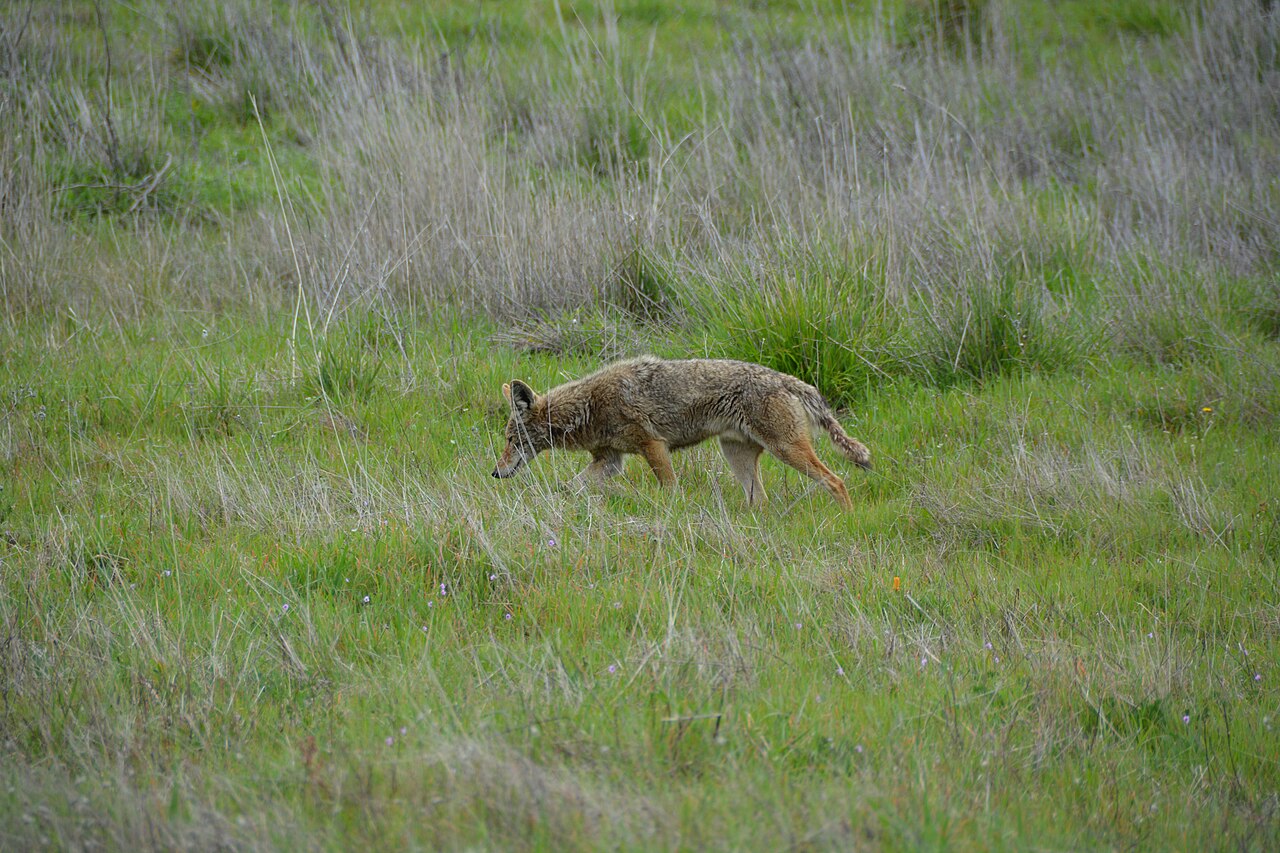
Telling coyote scat from dog droppings is the question most people actually have, and a few features settle it. Dog poop is generally smoother, more uniform, and softer looking, because dogs eat processed food with little fur or bone. Coyote scat is rougher, drier, and full of hair and bone fragments from wild prey, with the tapered, twisted ends predators produce.
Location is another strong clue. Dogs relieve themselves more or less at random wherever they happen to be, while coyotes deliberately place scat in prominent spots to mark territory, such as trail junctions, the middle of a path, the corner of a yard, or on top of a rock or log. Scat sitting pointedly in the open is more likely wild than domestic.
Content seals it. If a dropping is full of gray hair, tiny bones, or berry seeds and tapers to a twisted point, it is almost certainly coyote. If it is smooth, uniform, and free of fur, it is probably a dog. Fox scat looks similar to coyote but is smaller and thinner, so size helps separate those two.
What Is in Coyote Scat?
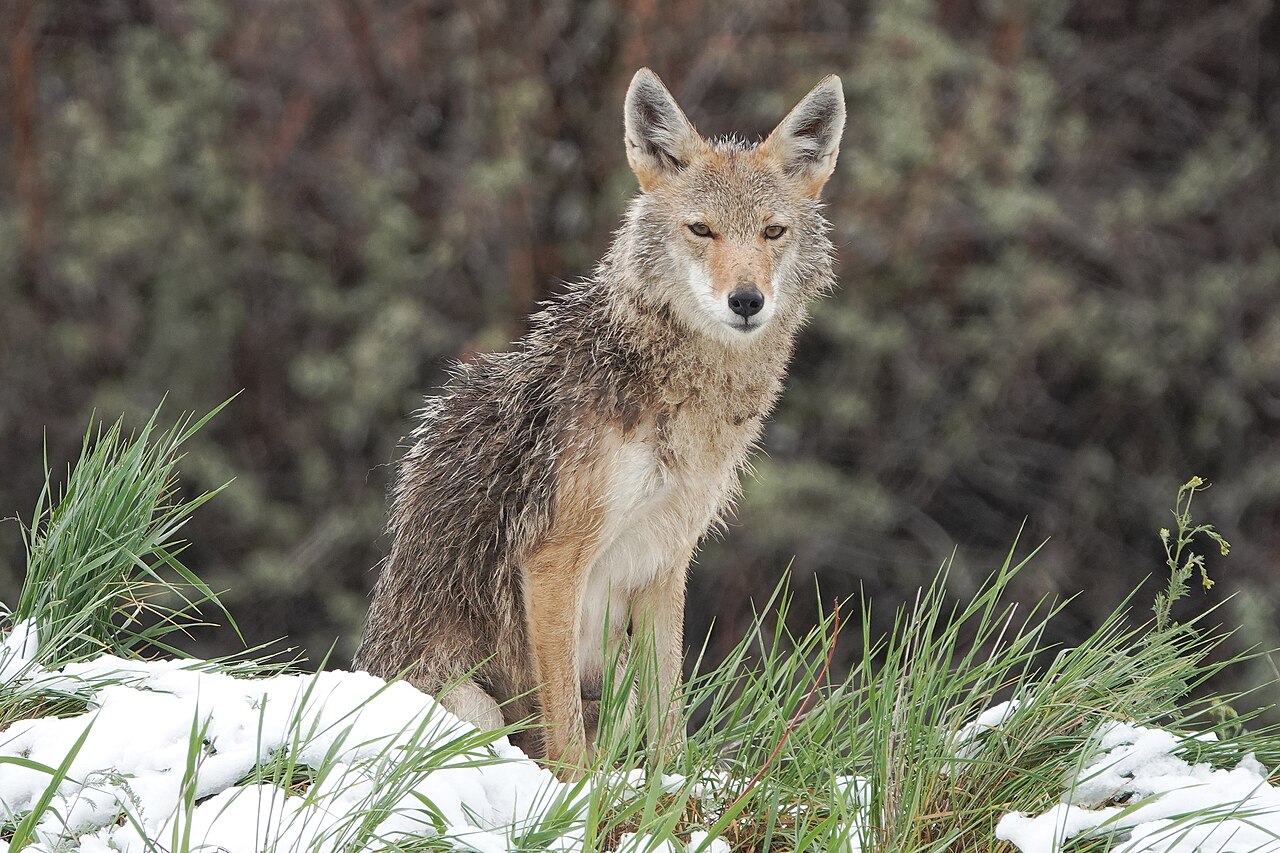
Coyote scat is essentially a record of the animal’s diet, because it is made mostly of the parts of prey that cannot be digested. The most common contents are fur and hair from small mammals like mice, voles, rabbits, and squirrels, along with fragments of their bones, teeth, and claws. This is why the scat looks so fibrous and rough.
Coyotes are opportunistic omnivores, so the contents shift with the seasons. In summer and fall, scat often fills with the seeds and skins of wild fruit such as persimmons, berries, and grapes, and it may contain the remains of insects and other invertebrates. Near towns, coyote scat can also reveal scavenged human food, pet food, and even bits of trash.
Because scat reflects what coyotes are eating locally, wildlife biologists study it to understand diet and health. For a homeowner, hair and bone in the scat is a reminder that coyotes are hunting the same rodents that plague gardens, doing quiet pest control, while heavy fruit content simply shows the seasonal shift many wild animals make.
Where and Why Coyotes Leave Scat
Coyotes do not scatter droppings randomly. They deposit scat deliberately in conspicuous, elevated, or boundary locations as a form of communication, leaving scent messages that mark territory and signal their presence to other coyotes. This is why scat so often turns up right in the middle of a trail, at an intersection, or on a raised object.
Around homes, that instinct leads coyotes to leave scat at the edges of yards, along fence lines, on driveways, and near the boundaries of what they consider their range. A pile appearing repeatedly in the same visible spot is a scent post, not an accident, and it tells other coyotes that the area is claimed.
Understanding this behavior helps you read the sign. Finding coyote scat placed prominently in your yard means a coyote is patrolling the area and treating it as part of its territory. It is a signal to remove attractants and supervise pets, rather than a reason to panic, since coyotes marking territory are simply doing what wild canines do, much like the related foxes that share the landscape.
Is Coyote Poop Dangerous?
Coyote scat can pose a real, if modest, health risk and should never be handled with bare hands. It can carry parasites and pathogens, including roundworm eggs, tapeworm, and bacteria, some of which can infect people and pets. Roundworm eggs in particular can persist in the environment and are a reason to keep children and dogs away from scat.
The safest approach is to avoid direct contact entirely. If you need to remove scat from a yard where pets or children play, wear disposable gloves, pick it up with a bag or scoop, seal it in a bag for the trash, and wash your hands thoroughly afterward. Avoid disturbing dried scat in a way that sends dust into the air.
Pets are the bigger concern, since dogs may sniff or eat scat and pick up parasites, so keeping dogs leashed in areas with coyote sign and up to date on parasite prevention matters. For people, the risk is low with sensible hygiene, but it is real enough that scat is something to remove carefully rather than ignore.
What to Do If You Find Coyote Poop in Your Yard
Finding coyote scat means a coyote is using your property, so the response is to make the yard less attractive rather than to fear the animal. Remove the scat safely with gloves and a bag, then look for what drew the coyote in the first place, since scat marks territory that offers food or shelter.
Cut the attractants. Secure trash cans, bring pet food indoors, clean up fallen fruit and birdseed spillage that draws rodents, and close off spaces under decks and sheds where coyotes might den. Coyotes follow prey, so a yard full of mice and rabbits is a yard that interests them, which ties their visits to the rabbits and rodents living there.
Discourage repeat visits with hazing, which means making the yard feel unwelcoming through motion-activated lights and sprinklers, and by acting big and loud if you see a coyote so it keeps its natural wariness of people. Supervise small pets outdoors, especially at dawn and dusk. These steps, recommended by wildlife agencies and the Humane Society, resolve most backyard coyote concerns without harm to anyone.
Coyote Scat vs Fox and Other Wildlife Scat
Coyote scat is often confused with the droppings of other wild animals, and size plus content usually tell them apart. Fox scat looks very similar, twisted and full of fur and bone, but it is noticeably smaller and thinner, roughly the diameter of a pencil, since foxes are smaller animals. Both are predator scat, so both are hairy and tapered.
Raccoon droppings are different, more like tubular segments with blunt ends, often full of seeds and berries, and typically deposited in communal latrines rather than marking spots. Bobcat scat resembles coyote scat but tends to be more segmented and is often buried, as cats cover their waste while coyotes leave theirs exposed to mark territory.
Reading these differences turns a mystery dropping into useful information about which animals share your neighborhood. Coyotes, foxes, raccoons, and bobcats all pass through suburban yards, and their scat is one of the clearest signs of that hidden traffic, alongside the other quiet evidence of the wildlife around your home that also includes the birds and small mammals coyotes hunt.
Related reading: Snake Poop.
Related reading: Skunk Poop.
Related reading: Deer Poop.
Related reading: Squirrel Poop.
Related reading: Chipmunk Poop.
Related reading: Fox Poop.
Related reading: Groundhog Poop.
Related reading: Rat Poop vs Mouse Poop.
Related reading: Mouse Poop.
Related reading: Mole Poop.
Related reading: Bear Poop.
Related reading: Frog Poop.
Related reading: Moose Poop.
Related reading: Bobcat Poop.
Related reading: Toad Poop.
Related reading: Mountain Lion Scat.
Related reading: Gecko Poop.
Related reading: Iguana Poop.
Related reading: Wolf Poop.
Frequently Asked Questions
What does coyote poop look like?
Coyote poop is rope-like and twisted, about two to four inches long, dark brown to black, with tapered ends and a rough surface full of hair, bone fragments, and sometimes seeds or berries. That hairy, tapered look is its signature.
How can I tell coyote poop from dog poop?
Coyote scat is rougher and drier, packed with fur and bone, and tapers to a twisted point, and it is often placed prominently to mark territory. Dog poop is smoother, more uniform, free of fur, and left more randomly wherever the dog happens to be.
Is coyote poop dangerous?
It can be. Coyote scat may carry parasites such as roundworm and tapeworm and various bacteria that can infect people and pets. Never handle it bare-handed. Remove it with gloves and a bag, keep pets and children away, and wash your hands afterward.
What does it mean if I find coyote poop in my yard?
It means a coyote is patrolling your property and has marked it as territory. It is a cue to remove attractants like trash, pet food, and fallen fruit, secure spaces under decks, and supervise small pets, rather than a reason to panic.
How big is coyote scat?
Coyote scat is usually two to four inches long and up to about an inch thick, larger and thicker than fox scat, which is roughly pencil-width. Size is one of the main ways to tell coyote droppings from those of smaller predators.
What is in coyote poop?
Mostly the indigestible parts of prey, especially hair and bone fragments from small mammals like mice, voles, and rabbits, plus seeds and berry skins when coyotes eat fruit in summer and fall. Near towns it can also contain scavenged food.
How do I keep coyotes out of my yard?
Remove attractants by securing trash, bringing in pet food, and cleaning up fallen fruit and birdseed that draw rodents, then close off den spaces under decks. Add motion lights or sprinklers and haze any coyote you see by acting big and loud.