Toad Poop: Identification and the Real Risk to Dogs
Toad poop is a dark brown to black sausage-shaped dropping, typically half an inch to over an inch long depending on the species, with blunt ends and a firm texture that holds its shape well. It is large relative to the animal, often a quarter to a third of the toad’s body length, and when it dries and breaks apart it reveals a glitter of undigested insect parts: ant heads, beetle wing cases, and the shells of the slugs and grubs that make up most of a toad’s diet.
Most people find toad droppings on a patio, in a garden bed, under a porch step, or in a window well, and the usual first assumption is rat. The far more urgent question, and the one that dominates searches on this topic, is whether toad droppings are toxic to dogs. The short answer is that the droppings themselves are not the main hazard; the toad is. This guide covers identification, the real dog risk and what it actually comes from, cleanup, and what a toad in the yard means for a garden.
Toad poop is a firm, dark, sausage-shaped dropping with blunt ends, from half an inch to over an inch long, packed with visible insect parts. It is drier and holds its shape better than frog droppings because toads live on land. The droppings themselves are not significantly toxic to dogs; the danger comes from a dog mouthing the live toad and contacting its parotoid gland secretions.
| Feature | Toad Poop |
|---|---|
| Shape | Sausage-shaped, blunt ends, holds form |
| Size | 0.5 to 1.5 in, larger in cane toads |
| Color | Dark brown to black |
| Contents | Ant, beetle, and slug remains |
| Where found | Garden beds, patios, window wells, under steps |
| Vs frog poop | Drier, firmer, found on the ground not on perches |
| Dog risk | Low from droppings; high from mouthing a live toad |
What Does Toad Poop Look Like?
Toad poop is a compact, cylindrical dropping with rounded ends that keeps its shape after landing, unlike the wetter, more mucus-coated droppings of tree frogs. An American toad produces droppings roughly half an inch to an inch long and a quarter inch thick, while a large cane toad can leave something two inches long and as thick as a thumb. Fresh droppings are dark and slightly moist; dried ones turn dull black or gray-brown and become brittle.
The size relative to the animal is what surprises people. A toad the size of a golf ball can produce a dropping that looks like it came from a rat, and this proportion is normal for amphibians. Toads swallow prey whole and cannot chew, and their digestive system processes large meals infrequently, so output arrives in substantial single deposits rather than a steady trickle.
The definitive check is content. Break a dried dropping apart with a stick and look for iridescent fragments: beetle elytra, ant heads and thoraxes, the hard mouthparts of grubs, and occasionally the gritty remains of slugs and snails. A toad may eat several thousand insects across a summer, and the record of that is right there in the droppings. No mammal in a garden leaves droppings packed with whole insect parts at that size.
Toad Poop vs Frog Poop
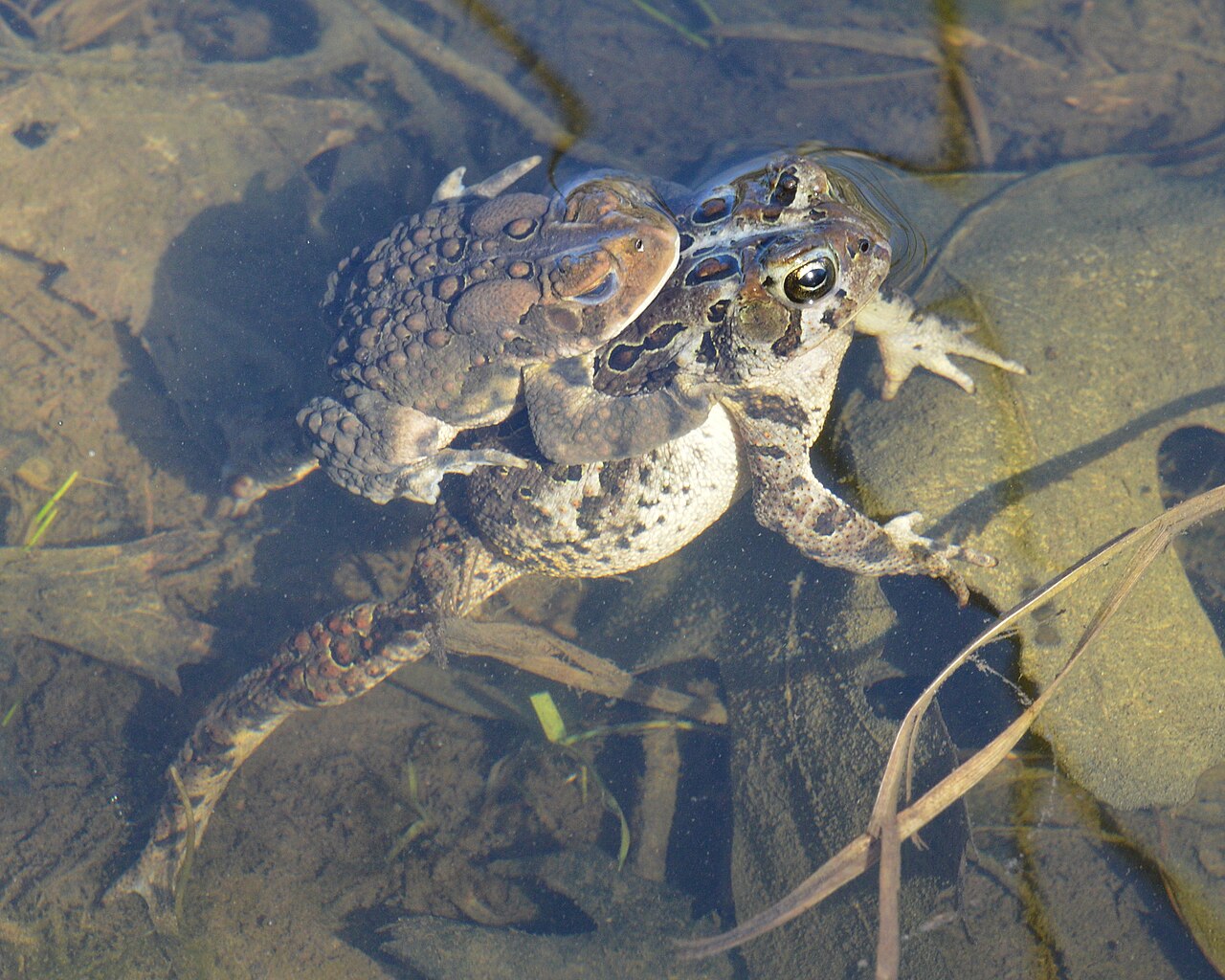
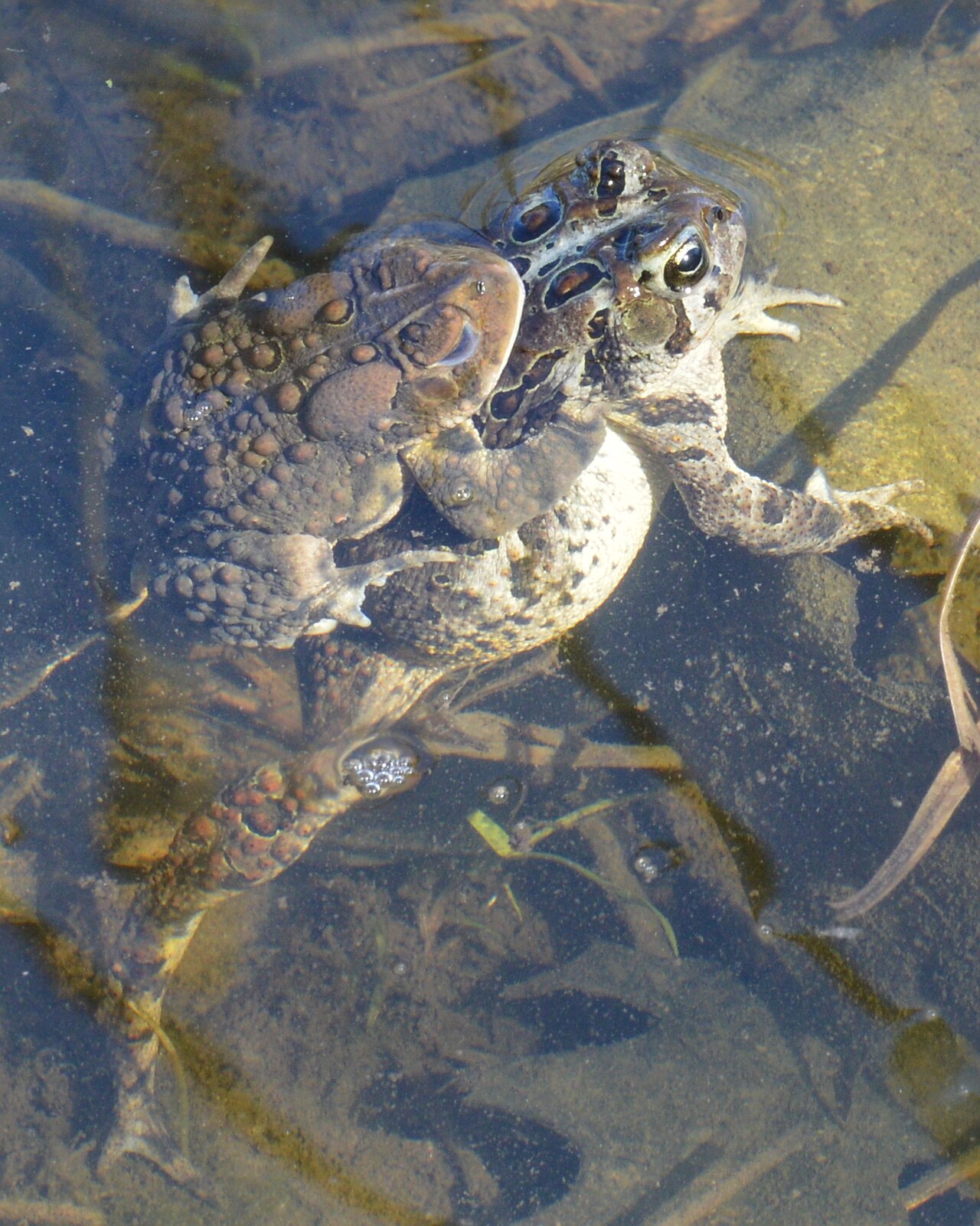
Toad and frog droppings come from closely related animals and look similar, but the differences track their lifestyles. Toads live on land, so their droppings are drier, firmer, and hold a distinct sausage shape. Frogs, especially tree frogs, are moister animals and their droppings often arrive with a clear mucus coating and a wetter, glossier appearance that flattens more on impact.
Location is the faster test. Tree frogs perch on vertical surfaces at night hunting insects drawn to lights, so their droppings appear on elevated horizontal surfaces directly below: windowsills, porch railings, patio furniture, car hoods, pool covers. Toads are ground dwellers that hop through garden beds, lawns, and mulch, so their droppings appear on soil, under steps, in window wells, and on patio slabs at ground level with nothing overhead.
Size overlaps but skews larger for toads in most yards, simply because a common toad outweighs a tree frog several times over. If you find a substantial dark dropping in a flowerbed with no perch above it, a toad is the likely source; if you find smaller marks on a windowsill under a light, that is a tree frog. The frog poop guide covers the frog side in detail, including how to distinguish both from rat droppings.
Is Toad Poop Toxic to Dogs?
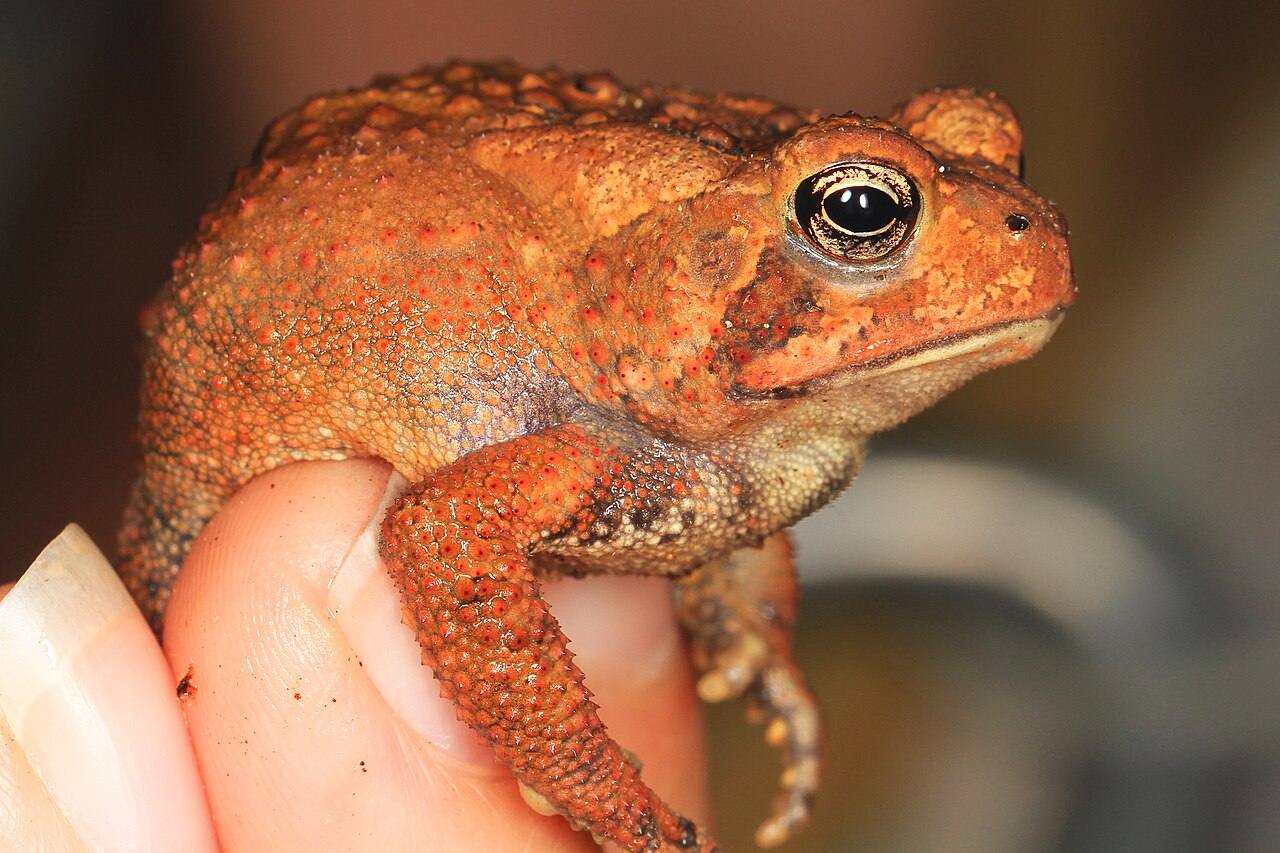
Toad droppings themselves are not significantly toxic to dogs. The serious danger comes from the live toad, not its waste. Toads produce defensive toxins in the parotoid glands, the raised bumps behind the eyes, and a dog that licks, mouths, or bites a toad receives a direct dose of that secretion onto its gums and tongue, where it absorbs rapidly. That is the scenario behind virtually every case of toad poisoning in dogs.
Severity depends heavily on the species. Common backyard toads across most of the United States, including the American toad and Fowler’s toad, produce a secretion that causes drooling, foaming, pawing at the mouth, and mild distress, and most dogs recover with rinsing and observation. Cane toads in Florida, Hawaii, and southern Texas, and Colorado River toads in Arizona and the Southwest, are a different matter entirely: their toxin can cause seizures, cardiac arrhythmia, and death within 30 minutes to an hour, and these encounters are veterinary emergencies.
If a dog mouths a toad, the immediate response is to rinse the mouth thoroughly with running water for five to ten minutes, directing the water sideways out of the mouth rather than back toward the throat so the dog does not swallow it, wipe the gums with a cloth, and call a veterinarian. In cane toad and Colorado River toad range, go to a vet immediately regardless of how the dog seems. The ASPCA Animal Poison Control Center (aspca.org) operates a 24-hour hotline for exactly these situations.
Are Backyard Toads Poisonous?
Backyard toads are poisonous but not venomous, meaning they produce a toxin that is harmful if ingested or absorbed through mucous membranes rather than injected through a bite or sting. Every true toad has parotoid glands, and the secretion contains bufotoxins, a family of steroidal compounds that affect the heart. The glands release the secretion when the toad is squeezed, bitten, or seriously alarmed.
For humans the risk is minimal. Handling a common toad is safe as long as you wash your hands afterward and do not touch your eyes or mouth in between, and the persistent belief that handling toads causes warts is false; warts are caused by human papillomavirus and have nothing to do with amphibians. Some people experience mild skin irritation from the secretion, and children should be supervised and made to wash up afterward.
Cats are affected less often than dogs, largely because cats are more careful about what they put in their mouths. Livestock and wildlife occasionally die from cane toads in invaded regions, and in Australia the arrival of cane toads caused population crashes in native predators such as quolls and goannas that had no evolved defense. Native North American predators including hognose snakes and raccoons have workarounds, with raccoons flipping toads and eating them from the belly to avoid the glands.
How to Clean Up Toad Poop
To clean toad droppings from a hard surface, put on disposable gloves, spray the dropping with water or a household cleaner to soften it, and lift it with paper towels or a plastic scraper. Dried toad droppings bond firmly to concrete, painted wood, and outdoor furniture, and letting the spray sit for a minute saves considerable scrubbing. Bag the waste, put it in the trash, disinfect the surface, and wash your hands with soap for at least 20 seconds.
The health precautions are the same as for any amphibian waste. Toads, like frogs and reptiles, commonly carry Salmonella in the digestive tract without appearing ill, and the bacteria are shed in droppings. The Centers for Disease Control and Prevention (cdc.gov) advises washing hands thoroughly after any contact with amphibians, their habitats, or anything they have contaminated, and keeping them away from food preparation areas. Children under five and immunocompromised people should not handle amphibians at all.
Unlike rodent and bat droppings, toad waste carries no airborne disease risk, so there is no need for the wet-only cleanup protocol those require. In garden beds and lawns, toad droppings can simply be left; they break down quickly and return nutrients to the soil. Only remove them from patios, decks, furniture, and anywhere children play.
What Does a Toad in Your Yard Mean?
A toad in your yard means you have a functioning garden ecosystem with enough insects, moisture, and shelter to support an amphibian, and it is worth encouraging. A single American toad can eat thousands of insects, slugs, snails, cutworms, and grubs over a season, targeting exactly the pests that damage vegetables and ornamentals. Gardeners in many regions actively work to attract toads for this reason.
Toads also indicate that your yard is not heavily contaminated. Amphibians absorb water and gases directly through permeable skin and are highly sensitive to pesticides, herbicides, fertilizer runoff, and pollutants, which is why they serve as environmental indicator species. A yard that hosts resident toads is one where the soil and water chemistry are tolerable, and applying broad-spectrum insecticides will remove both the toad’s food and, often, the toad.
To encourage them, provide shade and moisture: a shallow dish of dechlorinated water sunk to ground level, a toad house made from an overturned broken clay pot, dense low plantings, and a mulched bed that stays damp. Leave leaf litter in a corner for overwintering. Avoid pesticides, and keep outdoor lights on a yellow bulb near a garden bed to concentrate insects where the toad can find them without drawing every moth in the neighborhood to the house.
How Fresh Is the Toad Poop You Found?
Fresh toad droppings are dark, moist, and slightly glossy, and in warm weather flies arrive within minutes, so a dropping with no insect activity in summer is very recent. Within about a day the surface develops a dull, dried crust while the interior stays soft. After several dry days the whole dropping is hard, gray-black, and brittle, crumbling under light pressure to expose the insect fragments inside.
Rain accelerates the process dramatically, breaking down a dropping within hours on soil and washing it into the substrate. This means summer sign in a rainy climate gives a short window of information, while droppings on a covered porch or in a dry window well can persist recognizably for weeks. A window well accumulating droppings over time usually means a toad has fallen in and cannot get out, which is worth checking.
Toads are largely nocturnal and crepuscular, so droppings almost always appear overnight, the same pattern seen with the frogs that share their habitat. A dropping present at dawn that was not there at dusk indicates the toad was active in that spot during the night, which is useful if you are trying to work out where it shelters during the day. Check within a few feet: toads rarely travel far from their retreat during a night’s hunting.
What Toad Droppings Reveal About Their Diet
Toad droppings are a precise record of diet because toads swallow prey whole and lack any means of grinding it. Analysis of toad scat consistently shows ants as the single most numerous prey item in most North American species, often making up a large majority of items eaten, followed by beetles, spiders, earthworms, slugs, snails, caterpillars, and sowbugs. Larger toads take larger prey, including small snakes and occasionally other amphibians.
Toads hunt by ambush, sitting still and striking with a sticky tongue at anything moving of the right size, and they are essentially indiscriminate within that size range. This is why they are such effective garden pest controllers and also why they occasionally eat beneficial insects. Feeding is heaviest on warm humid nights when slugs and beetles are active, and toads may not feed at all during dry spells when they burrow down to conserve moisture.
Cane toads illustrate what happens when this indiscriminate appetite arrives somewhere it does not belong. Introduced to Australia in 1935 to control cane beetles, which they largely failed to eat, they now number in the hundreds of millions, consume vast quantities of native invertebrates, and poison the predators that try to eat them. Their droppings in invaded areas are correspondingly large and abundant, and they are an instructive lesson in the difference between a native toad in a garden and a toad in the wrong hemisphere.
Toad Poop vs Rat and Lizard Droppings
Toad droppings are most often mistaken for rat droppings, and the distinguishing features are ends, count, and content. Rat droppings taper at one or both ends, are smooth and uniform inside because commercial and agricultural food is fully processed, and appear in trails of dozens along walls and near food. Toad droppings have blunt ends, are packed with visible insect parts, and appear singly or in small numbers on open ground.
Lizard droppings are the other common confusion in warmer states, and they have one distinctive feature: a white or cream cap of urate at one end, the semi-solid nitrogen waste that reptiles excrete. Amphibian droppings sometimes show this too but less consistently, and lizard droppings are usually smaller and thinner than a toad’s. Location helps, since lizards leave droppings on walls, fences, and window ledges rather than in garden beds.
Getting the identification right matters mainly for peace of mind, since a rat problem requires action while a toad requires nothing at all. The lizard poop guide covers reptile droppings, the mouse poop guide covers the rodent side and the hantavirus precautions that come with it, and the squirrel poop vs rat poop comparison handles another frequently confused pair.
Frequently Asked Questions
What does toad poop look like?
Toad poop is a firm, dark brown to black sausage-shaped dropping with blunt ends, typically half an inch to an inch and a half long. It holds its shape well and contains visible insect parts such as ant heads and beetle wing cases.
Is toad poop toxic to dogs?
The droppings themselves are not significantly toxic. The danger is the live toad: a dog that licks or mouths one contacts the parotoid gland secretions directly. Common toads cause drooling and distress, while cane toads and Colorado River toads can be fatal.
What do I do if my dog licks a toad?
Rinse the mouth with running water for five to ten minutes, aiming sideways out of the mouth so the dog does not swallow, wipe the gums with a cloth, and call a veterinarian. In cane toad or Colorado River toad range, go to a vet immediately.
Are backyard toads poisonous?
Yes, but not venomous. Toads secrete bufotoxins from the parotoid glands behind the eyes when threatened. Handling a common toad is safe for people if you wash your hands afterward. Toads do not cause warts, which come from a human virus.
How is toad poop different from frog poop?
Toad droppings are drier and firmer and hold a distinct sausage shape, and they are found on the ground in garden beds and under steps. Frog droppings are moister, often mucus-coated, and appear on elevated surfaces below a perch.
Do I need to clean up toad poop?
On patios, decks, furniture, and play areas, yes, because of the Salmonella risk amphibians carry. Wear gloves and wash your hands afterward. In garden beds and lawns it can be left to break down naturally.
What does a toad in my yard mean?
It means you have enough insects, moisture, and shelter to support an amphibian, and that your yard is not heavily contaminated with pesticides. A single toad eats thousands of slugs, grubs, and insect pests over a season.