Pacman Frog Care: The 4 Numbers That Keep One Alive
Pacman frog care comes down to four numbers: substrate deep enough to bury in, 78 to 82 F (25 to 28 C), 60 to 80 percent humidity, and food every two to three days for adults. Get those right and the ornate horned frog (Ceratophrys ornata) is one of the least demanding amphibians in the hobby.
The failures are just as predictable. Nearly every sick Pacman frog in a home collection got there through dry substrate, an unregulated heat mat or too much food, and all three are cheap to prevent.
Keep a single Pacman frog in a 10 to 20 gallon tank with 4 inches of coconut fibre or sphagnum moss, a thermostat controlled heat mat holding 78 to 82 F, humidity at 60 to 80 percent, and a shallow dish of dechlorinated water. Feed adults every 2 to 3 days, juveniles daily, and never house two together.
| Parameter | Target | Notes |
|---|---|---|
| Enclosure | 10 gal minimum, 20 gal long better | Floor space, not height |
| Substrate depth | 3 to 5 in (7.5 to 13 cm) | Must allow full burial |
| Temperature | 78 to 82 F (25 to 28 C) day | Night down to 72 F is fine |
| Humidity | 60 to 80 percent | Mist daily, never soaking |
| Feeding, adult | Every 2 to 3 days | Prey no wider than the head |
| Feeding, juvenile | Daily or every other day | Dust with calcium and D3 |
| Lifespan | 6 to 10 years | Up to 15 in well kept females |
Are Pacman Frogs Easy to Take Care Of?
Yes, by amphibian standards. They need no UVB in most setups, no climbing furniture and no complex diet. A correctly built enclosure runs on a thermostat and a spray bottle, and the frog spends most of its life sitting in one place.
The catch is that they hide their problems. A buried frog that has not eaten for a week looks the same as a healthy one, so the keeper has to check weight and skin deliberately. Compare that with an active arboreal species like White’s tree frog, where a sick animal is obvious within a day. They are also not handling pets: adults bite hard, and the odontoid projections on the lower jaw break skin.
Tank Setup: Substrate, Heat and Humidity

Use coconut fibre, sphagnum moss or a soil and moss mix at least 3 inches deep, damp enough to clump in the hand but not to drip when squeezed. Avoid gravel, sand and bark chips, since impaction from swallowed substrate is a leading cause of death in this species.
Heat comes from a mat on the side of the tank, never underneath, and it must run through a thermostat; an unregulated mat under a buried frog will cook it. A shallow dish of dechlorinated water wide enough to sit in provides most of the hydration, because horned frogs drink through a patch of skin on the belly. Mist daily, check humidity with a digital hygrometer, and change the substrate every 3 to 4 weeks. For how other groups differ, see our guide to the main types of frogs.
What Is a Pacman Frog’s Favorite Food?
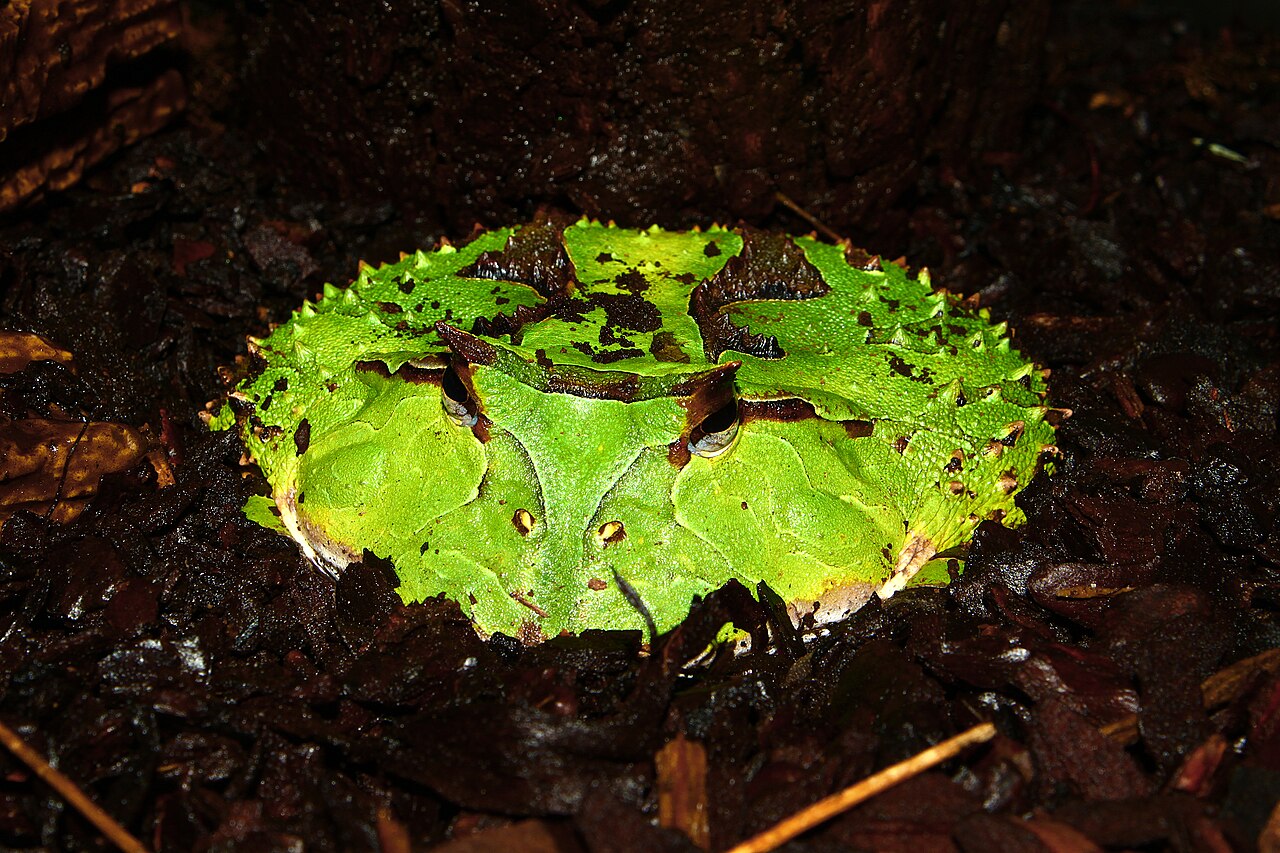
Gut loaded crickets and dubia roaches are the staple and the item most frogs take most eagerly. Nightcrawlers are the best single nutritional choice and should make up a good share of the diet. Hornworms and silkworms add variety, and a pinky mouse is a once monthly option at most. Feeder fish and wild caught insects are both bad ideas.
Prey width should not exceed the width of the frog’s head. Dust with calcium plus D3 at every feeding for juveniles and twice a week for adults. Adults eat every 2 to 3 days, juveniles under 3 inches daily or every other day. Overfeeding is the more common error and shows as fat pads behind the eyes and a frog that no longer fully buries; expected sizes are in our breakdown of Pacman frog size.
What Are the Signs That a Pacman Frog Is Happy?

A healthy horned frog sits buried with eyes level to the substrate, has taut colourful skin, strikes food within seconds, and passes firm dark waste every few days. Steady or slowly rising weight on a gram scale is the most reliable indicator of all, because it is the one thing the frog cannot hide.
The warning signs are the reverse: two refused feeds in a row, sitting in the water dish for days, cloudy skin that will not shed cleanly, and thin limbs with a rounded belly. A frog that seals itself in a dry cocoon is not sick but is telling you the substrate dried out, and it should be rehydrated gradually rather than soaked.
Common Health Problems and How to Avoid Them
Metabolic bone disease from missed calcium is the most preventable illness, showing as a soft jaw or trembling limbs. Red patches on the belly and thighs mean bacterial skin infection and almost always trace back to dirty substrate. Impaction causes bloating and refusal to feed and usually needs a vet, so find an exotics vet before you need one.
Quarantine new arrivals for 30 days, and never release a captive frog or its water outdoors. Handle only with clean wet hands or damp gloves and wash afterwards: amphibians commonly carry Salmonella, and the Centers for Disease Control and Prevention documents regular household outbreaks traced to pet frogs.
Care is identical across colour morphs. A strawberry Pacman frog and a standard Pacman frog need the same temperature, humidity and diet; the price difference buys pigment and nothing else.
Frequently Asked Questions
Is a 5 gallon tank big enough for a Pacman frog?
Not for an adult. A 5 gallon tank works for a juvenile under about 2.5 inches, but a full grown female needs at least a 12 by 12 inch footprint and 3 inches of substrate, which a 5 gallon cannot give while holding a stable temperature gradient. Upgrade to 10 gallons minimum.
Do Pacman frogs need to eat every day?
Only while young. Froglets and juveniles under 3 inches eat daily or every other day because they grow fast. Adults do best on a meal every 2 to 3 days, and a large well fed female can skip a week without harm. Daily feeding of an adult causes obesity within months.
What plants can I put in with my Pacman frog?
Live pothos, bromeliads and sturdy ferns tolerate the humidity and do no harm, but a heavy adult crushes most planting within weeks. Potted plants sunk into the substrate survive better than planted ones. Avoid anything with sharp edges or treated soil, and skip rigid plastic plants.
Can Pacman frogs have fruit?
No. Pacman frogs are strict carnivores and cannot digest plant matter. They will not recognise fruit as food, and offering it risks mould in the enclosure. The diet is insects, worms and the occasional whole prey item, with calcium and D3 to cover what captive feeders lack.