White’s Tree Frog Care: Tank Size, Temperature, and Feeding
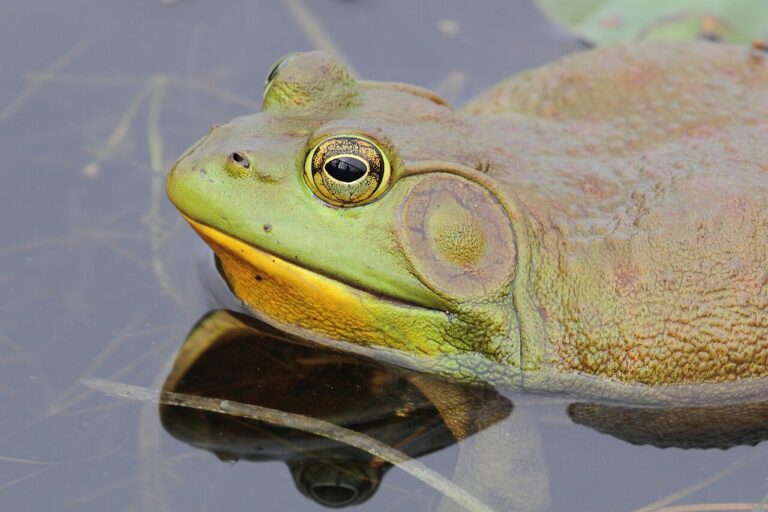
White’s tree frog care comes down to four things done consistently: a tall enclosure, temperatures in the 75 to 85 F range, humidity around 50 to 70 percent, and a feeding schedule that keeps the frog lean. Get those right and this is one of the longest-lived, most forgiving amphibians in the hobby, routinely passing 16 years in captivity.
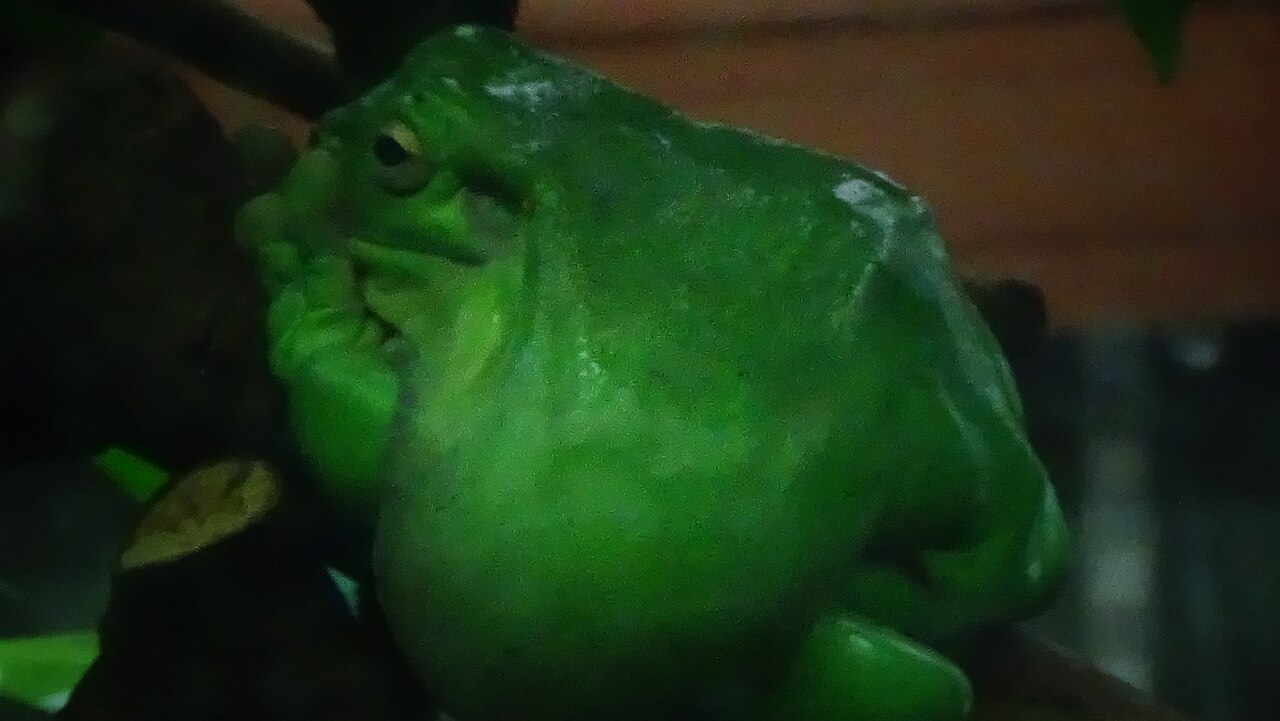
The species is also the most commonly overfed frog in the pet trade. The nickname “dumpy tree frog” describes a body condition keepers cause, not a natural shape, and almost every long-term health problem here traces back to diet or enclosure.
White’s tree frog (Ranoidea caerulea) needs a tall 18 by 18 by 24 in enclosure for one or two adults, daytime temperatures of 75 to 85 F with a night drop, humidity of 50 to 70 percent, and dechlorinated water changed daily. Feed adults two to three appropriately sized insects twice a week. Handle rarely, with clean wet hands.
| Care Parameter | Target |
|---|---|
| Minimum enclosure (1 to 2 adults) | 18 by 18 by 24 in (45 by 45 by 60 cm) |
| Daytime temperature | 75 to 85 F (24 to 29 C) |
| Night temperature | 65 to 75 F (18 to 24 C) |
| Humidity | 50 to 70 percent |
| Adult feeding | 2 to 3 insects, twice weekly, dusted |
| Adult size | 3 to 4.5 in (7.5 to 11 cm) |
| Lifespan | 16 years typical, over 20 recorded |
Are White Tree Frogs Hard to Care For?
No. White tree frogs are not hard to care for and they are the standard recommendation for a first amphibian, because they tolerate a wide range of temperature and humidity instead of demanding a narrow window. A keeper who misses a misting or lets the room drift a few degrees will not lose the frog, which is not true of most arboreal species.
The limits are worth naming. Chronic dry air causes shedding problems and a permanently soaked substrate invites skin infection, both solved once with a screen top, a ventilated front, and a substrate that drains. For contrast, the waxy monkey tree frog needs high heat with low humidity plus UVB and still defeats experienced keepers.
Enclosure, Tank Size, and How Many Frogs
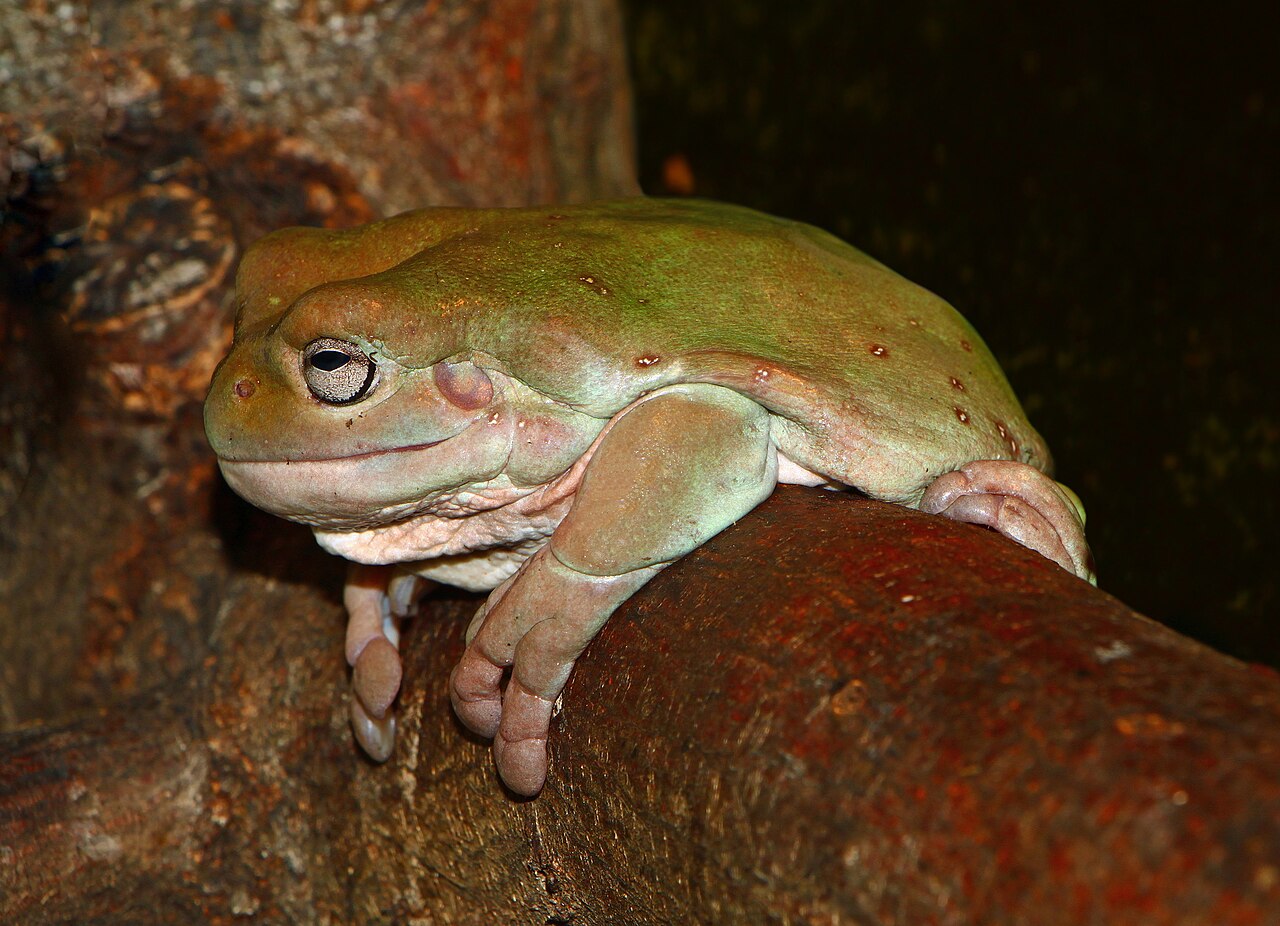
Height matters more than floor space. One or two adults need at least 18 by 18 by 24 in (45 by 45 by 60 cm), and for three white tree frogs step up to 18 by 18 by 36 in, adding roughly 10 gallons of volume per extra frog. Furnish it with thick horizontal branches, cork bark, sturdy plants, and a shallow water dish a frog can sit in.
Whether to get 1 or 2 white tree frogs is a keeper question, not a welfare question. These frogs are not social and a single animal does fine alone. Groups work, provided every frog is close to the same size, because a White’s tree frog will swallow anything that fits in its mouth, including a smaller housemate.
Use coconut fiber, cypress mulch, or a bioactive soil mix. Avoid gravel, sand, and small bark chips, which get swallowed during feeding strikes and cause fatal impaction. Water must be dechlorinated and changed daily.
Heat, Humidity, and Lighting
Aim for 75 to 85 F (24 to 29 C) by day with the warm end near the top of the enclosure, falling to 65 to 75 F (18 to 24 C) at night. A low-wattage overhead heat source on a thermostat beats an under-tank mat, because the frog lives above the substrate rather than on it.
Hold humidity at 50 to 70 percent by misting once in the evening and relying on the water dish between times. Constant fogging is a mistake; this species comes from seasonally dry Australian habitats and needs air movement. Measure with a digital hygrometer, not a dial gauge.
A low-output UVB bulb on a 12 hour cycle is optional but supports calcium metabolism and a day-night rhythm. Quarantine every new arrival: chytrid fungus and ranavirus spread through shared water and equipment, and both are tracked by the U.S. Geological Survey wildlife health program.
Feeding Without Making a Dumpy Frog
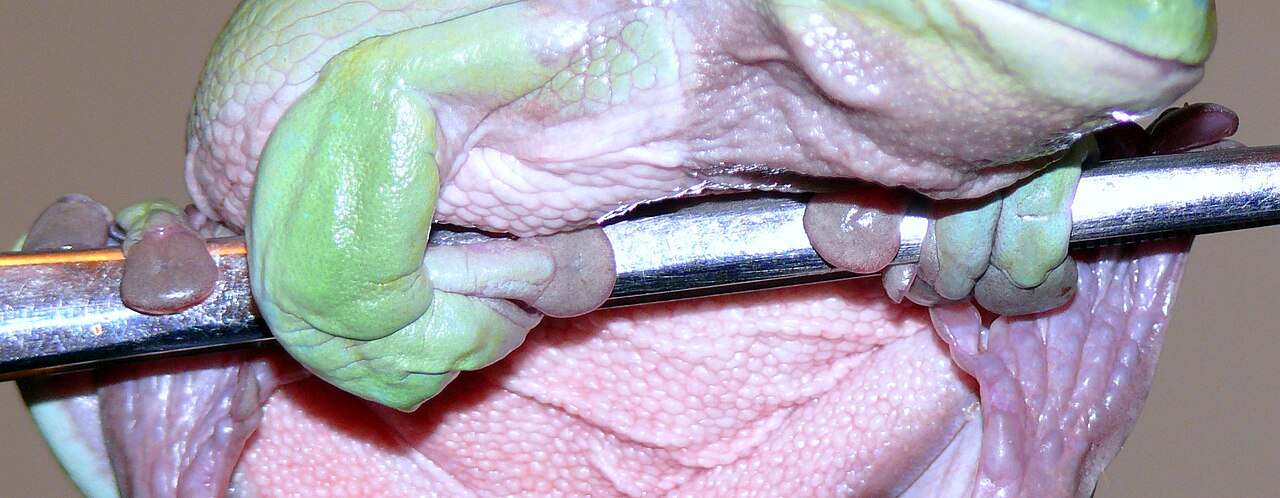
Feed adults two to three insects no wider than the space between their eyes, twice a week. Juveniles eat daily. Crickets and dubia roaches form the base, with hornworms for variety and waxworms strictly as a treat. Dust with calcium plus D3 at most feedings and a multivitamin weekly.
The visible sign of overfeeding is fat deposits above the eyes, pushing forward into a ridge that can obstruct vision. That ridge is not a mature adult look, it is obesity, and it brings fatty liver disease and a shortened life. A healthy adult tapers visibly toward the hips.
How Do I Tell if My White Tree Frog Is Happy?
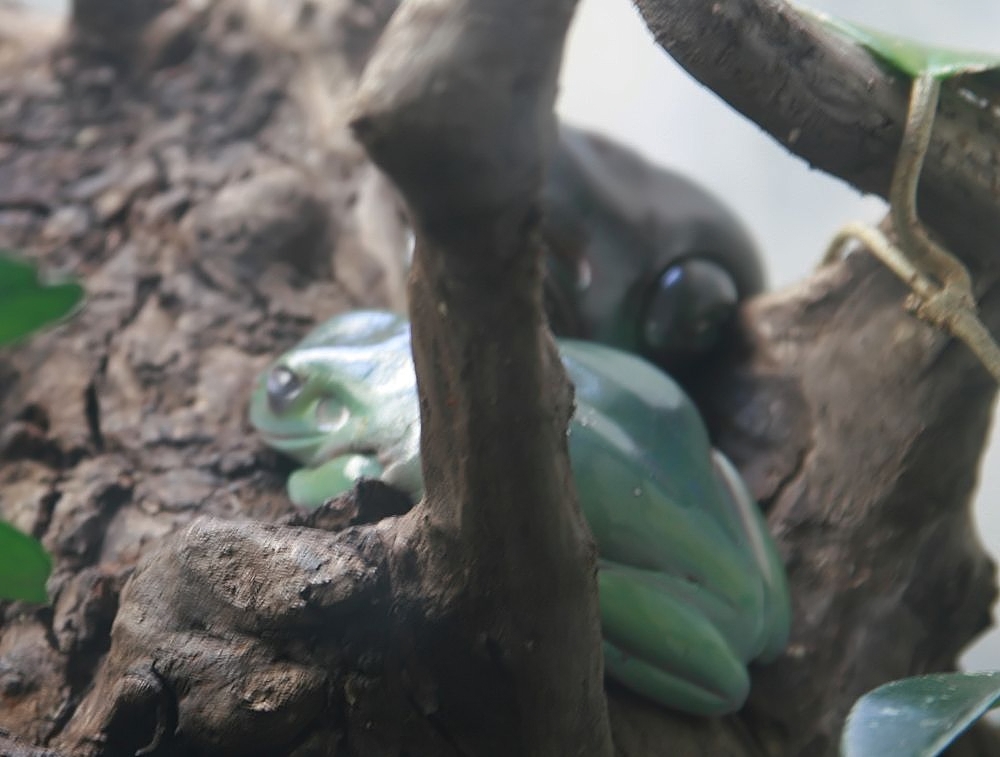
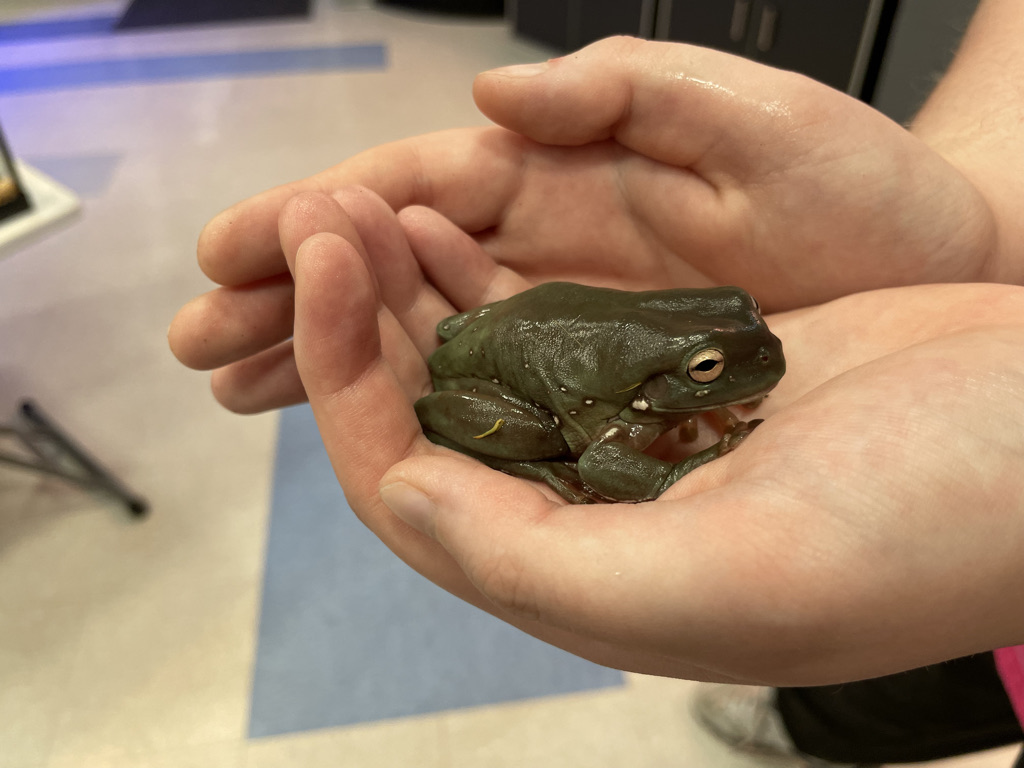
Judge it by skin, posture, and appetite rather than behavior that looks like affection. A healthy frog has smooth, slightly moist skin in even green or blue-green, sits in a compact crouch on a branch by day, becomes active shortly after lights out, and takes food without hesitation.
Warning signs are specific: dull or grayish skin, reddened thighs or belly, weight loss, daytime restlessness, constant sitting in the water dish, or refusing food for more than two weeks. Check temperature and humidity first, then book a vet who treats amphibians.
Vocalizing is a good sign. Males bark repeatedly at night, especially after misting or a drop in barometric pressure, and a calling frog is a secure frog. The range of calls across the family is covered in our guide to tree frog sounds.
Frequently Asked Questions
What is the lifespan of a white tree frog?
Captive White’s tree frogs commonly reach 16 years and well-kept individuals have passed 20, making this one of the longest-lived frogs available. Wild animals average far less. The two factors that shorten captive lifespans most are obesity and chronic skin infection from a permanently wet enclosure.
Do white tree frogs recognize their owners?
Not in any meaningful sense. They learn to associate the enclosure opening with food, which looks like recognition when a frog hops toward you at feeding time. There is no evidence of individual recognition or attachment, and handling should stay brief and rare regardless.
What can live with white tree frogs in a tank?
Other White’s tree frogs of similar size, and nothing else. Mixed-species tanks trade pathogens, and larger frogs eat smaller animals. That rules out Cuban tree frogs, which prey on other frogs, along with fish, geckos, and invertebrates.
How long does it take for white tree frogs to reach full size?
About 12 to 18 months from morph to adult size, with most growth in the first year. Females finish larger, reaching 4 to 4.5 in against 3 to 3.5 in. Our profiles of the white tree frog and the Australian green tree frog cover natural growth in the wild.