Turtle Poop: What It Looks Like and How to Identify It
Turtle poop is a soft, dark brown to greenish log, usually 0.5 to 2 in (1 to 5 cm) long, often paired with a chalky white blob of urate that looks like toothpaste. In water it breaks apart into a cloudy brown string within minutes, which is why most people notice turtle droppings in a tank or pond before they ever find one on land.
Identifying it outdoors is mostly a question of place and content. Aquatic turtle droppings turn up at the water’s edge or on a basking log, box turtle droppings appear on forest trails and in garden beds, and both are packed with whatever the animal ate: plant fiber, insect shells, snail bits and seeds.
Turtle poop is a cylindrical, soft brown or green dropping 0.5 to 2 in (1 to 5 cm) long, with blunt ends and visible plant fiber, insect parts or shell fragments. A separate white or yellowish chalky mass of urate is usually passed with it. Fresh droppings are shiny and smell strongly of pond water.
What Does Turtle Poop Look Like?
A typical dropping is a soft cylinder with rounded ends, not tapered like a rodent pellet and not coiled like a bird’s. Color runs from dark brown through olive to nearly black, depending on diet. Herbivorous species such as box turtles and tortoises produce greener, fibrous droppings; sliders and snapping turtles that eat fish and invertebrates produce darker, denser ones.
Texture is the quickest tell. Turtle feces hold together when fresh but crumble into recognizable food parts when dry: chitin from beetles, snail shell flecks, mushroom pieces, berry skins and intact seeds. That undigested content is normal and is the reason box turtles matter as seed dispersers in eastern forests.
Turtle Poop Size, Shape and Color by Species
Size scales with the animal, and the range is wide because a hatchling slider and an adult snapping turtle differ by a factor of twenty in body mass. Use the table as a starting point and weight it with where you found the dropping.
| Species | Length | Shape and color | Typical contents | Where found |
|---|---|---|---|---|
| Eastern box turtle | 0.6 to 1.2 in (1.5 to 3 cm) | Soft log, green brown | Berry seeds, beetle shells, fungi | Forest trails, garden mulch |
| Red-eared slider | 0.5 to 1.5 in (1 to 4 cm) | Loose log, dark brown | Plant fiber, pellet food | Tank floor, basking log |
| Snapping turtle | 1 to 2.5 in (2.5 to 6 cm) | Dense log, near black | Fish bone, crayfish shell | Shallow mud, pond edge |
| Painted turtle | 0.4 to 1 in (1 to 2.5 cm) | Short, brown green | Algae, insect parts | Submerged, on logs |
| Gopher tortoise | 1 to 2 in (2.5 to 5 cm) | Firm, fibrous, pale brown | Grass, prickly pear | Burrow aprons, sandy scrub |
White Urates: The Part That Is Not Poop
The white or pale yellow chalky material next to a turtle dropping is urate, the reptile equivalent of urine. Turtles excrete nitrogen waste as semi solid uric acid rather than dissolved urea, which saves water. Seeing some urate with a dropping is completely normal.
It becomes a warning sign when the texture changes. Gritty, hard urates like wet sand, or urate passed with no feces at all, point to dehydration in a captive turtle. Thin, watery white discharge points the other way. Both are reasons to review soaking and humidity before anything else.
Where You Find Turtle Droppings Outdoors
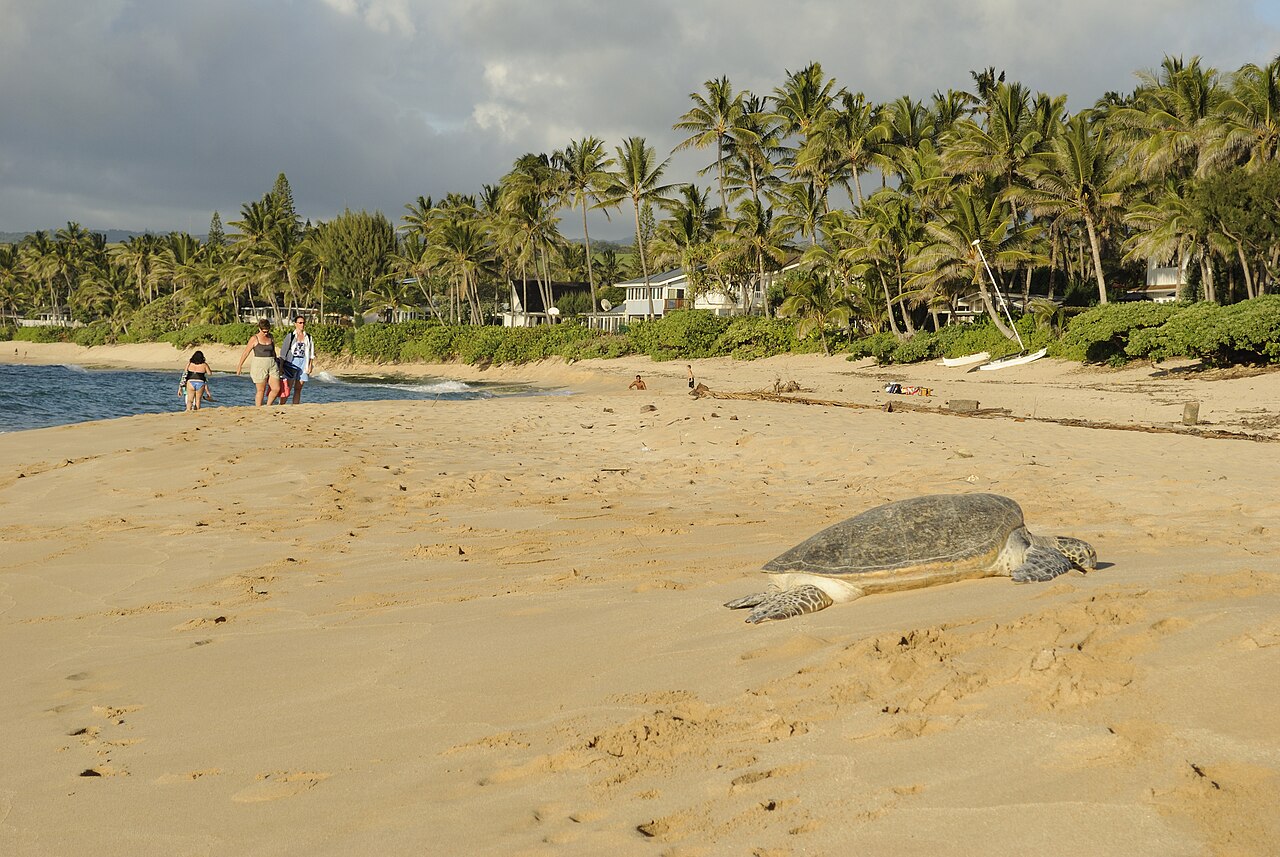
Aquatic turtles defecate in water most of the time, so terrestrial finds are limited to basking sites: fallen logs, warm rocks, concrete boat ramps and the bare bank where a female hauled out to nest. Droppings there dry fast into a dark crust with visible fiber.
Box turtles leave droppings along the trails and garden edges they patrol, often near fallen fruit. Gopher tortoise droppings sit on the sand apron outside the burrow entrance, where they are the most reliable sign of an active burrow. Unlike armadillo droppings, which are rounded clay marbles, turtle droppings keep an elongated shape.
How Often Do Turtles Poop?
A healthy adult aquatic turtle defecates every 2 to 3 days in warm conditions, and hatchlings closer to daily because they eat more relative to body size. Box turtles and tortoises fall in the same range during the active season, with large tortoises sometimes going 4 to 7 days between droppings.
Temperature drives everything. Reptile digestion slows as body temperature drops, so a turtle kept too cool or a wild turtle in late fall passes far less. During brumation a wild turtle may not defecate for months, which is normal and not a blockage.
Turtle Poop vs Lizard Poop
Lizard droppings are the most frequent mix up in yards and sheds. A lizard pellet is smaller, firmer and tapered at one end, typically 0.2 to 0.5 in (0.5 to 1.3 cm), with the white urate cap fused to the tip of the dropping rather than sitting beside it as a separate mass.
Turtle droppings are larger, blunt ended and softer, and the urate is usually a separate blob. Placement helps too: lizard scat accumulates on walls, fences and window sills where turtles cannot go. Our comparison of lizard poop and rat poop covers the fused urate cap in detail.
Turtle Poop vs Frog Poop
Frog droppings are dark, glossy, cylindrical and surprisingly large for the animal, up to a third of the frog’s body length. They are almost entirely insect remains, so a dry frog dropping crumbles into a mass of shiny black and brown chitin with no plant fiber at all.
Turtle droppings nearly always contain plant material or shell grit alongside insect parts, and they lack the wet, lacquered sheen of fresh frog scat. Both turn up on the same pond banks, so see frog poop and lizard poop if you need a side by side on amphibian droppings.
Turtle Poop vs Goose and Duck Droppings
On a pond shore, most of what looks like turtle poop is actually goose droppings. Goose scat is a firm green or brown tube with a distinct white smear of urate along one side, and it occurs in dozens of pieces across a lawn because geese graze continuously.
Turtle droppings appear singly or in twos, never in a scattered field of them, and they sit near the waterline or on a basking surface rather than out in mowed grass. Quantity, not shape, is the deciding clue. Larger reptile scat in the same habitat belongs to alligators; see alligator poop for that end of the range.
Salmonella and Other Health Risks
Turtles of all species commonly carry Salmonella in their gut and shed it in feces, including animals that look perfectly healthy. The bacteria survive on shells, tank water, basking rocks and hands. This is why the Centers for Disease Control and Prevention has banned the sale of turtles with shells under 4 in (10 cm) since 1975, after thousands of infections in children.
Box turtles and aquatic species can also shed Campylobacter, Mycobacterium and intestinal parasites. Infection comes from hand to mouth contact, not from being near a turtle, so households with children under five, adults over 65 or anyone immunocompromised should keep turtles out of kitchens and never bathe them in a food preparation sink.
How to Clean Up Turtle Poop Safely
Wear disposable gloves every time, indoors or out. Scoop solid droppings from a tank with a dedicated net or siphon rather than a kitchen utensil, and run partial water changes of 25 to 50 percent weekly so dissolved waste does not build up ammonia between full cleanings.
Clean enclosures and tools in a utility sink or outdoors, never in a kitchen sink or bathtub. Disinfect with a bleach solution of 1 tablespoon per gallon (about 4 ml per liter), rinse thoroughly, and wash hands with soap for 20 seconds afterward. Outdoor droppings can go in the trash or a non food compost; the same precautions apply to any reptile scat, as in our note on frog and rat droppings.
What Unhealthy Turtle Poop Looks Like
Four patterns justify a call to a reptile vet. Watery or mucus coated droppings that persist beyond a day or two suggest infection or a parasite load. Chalky white feces, as opposed to normal white urate, can indicate a liver or bile problem.
Visible worms, blood, or droppings with a sour, putrid smell distinct from ordinary pond odor all need a fecal exam. So does the opposite problem: no droppings at all for more than a week in a warm, actively feeding turtle, which can mean impaction from substrate or from an overly dry diet.
Frequently Asked Questions
What diseases do box turtles carry?
Box turtles commonly carry Salmonella, and less often Campylobacter, Mycobacterium and intestinal parasites such as roundworms and coccidia. They can also host ranavirus and upper respiratory pathogens that affect other reptiles. Transmission to people happens through hands after contact with the turtle, its enclosure or its droppings.
How do you clean tortoise poop?
Remove it daily with gloves and a scoop, take out the soiled substrate around it rather than just the surface, and replace that material. Wipe hard surfaces with a diluted bleach solution, rinse well and let them dry. Clean the enclosure outside or in a utility sink, then wash your hands with soap.
How often do tortoises poop?
Most tortoises pass droppings every 1 to 3 days when kept at correct temperatures and fed daily, with large species going up to a week. Output drops sharply when the enclosure is too cool or the animal is dehydrated. A weekly lukewarm soak of 15 to 20 minutes usually restores a regular pattern.
Why is my turtle’s poop white?
A separate white or yellowish chalky mass is urate, the normal solid form of turtle urine, and it is not a problem. White or pale feces themselves are different and can signal a liver or bile issue. Hard, gritty urates point to dehydration and call for more soaking and deeper water.
Do turtles poop in the water?
Aquatic turtles defecate in water almost exclusively, and many do it immediately after eating. That is why tanks need strong filtration rated well above the water volume, plus weekly partial water changes. Feeding a turtle in a separate container keeps most of the waste out of the main tank.
Can turtle poop make you sick?
Yes. Contact with turtle feces, tank water or a contaminated shell can transmit Salmonella, causing diarrhea, fever and cramps that are serious in young children and older adults. The risk is controlled easily: gloves for cleaning, no turtles in food areas, and hand washing immediately after any contact.