How to Get Rid of Voles Without Wasting Money
Getting rid of voles starts with confirming you actually have voles rather than moles, because the two animals cause different damage and respond to completely different treatments. Voles are plant-eating rodents that leave narrow surface runways worn through the grass and gnaw bark from the base of trees. Moles are insect-eating tunnelers that push up ridges and soil mounds and never touch a plant.
Once identified, the approach that works is habitat modification plus trapping, in that order. Voles need dense ground cover to survive, and a yard with short grass, mulch pulled back from trunks, and no tall weedy margins supports far fewer of them regardless of what else you do. This guide covers identification, the damage patterns, trapping technique, protecting trees, and which popular products are a waste of money.
| Feature | Voles | Moles |
|---|---|---|
| Diet | Plants, roots, bark, seeds | Earthworms and insects |
| Visible sign | Surface runways in grass, clean holes | Raised ridges and soil mounds |
| Hole appearance | 1 to 2 in wide, no soil mound | Volcano-shaped mound of loose soil |
| Plant damage | Severe, girdles trees and eats bulbs | None, damage is only cosmetic |
| Body | Mouse-like, small eyes, short tail | Cylindrical, huge front paws, no visible eyes |
| Peak activity | Year-round, worst under snow cover | Spring and autumn |
Voles or Moles? Identify First
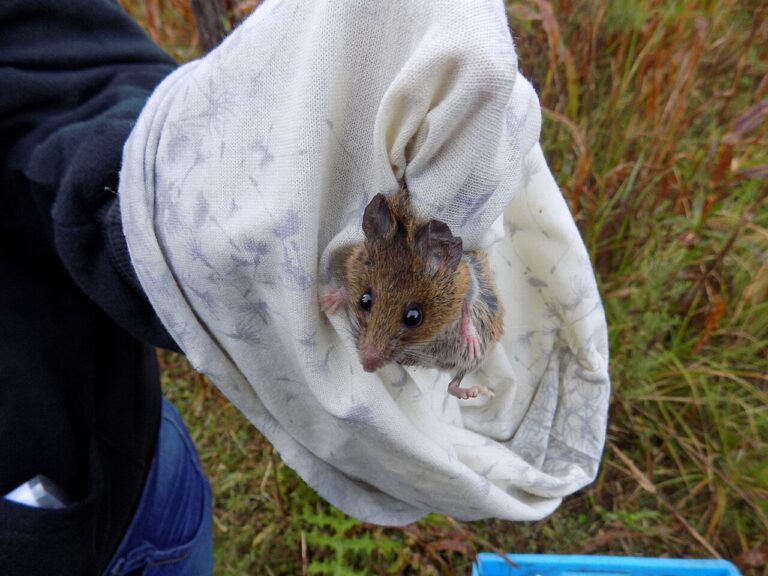
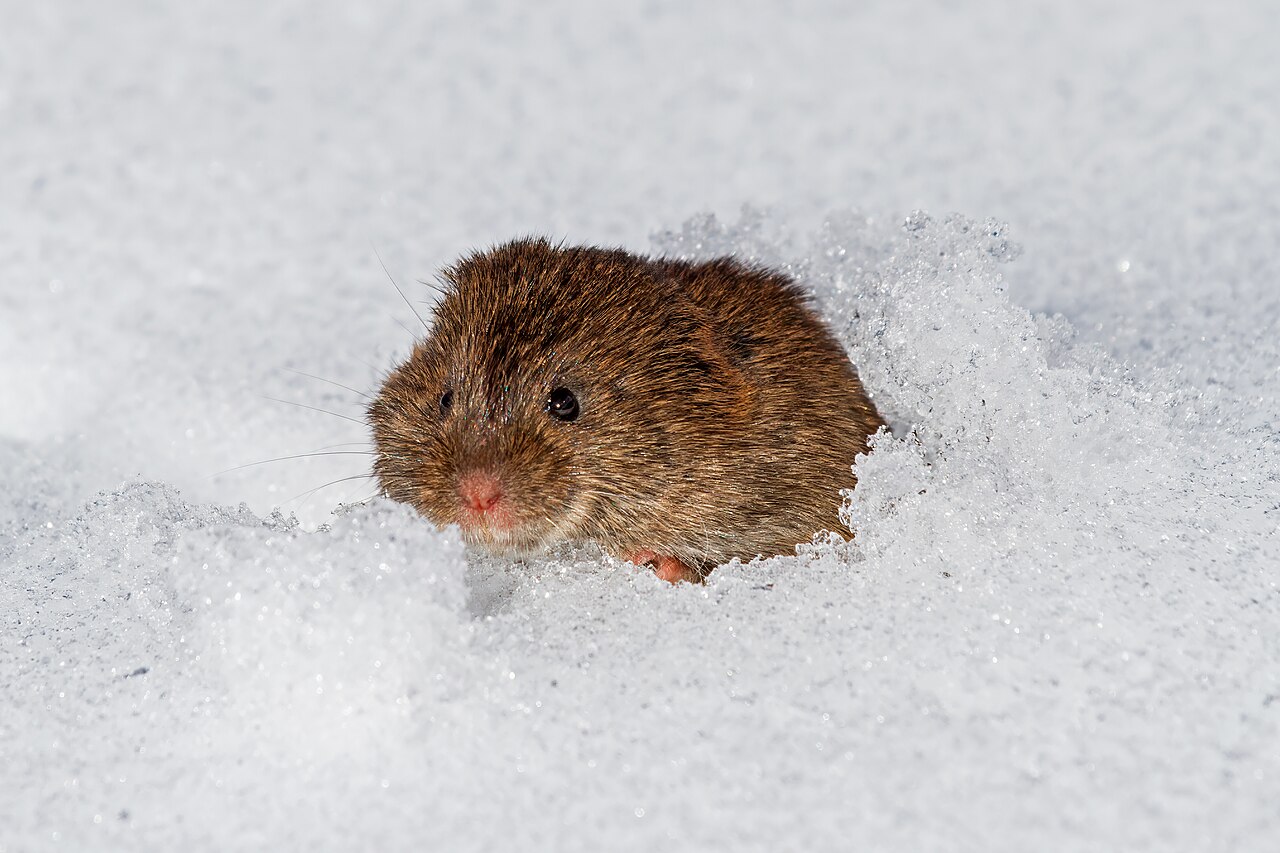
This is the step that determines everything, and getting it wrong wastes an entire season. Voles, sometimes called meadow mice, are rodents about 4 to 8 in long including a short tail, with small eyes and ears mostly hidden in fur. They eat plants.
Moles are not rodents at all. They are insectivores with cylindrical bodies, enormous spade-like front paws, a pointed snout, and no functional external eyes, and their entire diet is earthworms, grubs, and soil insects. A mole in a lawn is eating the things in the soil, not the lawn itself.
The sign on the ground separates them instantly. Voles create narrow runways about 1 to 2 in wide worn through the grass at the surface, often visible as trails when snow melts, with clean entrance holes and no excavated soil. Moles push up raised ridges where they tunnel just below the surface, plus conical mounds of loose soil where they eject material from deeper runs. Our guide to the baby mole covers the other animal in detail.
Signs of Vole Damage
Lawn runways are the first thing most people notice, and they are most obvious in early spring when snow retreats and reveals a network of trails pressed into the flattened grass. Voles are active under snow all winter, protected from predators, which is why damage often appears all at once in March.
Tree and shrub damage is the expensive part. Voles gnaw bark from the base of trunks, usually within a few inches of the ground and often hidden under mulch or snow, leaving irregular gnaw marks running in various directions. If they remove bark all the way around, the tree is girdled and will die once its stored reserves run out, sometimes not until the following summer.
Garden damage rounds it out. Voles eat bulbs, tubers, roots, and seeds, and a bed of tulips that fails to come up in spring has often been eaten from below. Hostas, potatoes, and carrots are frequent targets. Distinguishing the culprit matters, and our guides to chipmunk droppings and what mice eat help sort out the other small mammals working the same yard.
Habitat Modification: What Actually Works
Voles depend on cover. They are prey for hawks, owls, foxes, snakes, and cats, and without dense vegetation to hide in they cannot maintain a population in an open area. Removing that cover does more than any trap or product.
Start at the trunks. Pull mulch back 6 to 12 in from the base of every tree and shrub, since deep mulch piled against bark is both perfect vole habitat and a screen that hides gnawing until the damage is done. Keep the ring bare or use gravel instead.
Then reduce the rest of the cover. Mow regularly and keep grass short, particularly in autumn before snowfall, cut back tall weedy margins along fences and outbuildings, remove dense ground cover such as ivy and periwinkle near valuable plants, and clear brush and debris piles. A mowed strip a few feet wide between a weedy field and a garden is a meaningful barrier, because voles cross open ground reluctantly.
Trapping Voles
Ordinary snap traps sold for mice work well, and they are the most reliable removal method for a home property. The technique matters more than the trap.
Place traps directly on the runways rather than near them, set perpendicular to the trail with the trigger end across the path, since voles follow their runways closely and will not detour. Two traps set in a T shape at a runway junction catch animals coming from either direction. Bait with peanut butter mixed with oatmeal, or a slice of apple, though voles often trip a well-placed trap without any bait at all.
Cover each set with a board, a bucket, or an overturned pot with a gap at the base. This keeps birds, pets, and children away from the trap and makes voles more willing to approach, since they prefer covered runs. Check daily, wear gloves when handling traps and carcasses, and expect to run traps for a week or more, moving them if a location produces nothing after two days.
Protecting Trees and Shrubs
Physical barriers are the only fully reliable protection for individual plants, and they are worth installing on anything valuable. Use quarter-inch hardware cloth formed into a cylinder around the trunk, extending at least 18 in above the expected snow line and pushed 2 to 3 in into the soil so voles cannot go underneath.
Leave space between the guard and the bark so the trunk can grow and air can circulate, and check guards annually since a cylinder that fits a young tree will strangle it in a few years. Plastic spiral guards work for small trees but trap moisture and should be removed during the growing season.
For beds, hardware cloth laid under new plantings prevents voles reaching bulbs and roots from below, and lining a raised bed base with quarter-inch mesh solves the problem permanently. Gravel mulch is far less attractive to voles than shredded bark, which is worth considering when replanting an area with chronic problems.
Do Repellents Work?
Mostly not, and this is where most vole budgets get wasted. Ultrasonic and vibrating stake devices have failed controlled testing repeatedly, and there is no credible evidence that they affect voles, moles, or any other burrowing mammal.
Castor oil products have the best evidence of the repellent category, which is not saying much. They appear to make treated soil and vegetation less palatable for a period, and results improve when the product is watered in and reapplied after rain, but the effect is partial and temporary and voles simply feed elsewhere in the same yard.
Predator urine, mothballs, chewing gum, human hair, and the various home remedies circulating online do nothing measurable. Mothballs in particular are illegal to use this way in the United States, since applying a pesticide contrary to its label is a violation, and the naphthalene contaminates soil and groundwater. Skip the entire category and spend the effort on mowing and trapping instead.
Why to Avoid Poison Baits
Rodenticides work on voles, and they create problems that outlast the vole population. Anticoagulant baits kill slowly, and a poisoned vole remains active and easy to catch for days, which makes it exactly the prey a hawk, owl, fox, or cat is most likely to take.
Secondary poisoning is well documented and widespread. Studies of raptors across North America routinely find anticoagulant residues in the large majority of tested birds, and the predators killed this way are the same animals that would otherwise be suppressing the vole population for free. Poisoning voles removes the control system along with the voles.
Pets and children add direct risk. Bait stations are not reliably tamper-proof, and dogs in particular find and consume bait blocks readily. Given that habitat modification and trapping work well on the scale of a home property, poison offers no advantage that justifies the cost. Our guide to getting rid of Japanese beetles makes a parallel point about broad-spectrum treatments destroying the natural controls.
Natural Predators and How to Encourage Them
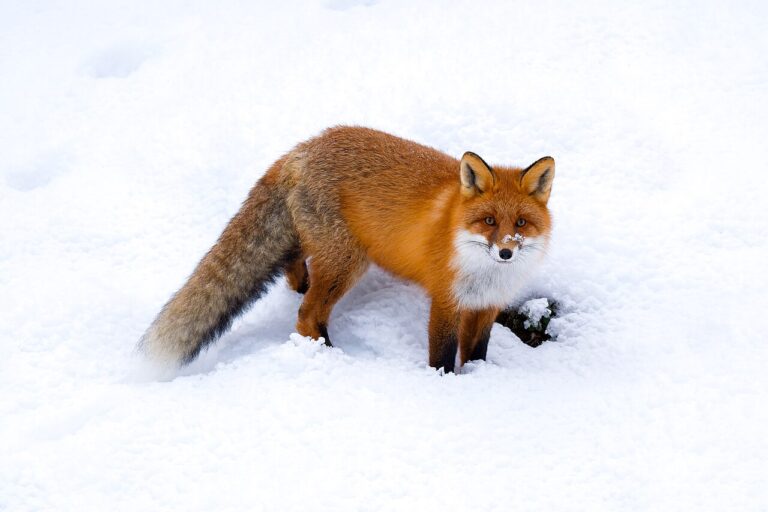
Voles are a staple prey species for a long list of predators, and a yard that welcomes them handles its own vole problem. Barn owls, barred owls, and great horned owls take enormous numbers, as do red-tailed hawks and other buteos hunting open ground during the day.
Encouraging raptors is straightforward. Leave a few tall perch trees or install a perch pole overlooking open areas, since hunting hawks need vantage points. Nest boxes work for barn owls and screech owls where the habitat suits them, and the payoff is substantial given that a barn owl family can take well over a thousand rodents in a season. Our guides to the barred owl and the red-tailed hawk cover the two most likely visitors.
Snakes, foxes, weasels, and outdoor cats all contribute as well, though cats bring their own costs to songbird populations. The single most important thing you can do for the predator side of the equation is to stop using rodenticides, since poisoned prey removes the predators that would otherwise keep working for free.
When It Is Not Voles
Several animals get blamed for vole damage. Moles produce ridges and mounds but eat no plants, so plant damage attributed to a mole is almost always vole damage in mole tunnels, since voles readily use mole runs as ready-made highways. Treating the mole in that scenario solves nothing.
Pocket gophers, in the western and central states, push up fan-shaped or crescent mounds with a plugged hole off to one side rather than the volcano-shaped mounds moles make, and they pull entire plants down into their burrows. Shrews make runways similar to voles but eat insects and are not a plant threat.
Ground squirrels and chipmunks dig larger burrows and are active above ground in daylight, unlike voles, which stay in cover. Getting the identification right before spending money is the theme of this entire topic, and photographing the damage plus the hole pattern is usually enough for a state extension office to confirm what you have.
Frequently Asked Questions
How do I know if I have voles or moles?
Voles leave narrow surface runways worn through grass and clean 1 to 2 in holes with no soil mound, and they damage plants and gnaw bark. Moles push up raised ridges and volcano-shaped soil mounds and eat only earthworms and insects, so they never damage plants directly.
What is the most effective way to get rid of voles?
Habitat modification plus trapping. Pull mulch back 6 to 12 in from trunks, mow short especially before winter, and clear dense ground cover and weedy margins. Then set mouse snap traps directly on the runways, perpendicular to the trail, covered by a board or bucket.
Do ultrasonic vole repellers work?
No. Ultrasonic and vibrating stake devices have failed controlled testing repeatedly. Castor oil products have limited temporary effect, and predator urine, mothballs, and home remedies do nothing. Mothballs used this way are also illegal in the United States and contaminate soil.
Why should I avoid vole poison?
Anticoagulant baits kill slowly, so poisoned voles stay active and become easy prey for hawks, owls, foxes, and cats, which are then poisoned too. Raptor studies routinely find these residues in most tested birds. Poisoning removes the predators that were controlling the voles for free.
How do I stop voles from killing my trees?
Wrap trunks in quarter-inch hardware cloth extending at least 18 in above the expected snow line and pushed 2 to 3 in into the soil, leaving space for growth. Pull mulch back from the base, and check guards annually so they do not strangle the tree as it grows.
When do voles do the most damage?
Winter, under snow cover, when they are hidden from predators and feeding on bark at the base of trees and shrubs. Damage often becomes visible only in spring when snow melts, and girdled trees may not die until the following summer.
How many voles are in a typical yard?
Populations fluctuate dramatically, and meadow vole densities can range from a handful per acre to several hundred in peak years with good cover. That variability is why habitat modification matters more than removal: reducing cover lowers the ceiling the population can reach.