Monarch Butterfly Eggs: How to Find and Identify Them
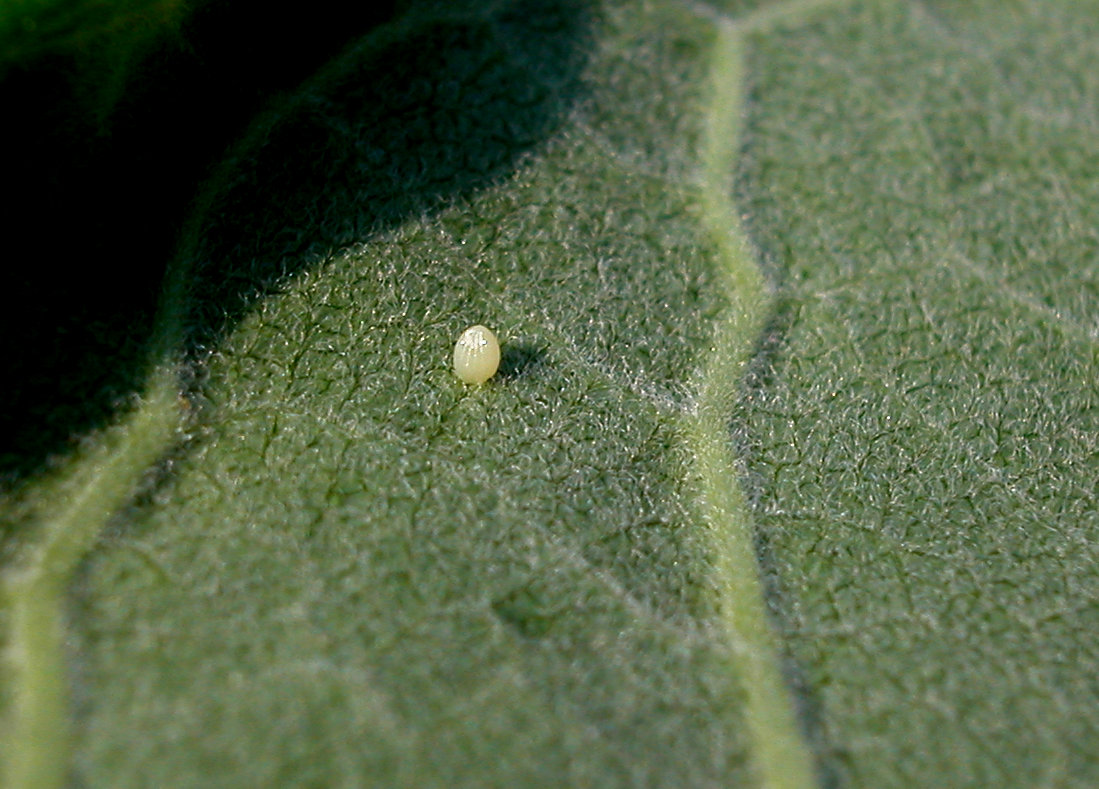
Monarch butterfly eggs are creamy white to pale yellow, about the size of a pinhead at roughly 1.2 millimetres tall, oval and pointed at the top, with fine vertical ridges running down the sides. They are laid singly on the underside of milkweed leaves, almost always one per leaf, and they hatch into caterpillars in three to five days depending on temperature.
Finding them is easier than most people expect once you know where to look, and knowing what a real egg looks like matters, because milkweed leaves carry several things that get mistaken for one, including aphid casings, dew droplets, and the eggs of other insects. This guide covers identification, timing, how to check for parasitism, what to do with eggs you find, and whether to intervene at all.
Monarch eggs are creamy white to pale yellow, about 1.2 millimetres tall, oval with a pointed tip and fine vertical ridges, laid singly on the underside of milkweed leaves. They hatch in three to five days, darkening at the tip beforehand as the caterpillar’s head capsule becomes visible. A female lays 300 to 500 eggs over her life.
| Feature | Monarch Egg |
|---|---|
| Size | About 1.2 mm tall, pinhead-sized |
| Colour | Creamy white to pale yellow |
| Shape | Oval, pointed top, ridged sides |
| Location | Underside of milkweed leaves, one per leaf |
| Hatch time | 3 to 5 days |
| Eggs per female | 300 to 500 over a lifetime |
| Survival to adult | Under 10 percent in the wild |
What Do Monarch Butterfly Eggs Look Like?
A monarch egg is a tiny creamy white to pale yellow dome, roughly 1.2 millimetres tall and under a millimetre wide, so about the size of the head of a pin. It stands upright on the leaf surface, narrower at the top than the base, and the top comes to a rounded point rather than a flat cap.
The surface texture is the confirming feature. Fine longitudinal ridges run from base to tip, and under a hand lens they give the egg the look of a miniature ribbed dome or a tiny lemon. That ridging is visible with a 10x loupe and is what separates a monarch egg from most of the things it gets confused with.
Colour changes as the egg develops. Freshly laid eggs are pale, almost white; over the following days they yellow slightly, and shortly before hatching the tip darkens noticeably as the caterpillar’s black head capsule becomes visible through the shell. A dark-tipped egg will hatch within a day. The monarch caterpillar guide covers what emerges.
Where Do Monarchs Lay Their Eggs?
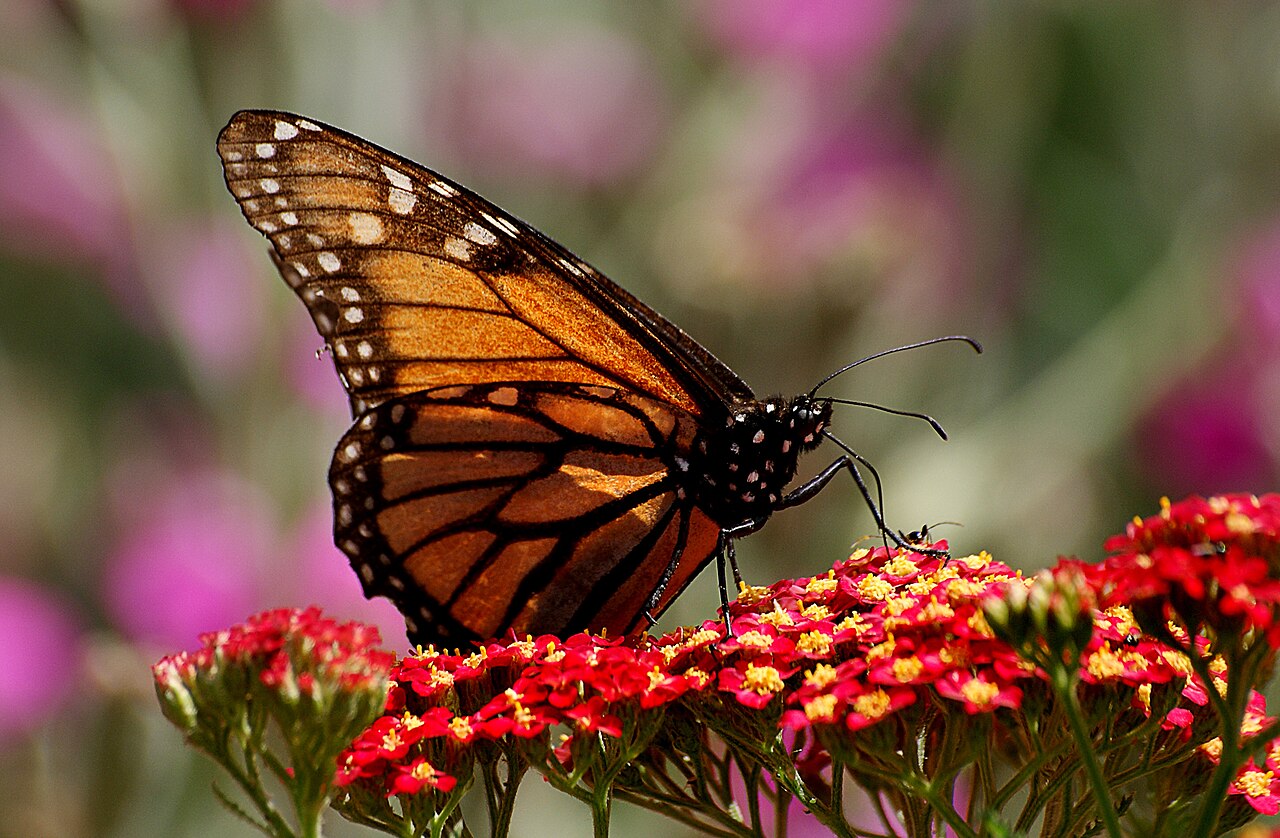
Only on milkweed. Females locate host plants by sight and by chemical cues, then drum the leaf with sensory receptors on their forelegs to taste it before committing, and they will not lay on anything outside the genus Asclepias and its close relatives.
Within a plant, the strong preference is for the underside of young, tender leaves near the top of the plant or on fresh growth, which is where a search should start. Eggs also turn up on stems, flower buds, and seed pods, but leaf undersides account for the great majority. Females lay one egg per leaf and usually move to a different plant afterwards.
Plant condition matters. Small, fresh, actively growing milkweed in a sunny position gets used far more heavily than large, tough, older plants, which is why cutting a patch of common milkweed back in midsummer often produces a wave of egg-laying on the regrowth. Isolated plants and small clumps are used more than dense stands. The monarch butterfly guide covers the migration timing that drives all of this.
What Time of Year Do Monarchs Lay Eggs?
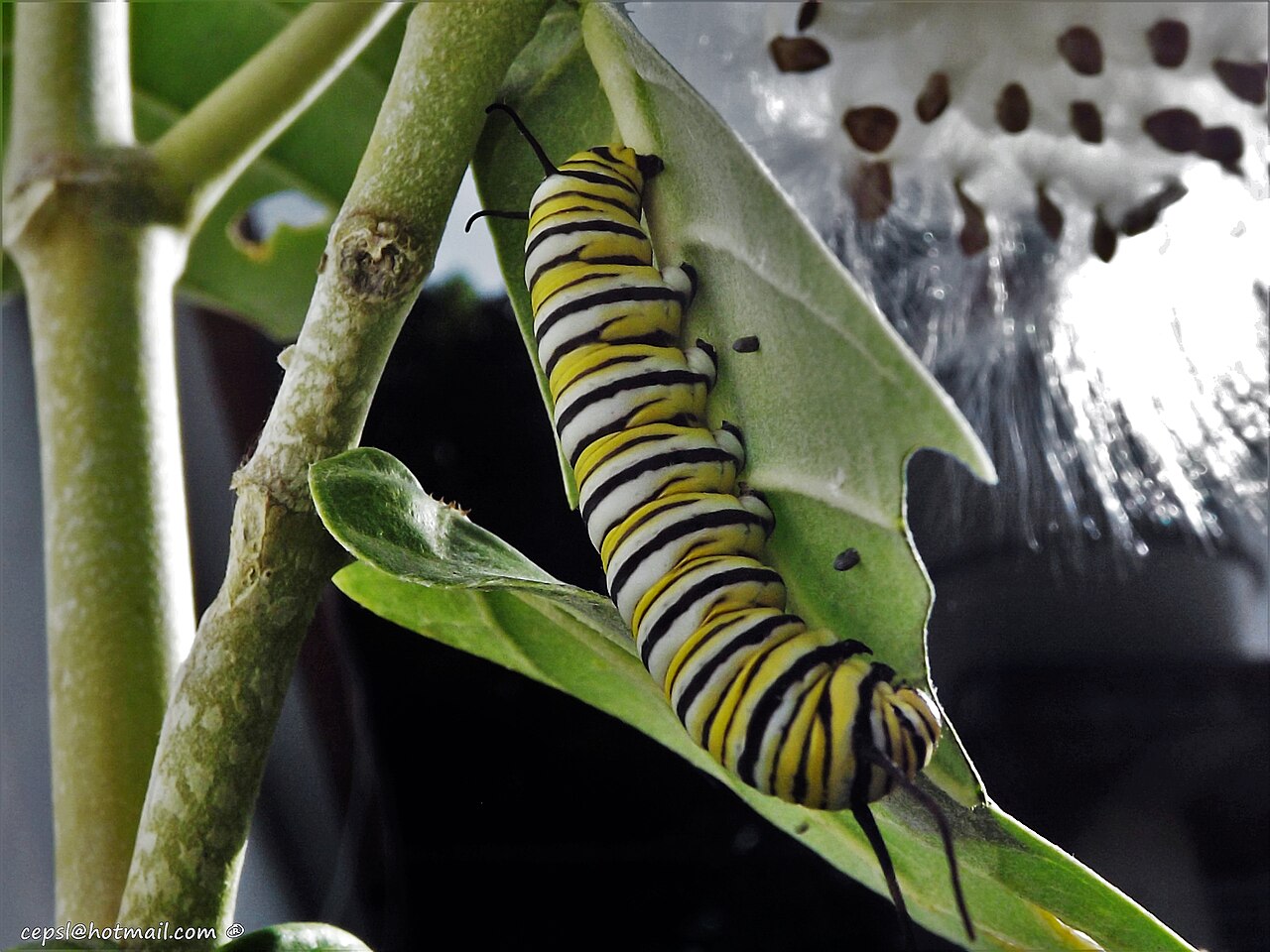
Egg-laying tracks the northward migration, so timing depends entirely on latitude. In Texas and the Gulf states, the overwintering generation arrives and lays from March, and their offspring continue north. The Midwest and mid-Atlantic see eggs from May, and the northern states and southern Canada from late May into June.
Each summer generation lays through its two to six week adult life, and two to four generations follow through the season depending on latitude. The result in the northern range is a fairly continuous egg supply from June through August, with a peak in July, and a final generation in late summer.
The autumn generation is the exception. Monarchs emerging from late August into September enter reproductive diapause, do not mate, and do not lay, saving their energy for the flight to Mexico and for overwintering. That is why milkweed searched in late September usually holds nothing, even in a garden that was full of caterpillars a month earlier. It is also why the autumn butterflies drifting south carry the symbolic weight covered in the monarch butterfly meaning guide.
How Long Do Monarch Eggs Take to Hatch?
Three to five days in typical summer conditions, faster in hot weather and slower in cool. Temperature is the controlling factor, and at the warm end an egg can hatch in under three days while a cool spell can stretch it past a week.
The visible sequence is useful for anyone watching. The egg pales for the first day or two, yellows slightly, then the tip darkens as the head capsule forms, and the whole egg becomes greyish and slightly translucent in the last hours. Hatching itself takes a few minutes.
The newly hatched caterpillar eats its own eggshell first, which supplies nutrients and appears to be necessary, then moves to the leaf and begins by chewing small holes rather than eating from the edge. A first instar caterpillar is about two millimetres long, pale, and easy to overlook entirely. It also stays on the underside of the leaf, which is where a search for tiny caterpillars should begin.
What Is Mistaken for a Monarch Egg?
Aphid casings top the list. Milkweed is heavily colonised by oleander aphids, and their pale shed skins and the small white bodies of young aphids look convincingly like eggs at a glance. Aphid casings are flat, irregular, and often clustered; monarch eggs are single, upright, and ridged.
Other insect eggs also appear on milkweed. Milkweed tussock moths lay eggs in large clusters on the underside of leaves, which rules them out immediately since monarchs lay singly. Lacewing eggs sit on top of fine stalks and are unmistakable once seen. Queen butterflies, which are also milkweed feeders and look like darker orange and black butterflies, lay eggs on the same plants in the south. Various fly and beetle eggs are smaller, flatter, or differently coloured.
Non-biological confusions are common too: dew droplets, latex droplets from a damaged leaf that have dried white, and specks of debris all get photographed and posted as eggs. The ridges settle every case, and a cheap 10x jeweller’s loupe makes the difference immediately obvious.
Will Monarchs Lay Eggs on Milkweed With Aphids?
Yes, they will, and aphids are not a reason to reject a plant or to intervene aggressively. Heavy aphid colonies do weaken milkweed over time and can make leaves sticky with honeydew and sooty mould, but monarchs lay on infested plants routinely and caterpillars develop on them without obvious harm.
The problem with treating aphids is what the treatment does. Insecticidal soap, neem, and horticultural oil all kill monarch eggs and small caterpillars on contact, so spraying milkweed defeats the purpose of growing it. Ladybird larvae and lacewings introduced for aphid control also eat monarch eggs and first instars.
Oleander aphids on milkweed are worth a second look for their own sake. They are bright orange with black legs, they are not native to North America, and populations on milkweed are almost entirely female and reproduce without mating, producing live young rather than eggs. That is why a colony appears to explode overnight from a handful of insects.
The workable methods are physical. A strong jet of water knocks aphids off without harming eggs if the eggs are on a different part of the plant, and squashing colonies by hand or wiping them off with a gloved finger works on a small patch. Most gardeners find it easier to accept the aphids, since milkweed tolerates them and the plants come back each year regardless.
Should You Bring Monarch Eggs Indoors?
It depends on what you want and on how carefully you can do it. Outdoors, fewer than one in ten monarch eggs reaches adulthood, with most taken by ants, spiders, lacewing larvae, ladybird larvae, stink bugs, and parasitoid wasps and flies. Indoor rearing raises survival dramatically, which is the argument for it.
The arguments against are real. Crowded indoor rearing spreads disease, particularly the protozoan parasite Ophryocystis elektroscirrha, and heavily reared monarchs have been shown in some studies to have weaker migratory orientation than wild ones. Several states and provinces regulate collection and rearing, and mass rearing for release is discouraged by most monarch conservation organisations.
The middle path most people settle on is small-scale and clean: a handful of eggs at a time, individual containers or a mesh cage, fresh milkweed daily, containers cleaned every day, and release near where the eggs were found. Xerces Society (xerces.org) publishes current guidance on responsible rearing limits, and the underlying advice is consistent: planting more milkweed helps more monarchs than rearing does.
How Do You Know if an Egg Is Parasitised?
Trichogramma wasps attack monarch eggs directly, and a parasitised egg turns dark grey or black over its whole surface rather than only at the tip. The distinction matters because a healthy egg about to hatch also darkens, but only at the point where the head capsule sits, with the rest still pale.
A uniformly black egg will not produce a caterpillar and instead releases one or more tiny wasps. Some people remove and discard these when found in a rearing setup, though the wasps are native and part of the system, and in the garden it is not worth acting on.
Later-stage parasitism is more common and shows up in caterpillars rather than eggs. Tachinid flies lay eggs on larger caterpillars, and the visible sign is white maggots dropping from a caterpillar or a chrysalis on fine threads, usually just before pupation. Nothing can be done at that stage, and it is the single most common reason a reared caterpillar fails. The guide to birds that eat caterpillars covers the other side of that mortality.
Frequently Asked Questions
What do monarch butterfly eggs look like?
Creamy white to pale yellow domes about 1.2 millimetres tall, oval with a pointed tip and fine vertical ridges, standing upright and laid singly on the underside of milkweed leaves.
How long does it take monarch eggs to hatch?
Three to five days in typical summer conditions, faster in heat and slower in cool weather. The tip darkens as the caterpillar’s head capsule becomes visible a day before hatching.
What time of year do monarchs lay eggs on milkweed?
From March in Texas and the Gulf states, May in the Midwest and mid-Atlantic, and late May or June in the north. The generation emerging from late August enters diapause and does not lay at all.
Where do monarchs lay their eggs?
Only on milkweed, usually on the underside of young tender leaves near the top of the plant, one egg per leaf. Small fresh plants in sun are used far more than large tough ones.
Will monarchs lay eggs on milkweed with aphids?
Yes, routinely, and caterpillars develop on infested plants. Do not spray, since soap, neem, and oil kill eggs and small caterpillars. Water jets or wiping colonies off by hand are the safe options.
What is mistaken for a monarch egg?
Oleander aphid casings, tussock moth egg clusters, lacewing eggs on stalks, dew droplets, and dried latex specks. The fine vertical ridges and the single upright placement settle it under a 10x loupe.
How do you tell if a monarch egg is parasitised?
A parasitised egg turns uniformly dark grey or black across the whole surface. A healthy egg about to hatch darkens only at the tip where the head capsule sits, with the rest still pale.