Birds That Eat Caterpillars: Why Your Garden Needs Both
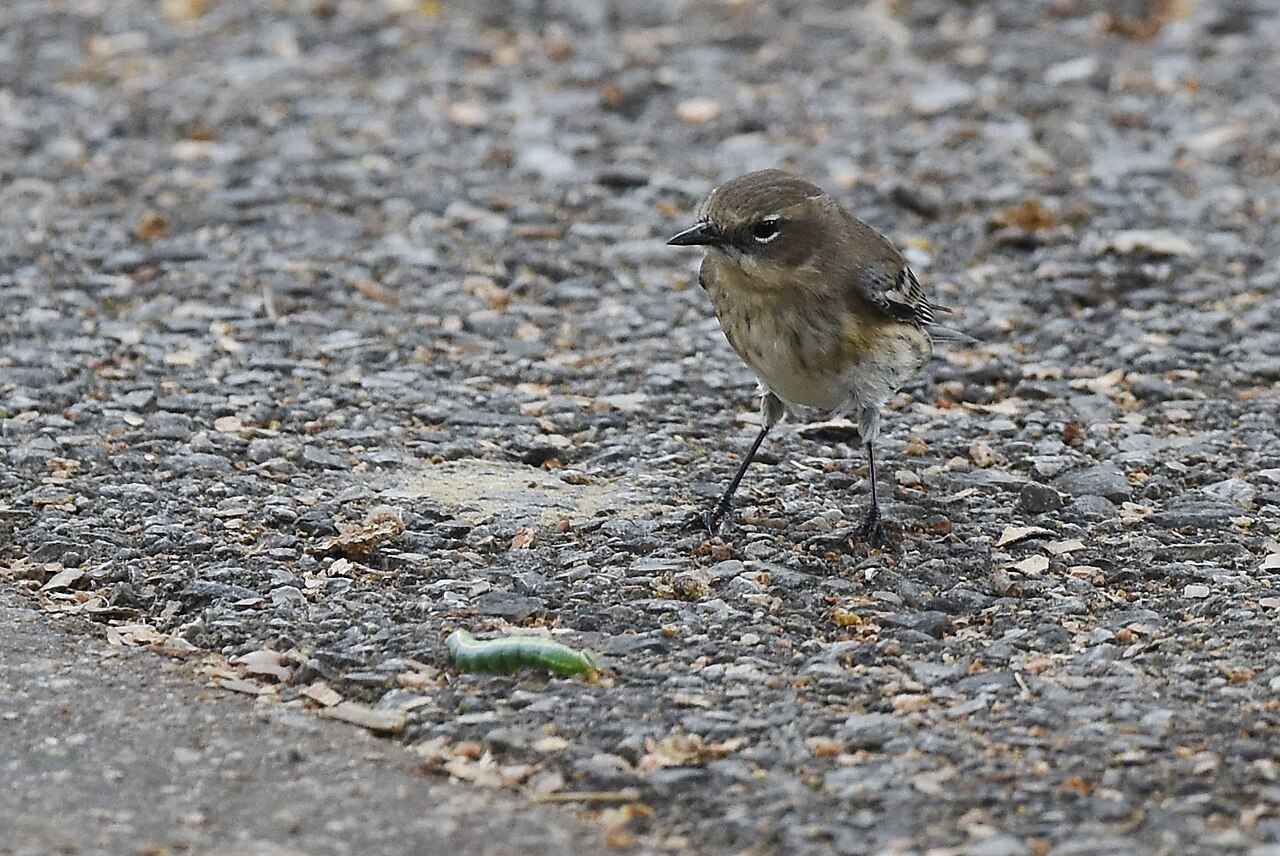
Nearly every songbird eats caterpillars, and most feed them to their young almost exclusively. Warblers, vireos, chickadees, titmice, wrens, orioles, tanagers, cuckoos, and bluebirds are the heaviest caterpillar predators in North America, and a single pair of chickadees needs somewhere between 6,000 and 9,000 caterpillars to raise one brood of nestlings.
That figure is the reason caterpillars matter so much more than their reputation suggests. Caterpillars are soft, protein-rich, low in indigestible material, and easy for a nestling to swallow, and no other food item substitutes well. A yard without caterpillars cannot support breeding songbirds regardless of how many feeders it has. This guide covers which birds eat them, how many are needed, which caterpillars birds avoid, and what to plant.
Warblers, vireos, chickadees, titmice, wrens, orioles, tanagers, cuckoos, and bluebirds are the main caterpillar-eating birds in North America, and most songbirds feed their nestlings caterpillars almost exclusively. One chickadee brood needs roughly 6,000 to 9,000 caterpillars. Cuckoos are the specialists, eating hairy and toxic species other birds reject.
| Bird | Caterpillar Role |
|---|---|
| Black-capped chickadee | 6,000 to 9,000 per brood |
| Warblers (many species) | Canopy and shrub specialists |
| Red-eyed vireo | Deliberate leaf-by-leaf searcher |
| Yellow-billed cuckoo | Eats hairy and tent caterpillars |
| Baltimore oriole | Takes tent caterpillars and gypsy moths |
| Eastern bluebird | Ground and low foliage hunting |
| Tufted titmouse | Bark and twig gleaning year-round |
What Birds Eat Caterpillars?
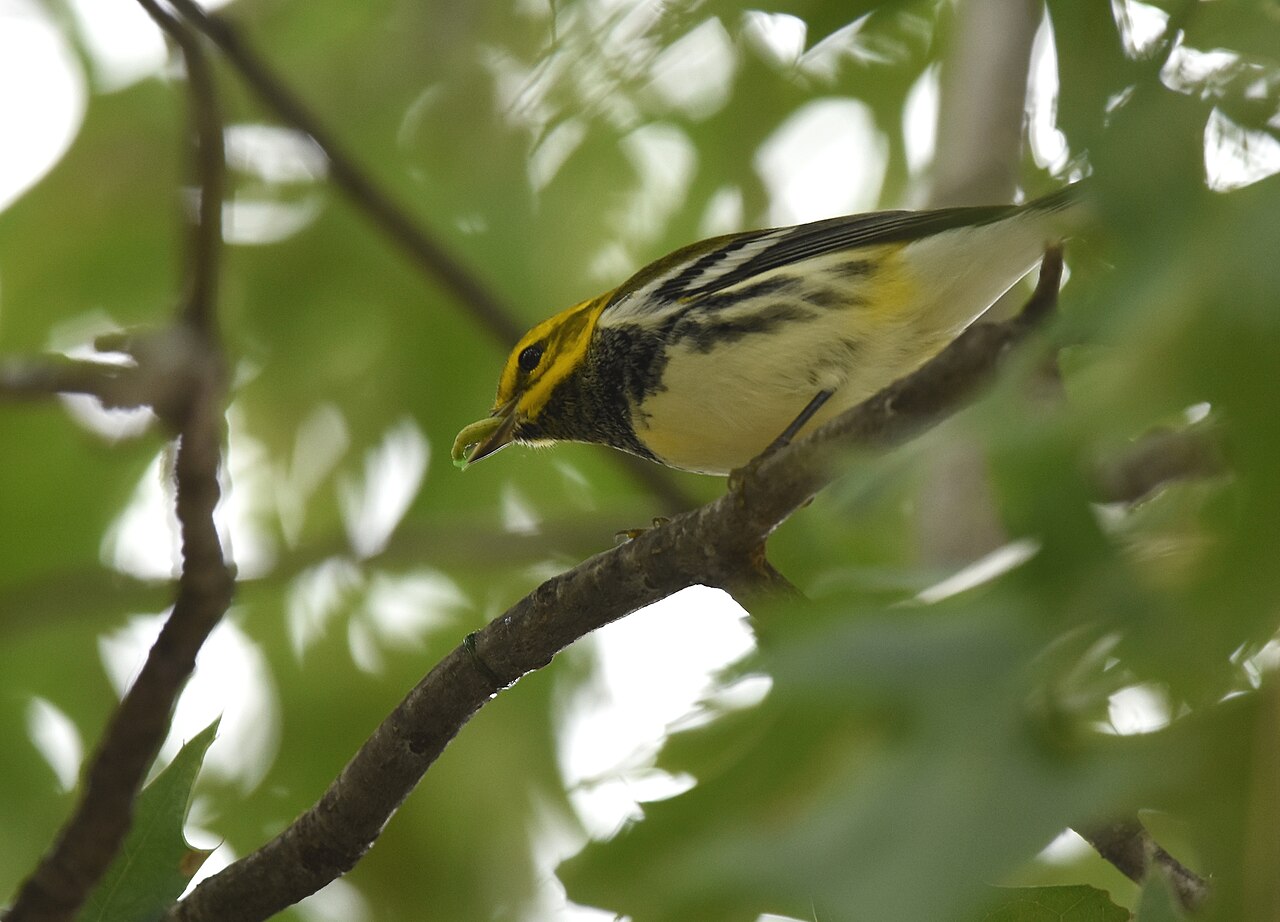
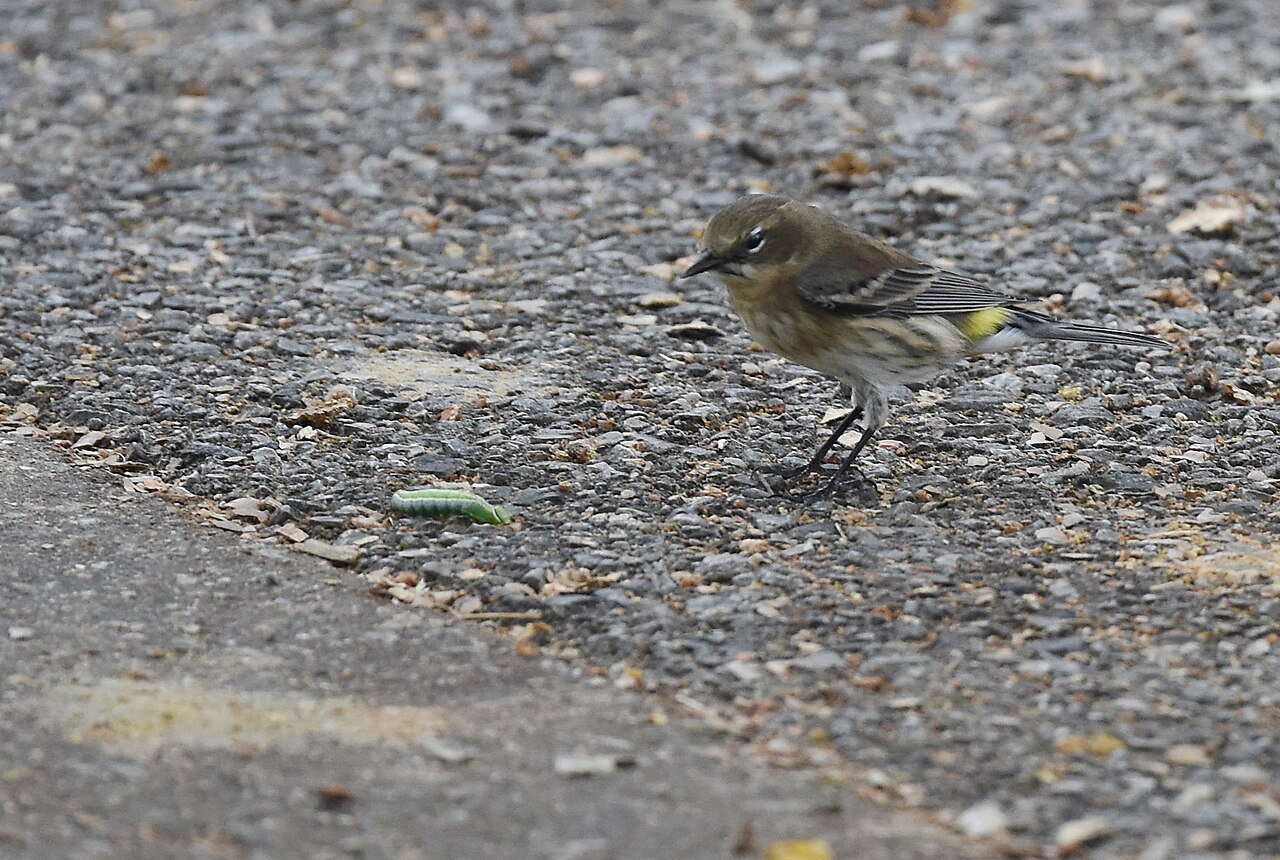
Almost all insect-eating songbirds do, and the list of exceptions is shorter than the list of eaters. Warblers are the archetype, with over fifty North American species foraging through foliage at different heights and on different parts of the leaf, and their spring migration is timed to arrive with the caterpillar flush on newly opened leaves.
Chickadees, titmice, nuthatches, and wrens work bark, twigs, and leaf clusters year-round, taking eggs and overwintering larvae in cold months and active caterpillars in summer. Vireos hunt more deliberately, moving slowly and inspecting leaf undersides one at a time, and red-eyed vireos in particular take large numbers of the caterpillars other birds miss.
Orioles, tanagers, grosbeaks, and cuckoos take larger prey, including species other birds refuse. Bluebirds, robins, phoebes, and flycatchers take caterpillars that fall or crawl on the ground and low vegetation. Even birds thought of as seed-eaters, including cardinals and sparrows, switch to insects while feeding young. The guide to birds that eat spiders covers many of the same species working other prey.
How Many Caterpillars Does One Bird Need?
A single black-capped chickadee brood consumes between 6,000 and 9,000 caterpillars in the roughly sixteen days from hatching to fledging, a figure established by entomologist Doug Tallamy’s research at the University of Delaware and now widely cited in native plant advocacy. Parents make several hundred delivery trips per day at peak demand.
The reason is nutritional rather than preferential. Nestlings need protein, fat, and carotenoids for growth and feather development, and caterpillars supply all three in a soft package with very little indigestible chitin. Beetles and ants have hard exoskeletons that a nestling processes poorly, and seed cannot support growth at all in most species.
Scale that across a neighbourhood and the numbers get large quickly. A yard supporting several breeding pairs needs tens of thousands of caterpillars over a season, and they have to be produced locally because parents forage within a short radius of the nest. This is the practical argument behind native plant gardening: it is a caterpillar production question. The chickadee guide covers the species most often used to illustrate it.
Which Caterpillars Do Birds Avoid?
Birds avoid caterpillars that are toxic, hairy, or spiny, and the bright colours on many species are advertisements of exactly that. Monarch caterpillars store cardiac glycosides from milkweed and are rejected by nearly all birds. Pipevine swallowtail larvae store aristolochic acids. Both are boldly marked for the same reason.
Hairs and spines are a physical defence that works well against birds specifically. Tussock moth, woolly bear, io moth, and saddleback caterpillars all carry hairs or urticating spines that irritate mouth and throat tissue, and most birds either avoid them entirely or handle them awkwardly. Some hairs cause genuine problems if swallowed in quantity.
Cuckoos are the notable exception and eat hairy caterpillars freely, including tent caterpillars and gypsy moth larvae that other birds refuse. Yellow-billed and black-billed cuckoos periodically shed the stomach lining that accumulates ingested hairs, which lets them exploit a food source almost nothing else can. Orioles get around the problem differently, by slitting caterpillars open and eating the insides while leaving the hairy skin. The woolly bear caterpillar guide covers one of the species birds mostly leave alone.
What Is the Biggest Predator of Caterpillars?
Birds are the most visible caterpillar predators, but parasitoid wasps and flies probably kill more. Braconid and ichneumonid wasps and tachinid flies lay eggs in or on caterpillars, and the larvae consume the host from inside before emerging, and parasitism rates in some caterpillar populations run above fifty percent.
Invertebrate predators take a further heavy toll. Ants, ground beetles, spiders, assassin bugs, stink bugs, lacewing larvae, and paper wasps all hunt caterpillars, and paper wasps in particular carry them back to their nests in quantity to feed their own larvae. Small caterpillars in their first instars are extremely vulnerable to all of these.
Diseases finish the job. Nucleopolyhedroviruses, fungi, and bacteria including Bacillus thuringiensis spread rapidly in dense caterpillar populations and can collapse an outbreak within weeks. Between predators, parasitoids, and disease, the great majority of caterpillars never reach pupation; monarch survival from egg to adult, for instance, is thought to be under ten percent. The monarch caterpillar guide covers that mortality in detail.
How Do You Attract Caterpillar-Eating Birds?
Plant the trees that produce caterpillars. Oaks support hundreds of caterpillar species in most of North America, more than any other genus, followed by willows, cherries and plums, birches, poplars, and maples. A single native oak supports more caterpillar biomass than an entire yard of non-native ornamentals, and that is what brings warblers, vireos, and chickadees in.
Native plants matter here specifically rather than generally. Most caterpillars are specialists that can only digest a narrow range of plant families they evolved alongside, so a ginkgo, a Bradford pear, or a crape myrtle supports almost nothing. This is the reason a well-planted garden of exotic ornamentals can hold very few breeding birds despite looking lush.
The difference is measurable rather than theoretical. Studies comparing yards dominated by native plants with conventionally landscaped yards have found substantially lower caterpillar biomass and fewer breeding chickadees in the non-native yards, with the effect strong enough that researchers proposed a rough threshold: a property needs a majority of its plant biomass to be native to sustain breeding insectivorous birds. That is a planting target rather than a rule, but it explains why adding one native shrub to an otherwise exotic garden changes little.
Structure and restraint do the rest. Leaf litter left under trees is where many species pupate over winter, so autumn leaf removal destroys the next year’s supply. Skipping insecticides, including mosquito fogging and Bacillus thuringiensis sprays that kill all caterpillars indiscriminately, protects the food source. Nest boxes and water complete it. The guide to birds that eat ants covers overlapping habitat needs.
How Do You Keep Birds From Eating Caterpillars?
If you are raising monarchs or another species deliberately, physical exclusion is the only reliable method. Fine mesh sleeves tied over milkweed stems or a mesh rearing cage keep birds, wasps, and parasitoid flies away, and they need to go on early because parasitoids attack small caterpillars.
Bringing caterpillars indoors works but has trade-offs. Indoor rearing removes predation entirely but concentrates disease risk, particularly the protozoan parasite Ophryocystis elektroscirrha in monarchs, and it requires daily fresh host plant and scrupulous cleaning. Small numbers, well spaced, do better than a crowded container.
For garden butterflies generally, the better approach is quantity rather than protection. Planting enough host plant that losses do not matter is more effective and less work than defending individual larvae, and it supports the birds at the same time. A garden that produces both butterflies and fed nestlings is doing more than one that produces only butterflies.
Do Birds Eat Tent Caterpillars and Gypsy Moths?
Some do, and they are among the most useful birds a property can have. Yellow-billed and black-billed cuckoos are the standout: both eat eastern tent caterpillars and spongy moth larvae, formerly called gypsy moths, in large numbers, and cuckoo numbers rise locally in outbreak years in response to the food supply.
Baltimore orioles, blue jays, crows, grackles, and chickadees also take tent caterpillars, with orioles particularly effective because they slit the larvae open rather than swallowing them whole. Black-billed cuckoos have been recorded with over a hundred tent caterpillars in a single stomach.
Birds do not stop an outbreak, though. Tent caterpillar and spongy moth populations cycle on their own, driven mainly by viral disease and by weather, and they collapse when density triggers an epizootic rather than when predators catch up. Cutting tents out by hand in early morning while the caterpillars are inside is the practical garden response, and burning them is unnecessary and dangerous.
Do Birds Eat Caterpillars in Winter?
Yes, in a sense: they eat the overwintering stages. Chickadees, titmice, nuthatches, kinglets, brown creepers, and woodpeckers spend the cold months searching bark crevices, twig tips, curled leaves, and leaf litter for eggs, pupae, and dormant larvae, and this hidden food is what gets them through winter alongside seeds.
That is why leaving the garden untidy through winter matters more than most autumn advice suggests. Standing perennial stems, leaf litter under shrubs, and dead branches all hold overwintering insects, and clearing them out in October removes the winter food supply and next spring’s caterpillars in one operation.
Winter foraging behaviour is worth watching for its own sake. Brown creepers spiral up trunks from the base and drop to the next tree to start again, nuthatches work headfirst downward and find prey in crevices the upward-moving birds pass over, and kinglets hover at twig tips to take items too small to see from a distance. Each technique targets a different hiding place, which is why mixed winter flocks strip a tree more thoroughly than any single species could.
Suet and seed feeders help through cold snaps, but they supplement rather than replace insect foraging, and birds at a well-stocked feeder still spend most of the day working bark. A property that keeps its insect population through winter holds more birds in February than one that feeds heavily but was cleared bare in autumn. The black caterpillar guide covers identifying the species that turn up in a garden.
Frequently Asked Questions
What birds eat caterpillars?
Nearly all insect-eating songbirds, including warblers, vireos, chickadees, titmice, wrens, orioles, tanagers, cuckoos, and bluebirds. Even seed-eating species such as cardinals switch to caterpillars while feeding nestlings.
How many caterpillars does a bird need?
A single black-capped chickadee brood eats roughly 6,000 to 9,000 caterpillars in the sixteen days from hatching to fledging. Caterpillars are soft, protein-rich, and low in indigestible chitin, and nothing substitutes well.
Which caterpillars do birds avoid?
Toxic species such as monarchs and pipevine swallowtails, and hairy or spiny species such as tussock moths, woolly bears, and saddlebacks. Cuckoos are the exception and eat hairy caterpillars other birds reject.
What is the biggest predator of caterpillars?
Parasitoid wasps and flies probably kill more than birds do, with parasitism rates above fifty percent in some populations. Ants, ground beetles, spiders, and paper wasps take heavy numbers of small larvae as well.
How do you attract birds that eat caterpillars?
Plant native trees, especially oaks, willows, cherries, and birches, which support far more caterpillar species than non-native ornamentals. Leave leaf litter, skip insecticides, and add water and nest boxes.
How do you keep birds from eating caterpillars you are raising?
Mesh sleeves over host plant stems or a rearing cage, applied early since parasitoid wasps and flies attack small larvae. Indoor rearing works but raises disease risk and needs daily fresh host plant.
Do birds eat caterpillars in winter?
They eat the overwintering eggs, pupae, and dormant larvae hidden in bark crevices, curled leaves, and leaf litter. Clearing the garden bare in autumn removes that food and next spring’s caterpillars together.