Woolly Bear Caterpillar: Winter Myth, Facts, and Life Cycle
The woolly bear caterpillar is the larva of the Isabella tiger moth (Pyrrharctia isabella), a fuzzy black-and-rust caterpillar seen crossing roads and sidewalks across North America every autumn. It is harmless to handle, it eats dandelions and plantain rather than garden crops, and it survives winter by freezing nearly solid and thawing out in spring.
The famous claim that the width of its rust-colored band predicts the coming winter does not hold up. That idea traces to a single small study in 1948 and has never been replicated, and the band width actually tracks the caterpillar’s age and the wetness of the previous season. This guide covers what the bands really mean, what the caterpillar turns into, whether it stings, the all-black and yellow lookalikes, and the Arctic relative that takes up to fourteen years to grow up.
| Quick Facts | Woolly Bear Caterpillar |
|---|---|
| Adult form | Isabella tiger moth, dull orange-yellow |
| Length | About 2 in when fully grown |
| Appearance | Black at both ends, rust-red band in the middle |
| Diet | Dandelion, plantain, clover, grasses, nettle |
| Sting or venom | None, hairs may irritate sensitive skin |
| Winter strategy | Overwinters as a caterpillar, freezes and thaws |
What Is a Woolly Bear Caterpillar?
The banded woolly bear is the larval stage of the Isabella tiger moth, a member of the tiger moth group in the family Erebidae. Fully grown larvae reach about 2 in, covered in dense stiff bristles called setae, with black at the head and tail ends and a rust-red or brown band across the middle.
They occur across most of the United States and Canada and into northern Mexico, in fields, meadows, roadsides, gardens, and forest edges. The autumn sightings that make them famous happen because fully grown caterpillars leave their feeding areas to find sheltered overwintering spots, which is why they turn up crossing pavement in September and October.
The bristles are the source of the name and of most of the questions about them. They are not venomous and not connected to any gland, functioning as physical defense against birds and parasitic wasps rather than as a chemical weapon. Hairy larvae generally are covered in our guide to the fuzzy caterpillar, which sorts the harmless ones from the few that genuinely sting.
The Winter Prediction Myth
The folklore says that a wide rust band means a mild winter and a narrow one means a harsh winter, and this is repeated every autumn by newspapers, local news, and at least one long-running festival. It is charming and it is not supported by evidence.
The claim originates with Charles Curran, an entomologist at the American Museum of Natural History, who collected woolly bears at Bear Mountain State Park in 1948 and compared band width against that winter’s weather. His sample was small, his study ran informally for several years, and he himself described it as a bit of fun rather than science. The press ran with it anyway.
What band width actually reflects is the caterpillar’s own history. Extension entomologists have made this point repeatedly: the rust band widens with each molt, so an older, further-developed caterpillar has a wider band, and growth rate depends on how long the feeding season was and how wet the previous spring and summer were. A wide band therefore tells you about the season that just ended, not the one coming. Band width also varies between individuals in the same location on the same day, which is the simplest demonstration that it cannot be forecasting anything.
What Does a Woolly Bear Turn Into?
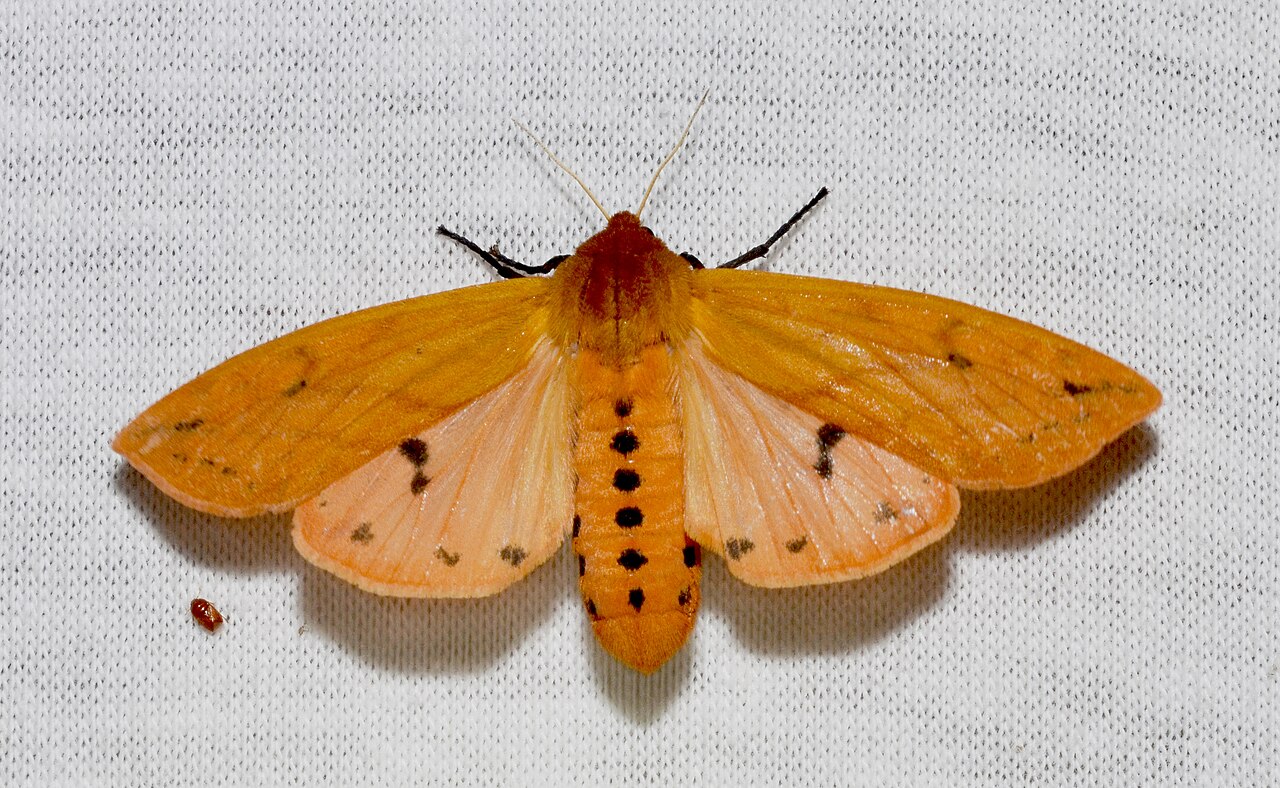
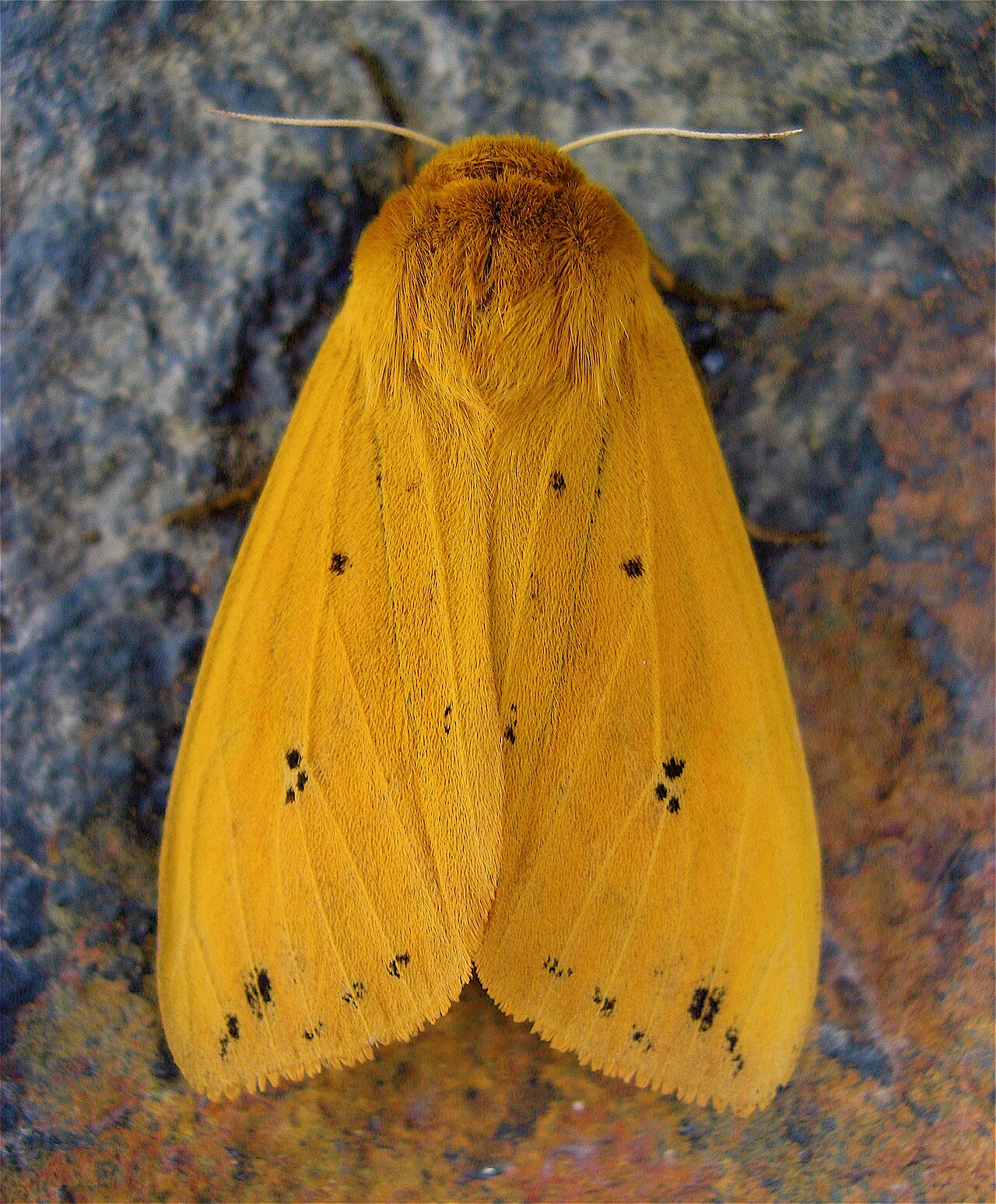
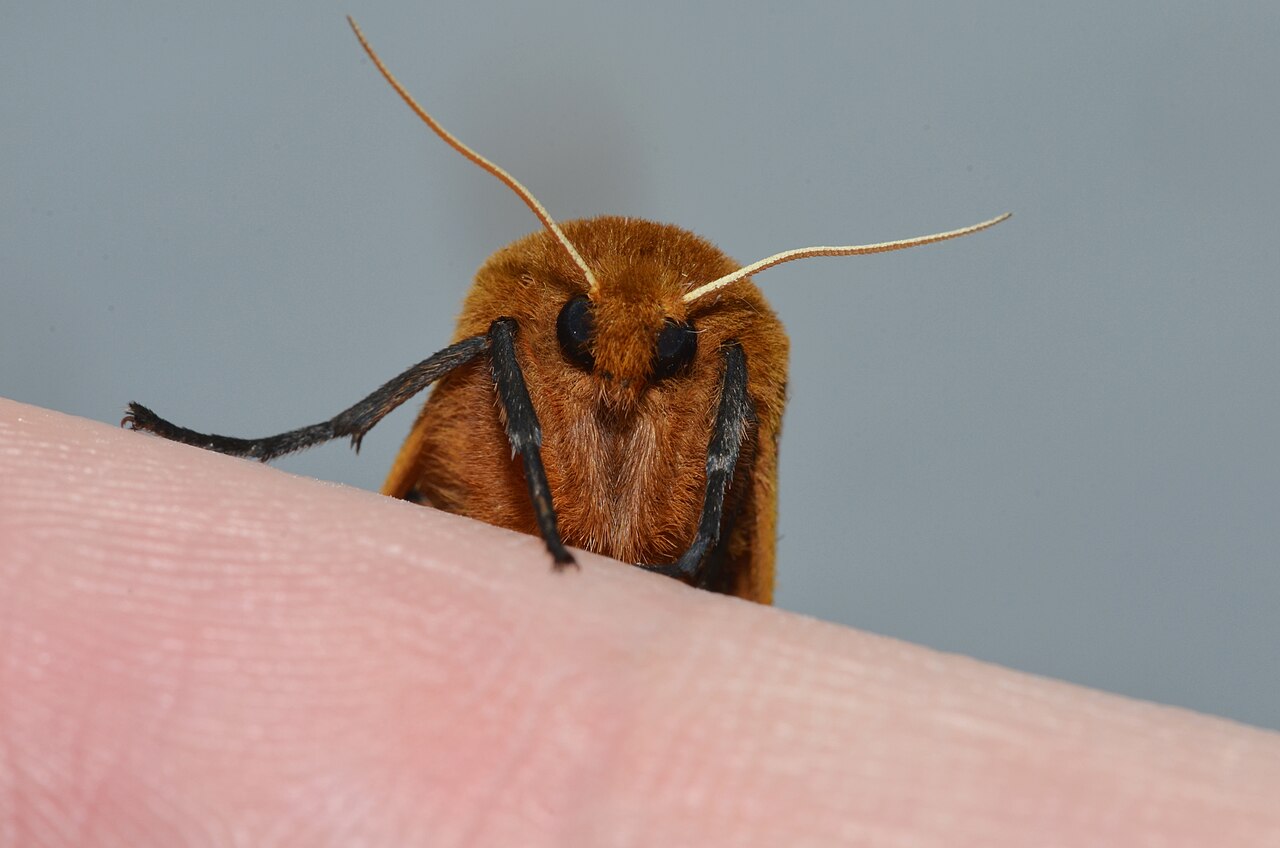
The Isabella tiger moth, which is far less recognizable than the caterpillar. Adults have a wingspan of about 1.5 to 2 in and are a dull yellowish-orange to tan, with scattered small black dots on the wings and body and orange marks on the abdomen. Most people who know woolly bears well have never knowingly seen the moth.
The transformation happens in spring rather than autumn, which surprises many people. The caterpillar overwinters as a larva, becomes active again when temperatures rise, feeds briefly, then spins a cocoon and pupates. The cocoon is unusual because the caterpillar incorporates its own bristles into the silk, producing a fuzzy grey-brown structure.
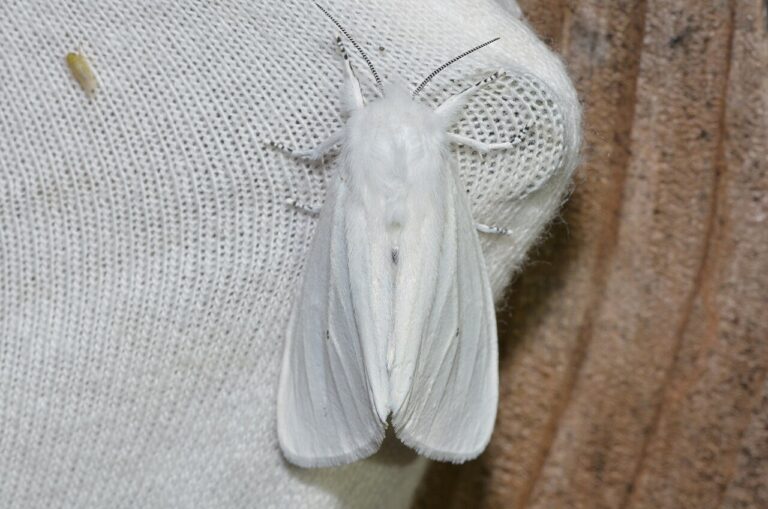
Adults emerge after roughly two weeks to a month and live only a few weeks, long enough to mate and lay eggs. In the southern part of the range there are two generations per year, so spring caterpillars produce summer moths and a second brood overwinters. The moth is nocturnal and comes to lights, which our guide to the white moth covers alongside its close tiger moth relatives.
Are Woolly Bear Caterpillars Poisonous?
No. Woolly bears have no venom, no stinging spines, and no toxic secretions, and they are among the safest caterpillars in North America to pick up. Children handle them every autumn without incident, and the caterpillar’s own defense is to curl into a tight ball and rely on its bristles making it unpleasant to swallow.
Some people do react to the hairs. The stiff setae can cause mechanical irritation, producing brief itching or a mild rash in sensitive individuals, particularly if a caterpillar is handled repeatedly or the hairs contact the face or inner arms. That is a contact reaction rather than envenomation, and washing with soap and lifting embedded hairs with tape resolves it.
The important distinction is against caterpillars that genuinely sting. The puss caterpillar, saddleback, io moth, and buck moth larvae have hollow spines connected to venom glands and cause real pain requiring medical attention. None of them looks like a woolly bear, but the general rule of not handling unfamiliar fuzzy or spiny caterpillars bare-handed costs nothing and removes the question entirely.
All-Black and Yellow Woolly Bears
An entirely black fuzzy caterpillar is usually not a banded woolly bear at all. The most common all-black candidate is the giant leopard moth caterpillar, which is jet black with stiff bristles and reveals bright red bands between its segments when it curls up. It is likewise harmless, and the adult moth is a striking white insect covered in black rings.
Banded woolly bears do occasionally appear nearly all black when the rust band is very narrow, which folklore reads as a prediction of a brutal winter. It actually indicates a young caterpillar that has not molted many times, often because the feeding season was short or dry.
The yellow woolly bear is a different species entirely, the larva of the Virginian tiger moth (Spilosoma virginica). It ranges from pale yellow through cream to orange, is uniformly colored rather than banded, and is common in gardens across North America. It too is harmless, though its hairs cause contact irritation somewhat more often than those of the banded woolly bear. Sorting dark larvae by pattern is the subject of our guide to the black caterpillar.
How Woolly Bears Survive Winter
Most butterflies and moths overwinter as eggs or pupae. Woolly bears do it as caterpillars, and the physiology involved is remarkable. They shelter under leaf litter, loose bark, logs, or rocks, and then simply allow themselves to freeze as temperatures drop.
The trick is cryoprotection. The caterpillar produces glycerol and related compounds that act as a biological antifreeze, protecting cell membranes and controlling where ice forms so that crystals develop outside the cells rather than inside them, where they would be lethal. Heart, gut, and blood freeze, and the animal survives.
Tolerances are extreme. Woolly bears have been recorded surviving temperatures well below minus 40 F under laboratory conditions, and in the wild they simply thaw when spring arrives and resume feeding. This is also why raking every leaf off a property in autumn removes overwintering habitat for woolly bears and a great many other insects, and why leaving leaf litter in place through winter is one of the more useful things a yard can do for local invertebrates.
The Arctic Woolly Bear
The most extreme member of the group lives in the high Arctic. Gynaephora groenlandica, the Arctic woolly bear moth, occurs in Greenland and northern Canada, where the summer growing season lasts only a few weeks and the caterpillar can feed for perhaps a month per year.
Because it cannot accumulate enough resources in one season, it stretches development across many. Arctic woolly bears take roughly seven years to reach pupation, and individuals in the harshest sites have been recorded taking up to fourteen, spending well over 90 percent of their lives frozen. It is among the longest larval development periods known in any insect.
Their freeze tolerance goes further than that of temperate species, surviving temperatures around minus 70 C. They also bask deliberately, orienting their dark bristly bodies toward the sun to raise body temperature well above the surrounding air so that digestion can proceed at all. The adult moth, after all those years, lives only a few days.
What Do Woolly Bear Caterpillars Eat?
They are broad generalists, which is part of why they are so widespread. The diet includes dandelion, plantain, clover, nettle, grasses, asters, birch, maple, and dozens of other herbaceous plants and low shrubs. They feed mostly on low-growing weeds rather than cultivated plants, which puts them in the same harmless-in-the-garden category as the beetles in our guide to the yellow ladybug.
This makes them a non-issue for gardeners. Woolly bears rarely occur in numbers large enough to damage anything, and their preferred foods are the plants most people are trying to remove anyway. There is no scenario in which a home garden needs woolly bear control.
If you want to keep one temporarily to watch it pupate, provide fresh dandelion or plantain leaves daily, a ventilated container with a stick or twig for pupation, and a slightly damp paper towel for humidity. Release it where you found it if you decide not to see it through, and be aware that a caterpillar collected in autumn needs cold overwintering conditions rather than a warm house, since keeping it warm through winter usually kills it.
Life Cycle Through the Year
Eggs are laid in clusters on host plant leaves in late spring or summer and hatch within a couple of weeks. The caterpillars feed through summer and early autumn, molting several times, with the rust band widening at each molt.
In autumn the fully grown larvae disperse to find shelter, which is the migration people notice on roads and driveways. They overwinter frozen under cover, become active again in early spring, feed briefly to top up reserves, and then spin a cocoon.
Pupation lasts about two weeks to a month, adults emerge and live a few weeks, and the cycle restarts. In southern regions two generations per year are typical, in northern regions one. Autumn is also when other insects make similar journeys, including the species covered in our guide to the orange butterfly. That road-crossing behavior is the main mortality event of the whole cycle, and moving one off pavement in the direction it was already heading is a small kindness with no downside.
Related reading: Woolly Bear Caterpillar Winter Prediction.
Related reading: Woolly Aphids.
Frequently Asked Questions
Do woolly bear caterpillars predict the winter?
No. The idea traces to a small informal study by Charles Curran in 1948 and has never been replicated. Band width reflects the caterpillar’s age and how favorable the previous growing season was, and individuals collected from the same field on the same day show different bands.
What does a woolly bear caterpillar turn into?
The Isabella tiger moth, a dull yellowish-orange moth with a 1.5 to 2 in wingspan and small black dots. The transformation happens in spring, since the caterpillar overwinters as a larva, then spins a cocoon incorporating its own bristles into the silk.
Are woolly bear caterpillars poisonous or do they sting?
No. They have no venom and no stinging spines, and they are safe to handle. The stiff bristles can cause mild mechanical irritation or a brief rash in sensitive people, which washing and tape resolve. Genuinely stinging caterpillars such as the puss caterpillar look nothing like a woolly bear.
What is an all-black woolly bear caterpillar?
Usually a giant leopard moth caterpillar, which is jet black with stiff bristles and shows red bands between the segments when it curls up. A banded woolly bear can also appear nearly black when its rust band is very narrow, which indicates a young caterpillar rather than a coming hard winter.
How do woolly bear caterpillars survive winter?
They shelter under leaf litter, bark, or logs and freeze solid, producing glycerol and related compounds that act as antifreeze and force ice to form outside their cells rather than inside. They have survived below minus 40 F in laboratory conditions and simply thaw in spring.
What do woolly bear caterpillars eat?
Dandelion, plantain, clover, nettle, grasses, asters, and dozens of other low-growing plants and shrubs. They are broad generalists that prefer weeds over cultivated plants and never occur in numbers that damage a garden.
Why do woolly bears cross roads in autumn?
Fully grown caterpillars leave their feeding areas in September and October to find sheltered overwintering sites under leaf litter, logs, and bark. Road crossings are the most dangerous part of the entire life cycle, and moving one off pavement in the direction it was heading genuinely helps.