Bullet Ant: The World’s Most Painful Sting Explained
The bullet ant (Paraponera clavata) holds the top rating on the Schmidt Sting Pain Index, a scientific scale of insect sting pain, earning its name from a sting so intense that survivors consistently describe it as feeling like being shot. Found in the humid rainforests of Central and South America, this large, dark, wasp-like ant is both a formidable predator and, despite its fearsome reputation, generally not dangerous to healthy humans in any lasting medical sense. This guide covers identification, exactly how painful the sting really is, what causes that pain, and what to expect if stung.
| Trait | Detail |
|---|---|
| Scientific name | Paraponera clavata |
| Size | Around 2 to 2.5 cm (roughly 1 inch) long |
| Range | Central and South America (El Salvador to Brazil) |
| Schmidt Pain Index rating | 4.0+ (highest possible rating) |
| Pain duration | 12 to 24 hours |
How to Identify a Bullet Ant
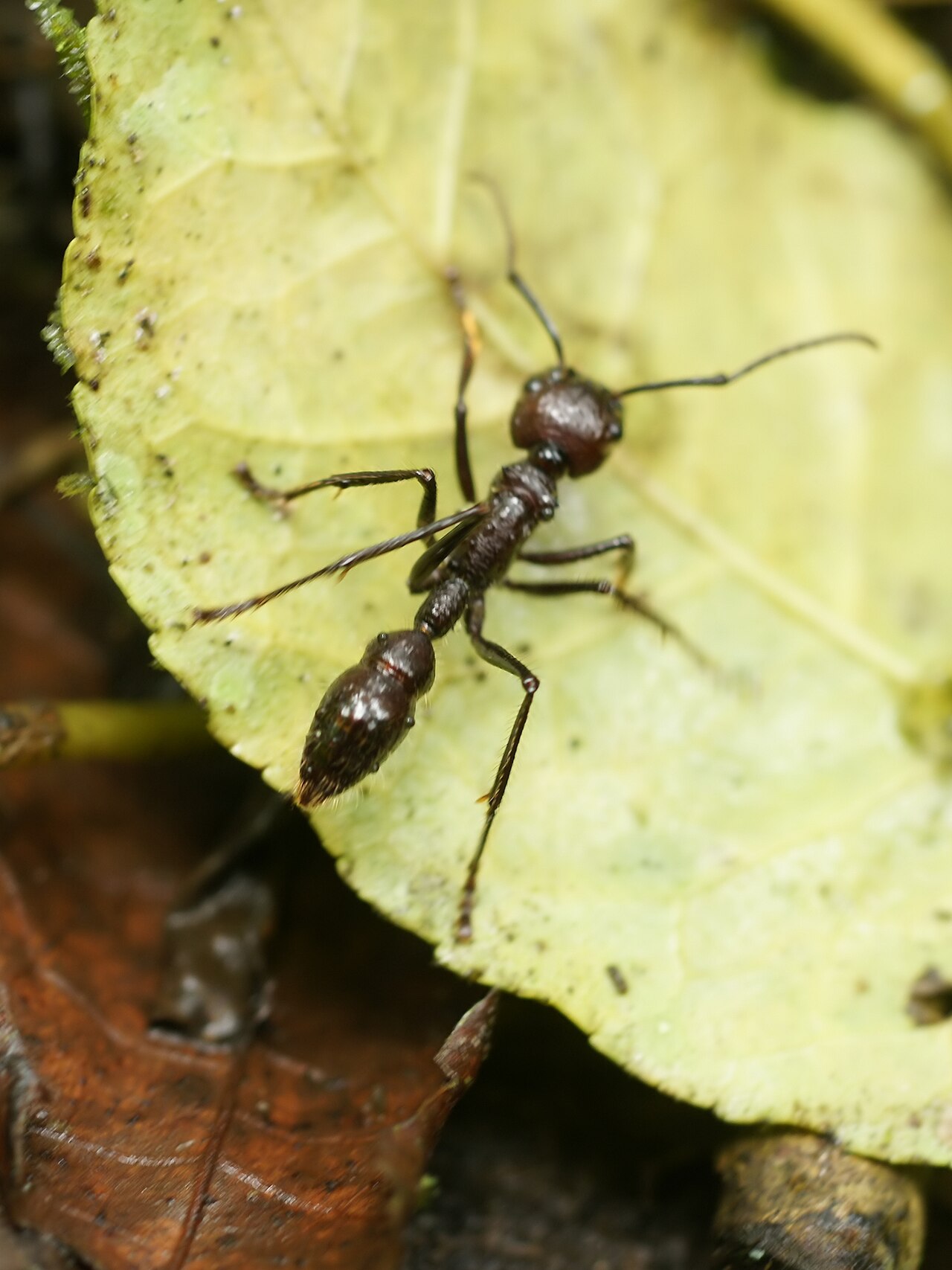
Bullet ants are notably large compared with common household ants, with workers typically measuring around 2 to 2.5 centimeters, roughly an inch, in length, and a dark reddish-brown to black, glossy body that gives them a distinctly strong, wasp-like appearance. Unlike many ant species where the queen is dramatically larger than workers, bullet ant queens are not significantly bigger than the workers around them, which can make identifying a queen by size alone difficult for a non-expert observer. They form nests in soil near the base of trees, and worker ants actively forage both on the ground and up into the forest canopy in search of food for the colony.
Just How Painful Is a Bullet Ant Sting?
The bullet ant’s sting earns a maximum 4.0+ rating on the Schmidt Sting Pain Index, a scale developed by entomologist Justin O. Schmidt, who personally experienced and rated numerous insect stings over his career; the bullet ant sits at the very top of that scale. Schmidt famously described the sensation as “pure, intense, brilliant pain,” comparing it to walking over flaming charcoal with a three-inch rusty nail embedded in the heel. Unlike most insect stings that peak and fade within minutes to hours, bullet ant pain remains intense and unrelenting for an extraordinarily long stretch, typically 12 to 24 hours, which earned the species its evocative local nickname, Hormiga Veinticuatro, or “24-hour ant.”
What Makes the Sting So Painful?
The bullet ant’s venom contains a specialized neurotoxic peptide called poneratoxin, which is directly responsible for the sting’s extreme intensity and unusually long duration. Poneratoxin works by preventing voltage-gated sodium channels in the nervous system from properly inactivating, meaning affected nerve cells keep firing far longer than normal rather than resetting quickly the way they would after an ordinary stimulus. This sustained, abnormal nerve activity translates directly into the prolonged, waves-like throbbing pain victims describe, often accompanied by additional symptoms such as localized swelling, trembling, and in some cases nausea in the hours immediately following a sting.
First Aid for a Bullet Ant Sting
Because the sting is not typically medically dangerous despite its intensity, first aid focuses primarily on pain management rather than treating any serious underlying toxicity. Cleaning the sting site, applying a cold compress to help with swelling, and taking an over-the-counter pain reliever are reasonable general steps, similar to basic care recommended for other significant insect encounters like other large, intimidating insects. Anyone with a known history of serious allergic reactions to insect stings, or anyone showing signs of a severe allergic response such as difficulty breathing or widespread swelling, should seek emergency medical care immediately rather than relying on general home comfort measures.
Is a Bullet Ant Sting Dangerous?
Despite its fearsome reputation and genuinely severe pain, a bullet ant sting is not typically dangerous or life-threatening to a healthy person, and it does not carry the serious systemic toxicity associated with, for example, certain snake or scorpion venoms. The primary effects are localized: intense pain, swelling, and redness at the sting site, with rare allergic reactions possible in sensitive individuals, similar to how any insect sting carries some allergy risk regardless of species. That said, the sheer intensity and duration of the pain alone represents a genuine ordeal, which is precisely the point evolutionarily, since the sting exists as a defensive and territorial deterrent rather than as a way to seriously harm larger animals or people.
Bullet Ant Colony Structure
Bullet ant colonies are generally modest in size compared with many other ant species, often numbering in the low hundreds of individuals rather than the tens of thousands seen in some other ant colonies. The colony structure follows a typical division of labor: a single queen focused on reproduction, worker ants that forage, defend the nest, and care for developing larvae, and the larvae themselves, which depend entirely on workers bringing back both plant-based resources and hunted or scavenged animal protein. Because the queen is not dramatically larger than workers, as noted earlier, colony structure is often easier to determine through behavior and location within the nest than through simple visual size comparison alone.
Where Do Bullet Ants Live?
Bullet ants are native exclusively to humid lowland tropical rainforests, found across a range spanning from El Salvador and Honduras in Central America down through Peru, Bolivia, and Brazil in South America. They are not found in the United States, though a similarly named and similarly painful species, the Texas bullet ant (Neoponera villosa), does occur in Texas and Mexico despite being a distinct species from the true bullet ant. Within their rainforest habitat, bullet ants build nests in soil near the base of trees, giving worker ants ready access to both ground-level foraging and the forest canopy above.
What Do Bullet Ants Eat?
Bullet ants are omnivorous hunters and scavengers, and adult ants primarily sustain themselves on plant-based resources like nectar, honeydew, and plant sap. However, the colony’s larvae need animal protein to develop properly, so worker ants actively hunt live prey, including small invertebrates such as spiders, insects, and even small vertebrates like frogs, alongside scavenging carcasses of grasshoppers, beetles, and katydids they encounter while foraging. This dual role as both plant-resource consumers and active predators makes bullet ants a genuine part of the local arthropod food web, contributing to controlling the populations of the smaller invertebrates they hunt, not unlike how other omnivorous insects balance plant and animal food sources depending on availability.
How Bullet Ants Defend Their Colony
Beyond stinging individual threats, bullet ants display coordinated colony-level defense behavior when their nest is disturbed, with worker ants emitting alarm signals that recruit nearby colony members to respond to a perceived threat collectively rather than relying on a single ant to repel an intruder alone. This collective defense, combined with the sheer deterrent power of the sting itself, makes an established bullet ant colony a genuinely effective deterrent against most potential predators or disturbances in its rainforest habitat, reinforcing why the species faces relatively few natural threats once a colony is established, a defensive advantage shared conceptually with other well-defended colonial insects that also rely on coordinated group response.
Bullet Ant vs Other Painful Insect Stings
The Schmidt Sting Pain Index rates dozens of stinging insects on a scale from 1.0 to 4.0+, and the bullet ant sits alone at the top with its 4.0+ rating, well above other notably painful insects on the same scale, such as paper wasps and red harvester ants at 3.0, or bald-faced hornets and yellow jackets at 2.0. Even a swarm of ordinary fire ants, individually rated a mild 1.2, does not approach the bullet ant’s intensity even collectively, which underscores just how far outside the normal range the bullet ant’s sting sits compared with virtually every other commonly encountered stinging insect, including species people typically consider quite painful in their own right, like large spiders.
The Bullet Ant Initiation Ritual
Certain Indigenous communities in the Amazon, most notably the Sateré-Mawé people of Brazil, are known for a coming-of-age ritual in which young men wear gloves woven with dozens of live bullet ants, stingers turned inward, to deliberately experience repeated stings as a test of endurance and a rite of passage into manhood. Given the sting’s documented 12 to 24 hour pain duration, and the ritual’s expectation that a participant endure this multiple times over repeated ceremonies, it stands as one of the more extreme documented examples of humans intentionally enduring the world’s most painful recorded insect sting for cultural and symbolic reasons rather than out of necessity or accident.
Related reading: Red Wasp.
Related reading: Red Wasp.
Related reading: Red Wasp.
Related reading: Red Wasp.
Related reading: Red Wasp.
Related reading: Red Wasp.
Related reading: Red Wasp.
Related reading: Red Wasp.
Related reading: Red Wasp.
Related reading: Purple Butterfly.
Related reading: Carpenter Ant Bite.
Related reading: Carpenter Ant Queen.
Frequently Asked Questions
How painful is a bullet ant sting?
It rates a maximum 4.0+ on the Schmidt Sting Pain Index, the highest possible score, and is described as intense, waves-like pain lasting 12 to 24 hours, earning the species the nickname ’24-hour ant.’
What causes the bullet ant’s extreme pain?
The venom contains poneratoxin, a neurotoxic peptide that keeps nerve cells firing abnormally long by disrupting voltage-gated sodium channels, producing sustained, throbbing pain rather than a brief sting sensation.
Is a bullet ant sting dangerous or deadly?
No, it is not typically dangerous to a healthy person despite the extreme pain. Effects are usually localized swelling and redness, with rare allergic reactions possible, similar to risks with any insect sting.
Where do bullet ants live?
Bullet ants live in humid lowland rainforests across Central and South America, from El Salvador and Honduras down through Peru, Bolivia, and Brazil. They are not found in the United States.
What do bullet ants eat?
Adult bullet ants mainly feed on nectar, honeydew, and plant sap, while worker ants hunt small invertebrates like spiders and insects, along with scavenging carcasses, to feed protein to developing larvae.
How big are bullet ants?
Worker bullet ants typically measure around 2 to 2.5 centimeters, roughly one inch, long, making them notably larger than most common household ant species.
What is the bullet ant initiation ritual?
Certain Indigenous communities in the Amazon, notably the Sateré-Mawé people, use a coming-of-age ritual where young men wear gloves woven with live bullet ants to endure repeated stings as a test of endurance.
Entomologists studying insect venom, including researchers affiliated with university biology departments, continue examining poneratoxin and related compounds for potential applications beyond simple curiosity about insect defenses, since understanding exactly how such a potent, long-lasting nerve toxin functions has broader relevance to pain research generally.
For most people, the bullet ant will remain a fascinating subject encountered through documentaries or written accounts rather than direct experience, and that distance is honestly for the best given just how uniquely unpleasant a firsthand encounter with this species genuinely is.
Comparisons to other notorious stinging insects like red wasps help put the bullet ant’s reputation in perspective, but even seasoned entomologists who have experienced both consistently rank the bullet ant in a category of its own.
Anyone drawn to studying venomous or defensively formidable insects more broadly may also find the diet and behavior of the reptiles that sometimes prey on ants an interesting related area, since predator-prey relationships between reptiles and stinging insects shape rainforest food webs in their own right.