Fruit Bat: Size, Diet, Range, and Why You Never Touch One
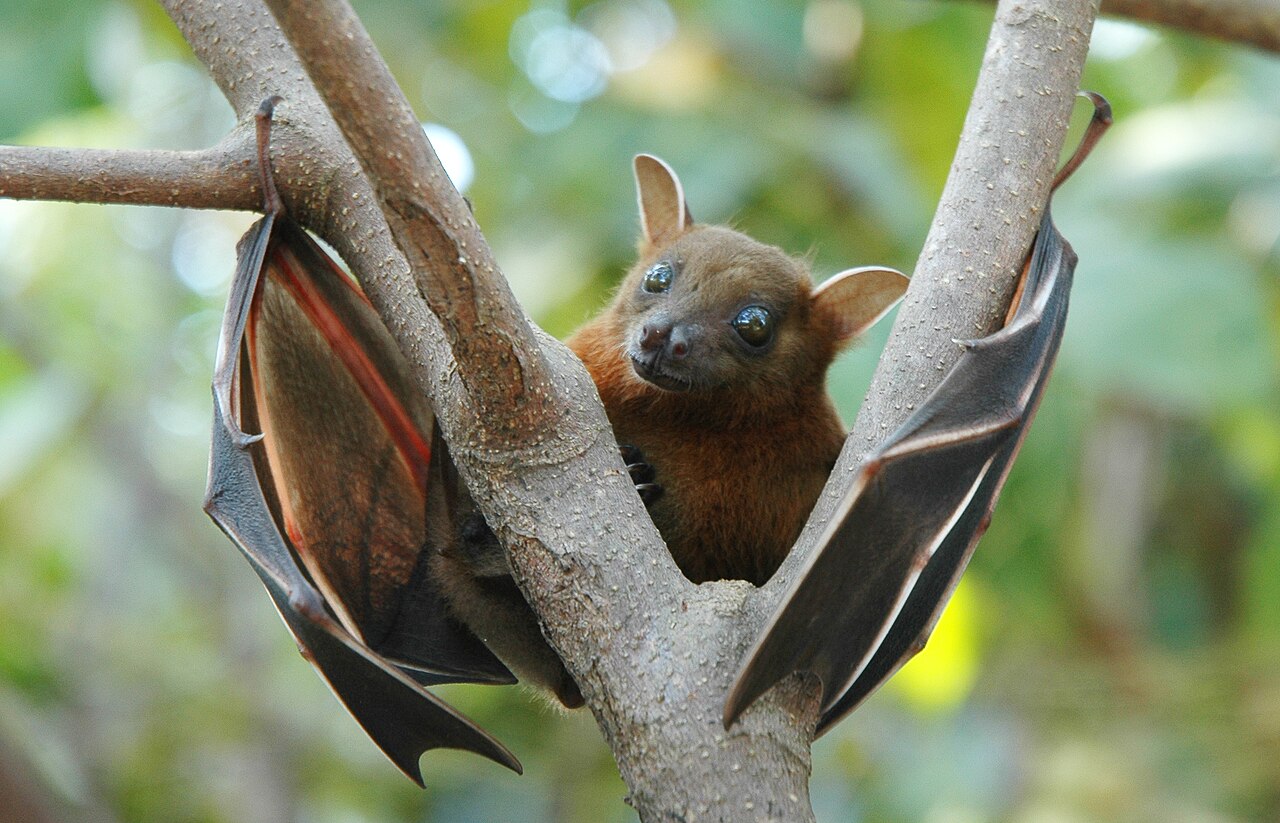
A fruit bat is any of roughly 200 species in the family Pteropodidae, the large, fruit eating bats of Africa, Asia, Australia and the Pacific islands. They are the biggest bats alive, they navigate with huge eyes rather than echolocation, and none of them live in the continental United States. The flying fox with a 5 ft (1.5 m) wingspan hanging in a zoo exhibit is a fruit bat.
Almost everything people assume about bats comes from the small insect eating species found across North America, and fruit bats break most of those assumptions. They have dog like faces, they feed by daylight in some species, and they are the reason wild durian, mango and agave keep producing. Here is what separates them from the bats in your attic.
Fruit bats, or megabats, are large Old World bats that eat fruit, nectar and pollen. They range from 2 in (5 cm) to over 1 ft (30 cm) in body length with wingspans up to 5.6 ft (1.7 m). They do not live in the US, do not drink blood, and should never be handled because of the viruses they can carry.
| Trait | Fruit bats (megabats) | US bats (microbats) |
|---|---|---|
| Wingspan | Up to 5.6 ft (1.7 m) | 6 to 16 in (15 to 40 cm) |
| Diet | Fruit, nectar, pollen | Insects |
| Navigation | Large eyes, keen smell | Echolocation |
| Range | Africa, Asia, Australia, Pacific | Americas and worldwide |
| Roosts | Open tree camps, thousands strong | Caves, attics, bark crevices |
| Pups per year | Usually 1 | 1 to 4 |
What Is a Fruit Bat?
Fruit bats belong to the suborder Yinpterochiroptera and the single family Pteropodidae, often called megabats. The family covers about 200 species, from the tiny long tongued nectar bats of Southeast Asia to the large flying foxes of the genus Pteropus. The largest, the golden crowned flying fox (Acerodon jubatus) of the Philippines, weighs up to 2.6 lb (1.2 kg).
The clearest structural difference is the claw. Most fruit bats keep a claw on the second finger as well as the thumb, which they use to climb through fruiting branches. Their eyes are large and adapted to low light, and only one group, the rousette bats, produces a crude form of echolocation using tongue clicks. For the sounds the insect eating species make instead, see our guide to bat sounds.
Why Is It Called a Fruit Bat?
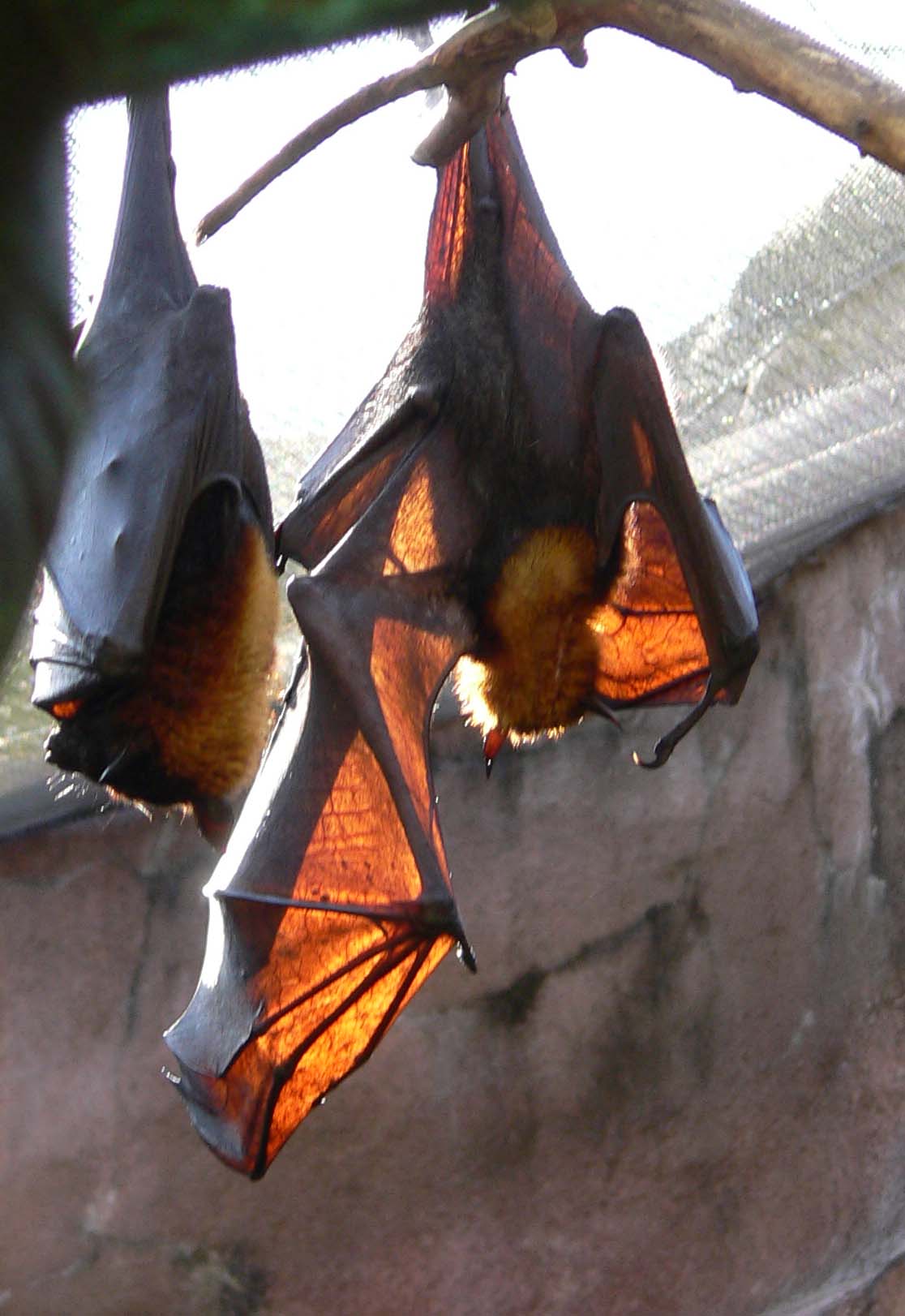
The name comes straight from the diet, and unlike many common names it is accurate. These bats feed on ripe fruit, nectar and pollen, and many species do not chew and swallow pulp at all. They press the fruit against the roof of the mouth, swallow the juice, and spit out a dry wad of fiber and seeds called an ejecta pellet.
That habit makes them unusually efficient seed dispersers. A single flying fox colony can move seeds tens of miles in a night, which is why fruit bats matter to forest regeneration well beyond the trees they feed in. Nectar feeding species also pollinate commercially important plants, including agave and durian.
Are There Any Fruit Bats in the US?
Not in the lower 48 states. Pteropodid fruit bats are an Old World family and reach no closer than the western Pacific. The one exception under the US flag is the Mariana fruit bat (Pteropus mariannus), a federally threatened species on Guam and in the Northern Mariana Islands, where the population has been hit hard by hunting and by the invasive brown tree snake.
The bats that eat fruit in Florida or Texas headlines are almost always misidentified. Every bat native to the continental US eats insects, with the exception of a few nectar feeding leaf nosed bats in southern Arizona and New Mexico, and those belong to a different family entirely. If something is roosting in your house, it is an insect eater, and the removal process is different from what you would need for a fruit bat colony.
Why Can’t You Touch Fruit Bats?
Because of what they can carry, not because of what they do. Fruit bats are natural reservoirs for several serious viruses, including Nipah virus in South and Southeast Asia, Hendra virus in Australia, Marburg virus in African rousette bats, and Australian bat lyssavirus, which is closely related to rabies. Transmission is rare, but the illnesses are severe.
A frightened bat of any size will bite when handled, and a bite or scratch from an unknown bat is treated as a rabies exposure in the US regardless of the species. The practical rule is the same everywhere: never pick up a bat with bare hands, alive or dead, and call animal control or a licensed rehabilitator instead. Droppings deserve the same caution, as covered in our guide to bat guano.
Are Fruit Bats Harmless to Humans?
Left alone, yes. Fruit bats have no interest in people, they do not feed on blood, and they do not attack. Only three vampire bat species drink blood, all of them small microbats in Latin America, and none are fruit bats. The damage attributed to fruit bats is agricultural, where large colonies raid orchards, and the conflict that follows is the main reason many species are declining.
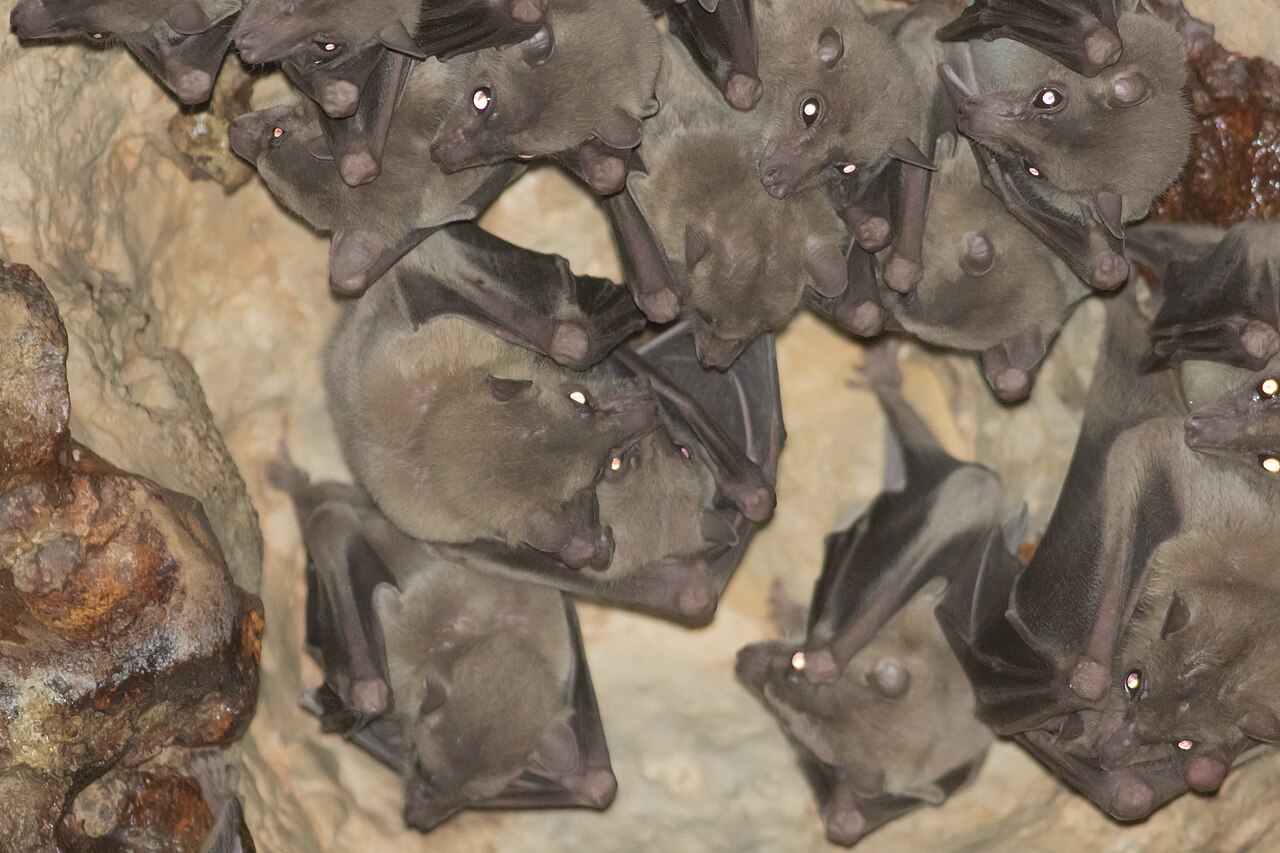
Their roosts are the other friction point. A flying fox camp can hold tens of thousands of animals in a stand of trees, and the noise and smell are considerable. Those colonies are also why bats have so many collective nouns, a topic we cover in what a group of bats is called.
Fruit Bat vs Flying Fox
Every flying fox is a fruit bat, but not every fruit bat is a flying fox. Flying fox is the common name for the genus Pteropus, about 60 species of the largest fruit bats, all with a fox like muzzle and no tail. The rest of the family includes epauletted fruit bats, rousettes, tube nosed bats and the small nectar feeders.
Size is the quickest field separation. If the animal is over 1 ft (30 cm) long with a wingspan past 3 ft (90 cm) and is roosting in the open canopy by day, it is almost certainly a Pteropus. Smaller fruit bats tend to roost in caves and foliage, and their single pups look much like the baby bats of other families.
Frequently Asked Questions
Are fruit bats friendly?
Captive raised fruit bats in zoos can become tolerant of familiar keepers, which is where the reputation comes from. Wild ones are not friendly, they are simply not aggressive. A bat that lets you approach is usually sick or injured, and that is exactly the one you should not touch.
What is the rarest bat on Earth?
Several fruit bats are contenders. The Bulmer’s fruit bat of Papua New Guinea survives in a single cave with a few hundred animals, and the Livingstone’s flying fox of the Comoros numbers around 1,200. Both are critically endangered, mainly from habitat clearing and hunting.
What is the deadliest bat in the world?
No bat is deadly by behavior. By disease risk, the Egyptian rousette (Rousettus aegyptiacus) is the most consequential, as it is the reservoir of Marburg virus. Vampire bats transmit rabies to livestock in Latin America, but they are not fruit bats and rarely bite people.
Why is killing a bat illegal?
In the US, all native bats are protected by state wildlife law, and several by the Endangered Species Act. Removal is legal only outside the maternity season and only by exclusion, not killing. The National Park Service and state agencies publish the exclusion windows.
How big do fruit bats get?
The largest are the golden crowned flying fox and the large flying fox (Pteropus vampyrus), both with wingspans near 5.6 ft (1.7 m) and weights up to 2.6 lb (1.2 kg). Body length stays around 1 ft (30 cm). The smallest nectar feeding species weigh less than an ounce.
How do you tell fruit bat droppings from rodent droppings?
Bat droppings crumble to a glittery powder of insect parts or seed fragments, while rodent pellets stay hard and fibrous. The difference is easy to check and matters for cleanup, and we walk through it in bat poop vs mouse poop.