What Is a Group of Bats Called? Colony and Cauldron
A group of bats is called a colony, which is the term biologists use, and a cauldron when the bats are in flight. Collective noun lists also give a cloud of bats and a camp of bats, the latter used specifically for fruit bat roosts in Australia. What is a group of bats called therefore has one working answer, colony, and several colorful ones that survive in trivia lists. A group of bats emerging from a cave at dusk is properly a cauldron, and that is the term most people are looking for.
Bats are among the most social mammals on earth, which makes their collective nouns unusually well earned. Bracken Cave in Texas houses roughly 15 million Mexican free-tailed bats in summer, the largest known concentration of mammals anywhere, and the nightly emergence takes hours and shows up on weather radar. This guide covers every term for a group of bats, explains where cauldron came from, describes how bat colonies are organized, and clarifies what to call the bats in your attic and the pups they raise there.
A group of bats is called a colony, the term used by biologists, or a cauldron when the bats are flying. Collective noun lists also list a cloud and a camp. Bat colonies range from a few individuals to the 15 million Mexican free-tailed bats at Bracken Cave in Texas, the largest mammal gathering on earth. Baby bats are pups.
| Question | Answer |
|---|---|
| Scientific and everyday term | Colony |
| Bats in flight | Cauldron |
| Other listed terms | Cloud, camp |
| Roost of breeding females | Maternity colony |
| Largest known colony | ~15 million at Bracken Cave, Texas |
| Baby bat | Pup; a group of pups is a crèche |
| Not correct | Flock (bats are mammals, not birds) |
Why Is a Group of Bats Called a Cauldron?
A group of bats in flight is called a cauldron because of the swirling, boiling motion of a large emergence, and because of the long association between bats and witchcraft. When millions of bats leave a cave at dusk, they spiral upward in a dense, rotating column that genuinely resembles something boiling over the rim of a pot. The image is accurate enough that the word works as a description rather than only as folklore.
The witchcraft association supplies the second half. Bats appear in the witches’ brew in Macbeth, and European folklore linked them with the night, with sorcery, and with the devil for centuries. Cauldron carries all of that, and the collective noun sits alongside a murder of crows and an unkindness of ravens in the tradition of naming disliked or feared animals with sinister terms. Unlike those medieval coinages, cauldron for bats is a comparatively modern addition to collective noun lists.
A cloud of bats is a gentler alternative describing the same thing, and it is closer to what a distant emergence actually looks like: a dark, shifting smudge rising against the sky. A camp of bats refers specifically to the daytime roosts of flying foxes, the large fruit bats of Australia and Southeast Asia, which hang in trees in groups of thousands and are known locally as camps. That is a genuine working term rather than a trivia entry.
What Is a Bat Colony?
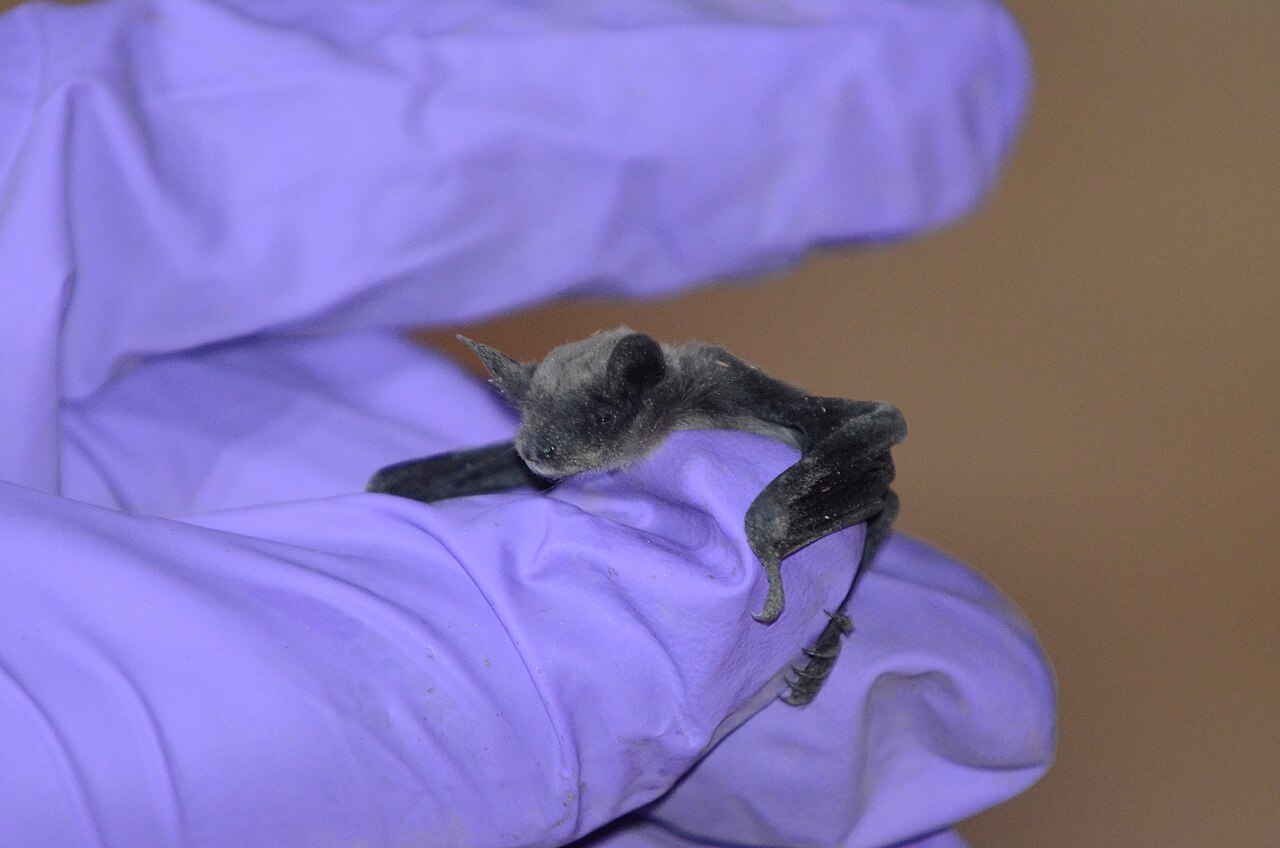
A bat colony is any group of bats roosting together, and colony is the standard term in biology, wildlife management, and pest control. Unlike cauldron, colony carries no implication about flight or numbers: three little brown bats in a barn are a colony, and so are fifteen million Mexican free-tailed bats in a cave. The word is used the same way it is for seabirds, ants, and prairie dogs, meaning animals living together at one site.
Biologists distinguish colony types by function. A maternity colony consists of pregnant and nursing females that gather in spring to give birth and raise pups, and these are the colonies most likely to occupy attics and barns because they need warmth. A bachelor colony holds adult males, which typically roost separately during the breeding season. A hibernaculum is the winter roost, usually a cave or mine with stable temperature and humidity, where bats cluster in torpor for months.
Bats choose roosts by microclimate, and the requirements are narrow. Maternity colonies need temperatures warm enough for pups to develop quickly, which is exactly why attics are attractive. Hibernacula need cold but above freezing, with high humidity to prevent dehydration over a winter of near-total inactivity. Because suitable sites are limited, entire regional populations may depend on a handful of caves, which is what made white-nose syndrome so devastating. The guide to getting rid of bats explains the legal and practical constraints on removing a maternity colony.
How Large Do Bat Colonies Get?
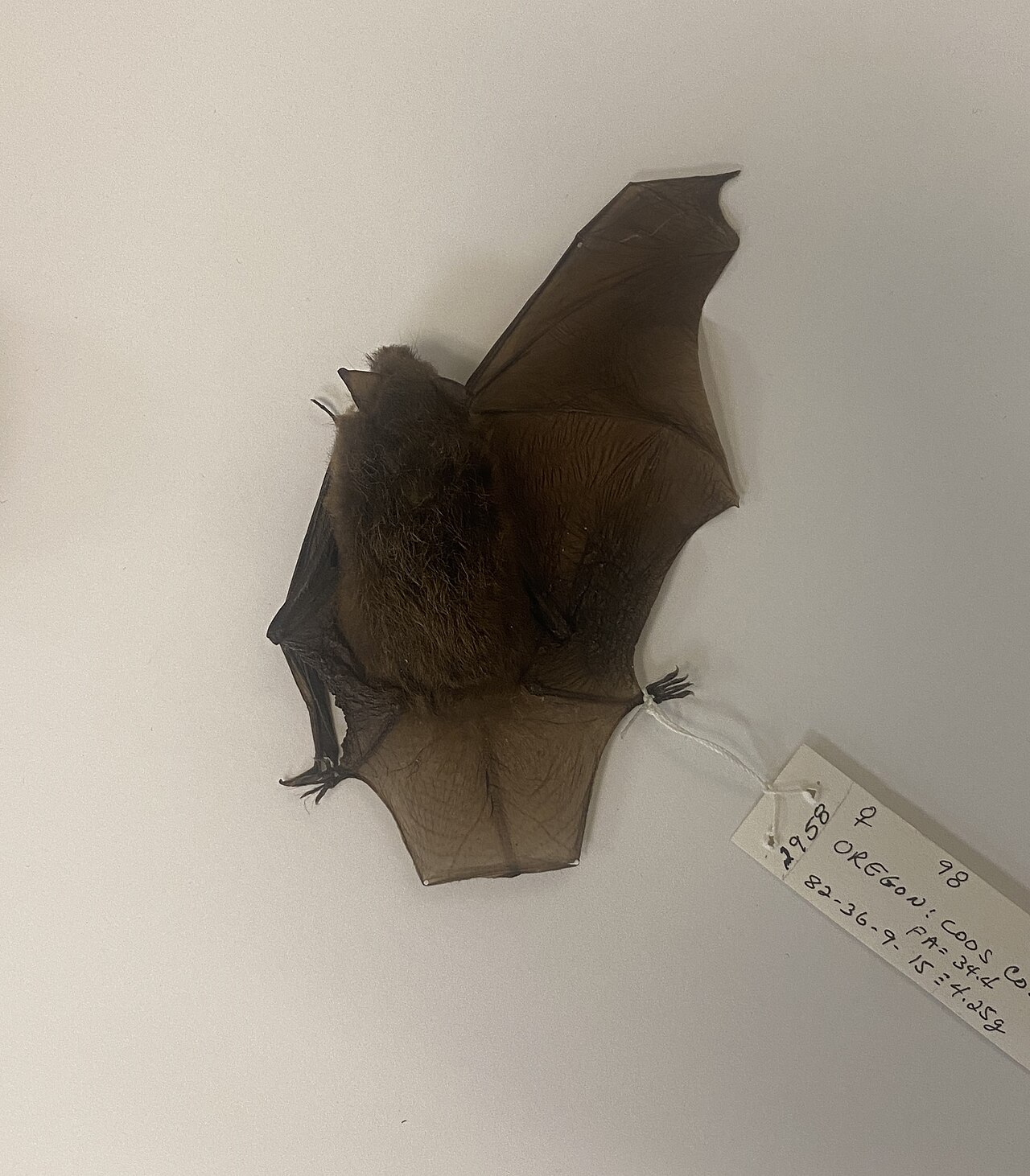
Bat colonies range from a handful of individuals to the largest gatherings of mammals on the planet. Bracken Cave north of San Antonio, Texas, holds an estimated 15 million Mexican free-tailed bats each summer, and the nightly emergence is so dense that it appears on National Weather Service Doppler radar as an expanding bloom. The colony consumes something on the order of 100 tons of insects per night, including significant numbers of agricultural pest moths.
Congress Avenue Bridge in Austin, Texas, hosts roughly 1.5 million Mexican free-tailed bats between March and October in the expansion joints under the deck, making it the largest urban bat colony in North America and a major tourist attraction. Carlsbad Caverns in New Mexico, Frio Cave in Texas, and numerous limestone caves across the southern United States hold colonies in the hundreds of thousands to millions.
Most North American species form far smaller groups. Little brown bat maternity colonies typically hold 50 to a few hundred females, big brown bat colonies 20 to 300, and many forest species roost alone or in groups of two or three under loose bark or in tree cavities. Solitary species including the hoary bat and the red bat roost singly in foliage and never form colonies at all, so the collective noun question does not really apply to them.
Do Bats Live in Groups All Year?
No, bat social structure changes completely through the year in most temperate species. In spring, females gather into maternity colonies while males roost alone or in small bachelor groups, so the sexes are largely separated through the summer. In autumn, bats congregate at cave entrances in a behavior called swarming, where mating occurs and young bats learn the location of hibernation sites. In winter, both sexes cluster together in hibernacula.
Mating itself has an unusual twist. Many temperate bats mate in autumn, but the female stores the sperm through hibernation and does not ovulate until spring, so fertilization is delayed by months. This lets the birth be timed to the emergence of insects rather than to the mating season. Gestation then runs roughly 40 to 60 days, and most North American species give birth to a single pup, though big brown bats and red bats often have twins or more.
The seasonal pattern explains why people find bats at different times for different reasons. A colony appearing in an attic in May is a maternity group. Bats turning up individually in living space in August are usually inexperienced juveniles that have just started flying. Bats found in a basement or wall cavity in January are hibernating. The bat sounds guide covers the audible squeaking and chittering that often gives a roost away long before anyone sees a bat.
What Is a Group of Baby Bats Called?
A baby bat is called a pup, and a group of pups left together in a maternity roost is called a crèche, the same term used for flamingo and penguin chicks. Female bats leave their pups clustered in the warmest part of the roost while they hunt, and in a large maternity colony that crèche can contain hundreds or thousands of pups packed at densities of several hundred per square foot.
The remarkable part is what happens on return. In a Mexican free-tailed bat colony with millions of pups, a returning mother locates her own pup among the mass using a combination of vocal signature and scent, and studies have shown that mothers find their own offspring the large majority of the time rather than nursing at random. Given the density and noise involved, this is one of the more impressive feats of individual recognition in mammals.
Pups are born large relative to the mother, often a quarter or more of her body weight, and are born naked and helpless. They grow fast, and most North American species can fly at three to five weeks. Bats are unusually long-lived for their size, with little brown bats commonly reaching 10 to 20 years and one banded individual recorded at over 30, and they reproduce slowly at one pup a year, which is why colony losses are so hard to recover from. The baby bat guide covers pups in detail and what to do if you find one.
Is a Group of Bats Called a Flock or a Swarm?
No, a group of bats is not a flock. Flock applies to birds and to some herd animals such as sheep, and bats are mammals, not birds, so the term does not apply. This is worth stating plainly because bats are frequently assumed to be birds, and the confusion goes back a long way; the German word Fledermaus, meaning flutter-mouse, at least gets the mammal part right.
Swarm is different, because swarming is a genuine technical term in bat biology, but it does not mean simply a group. Autumn swarming describes a specific behavior in which large numbers of bats gather at cave and mine entrances in late summer and autumn, flying in and out repeatedly through the night. Swarming sites serve for mating and for introducing young bats to hibernation locations, and they can draw bats from a wide surrounding area.
So a swarm of bats is correct only when describing that behavior, not as a general collective noun. For everyday use, colony covers a roosting group, cauldron covers a flying mass, and cloud is an acceptable alternative for the latter. If a quiz asks what a group of bats is called, cauldron is usually the expected answer, with colony as the technically correct one.
How Bat Colonies Are Organized Socially
Bat colonies are more socially complex than their appearance suggests. Female bats in maternity colonies frequently return to the same roost year after year, and many species show natal philopatry, meaning daughters return to the colony where they were born. This produces roosts made up largely of related females across several generations, a structure closer to an elephant herd than to a random aggregation.
Individual bats also form stable social bonds. Studies of common vampire bats, the most intensively researched species socially, have documented long-term relationships in which unrelated individuals regurgitate blood meals to roost mates that failed to feed, and the sharing is reciprocal: bats that have given help are more likely to receive it. This is one of the clearest documented cases of reciprocal altruism in a non-primate mammal.
Communication within a colony is extensive. Bats use a wide range of social calls distinct from their echolocation, including isolation calls from pups, distress calls, territorial calls between males, and courtship songs; male Mexican free-tailed bats sing structured songs with repeated syllables to attract females. Some species also engage in vocal learning, adjusting their calls to match roost mates, which is rare outside of humans, cetaceans, and a handful of birds.
Collective Nouns for Bats and Other Colonial Animals
Bats share colony with the other animals that live at high density in one place: seabirds, penguins, ants, bees, prairie dogs, and seals all form colonies, and in each case the word is a functional description rather than a piece of wordplay. This puts bats in a different category from birds like crows and owls, whose collective nouns were invented for effect. Cauldron is the exception, a fanciful term layered on top of a functional one.
Among mammals, the fanciful terms are relatively scarce. A group of mice is a mischief, a group of squirrels is a scurry or a dray, and a group of ferrets is a business, but most mammals simply get herd, pack, pod, or colony. Whales get a pod, wolves a pack, lions a pride, and rhinos a crash, which is one of the few mammal terms with real character. The medieval compilers who produced most collective nouns concentrated on game birds and hunted mammals, and bats were of no interest to them.
What sets bats apart is that they represent about one in five mammal species worldwide, with more than 1,400 species described, and they range from the bumblebee bat weighing two grams to flying foxes with five-foot wingspans. A single collective noun covering that range is necessarily loose. Bat Conservation International (batcon.org) uses colony throughout its materials, which is the best guide to what the working term is. If you suspect a colony in a building, the bat poop guide covers identifying guano and the health precautions that go with it, and the bat poop vs mouse poop comparison handles the most common misidentification.
Related reading: what is a group of butterflies called.
Frequently Asked Questions
What is a group of bats called?
A group of bats is called a colony, the term biologists use, or a cauldron when the bats are in flight. Collective noun lists also include a cloud of bats and a camp, the latter used for fruit bat roosts.
Why is a group of bats called a cauldron?
Because a large emergence spirals upward in a swirling, boiling motion that resembles something bubbling over a pot, and because of the long folklore association between bats and witchcraft. It is a modern addition to collective noun lists.
Is a group of bats called a flock?
No. Flock applies to birds, and bats are mammals. The correct terms are colony for a roosting group and cauldron or cloud for bats in flight.
What is a swarm of bats?
Swarming is a specific autumn behavior in which bats gather at cave and mine entrances, flying in and out through the night to mate and to teach young bats where the hibernation sites are. It is not a general term for any group of bats.
What is a group of baby bats called?
Baby bats are pups, and a group of pups left in the roost while mothers hunt is a crèche. In large colonies a crèche can hold thousands of pups, and mothers find their own by voice and scent.
What is a small group of bats called?
Still a colony. The word carries no minimum, so three bats in a barn and fifteen million in a cave are both colonies. Some bat species roost alone and never form groups at all.
How many bats are in a colony?
Anywhere from two to about 15 million. Bracken Cave in Texas holds the largest known colony, and Austin’s Congress Avenue Bridge about 1.5 million. Most North American maternity colonies hold 20 to a few hundred bats.