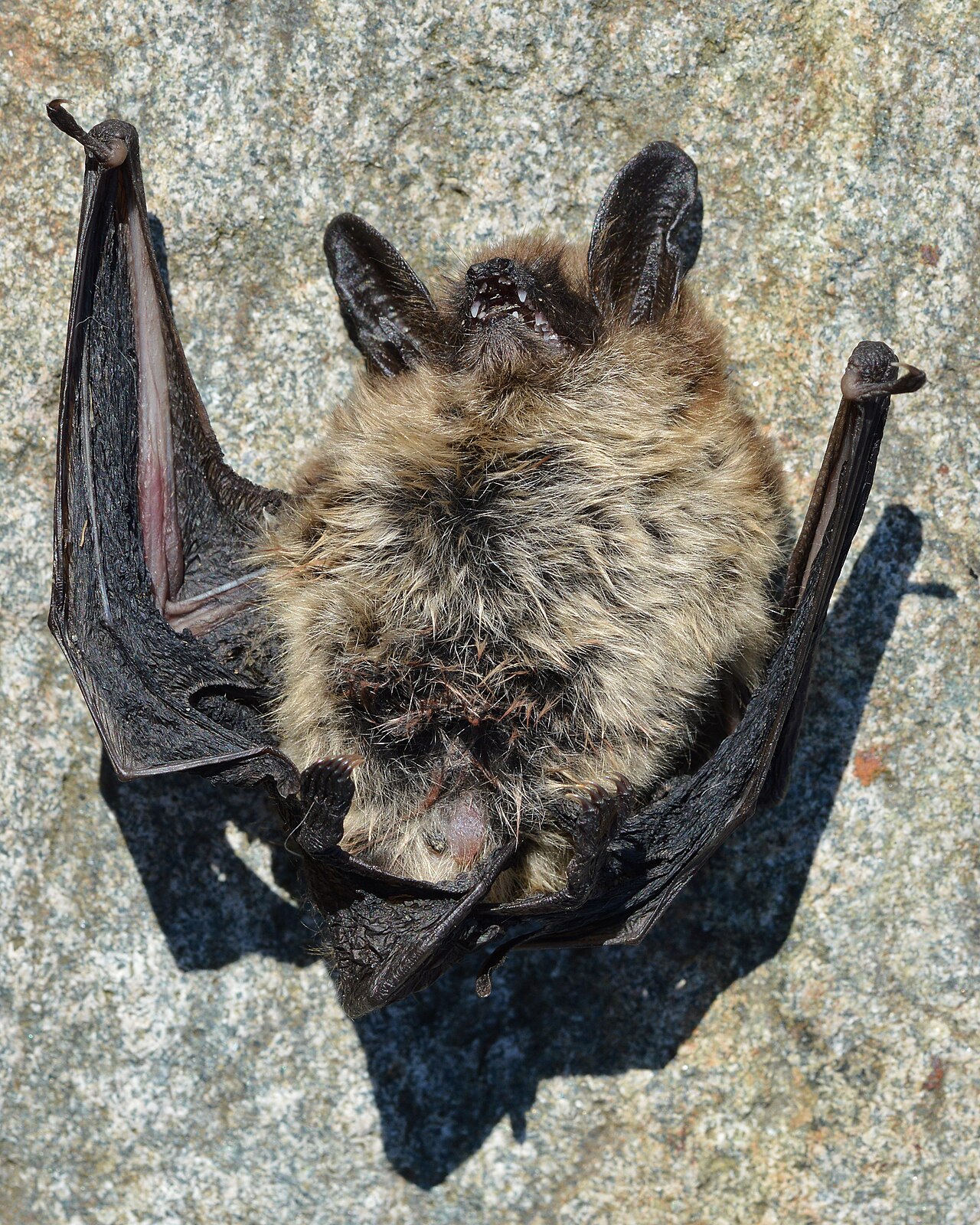
Do Bats Hibernate? Yes, for Up to 6 Months in Winter
Many bats hibernate, and the ones that do can stay under for six months or more. In North America the species split roughly in two: cave bats hibernate through winter in a cold, humid shelter called a hibernaculum, while tree bats migrate south instead. So the answer to “do bats hibernate” depends entirely on which bat you are asking about.
Little brown bats, big brown bats, northern long eared bats, tri colored bats, and Indiana bats all hibernate. Hoary bats, red bats, and silver haired bats migrate, sometimes hundreds of miles. A bat overwintering in your attic is almost always a big brown bat, the one species comfortable inside buildings.
Yes, most North American cave bats hibernate for four to six months, entering a state of torpor in which body temperature drops to near the surrounding air and heart rate falls from about 400 beats per minute to roughly 10. Tree dwelling species migrate south for winter rather than hibernating.
| Species | Winter strategy | Typical site |
|---|---|---|
| Little brown bat | Hibernates | Caves and mines |
| Big brown bat | Hibernates | Caves, mines, buildings, attics |
| Northern long eared bat | Hibernates | Cave cracks and crevices |
| Tri colored bat | Hibernates | Warm, humid cave zones |
| Hoary bat | Migrates | Tree foliage, southern range |
| Eastern red bat | Migrates, some torpor in leaf litter | Trees and ground cover |
Do Bats Hibernate or Migrate?
Both, depending on the species, and the dividing line is where the bat roosts in summer. Cave bats already use enclosed, thermally stable spaces and move into the coldest, most humid parts of them for winter. Tree bats have no such shelter, so they fly south, with hoary bats (Lasiurus cinereus) covering some of the longest migrations of any North American bat.
Insects drive the decision. Bats that eat flying insects have no food at all once night temperatures fall below about 50 degrees F (10 C), so they either leave or shut down. A bat still hunting in December is a bat in trouble.
Hibernation here is deeper than what most mammals do. Body temperature falls to within a few degrees of the surrounding air, breathing can pause for an hour, and a bat may lose a quarter of its body weight over the season. Compare the lighter winter sleep of chipmunks or the outright activity of squirrels.
Where Bats Hibernate: Inside a Hibernaculum

A hibernaculum is a winter roost, and the requirements are narrow: temperature stable and just above freezing, usually 35 to 50 degrees F (2 to 10 C), humidity high enough to keep the wings from drying out, and no air movement or disturbance. Limestone caves and abandoned mines meet all four, which is why some sites hold tens of thousands of bats.
Species partition the space inside. Northern long eared bats (Myotis septentrionalis) wedge into cracks where they are nearly invisible, while little brown bats hang in dense clusters on open ceiling and big eared bats hang singly in colder entrance zones. A colony packed onto a ceiling is one of the few times the collective nouns apply literally; see what a group of bats is called.
Bats return to the same hibernaculum year after year, often to the same patch of wall. That site fidelity is why losing one cave can affect bat numbers across a region.
Will Bats Leave Your House in the Winter?

Usually not, if they are big brown bats. That species tolerates cooler and drier conditions than cave specialists and regularly overwinters in attics, soffits, and wall voids, entering torpor right there in the structure. You may hear scratching or squeaking during a warm spell when they rouse, then nothing for weeks.
This creates a real problem for removal. Exclusion must not be done while bats are hibernating, because sealed in animals die inside the walls and the ones that get out cannot survive winter outside. Most states also prohibit exclusion during the summer maternity season. The workable windows are early spring and late summer to autumn once young can fly, covered in our guide to getting bats out of a house.
Accumulated droppings are the usual first clue, since the pile grows slowly through the season. Identify them before starting cleanup; see what bat droppings look like.
How Cold Is Too Cold for a Bat?
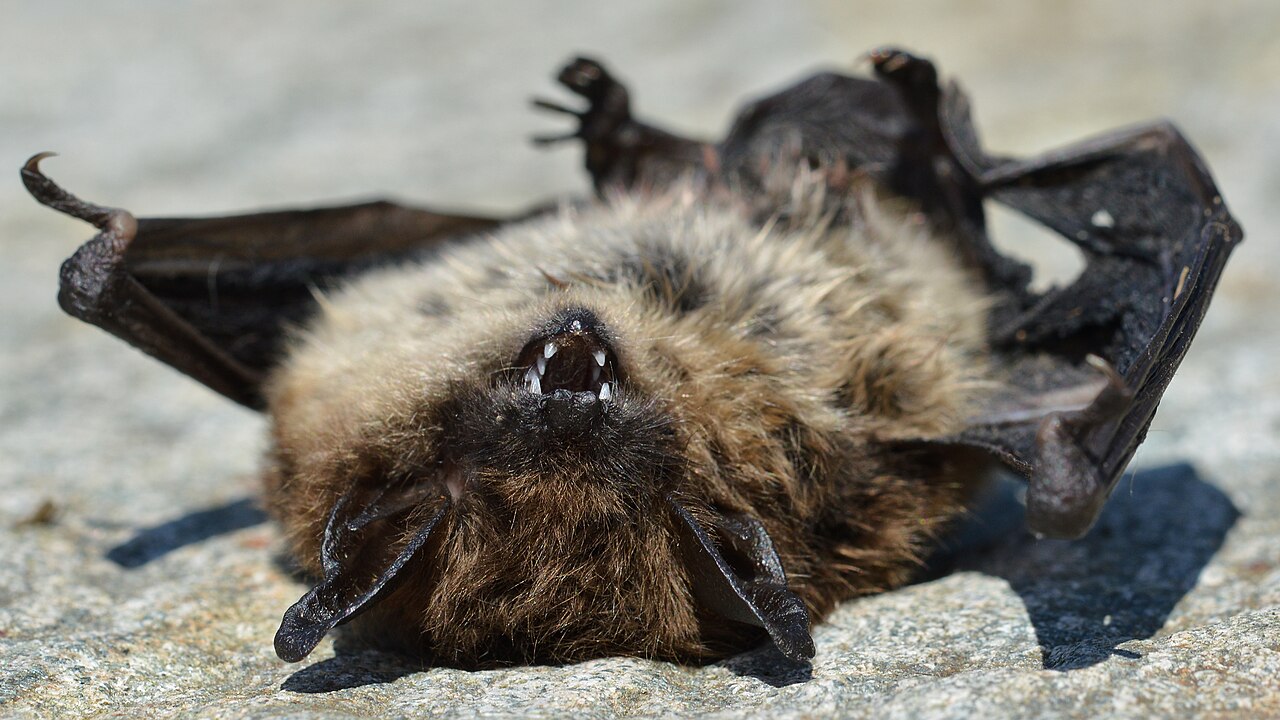
Hibernating bats hold at just above freezing and can tolerate brief dips to around 32 degrees F (0 C) by raising their metabolism slightly to compensate. Sustained subfreezing temperatures kill them, which is why a hibernaculum that falls below freezing throughout is abandoned or fatal.
The bigger danger is not cold but waking up. Each arousal from torpor burns fat reserves worth days or weeks of hibernation, and a bat has only enough stored fat for a fixed number of them. Repeated disturbance, from cavers, from construction noise, or from warm air leaking into a roost, drains the budget until the animal starves before spring. This is the direct mechanism behind most winter bat deaths.
White Nose Syndrome and Early Waking

White nose syndrome is a fungal disease caused by Pseudogymnoascus destructans, a cold loving fungus that grows on the muzzle and wing membranes of hibernating bats. It does not kill directly. It irritates the animal into waking repeatedly, and the bats then burn through their fat stores and starve, often flying out into the snow in daylight in a doomed search for insects.
Since its detection in New York in 2006 the disease has spread across most of the continent and killed millions of bats. Little brown bats and tri colored bats have declined by well over 90 percent at many affected sites, and the northern long eared bat is now federally listed as endangered. Populations of young bats recover slowly because most species raise only one pup per year.
The National Park Service maintains current information on bat hibernation and white nose syndrome across the park system at nps.gov.
Frequently Asked Questions
What is the lifespan of a bat?
Far longer than their size suggests. Little brown bats commonly live 6 to 7 years and have been recorded past 30, and one Brandt’s bat in Siberia reached 41. Hibernation is part of the reason: months spent at near freezing metabolic rates appear to slow the aging process considerably.
What is the biggest killer of bats?
White nose syndrome, by a wide margin, having killed millions of hibernating bats in North America since 2006. Wind turbine collisions are the leading cause for migratory tree bats, which the fungus does not affect. Habitat loss and roost disturbance rank third.
Do bats recognize humans?
Some evidence says yes. Bats in captivity distinguish individual keepers and respond differently to familiar and unfamiliar people, and several species recognize individual group members by voice. Wild bats have no reason to build that association, so a bat in your attic is simply avoiding you.
Do bats sleep in the same spot every night?
In winter, essentially yes, since a hibernating bat may not move from its patch of ceiling for weeks. In summer they are more flexible, with many species rotating among several day roosts within a small area, though maternity colonies stay put while pups are dependent.