Are Skunks Nocturnal? The Real Schedule, and Why You See One at Noon
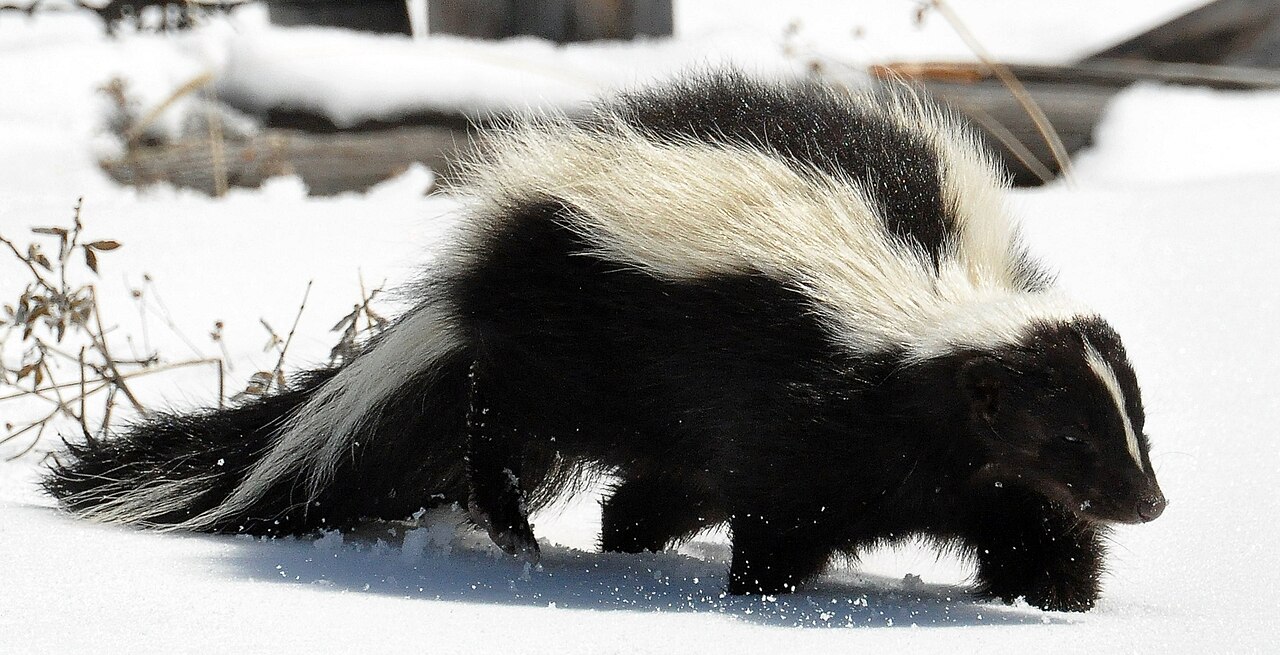
Skunks are nocturnal, and more precisely they are crepuscular leaning nocturnal: the striped skunk (Mephitis mephitis) begins moving around dusk, forages hardest in the first few hours of darkness and again before dawn, and spends the daylight hours asleep underground. If you see one crossing a lawn at 10 p.m., that is entirely normal behavior for the animal.
The question people are usually asking underneath this one is different: they saw a skunk in broad daylight and want to know whether it is rabid. Most of the time it is not, and the daytime sighting has a simpler explanation that has nothing to do with disease.
Skunks are nocturnal animals that leave their dens at dusk and forage through the night, with peak activity in the two hours after sunset and the hours before sunrise. Daytime sightings are common in spring and summer, usually a mother feeding kits or a hungry animal, and are not by themselves a sign of rabies.
| Time of Day | Typical Skunk Activity |
|---|---|
| Dawn to mid morning | Returning to den, occasional late foraging |
| Mid morning to afternoon | Asleep underground, rarely seen |
| Late afternoon | Nursing females may emerge early |
| Dusk to midnight | Peak activity: digging, foraging, patrolling |
| Midnight to 3 a.m. | Steady foraging, longest travel distances |
| 3 a.m. to sunrise | Second feeding push, then return to den |
Are Skunks Nocturnal or Crepuscular?
Skunks are functionally nocturnal with a strong crepuscular bias, which means their activity clusters at the low light edges of the night rather than spreading evenly across it. Radio tracking studies of striped skunks show the animals leaving den sites within about an hour of sunset and returning within an hour of sunrise, with the heaviest movement bracketing those two windows.
The pattern is driven by food rather than light preference. Beetles, grubs, earthworms and small rodents are most available at those hours, and the cover of low light reduces exposure to daytime predators such as hawks. A skunk is a slow animal with poor eyesight, so darkness is protection as much as opportunity.
That places skunks alongside raccoons and opossums in the same activity band, well documented in our list of nocturnal animals. Unlike some nocturnal mammals, skunks do not become fully diurnal under pressure; they shift their hours slightly but keep the same basic rhythm year round.
When Skunks Are Most Active Through the Night
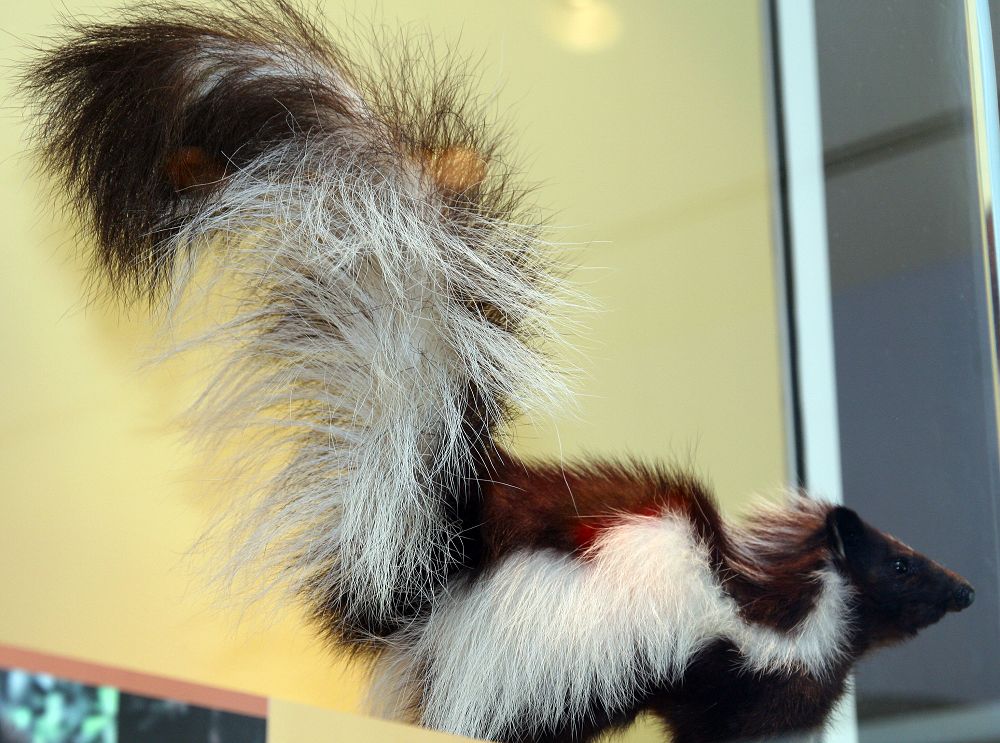
The busiest stretch runs from roughly an hour after sunset to midnight. A striped skunk covers half a mile to two miles (0.8 to 3.2 km) in a night while foraging, moving in a slow zigzag and stopping constantly to dig. Most of the small conical holes that appear in suburban lawns overnight come from this window.
Activity dips somewhat in the small hours, then picks up again in the two hours before dawn as the animal tops off before returning to the den. Females with kits make shorter trips and stay closer to the den site, sometimes within 200 yards (180 m).
Seasonal shifts matter. In late winter, the February and March breeding season pushes males into much longer nightly travel, which is why road mortality and spraying incidents both spike then. The characteristic calls of that season are covered in our guide to skunk sounds.
Is It Normal for Skunks to Be Out During the Day?
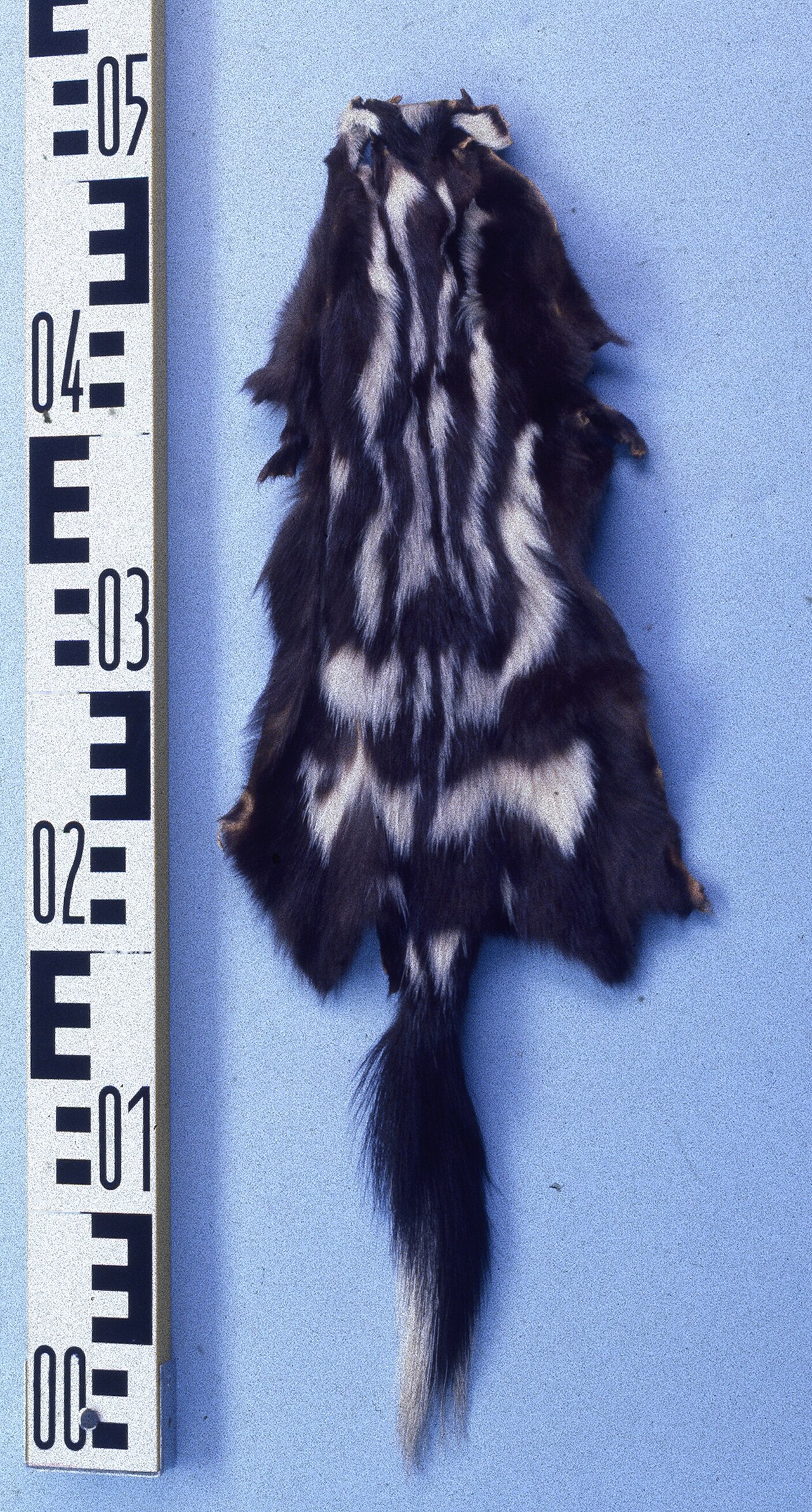
Yes, it is normal, and this is the single most misunderstood point about the species. Wildlife rehabilitation centers field the same call every spring: a skunk seen at noon, an owner convinced it is rabid. In the overwhelming majority of cases the animal is a nursing female who cannot get enough calories in the dark hours alone, or a juvenile dispersing from the den.
Food pressure explains most of the rest. A skunk that has been disturbed from its den, is recovering from injury, or lives where night foraging has been unproductive will extend into daylight. Hunger is a far more common driver than illness.
Daytime sightings peak from May through August when kits are present. If you see several small skunks trailing a larger one during the day, that is a family group, and our piece on the baby skunk covers what to expect as they disperse.
What to Do If You See a Skunk During the Day
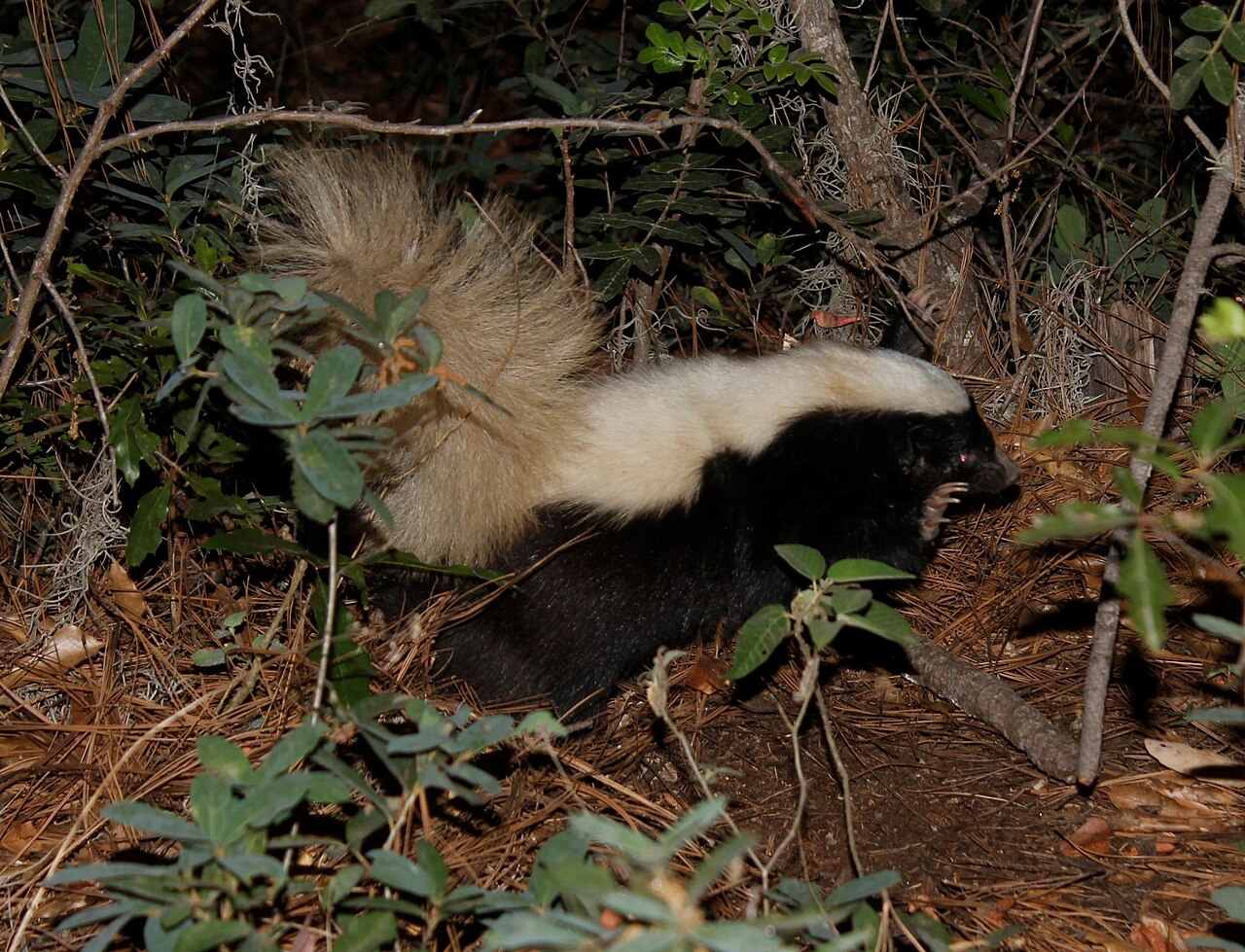
Watch the behavior rather than the clock. A skunk that is foraging purposefully, avoiding you, digging and moving in a straight line when disturbed is behaving normally regardless of the hour. Give it distance, bring pets indoors and let it pass.
The signs that actually warrant a call are neurological: circling, stumbling, apparent blindness, unprovoked aggression toward people, dragging hind limbs, or heavy drooling with no fear response at all. Those warrant contacting animal control or a state wildlife agency such as the Washington Department of Fish and Wildlife, not a broom.
Never corner a skunk indoors or in a garage. A cornered animal that cannot retreat will stamp its front feet, raise its tail and spray, and an enclosed space turns a nuisance into a week of cleanup. Open a door, leave the room and let it find its own exit.
Where Do Skunks Sleep During the Day?
Skunks sleep in dens: abandoned woodchuck or fox burrows, hollow logs, brush piles, and above all the space under decks, sheds and porches. They are capable diggers but prefer to take over an existing hole, and a single skunk may rotate through several den sites within its home range.
Den choice is the reason most human skunk conflicts happen at all. A deck with an 8 inch (20 cm) gap at ground level is a perfect den, and once a female has chosen it for a litter she will not leave easily until the kits are mobile at about eight weeks.
In winter, skunks gather. Several females and occasionally a male share a single den through the coldest months, huddling to conserve heat, which is when a persistent musky smell around a foundation is most noticeable.
Do Skunks Hibernate in Winter?
Skunks do not truly hibernate. They enter torpor, a state of reduced body temperature and activity, and can stay denned for days or weeks during hard cold, emerging on milder nights to forage. Body weight drops substantially over winter, often by a third in northern populations.
That is why a skunk track in January snow is not unusual. The animal is not confused; it is using a warm night to feed. Activity windows in winter also tend to run earlier in the evening, when residual daytime warmth makes movement cheaper.
The signal that winter is over is the February breeding push. Males emerge first and travel widely, and if you find fresh scat around a foundation in late winter, our guide to skunk poop explains how to tell it from raccoon droppings.
What Is a Skunk’s Worst Enemy?
The great horned owl (Bubo virginianus) is the skunk’s most effective predator, and it is the only one that hunts them routinely. Owls have a poor sense of smell and attack silently from above, so the skunk’s defense, which relies on a visual warning display and a chemical deterrent, fails completely against them.
Ground predators mostly learn to avoid skunks. Coyotes, bobcats and foxes, which share the same nocturnal schedule, will take a skunk when desperate or when they catch a young one, but healthy adults are generally left alone after a single bad experience.
In practice, vehicles kill more skunks than any predator. Slow movement, poor eyesight and a defense posture that involves standing and facing a threat are a fatal combination on a road at night.
What Will Deter Skunks From Your Yard?
Removing food and shelter works; repellents mostly do not. Secure garbage bins with locking lids, feed pets indoors, pick up fallen fruit, and treat lawn grubs if the animal is digging nightly. A yard with no grubs, no pet food and no accessible den sites stops being worth the trip.
Physical exclusion is the permanent fix. Hardware cloth buried 6 to 8 inches (15 to 20 cm) deep and bent outward in an L shape along deck skirting will stop skunks from digging under. Motion activated sprinklers deter some individuals, though many habituate within a couple of weeks.
Bright light aimed at a den entrance is the one cheap tactic with a decent record, since a nocturnal animal genuinely dislikes a lit den mouth. Fuller options are in our guide on how to get rid of skunks.
Will Skunks Go Away on Their Own?
Often yes. Skunks are not strongly territorial and shift den sites regularly, so a skunk that has passed through a yard following a food source will usually move on once that source disappears. A female with a litter under a deck is the exception, and she will stay until the kits are mobile at roughly eight weeks.
Waiting is frequently the correct strategy from June onward. By late summer the kits disperse, the den empties on its own, and you can seal the gap without trapping anything inside.
Trapping and relocating is a poor answer in most states. It is illegal in many of them, relocated skunks have low survival rates, and an empty den simply attracts the next animal unless the entrance is closed.
Frequently Asked Questions
What do skunks absolutely hate?
Skunks avoid bright light at den entrances, loud sudden noise, open exposed ground with no cover, and the smell of predator urine to a limited degree. Citrus peels and ammonia soaked rags are commonly recommended and show inconsistent results. Removing food and sealing den access works far more reliably than anything a skunk dislikes.
What are skunks most afraid of?
Skunks are most wary of great horned owls, dogs and sudden human movement at close range. Their response to fear is a graded warning: foot stamping, hissing, tail raising, then a handstand display before spraying. A skunk almost never sprays without running through that sequence first, which gives you time to back away.
Will Irish Spring soap repel skunks?
There is no reliable evidence that Irish Spring soap repels skunks. The idea circulates widely online and comes from deer deterrent folklore. Skunks are driven by food availability and den quality, and a strongly scented soap bar does not change either. Grub control and exclusion fencing are what actually work.
How do I get a skunk to leave my property?
Remove the attraction, then close the access. Secure trash, stop feeding pets outside, treat grubs, and once you have confirmed the den is empty at night, seal the opening with buried hardware cloth. Add a light at the den mouth for a few nights first if the animal keeps returning.
Are skunks dangerous to people or pets?
Skunks are not aggressive and will not chase a person. The realistic risks are spray, which is painful to the eyes but not toxic, and rabies, which skunks do carry in some regions. Keep dogs leashed at night, vaccinate pets, and never handle a skunk that is behaving abnormally.
Do skunks spray at night?
Yes, since that is when they are active and most likely to meet a dog or a startled person. Spraying peaks during the February and March breeding season, when males encounter each other and rejected females spray suitors. A skunk carries enough musk for five or six sprays and needs about a week to replenish the supply.