How Long Do Goldfish Live? 10 to 15 Years, and Why Most Die at 6 Months
A healthy goldfish lives 10 to 15 years, and pond-kept fish often reach 20 to 30. The reason most people think goldfish are two-year fish is not biology, it is housing. A goldfish that dies in six months did not reach the end of its natural life, it ran out of clean water.
The gap between a goldfish that dies in a bowl by Christmas and one that outlives a family dog comes down to four things: tank volume, filtration, water chemistry and feeding. Get those right and Carassius auratus becomes one of the longest lived pets you can buy for under ten dollars.
Goldfish live 10 to 15 years in a properly filtered aquarium and 20 to 30 years in an outdoor pond. Fancy varieties average 8 to 12 years, single-tail varieties 15 to 25. The verified record is 43 years. Unfiltered bowls cut lifespan to 6 months or less because ammonia builds up faster than the fish can tolerate it.
| Housing | Typical Lifespan | Limiting Factor |
|---|---|---|
| Unfiltered bowl, 1 to 2 gal | 2 to 6 months | Ammonia poisoning |
| Filtered tank, 10 gal | 2 to 4 years | Stunted growth, organ strain |
| Filtered tank, 20 to 40 gal | 10 to 15 years | Diet and water changes |
| Outdoor pond, 200+ gal | 20 to 30 years | Predation, winter kill |
| Fancy varieties, any tank | 8 to 12 years | Swim bladder and body shape |
| Record holder (Tish, UK) | 43 years | None documented |
How Long Do Goldfish Live in a Tank?
In a filtered aquarium of at least 20 gallons for the first fish and 10 more for each additional one, a goldfish reliably reaches 10 to 15 years. That figure is not optimistic, it is the ordinary outcome when nitrogen waste stays near zero and the fish has room to grow into its adult size of 6 to 8 in (15 to 20 cm).
Tank-kept goldfish age more slowly than most aquarium fish because their metabolism runs cool. They thrive between 65 and 72 F (18 to 22 C), which is below the tropical range most heaters default to. A goldfish kept at 78 F burns through its life faster, grows quicker and dies earlier.
The common failure is not neglect but optimism about volume. A 10 gallon tank with two goldfish looks fine for the first year, then the fish reach adult mass and the same filter has three times the waste to process. Most goldfish that die at age two die in tanks that were adequate for the fish they used to be.
How Long Do Goldfish Survive in a Bowl?
Goldfish survive in a bowl for about two to six months, and that is survival rather than living. A one gallon bowl holds too little water to dilute ammonia, has no surface agitation to carry oxygen down, and cannot host the bacteria colony that converts waste into something harmless.
The fish does not die of loneliness or boredom. It dies of chemical burns to the gills. Ammonia from a single goldfish will reach toxic levels in an unfiltered bowl within 48 hours, and even daily water changes only reset the clock rather than stop it.
If a bowl is all you have right now, the fish needs a 50 percent water change every other day with dechlorinated water matched to temperature. That buys time. It does not buy years. Moving the fish to any filtered container over 20 gallons, including a plastic storage tub, immediately changes its life expectancy by an order of magnitude.
How Long Do Goldfish Live in a Pond?
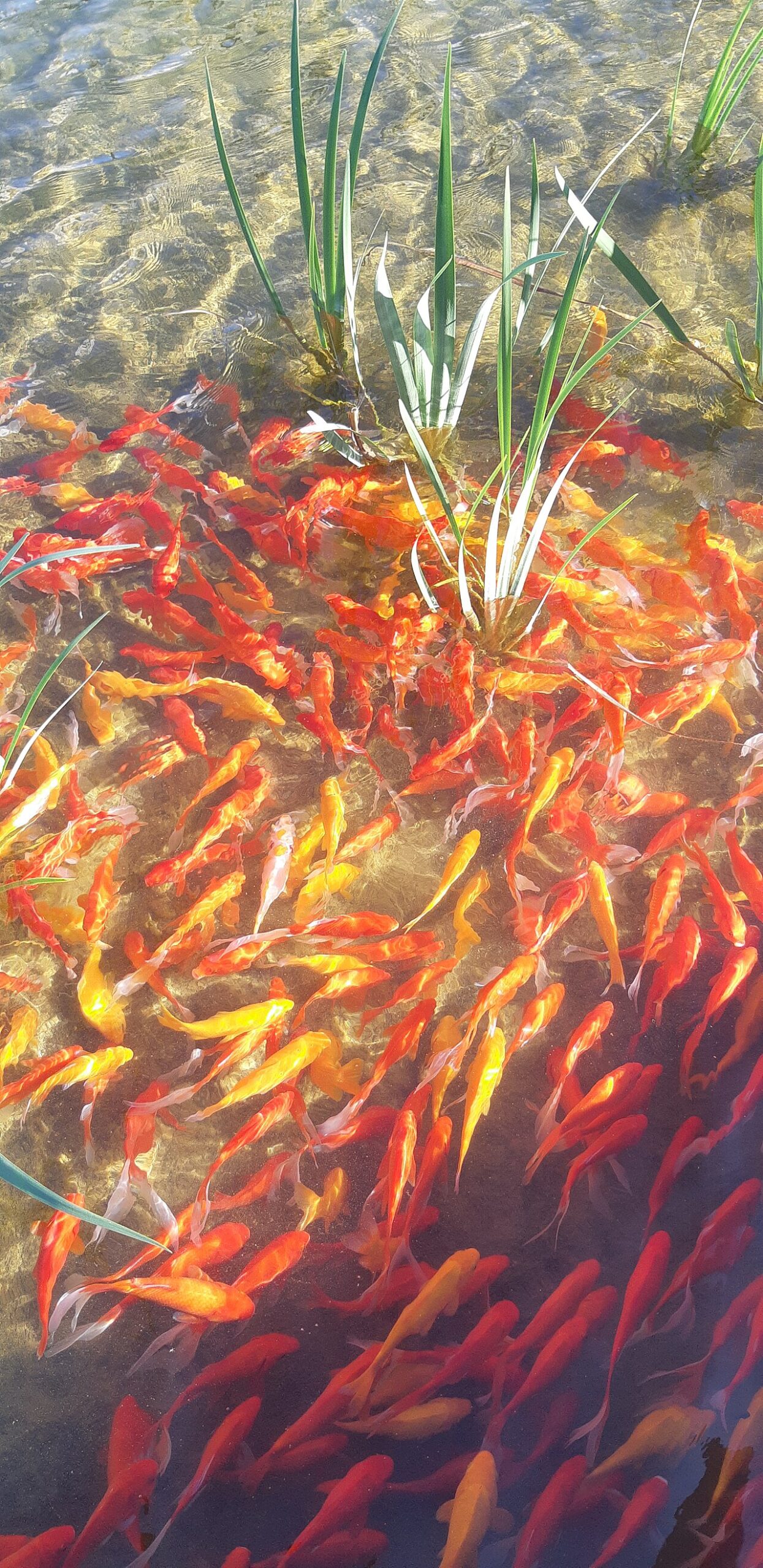
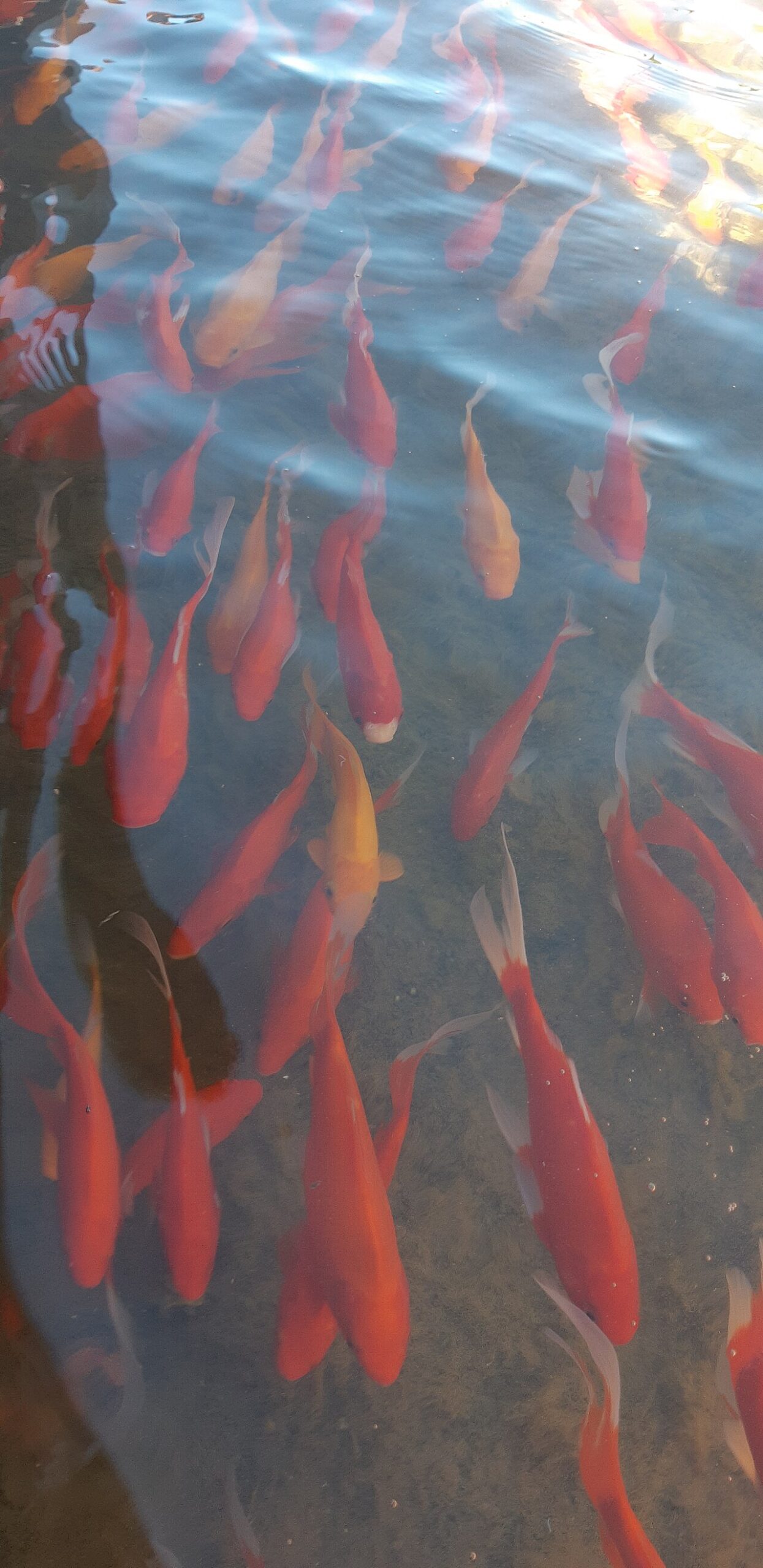
Pond goldfish routinely live 20 to 30 years, roughly double their indoor expectancy. A 200 gallon pond has more water than any reasonable aquarium, natural temperature swings that match the fish’s evolved rhythm, and algae and insect larvae that fill nutritional gaps a flake diet leaves open.
The seasonal cycle matters more than most keepers expect. Goldfish that cool to 40 F (4 C) in winter slow their metabolism, stop feeding and effectively pause aging for three months a year. Indoor fish held at a constant 72 F never get that break.
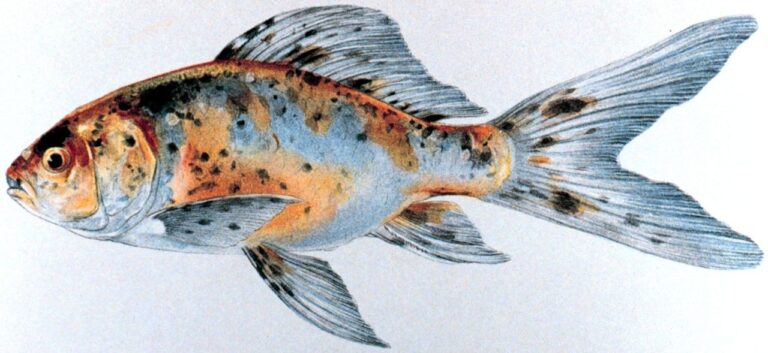
Pond risk shifts from water chemistry to predation and winter kill. Herons, raccoons and kingfishers take fish from shallow ponds, and a pond that freezes over completely traps decomposition gases underneath. A depth of at least 24 in (60 cm) and a floating de-icer handle both problems. The pond-hardy varieties are the single-tails: comet goldfish and shubunkins outlast fancy types outdoors by a wide margin.
Goldfish Lifespan by Variety
Body shape predicts lifespan better than care level does. Single-tailed goldfish keep the streamlined body of the wild crucian carp ancestor, with organs arranged the way evolution left them. They live 15 to 25 years and are the varieties that hold the longevity records.
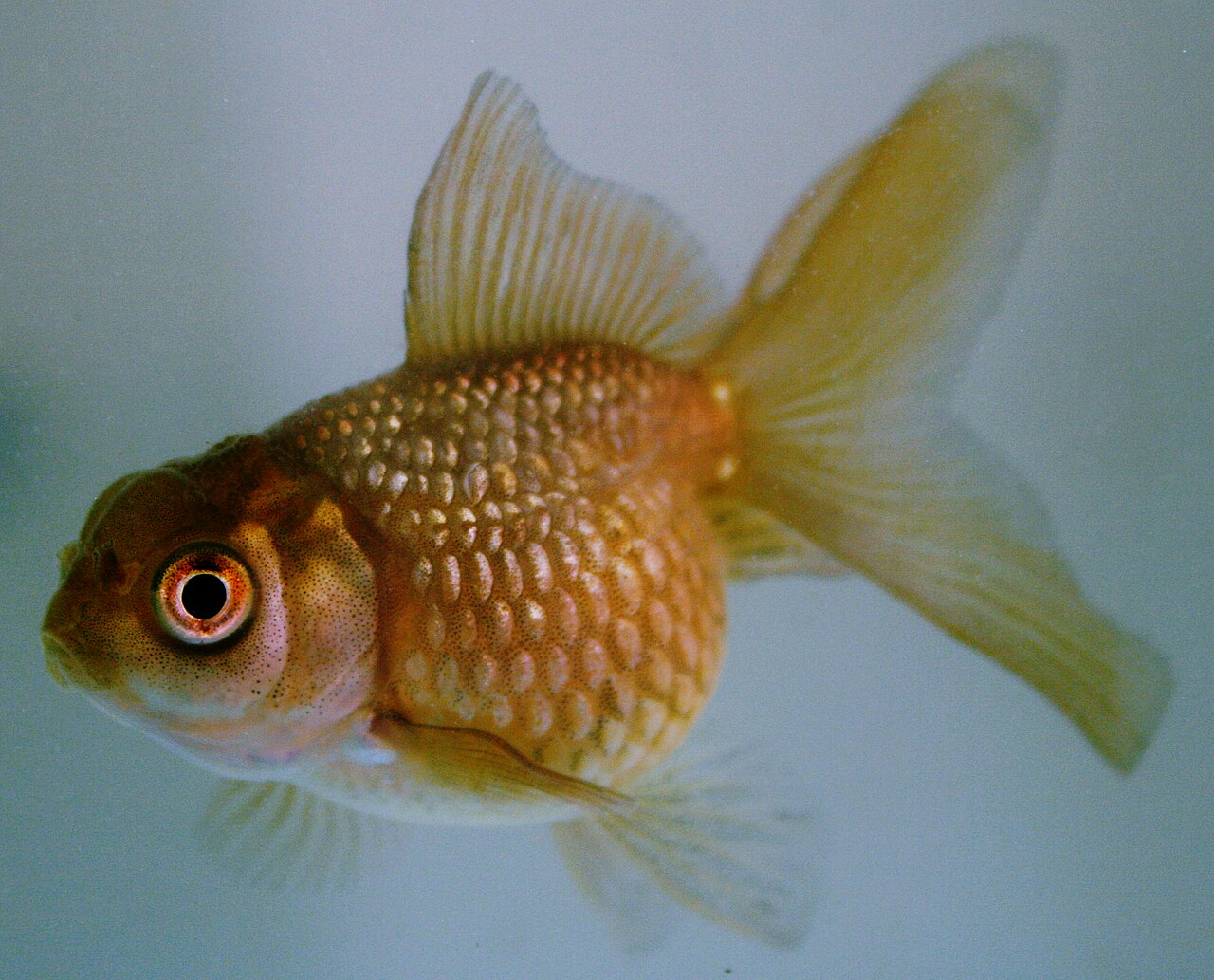
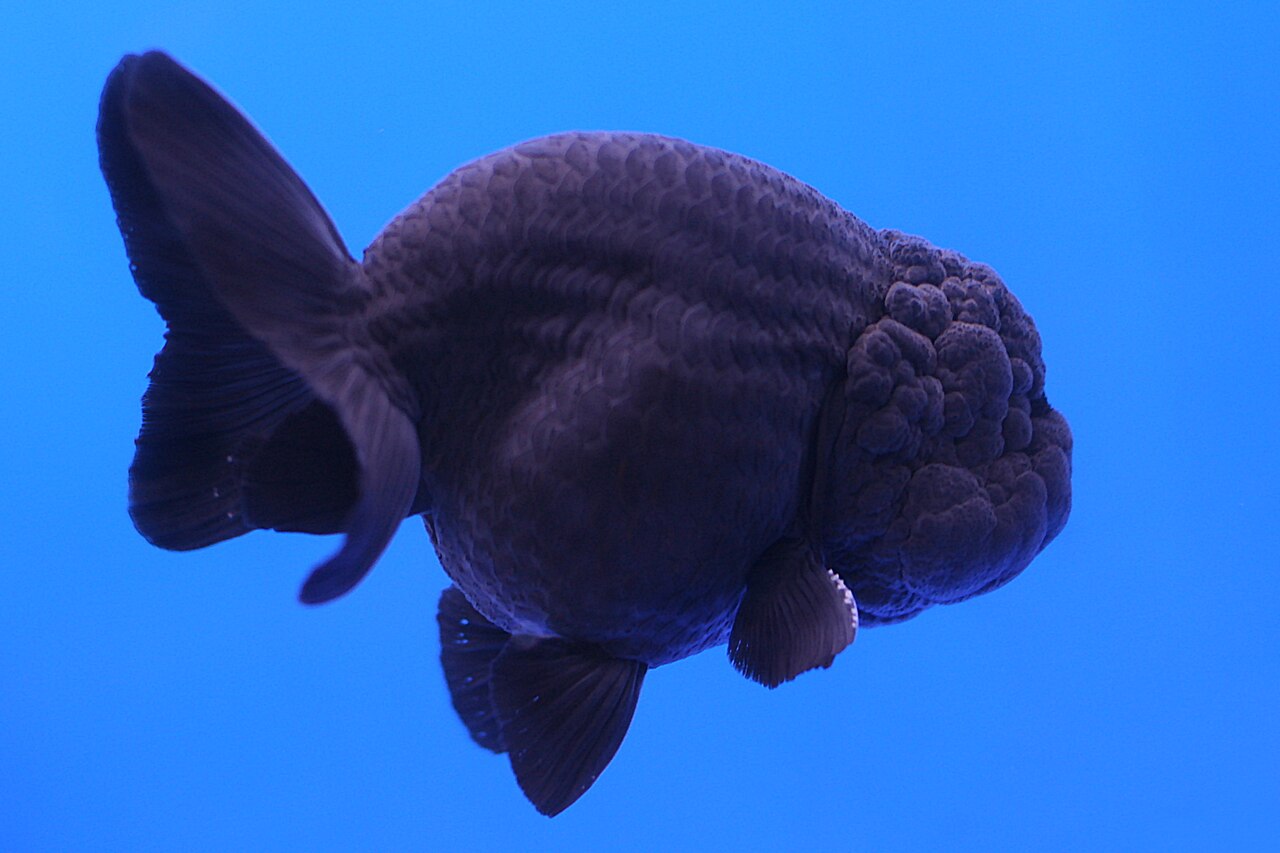
Fancy varieties have been bred for compressed, egg-shaped bodies that fold the swim bladder and intestines into a smaller space. Common results are chronic buoyancy problems and digestive trouble, and the practical effect is a lifespan of 8 to 12 years. The bubble eye goldfish sits at the far end of that trade, with fluid sacs that snag and tear on decor.
Between those poles sit the moderately modified types. An oranda or a fantail typically manages 10 to 14 years with good water. If longevity is your goal and the fish is going indoors, the plainer the body, the longer the fish. Choosing a fancy variety by body shape rather than by color is the useful way to do it.
What Are the Most Common Causes of Goldfish Death?
Ammonia and nitrite poisoning kill more goldfish than every disease combined. In a new tank that has not built a bacterial colony, waste accumulates with nothing to process it, and the fish suffocates as its gill tissue burns. Red streaking in the fins and gasping at the surface are the visible stage of a problem that started days earlier.
Second is chronic overfeeding. Goldfish have no stomach, only a straight gut, and they will eat as long as food is present. Excess food becomes waste, waste becomes ammonia, and the same overfeeding that fouls the water also causes the swim bladder disorders that look like a separate illness.
Third is stunting from undersized tanks. A goldfish in too small a tank keeps growing internally while growth-inhibiting hormones slow its external growth, and the mismatch damages organs over two to three years. The fish looks small and healthy right up until it does not.
Can Goldfish Live in Just Tap Water?
Goldfish can live in tap water only after it has been treated with a dechlorinator. Municipal water in the United States carries chlorine or chloramine at levels designed to kill bacteria, and those same levels destroy gill tissue and wipe out the beneficial bacteria in a filter.
A liquid conditioner neutralizes both instantly and costs a few cents per dose. Letting water sit out overnight works for chlorine but not for chloramine, which is now standard in most American water systems and does not evaporate.
Beyond chlorine, goldfish are unusually tolerant of tap water chemistry. They handle a pH of 7.0 to 8.4 and moderately hard water without complaint, which is why well water and city water both work once treated. The fish needs treated water, not special water.
Can Goldfish Live in a Bowl Without a Pump?
A goldfish can technically live in a bowl without a pump for a few weeks, but it will not thrive and it will not reach adult age. The pump does two jobs: it moves water across the filter media where bacteria neutralize ammonia, and it breaks the surface so oxygen can dissolve in.
Without circulation, oxygen enters only at the still surface, and a bowl’s narrow opening gives very little of that. Goldfish produce more waste per gram of body weight than tropical fish, so the demand on a bowl is higher than the shape can supply.
If a power outage takes the pump down, the temporary fixes are stopping all feeding and manually pouring water from a cup held above the surface every few hours. Both reduce ammonia production and add oxygen. Neither substitutes for filtration over any real length of time.
How Tank Size Sets the Ceiling on Lifespan
The working rule is 20 gallons for the first goldfish and 10 gallons for each additional fish, with fancy varieties at the lower end and single-tails needing more. A comet or shubunkin reaches 10 to 12 in (25 to 30 cm) and belongs in a pond or a tank of 75 gallons or more.
Volume matters because it dilutes. The same amount of ammonia in 40 gallons is half the concentration it is in 20, which gives the bacterial colony time to catch up between water changes. Larger tanks also hold temperature steady, and temperature swings stress goldfish more than a slightly high reading would.
Footprint beats height. A 30 gallon tank that is long and shallow gives more surface area for gas exchange and more swimming length than a 30 gallon tank that is tall and narrow. For a fish that cruises horizontally all day, the long tank is the one that adds years. See how large goldfish actually get before deciding a tank is big enough.
Water Quality Is the Single Largest Lifespan Factor
Target readings are ammonia 0 ppm, nitrite 0 ppm and nitrate under 40 ppm. Anything above zero on the first two is an active emergency, not a trend to watch. A liquid test kit gives you those numbers in five minutes and is the only way to see the problem before the fish shows symptoms.
A weekly water change of 25 to 30 percent keeps nitrate in range and replaces trace minerals the fish consumes. Vacuum the substrate during the change, because uneaten food and waste settle there and continue feeding ammonia into the column long after they are out of sight.
Never rinse filter media in tap water. The chlorine kills the bacterial colony you spent six weeks growing, and the tank cycles from scratch with a full-grown fish inside it. Rinse media in the bucket of water you just removed from the tank.
Feeding for a Long Life
Feed once or twice daily, only as much as the fish clears in 30 to 60 seconds. That looks like a shockingly small amount, and it is correct. Goldfish beg constantly because their gut empties fast, not because they are underfed.
Sinking pellets beat floating flakes for fancy varieties, because surface feeding makes them gulp air and worsens buoyancy problems. A quality pellet should list a whole protein source first and keep crude protein near 30 percent for adults. Supplement with blanched peas, deshelled, once a week to keep the gut moving, plus blanched spinach or zucchini.
Skip one day a week entirely. A fasting day clears the digestive tract and reduces the waste load on the filter, and it is the closest indoor equivalent to the seasonal feeding pause pond fish get. Details on formulation are in our guide to goldfish food.
How Can I Tell If My Goldfish Is Happy?
A content goldfish swims actively through all levels of the tank, holds its dorsal fin upright rather than clamped against the body, and shows steady interest in food and in you. Color stays bright and even, and the fish forages along the substrate between meals.
Warning signs run the other way: sitting on the bottom for long stretches, hanging motionless at the surface, clamped fins, darting against decor, or refusing food for more than a day. Any of those calls for a water test first, because water chemistry explains most behavior changes before disease does.
Normal behavior that worries new keepers includes resting on the bottom at night with reduced color, and occasional surface gulping right after feeding. Sustained gulping is an oxygen problem. A few gulps after dinner is just a fish that ate floating food.
Should I Have 1 or 2 Goldfish?
Two goldfish are better than one if the tank supports both, because goldfish are social and show more natural foraging and exploring behavior in company. A single goldfish will not die of loneliness, but it is measurably less active than a pair.
The constraint is volume, not preference. Two goldfish in a 30 gallon tank do well. Two goldfish in a 10 gallon tank halve each other’s lifespan, and a lonely fish in adequate water outlives a pair in poor water every time. Decide by gallons, then by company.
If you add a second fish, quarantine it for two weeks in a separate container first. Most goldfish disease outbreaks arrive with a new purchase, and a fish that has been kept alone for years has no exposure to whatever the store tank carried. Mixing types is fine as long as body shapes match; slow fancy varieties lose the race for food against fast single-tails.
Frequently Asked Questions
Do goldfish recognize their owners?
Yes. Goldfish distinguish individual human faces and learn to associate a specific person with feeding, often crowding to the front of the tank when that person enters the room and ignoring strangers. Laboratory work has shown they can also be trained to push levers and navigate mazes, which rules out the three second memory myth entirely.
Do goldfish miss their owners?
Goldfish do not experience longing the way a dog does, but they do notice absence. A fish accustomed to a daily routine becomes less responsive at feeding time when that routine breaks, and takes a day or two to resume its usual front-of-tank behavior when the familiar person returns. That is learned association fading and returning, not emotion.
Can a fish survive a toilet flush?
Almost never, and releasing one is illegal in many states. A flushed goldfish faces chlorinated water, sewage treatment chemicals and temperature shock, and virtually none survive the trip. The rare ones that reach open water become an invasive problem: feral goldfish in American lakes reach 16 in (40 cm) and damage native habitat, which the U.S. Geological Survey tracks in its nonindigenous species program.
What is the oldest goldfish on record?
Tish, a goldfish won at a fairground in Yorkshire, England, died in 1999 at age 43 after being kept in an ordinary tank by one family since 1956. A second British goldfish, Goldie, reached 45 by some accounts but was less thoroughly documented. Both were single-tailed common goldfish, not fancy varieties.
How much do goldfish cost?
Feeder and common goldfish sell for 30 cents to 2 dollars, fancy varieties such as orandas and ryukins run 15 to 60 dollars, and show-quality imported fish exceed 200. The fish is the cheapest part: a 30 gallon tank, filter, test kit and conditioner cost 150 to 300 dollars, and that setup is what determines whether the fish lives 6 months or 15 years.
How can you tell how old a goldfish is?
There is no reliable external age marker on a living goldfish, though size gives a rough guide in good conditions: about 2 in at one year, 4 to 5 in at three, and near full size by five. Scientists age dead specimens by counting growth rings on the otoliths, the small ear bones, much the way tree rings are read. For comparison with another popular aquarium species, see how long betta fish live.