Giant Goldfish: How Big They Really Get and the 67 lb Myth
A giant goldfish is an ordinary Carassius auratus that was given enough water, food and time to reach its real adult size, which is 12 to 18 in (30 to 46 cm) and 3 to 5 lb (1.4 to 2.3 kg). No separate giant species exists. The pet store fish sold at 2 in (5 cm) in a bowl carries exactly the same growth potential, and pond keepers and biologists pulling goldfish out of North American lakes see it realized every year.
That gap between the expected size and the actual size is why giant goldfish keep making the news. Anglers land specimens that look like carp, wildlife agencies in Minnesota, Michigan and Ontario net feral populations of football sized fish, and a widely shared 67 lb (30 kg) monster turns out to be something else entirely. Here is what the numbers actually support.
Goldfish are not sold as a giant variety. Given pond space and years of good feeding, a common Carassius auratus reaches 12 to 18 in (30 to 46 cm) and 3 to 5 lb (1.4 to 2.3 kg). The Guinness record fish measured 18.7 in (47.4 cm). The famous 67 lb fish called The Carrot is a koi and leather carp hybrid, not a goldfish.
| Question | Answer |
|---|---|
| Typical tank size | 4 to 6 in (10 to 15 cm) |
| Typical pond size | 10 to 14 in (25 to 36 cm) |
| Feral lake maximum | 16 to 18 in (40 to 46 cm), 4 lb (1.8 kg) |
| Guinness record length | 18.7 in (47.4 cm), Netherlands, 2003 |
| Record age | 43 years, a fish named Tish in the UK |
| Time to full size | 4 to 8 years in open water |
What Is a Giant Goldfish Called?
There is no accepted name for one, which is part of the confusion. Retailers use jumbo goldfish for oversized stock, pond suppliers say pond comet or jumbo comet, and biologists simply write feral goldfish in survey reports. All of them describe Carassius auratus, the same species behind every goldfish color in the hobby.
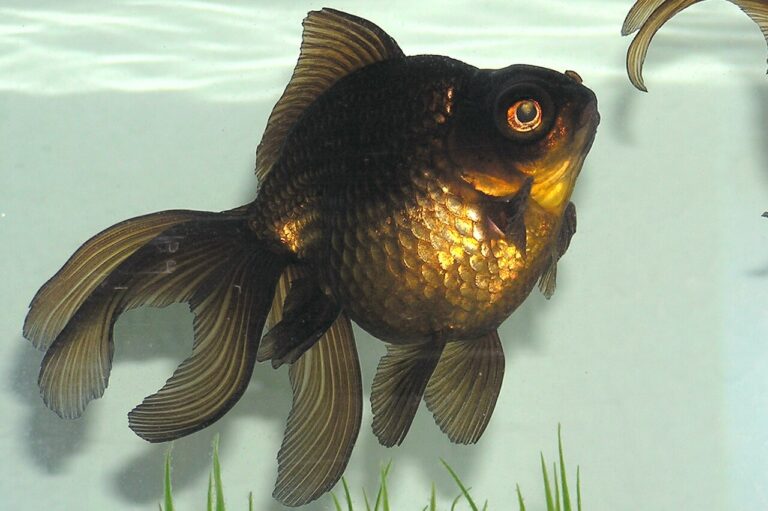
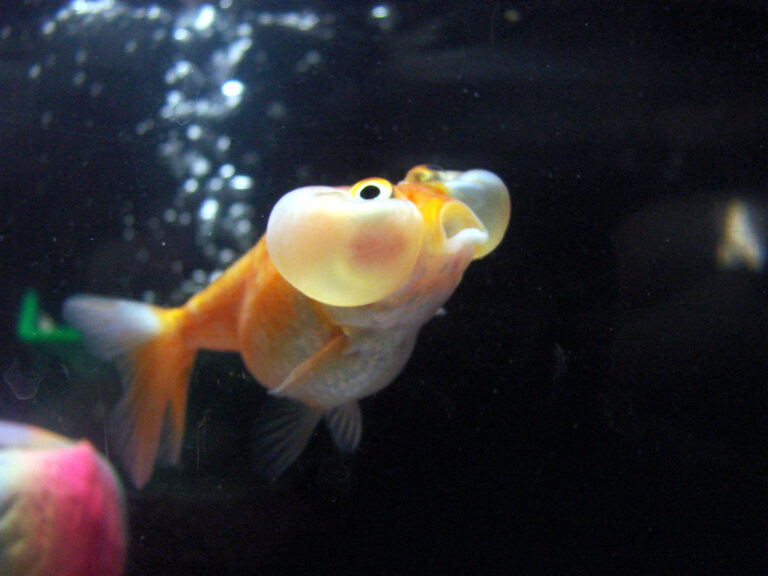
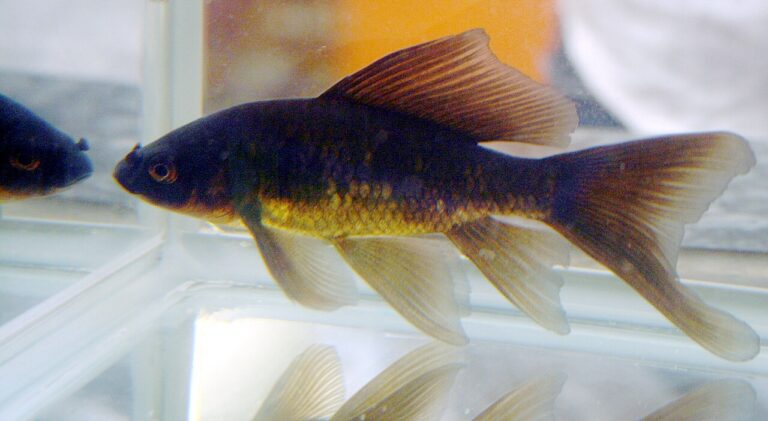
The single finned varieties get large fastest. A comet goldfish or a shubunkin goldfish is built like the wild form, streamlined and efficient, so it outgrows the fancy shapes by a wide margin. Fancy varieties do get heavy, but their compressed bodies and trailing fins cap them near 8 to 10 in (20 to 25 cm).
How Big Can a Giant Goldfish Get?
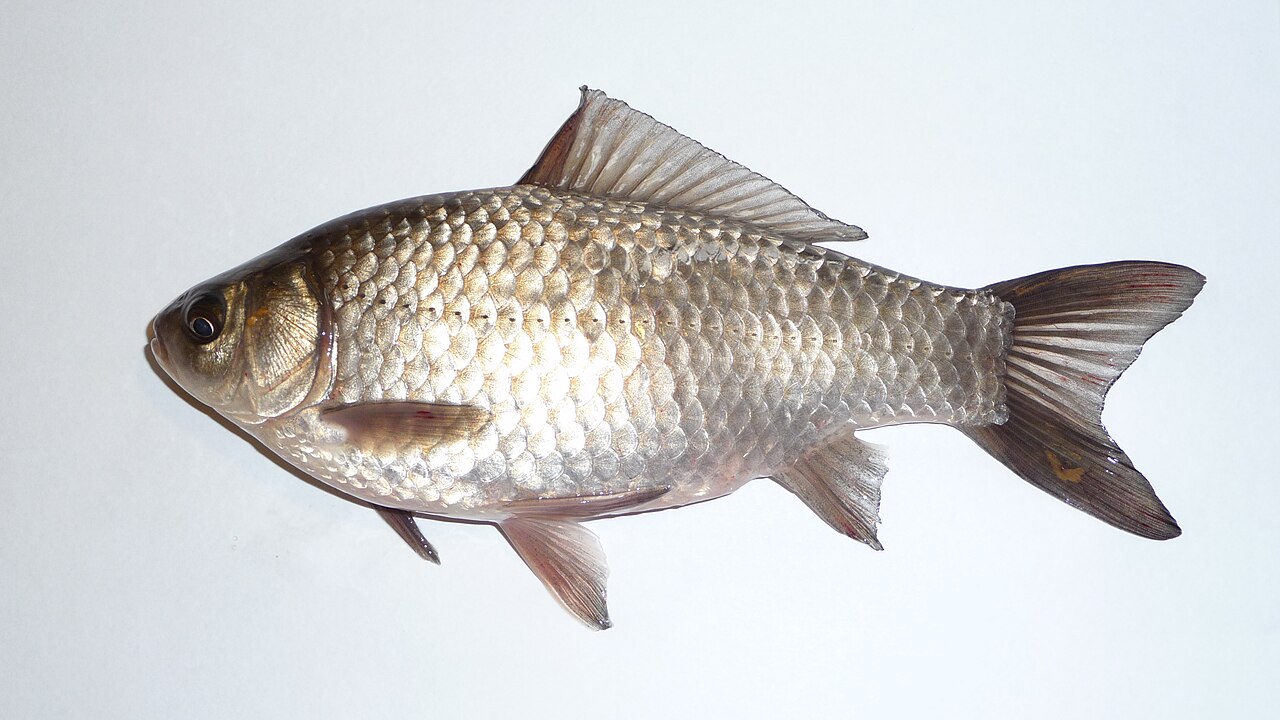
Goldfish show indeterminate growth, meaning they never fully stop, and the ceiling is set by water volume, food and lifespan rather than by a fixed adult size. In a garden pond, 10 to 14 in (25 to 36 cm) is routine after five or six years. In a lake, 16 to 18 in (40 to 46 cm) and 4 lb (1.8 kg) has been documented repeatedly.
The verified record belongs to a fish measured at 18.7 in (47.4 cm) in the Netherlands in 2003. Reports beyond that length almost always turn out to be carp, or goldfish and carp hybrids, which the two species produce readily where both occur.
Weight climbs faster than length. A 14 in (36 cm) pond goldfish can carry three times the mass of a 10 in (25 cm) one, which is why photographs of large specimens look so exaggerated next to the fish people remember from a tank.
Is the 67 Pound Goldfish Real?
The fish is real, the label is not. In November 2022 British angler Andy Hackett landed a 67 lb 4 oz (30.5 kg) orange fish nicknamed The Carrot at Bluewater Lakes in France. It had been stocked there around 2003 and is a hybrid of koi and leather carp, both forms of Cyprinus carpio, a different species from the goldfish.
Headlines called it the world’s largest goldfish because it is orange and round. Anyone comparing it to the goldfish in their living room is comparing two species that diverged long before either was domesticated. A true goldfish of that weight has never been recorded anywhere.
Why Pet Goldfish Grow Huge in Lakes and Ponds
Released goldfish grow because the three limits of aquarium life disappear at once: dissolved waste, restricted food and constant temperature. In open water, nitrogen compounds dilute away, natural food is continuous, and seasonal temperature swings trigger the feeding and spawning cycles the species evolved with.
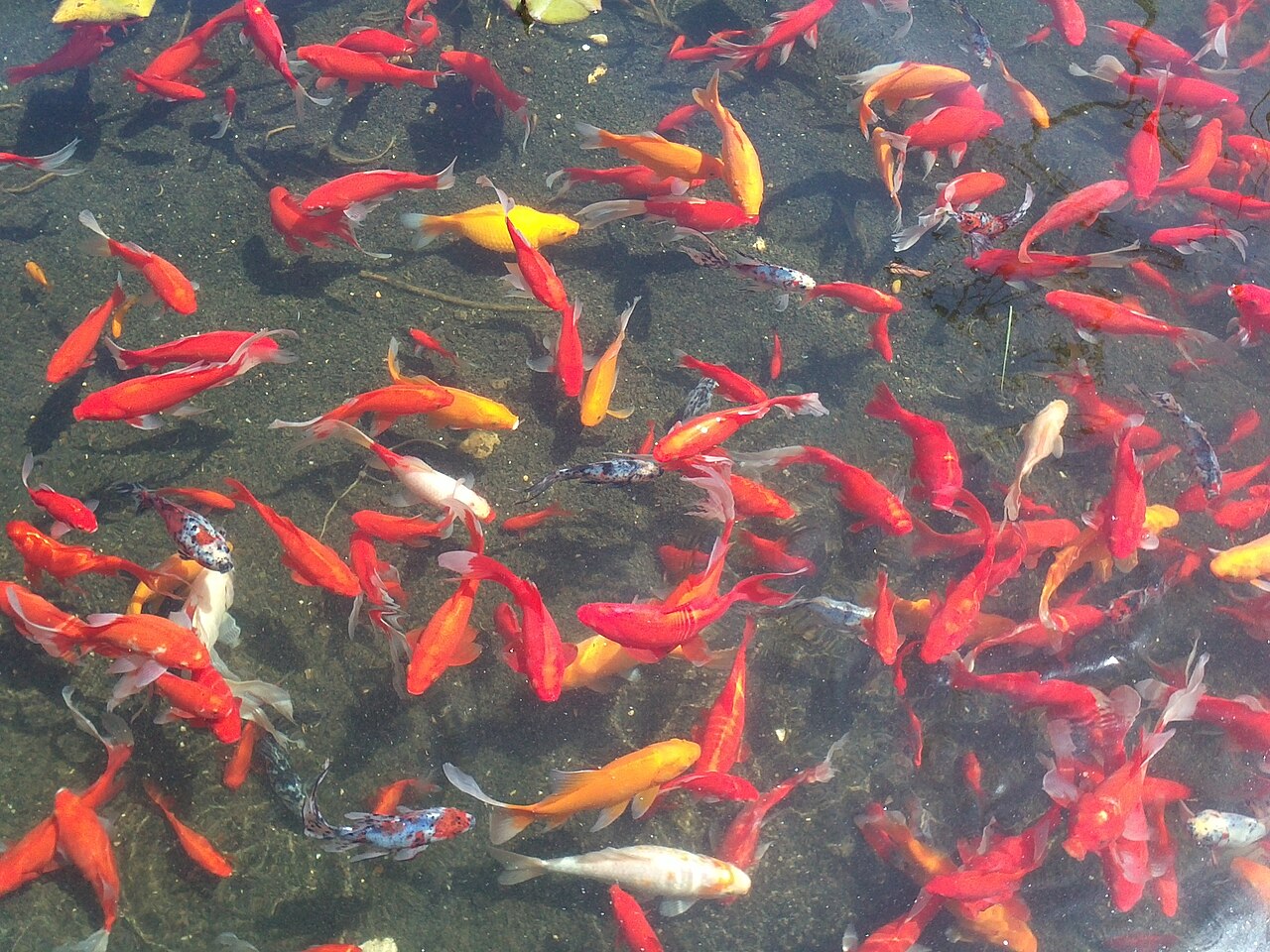
The results are a real management problem. Surveys in the Great Lakes basin, Lake Tahoe and Western Australia have all recovered goldfish over 12 in (30 cm) from populations that started with a handful of dumped pets. Large goldfish uproot plants, stir sediment and raise turbidity, and a single female can carry tens of thousands of eggs. The US Geological Survey tracks these introductions in its nonindigenous species database at nas.er.usgs.gov.
Releasing an unwanted goldfish is illegal in many states for exactly this reason. Rehoming through a local aquarium club, a school or a pond owner is the alternative that does not seed an invasive population.
Can Goldfish Live 25 Years?
Yes, and the documented ceiling is far higher. A goldfish named Tish in the United Kingdom reached 43 years, and 20 to 30 years is unremarkable for pond fish given clean water and a proper winter rest. The common belief that goldfish live two or three years describes tank failures, not the species.
Longevity and size travel together. A fish that survives decades keeps adding length and weight the whole time, which is why nearly every giant goldfish on record is also an old one. Feeding a quality goldfish food and maintaining stable water does more for both than any growth supplement.
How Much Does a Giant Goldfish Cost?
Buying one is cheap and rare. Feeder goldfish run about 30 cents, a pet store common goldfish 4 to 10 USD, and pond suppliers ask 25 to 60 USD for a graded jumbo comet of 8 to 10 in (20 to 25 cm). Fish larger than that are seldom sold at all because shipping cost and stress rise sharply with size.
The real expense is the water. A pond that will grow a goldfish past 12 in (30 cm) means 500 gal (1,900 L) or more, a pump, filtration and predator netting, which lands in the low thousands of dollars installed. That is also why a fantail goldfish or a ryukin goldfish kept indoors will never approach these sizes.
Frequently Asked Questions
What is the largest goldfish?
The largest verified goldfish measured 18.7 in (47.4 cm) and was recorded in the Netherlands in 2003. Larger claims usually involve carp or goldfish and carp hybrids, which share the orange coloration but reach a completely different size class. Feral goldfish of 16 in (40 cm) turn up regularly in North American surveys.
What is the lifespan of a giant goldfish?
Large goldfish are old goldfish, typically 10 to 25 years, with 43 years as the documented maximum. Pond fish outlive tank fish by a wide margin because the water stays cleaner by volume and a cool winter period appears to slow aging. Predation, not old age, ends most outdoor goldfish lives.
Do goldfish stop growing in a small tank?
Their growth slows, but the fish is not healthy while it happens. Accumulated waste and growth inhibiting hormones suppress skeletal growth while the internal organs continue developing, which shortens life. A goldfish that looks conveniently small in a 10 gal (38 L) tank is usually stunted rather than naturally compact.
How much is a pet goldfish at Petco?
Common and comet goldfish run roughly 4 to 10 USD at Petco and PetSmart, feeder goldfish under a dollar, and fancy varieties such as orandas and moors 15 to 40 USD depending on size and quality. Prices vary by store and region, and larger pond graded fish come from specialist suppliers instead.
Can goldfish and koi live together?
They can, and in large ponds they frequently interbreed, producing the orange hybrids often mistaken for giant goldfish. Koi need more volume and grow to 24 to 36 in (61 to 91 cm), so a pond sized for koi suits goldfish while the reverse is not true. Expect the koi to dominate feeding.