Goldfish Colors: 7 Types and What Determines Them
Goldfish colors range from the familiar orange of a classic pet store fish to red, white, black, blue, and multi-colored calico patterns, and the color a goldfish ends up with depends on which pigment cells it inherited and how it was bred. Wild goldfish (Carassius auratus) are actually a drab olive-brown, and every bright color seen in pet goldfish today traces back to centuries of selective breeding in China and Japan.
Understanding goldfish colors helps new owners know what to expect as a young fish matures, why some colors are rarer and pricier than others, and what changes in color might signal about a fish’s health or age. This guide breaks down the major goldfish colors, why they occur, and how to keep them vibrant.
Goldfish colors include orange, red, white, black, blue, brown, and calico patterns that mix several of these. Color comes from pigment cells called chromatophores, and most common goldfish start out brownish gray before developing their adult orange coloring within the first year.
| Color | Common In | Rarity | Typical Cause |
|---|---|---|---|
| Orange/Gold | Common, Comet | Very common | High xanthophore (yellow-orange pigment) density |
| Calico | Shubunkin, Oranda | Uncommon | Nacreous scales with patchy pigment cells |
| Red | Common, Fantail | Common | Concentrated red-orange xanthophores |
| White | Fantail, Ranchu | Common | Loss of pigment cells (leucistic) |
| Black | Black Moor, Telescope | Common in specific breeds | Dense melanophores (black pigment) |
| Blue | Blue Oranda, some Ryukin | Rare | Recessive gene reducing other pigments |
| Brown/Bronze | Juvenile Common Goldfish | Temporary | Early pigment stage before orange develops |
What Determines a Goldfish’s Color?
A goldfish’s color comes down to which pigment cells, called chromatophores, are present in its skin and scales. Xanthophores produce yellow and orange tones, melanophores produce black and brown, and iridophores create the shimmering white or metallic sheen seen in many varieties. The mix, density, and placement of these cells is set genetically, though diet and water quality can influence how vivid the colors appear over time.
Breeders have spent hundreds of years selecting fish with unusual pigment combinations, which is why hobby goldfish today display far more variety than their wild ancestors. A single spawn from two orange parents can still produce brown, white, or calico offspring depending on which genes each parent carries. This is part of why goldfish breeding remains popular among hobbyists who enjoy the unpredictability.
Scale type also affects how a color reads to the eye. Metallic-scaled goldfish show solid, glossy colors, while nacreous-scaled fish (like most calico varieties) have a semi-transparent quality that makes their patterns look softer and more mottled. Both scale types can carry the same underlying pigment genes.
Orange and Gold Goldfish: The Classic Color
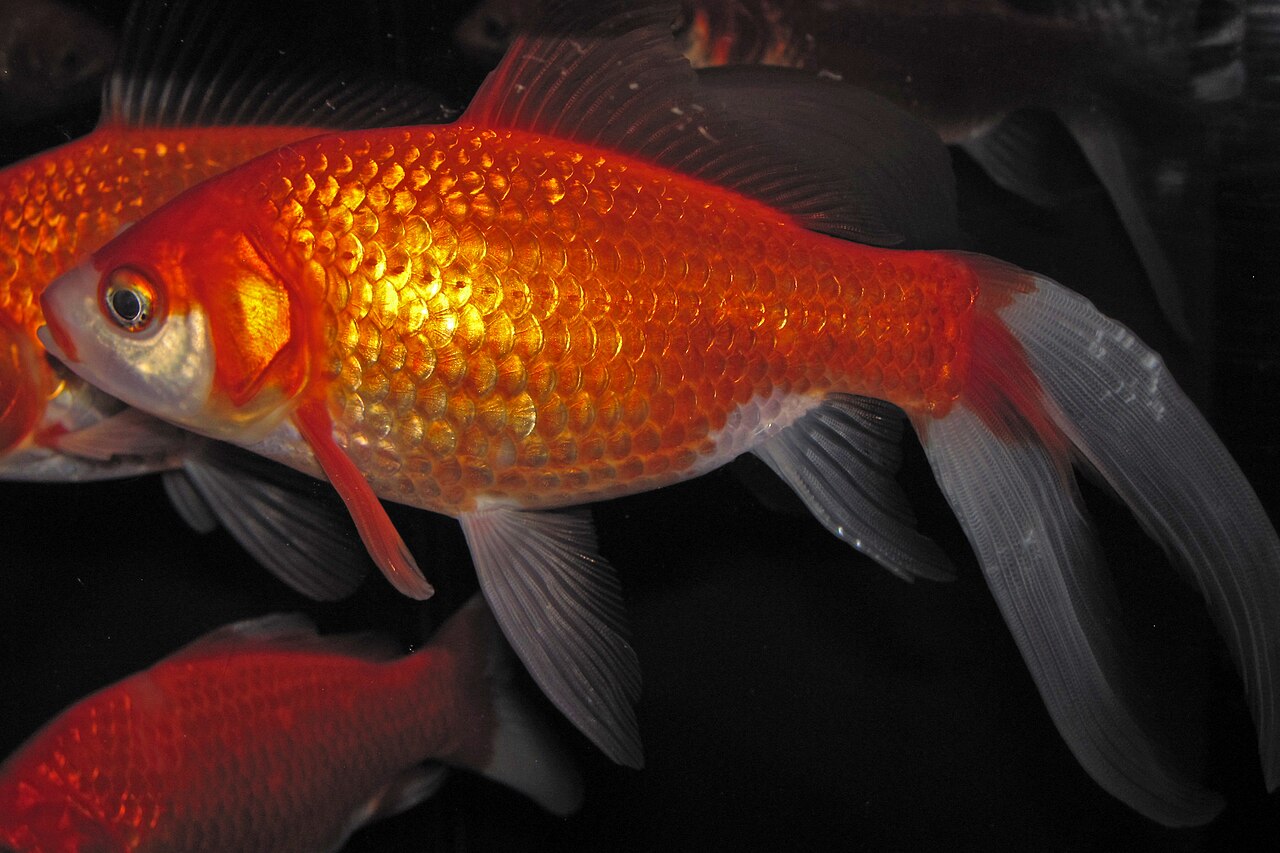
Orange is the color most people picture when they hear “goldfish,” and it comes from a high concentration of xanthophores in the skin. This is the natural end point for most common goldfish and comets once they mature past their juvenile brown stage, typically by six to twelve months of age. Breeders originally prized this color specifically because it stood out so strongly against the wild olive-brown coloring.
Comet goldfish, a slender single-tailed variety developed in the United States in the 1880s, are almost always solid orange or orange-and-white. Their streamlined body and long tail fin make the orange coloring especially vivid when they swim, which is part of why comets remain a common choice for outdoor ponds.
Not every orange goldfish stays a uniform shade for life. Some develop patches of white or black as they age, especially metallic-scaled varieties, so a solid orange juvenile is not a guarantee of a solid orange adult.
Calico Goldfish: Multi-Color Patterns
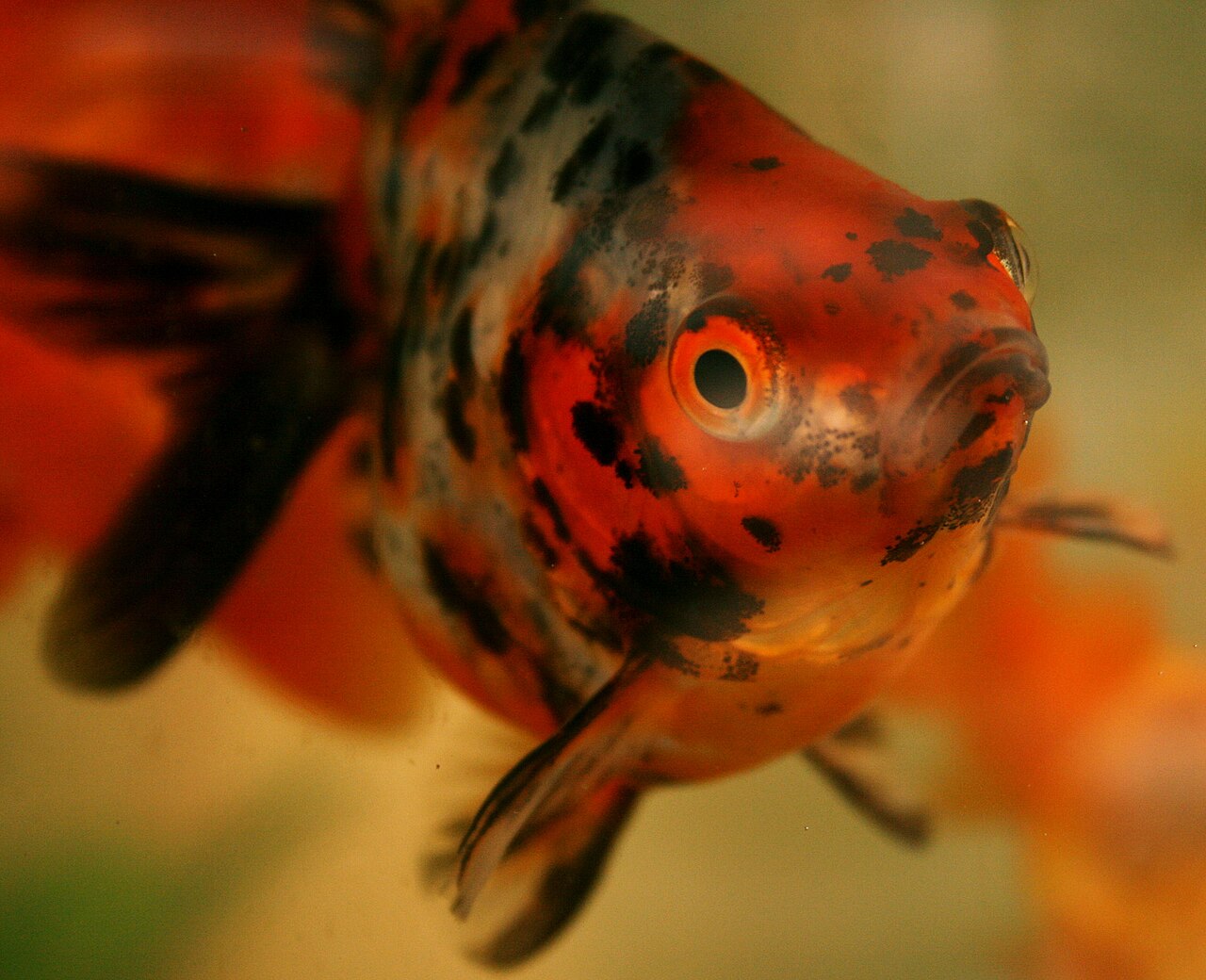
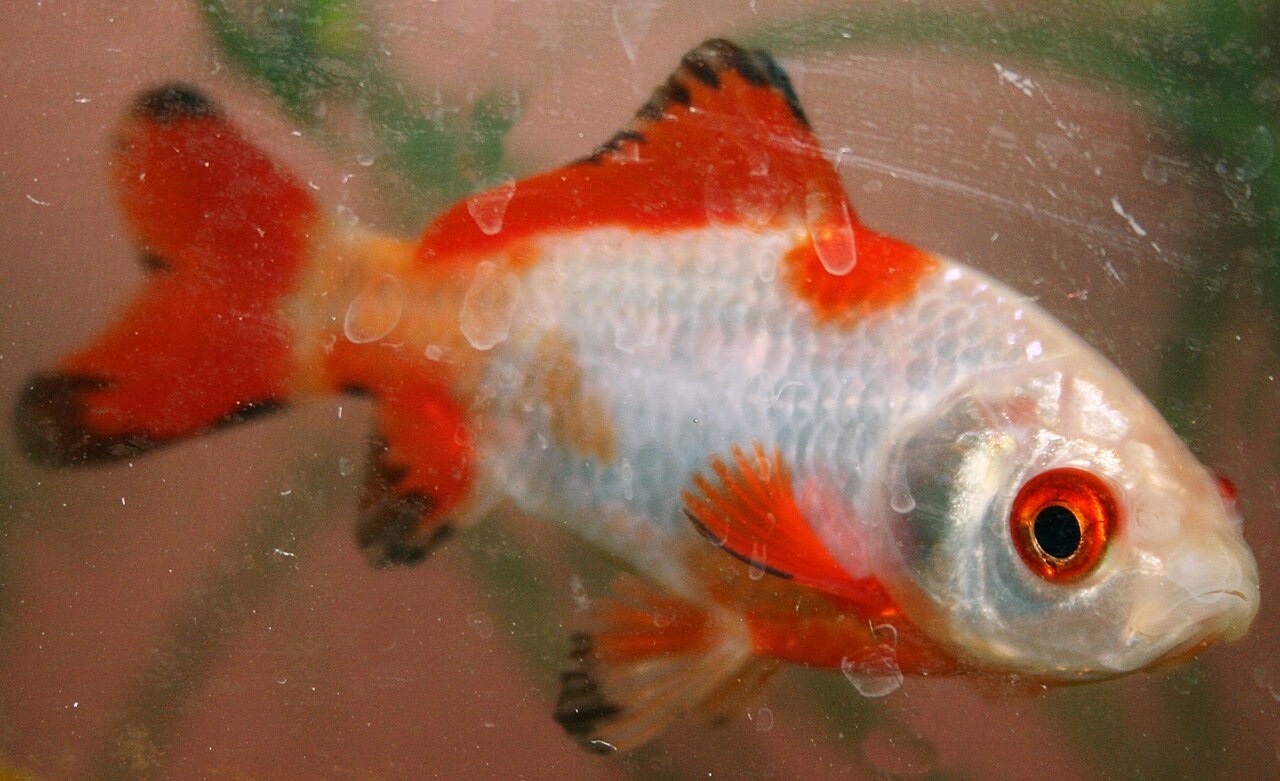
Calico goldfish combine patches of orange, red, black, blue, and white on nacreous (semi-transparent, non-metallic) scales, giving them a mottled, almost speckled appearance. This pattern shows up in several fancy varieties, most notably shubunkins and calico orandas, and each fish’s pattern is essentially unique. Shubunkins in particular were bred specifically to showcase this calico coloring on a hardy, single-tailed body.
Because calico patterning depends on how pigment cells settle across nacreous scales during development, no two calico goldfish look exactly alike, even from the same spawn. Some fish end up mostly white with small color patches, while others are densely covered in blue, red, and black.
Calico goldfish are considered less common than solid orange fish, partly because achieving a well-distributed, attractive pattern takes more selective breeding than producing a uniform color. This is one reason calico varieties often cost more at aquarium stores than plain orange common goldfish.
Red Goldfish
Red goldfish get their deep coloring from a particularly dense concentration of red-orange xanthophores, giving them a more intense shade than the standard orange seen on most common goldfish. This deep red tone appears most often on fancy varieties like fantails and ranchu, where breeders have selected specifically for saturated color over generations.
A true solid red goldfish is less common than an orange one, since the pigment density needed for that deep shade does not always breed true. Many “red” goldfish sold in stores are actually a strong orange-red blend rather than a pure red.
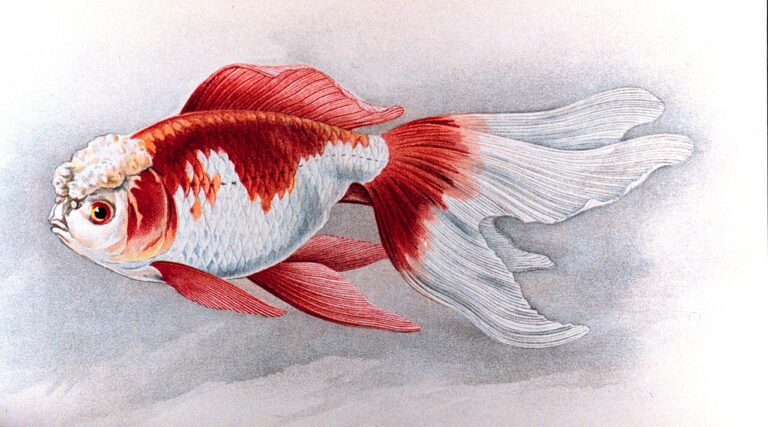
Red coloring can also appear as red-and-white patterning, which is especially prized in Japanese ornamental varieties closely related to koi breeding traditions. This red-and-white combination is sometimes called a form of “tancho” pattern when the red is concentrated on the head.
White Goldfish
White goldfish result from a reduced number of pigment cells, a trait sometimes called leucistic, which leaves the fish with little to no orange, black, or red coloring. This is different from albinism, since white goldfish still have normally colored eyes rather than the pink eyes associated with true albino animals.
Solid white goldfish are most common in fancy varieties such as fantails and ranchus, where breeders have selected for the trait alongside other body shape characteristics. A white goldfish can also develop small orange or black patches over time as it ages, which is normal and not a sign of illness.
Because white goldfish lack the darker pigments that offer some natural camouflage, they can be more visible to predators in outdoor ponds. Owners keeping white varieties outdoors often add extra cover, such as floating plants, to give the fish somewhere to hide.
Black Goldfish
Black goldfish get their coloring from a high density of melanophores, the pigment cells responsible for black and dark brown tones. The best known black variety is the Black Moor, a telescope-eyed fish that is prized specifically for its deep, velvety black coloring across its entire body.
Black coloring in goldfish is often temperature sensitive. Some black varieties, including certain telescope-eyed fish, can develop bronze or orange patches as they mature or if water temperatures run warm for extended periods, since melanophore production can shift with age and environment.
Because true solid black is harder to maintain across a fish’s whole life than orange or red, breeders who specialize in black varieties often cull young fish that show early signs of fading to keep their breeding lines consistent.
Blue Goldfish: A Rare Color
Blue is one of the rarest goldfish colors, produced by a recessive gene that suppresses other pigments and allows a bluish-gray tone to show through instead. Blue goldfish are almost always fancy varieties, such as certain Oranda and Ryukin lines specifically bred by hobbyists chasing this uncommon shade.
Because the gene responsible is recessive, two blue parents do not always guarantee blue offspring, and breeders can spend several generations trying to stabilize the color in a line. This unpredictability is a major reason blue goldfish are harder to find and typically sell for a premium compared to orange or red fish.
Blue coloring can also fade or shift toward gray as a fish ages, so a young blue goldfish is not always a guarantee of a blue adult. Consistent water quality and a balanced diet appear to help the color hold longer.
Brown and Bronze: The Juvenile Stage
Almost every baby goldfish starts life a dull brown or bronze rather than orange, a stage that typically lasts a few weeks to several months depending on the individual fish. This early coloring closely resembles the wild Carassius auratus, and it exists because young goldfish benefit from camouflage before they mature enough to compete with predators.
The shift from brown to orange usually happens gradually as xanthophore pigment cells develop and multiply with age. Water temperature and light exposure appear to play a role in how quickly this transition happens, with warmer, well-lit conditions often speeding up the color change.
Not every goldfish fully sheds its juvenile brown tone. Some fish keep patches of bronze or olive coloring into adulthood, particularly slower-growing or stunted fish, which is generally harmless and simply reflects an incomplete color transition.
Do Goldfish Change Color Over Time?
Yes, goldfish color can and often does change well into adulthood, not just during the juvenile-to-orange transition. Metallic-scaled goldfish are especially prone to developing new white, black, or orange patches as they age, sometimes shifting their overall appearance significantly over several years.
Environmental factors including diet, lighting, and water temperature all appear to influence how a goldfish’s coloring develops or shifts. Fish kept in dim tanks with little natural or full-spectrum light sometimes fade or dull in color compared to fish kept under brighter conditions.
Stress and poor water quality can also cause a goldfish’s colors to look duller or patchier than normal. If a previously vibrant fish suddenly looks faded, checking ammonia, nitrite, and nitrate levels is a reasonable first step before assuming the color change is purely cosmetic.
Rarest Goldfish Colors
Solid blue and true solid red are generally considered the rarest goldfish colors, since both require specific gene combinations that do not breed true consistently. Panda-patterned goldfish, which combine black and white in a way that resembles a panda’s coloring, are also considered rare and are prized among fancy variety collectors.
Certain breed and color combinations push rarity even higher. A well-patterned calico Oranda with a blue tint, for example, combines two uncommon traits at once, which is part of why exceptional specimens can sell for significantly more than a typical fancy goldfish.
Rarity in goldfish coloring is closely tied to how difficult a color is to stabilize across generations of breeding, not simply how visually striking it is. A breeder who successfully locks in a rare, consistent color line has typically invested years of selective pairing to get there.
Can Diet Affect Goldfish Color?
Diet has a real but limited effect on goldfish coloring, mainly through pigment-enhancing ingredients like spirulina, carotenoids, and certain shrimp-based proteins found in quality goldfish food. These ingredients can help intensify existing orange and red pigments, but they cannot change a fish’s underlying genetic color, so a white goldfish will not turn orange from diet alone.
A poor or nutrient-deficient diet can cause colors to look duller or paler than a fish’s genetic potential would otherwise allow. Consistent, high-quality feeding over months tends to produce more noticeable improvement than switching foods for just a few days before a show or sale.
Overfeeding color-enhancing foods does not speed up results and can contribute to water quality problems that end up dulling color instead. A balanced diet with occasional color-boosting supplements, alongside clean water, tends to produce the best long-term results.
How to Keep Goldfish Colors Vibrant
Clean, well-maintained water is the single biggest factor in keeping goldfish colors bright, since poor water quality causes stress that visibly dulls pigmentation over time. Regular partial water changes, proper filtration, and monitoring ammonia and nitrite levels all help fish maintain their natural coloring.
Lighting also plays a meaningful role, particularly for fish kept indoors under artificial light. Full-spectrum aquarium lighting on a consistent daily schedule tends to support more vivid coloring than dim or inconsistent lighting, which can leave colors looking washed out.
Finally, a varied, color-supporting diet combined with a stress-free environment, meaning appropriate tank size, compatible tankmates, and stable temperatures, gives goldfish the best conditions to display their full genetic color potential throughout their lives. Species data on Carassius auratus from FishBase confirms the natural, undomesticated coloring that all these fancy varieties were bred away from.
Frequently Asked Questions
What is the prettiest goldfish color?
This comes down to personal preference, but calico patterns and rare blue varieties are consistently among the most sought after by hobbyists. Solid, deep red fantails and glossy black moors are also frequently named favorites for their striking, uniform coloring.
Which is the rarest goldfish color?
Solid blue and true solid red goldfish are generally considered the rarest colors, since both depend on gene combinations that are difficult to breed consistently. Panda-patterned black-and-white goldfish are also rare and highly sought after by collectors.
What is the most expensive type of goldfish?
Prices depend heavily on color, pattern, and breed quality rather than color alone, but rare blue and exceptional calico Orandas or Ranchus tend to command the highest prices. A well-patterned, healthy specimen from a reputable breeder can sell for far more than a typical fancy goldfish.
Can goldfish live in tap water?
Goldfish can live in tap water only after it has been treated with a dechlorinator to remove chlorine and chloramine, which are harmful to fish. Untreated tap water can cause stress, gill damage, and duller coloring even if the fish survives short term.
Do they still make colorful goldfish varieties?
Yes, breeders around the world, especially in China, Japan, and Thailand, continue developing new goldfish colors and patterns every year. Fancy varieties with unusual calico, blue, and panda coloring remain an active area of ornamental fish breeding.
What causes goldfish to lose color as they age?
Aging, poor water quality, inadequate lighting, and nutrient-poor diets can all cause goldfish colors to fade or dull over time. In metallic-scaled varieties, natural pigment shifts can also occur with age, which is usually harmless rather than a sign of illness.